
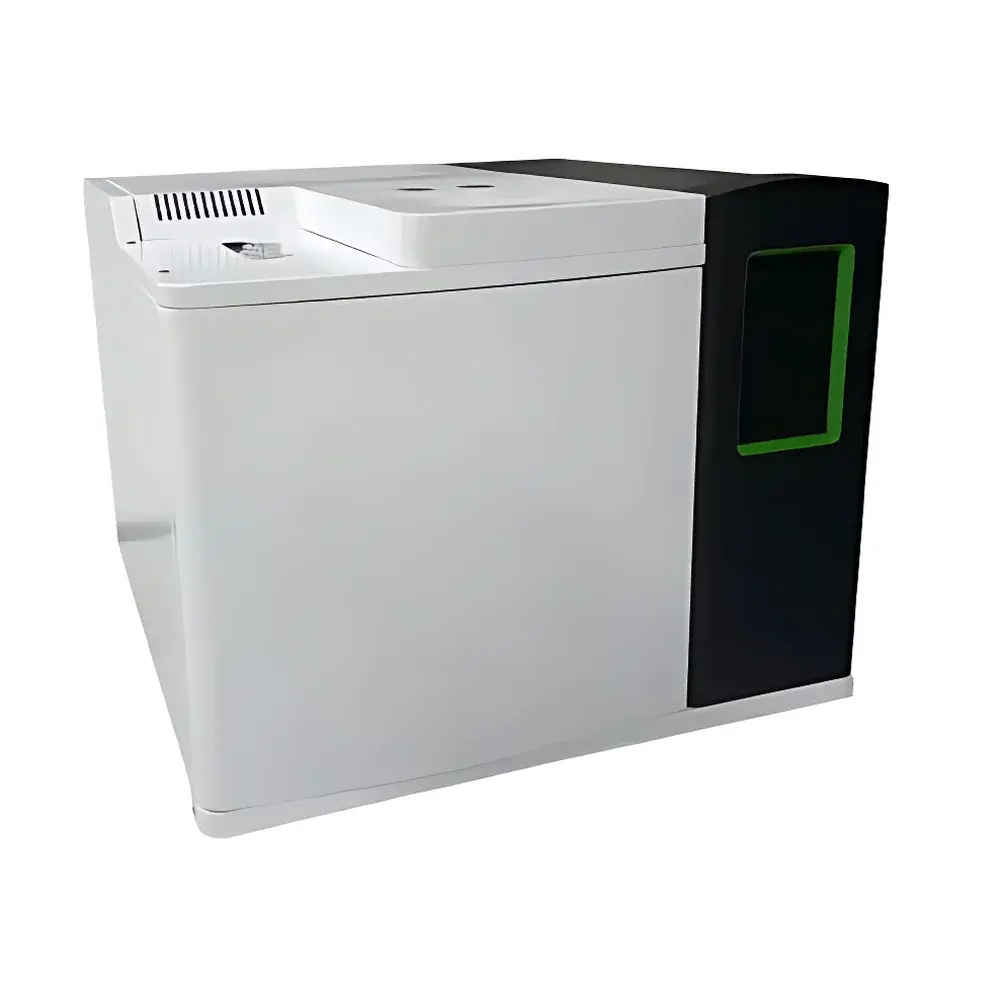
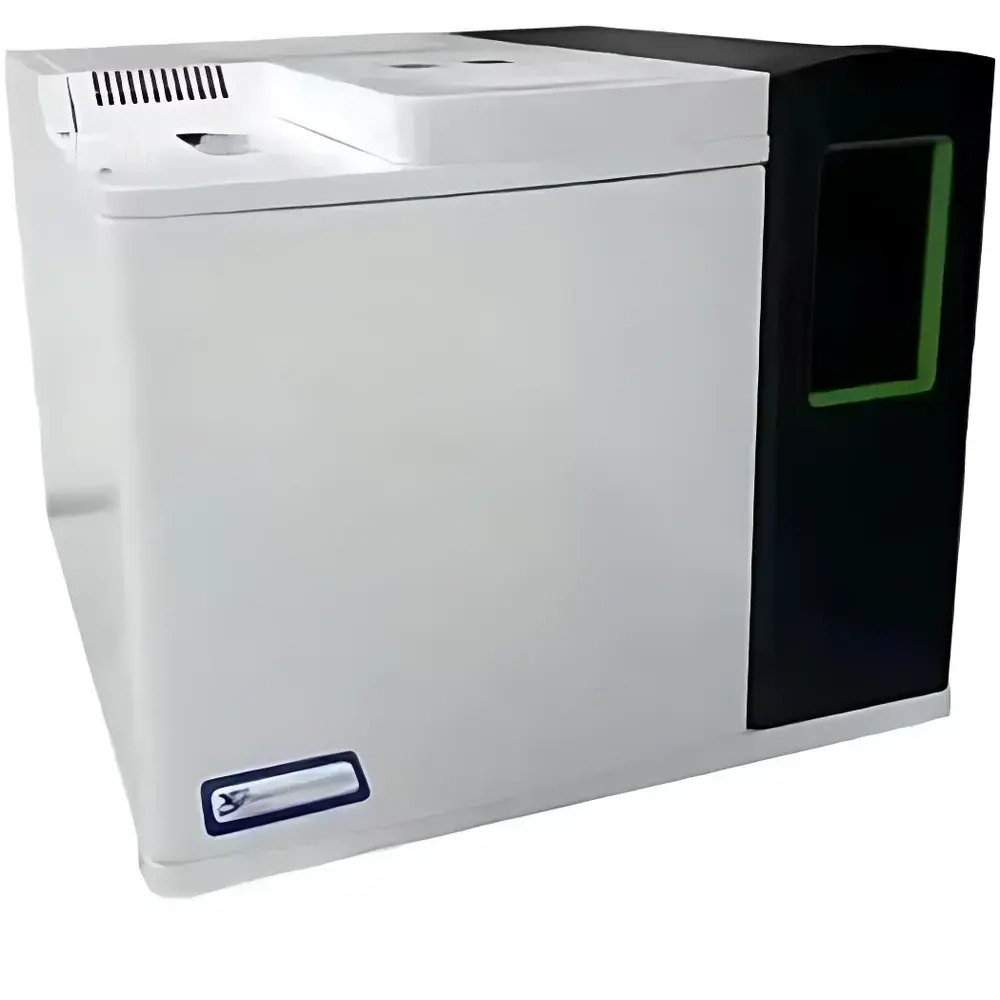
HSPX GC-Universal Series Laboratory Gas Chromatograph
| Brand | HSPX |
|---|---|
| Origin | Beijing, China |
| Manufacturer Type | Direct Manufacturer |
| Product Category | Domestic |
| Model | GC-Universal Series |
| Instrument Type | Benchtop Laboratory Gas Chromatograph |
| Application Scope | General-Purpose Analysis |
| Oven Temperature Range | Ambient + 4 °C to 450 °C (1 °C increment, ±0.01 °C accuracy) |
| Ramp Rate | 0.1–39 °C/min (Standard) |
| Cool-Down Rate | 450 °C → 50 °C in ~6 min |
| Carrier Gas Flow Control Range | 0–1000 mL/min |
| Carrier Gas Pressure Control Range | 0–970 kPa |
| Injector Max Operating Temperature | 400 °C |
| Injector Pressure Setting Range | 0–970 kPa |
| Injector Total Flow Setting Range | 0–1200 mL/min |
| Column Oven Programmable Steps | 16-stage |
| Hold Time per Step | 0–655 min |
| TCD Sensitivity | ≥5000 mV·mL/mg |
| FID Detection Limit | ≤5×10⁻¹² g/s (n-decane) |
| ECD Detection Limit | ≤1×10⁻¹³ g/s (γ-BHC) |
| FPD Detection Limit | ≤5×10⁻¹³ g/s (S), ≤1.4×10⁻¹³ g/s (P) |
| NPD Detection Limit | ≤5×10⁻¹³ g/s (N) |
| Power Supply | 220 V ±10% AC, 50 ±0.5 Hz |
| Max Power Consumption | ≤1500 W |
| Dimensions (L×W×H) | 628 × 465 × 460 mm |
| Weight | 50 kg |
Overview
The HSPX GC-Universal Series Laboratory Gas Chromatograph is a benchtop analytical instrument engineered for precision separation and quantitative analysis of volatile and semi-volatile organic compounds. Based on the fundamental principle of differential partitioning between a mobile phase (inert carrier gas) and a stationary phase (capillary or packed column), this system delivers high-resolution chromatographic separations under precisely controlled thermal and pneumatic conditions. Designed for routine laboratory environments—including QC/QA labs, environmental monitoring facilities, food safety testing centers, forensic units, and academic research institutes—the GC-Universal Series supports compliance-driven workflows across regulated sectors such as pharmaceuticals (USP , ICH Q2(R2)), environmental testing (EPA Methods 8021B, 8260D), and industrial hygiene (NIOSH 1501, OSHA 52). Its modular architecture enables flexible configuration for diverse analytical requirements without hardware redesign.
Key Features
- High-stability temperature control system with ±0.01 °C oven accuracy and programmable 16-stage ramp profiles, supporting both standard (0.1–39 °C/min) and high-speed (0.1–80 °C/min) heating modes;
- Integrated Electronic Pressure Control (EPC) and Electronic Flow Control (EFC) modules for reproducible carrier gas delivery across 0–1000 mL/min flow and 0–970 kPa pressure ranges;
- Dual-language (English/Chinese) graphical user interface with color LCD display, intuitive navigation, method storage, real-time clock, and built-in stopwatch function;
- Modular detector bay compatible with multiple high-sensitivity detectors: Flame Ionization Detector (FID), Thermal Conductivity Detector (TCD), Electron Capture Detector (ECD), Flame Photometric Detector (FPD), and Nitrogen-Phosphorus Detector (NPD);
- Automated safety protocols including flame-out detection, auto-reignition, carrier gas leak protection, and intelligent post-run cooling via motorized rear door;
- Front-panel and PC-based remote control via USB/RS-232 interface; compliant with Windows-based chromatography data systems (CDS) for method transfer and audit trail generation;
- Expandable platform with standardized interfaces for autosamplers, purge-and-trap concentrators, thermal desorbers, and headspace samplers—enabling unattended operation and integration into automated sample preparation workflows.
Sample Compatibility & Compliance
The GC-Universal Series accommodates liquid, gaseous, and solid-phase micro-extracted samples through split/splitless, on-column, or cold-on-column injection techniques. It meets essential regulatory prerequisites for GLP and GMP environments, including configurable audit trails, electronic signatures (per FDA 21 CFR Part 11 when paired with validated CDS software), and calibration traceability to NIST-certified standards. Column oven and detector zones operate independently within 15 °C to 400 °C, ensuring compatibility with polar, non-polar, and mid-polarity stationary phases (e.g., DB-5ms, HP-INNOWAX, RTX-1). The system supports ASTM D3606 (gasoline aromatics), ISO 11843-2 (detection limit validation), and EN 14083 (volatile organic compound analysis in indoor air).
Software & Data Management
HSPX provides native GC control software with full method development, sequence scheduling, peak integration, calibration curve generation, and report export (PDF, CSV, XML). Raw data files adhere to AIA/ANDI format for cross-platform interoperability with third-party CDS packages (e.g., OpenLab CDS, Chromeleon, Empower). All acquisition parameters—including temperature ramps, flow profiles, detector settings, and event markers—are stored with timestamps and operator IDs. Software supports multi-level user access control, electronic logbooks, and customizable reporting templates aligned with ISO/IEC 17025 documentation requirements.
Applications
- Petroleum & Petrochemicals: Hydrocarbon group-type analysis (PIONA), sulfur speciation, gasoline oxygenates (MTBE, ETBE);
- Environmental Testing: Pesticide residues in soil/water (EPA 8081B), VOCs in ambient air (TO-14/TO-15), PCB congeners in sediment;
- Food & Beverage: Flavor volatiles, ethanol quantification, mycotoxin screening, packaging migration studies;
- Pharmaceuticals: Residual solvents (ICH Q3C), excipient purity, stability-indicating assays;
- Forensics & Toxicology: Blood alcohol content (BAC), drug metabolite profiling, accelerant identification in arson investigations;
- Industrial Hygiene: Workplace exposure assessment for benzene, toluene, xylene (BTX), formaldehyde, and chlorinated solvents.
FAQ
Does the GC-Universal Series support 21 CFR Part 11 compliance?
Yes—when operated with validated third-party chromatography data systems (e.g., Thermo Fisher Chromeleon or Waters Empower), the instrument generates secure, time-stamped audit trails, electronic signatures, and role-based access controls required for regulated laboratories.
Can I upgrade the detector configuration after purchase?
Yes—the open detector bay and standardized electrical/pneumatic interfaces allow field-installation of additional detectors without service engineer intervention.
What is the minimum detectable concentration for chlorinated pesticides using the ECD?
Under optimized conditions (63Ni source, 30 m × 0.25 mm ID capillary column, 250 °C detector temp), typical MDLs are ≤0.5 pg on-column for γ-HCH and endosulfan sulfate.
Is external cooling required for rapid oven cooldown?
No—the integrated forced-air cooling system achieves 450 °C → 50 °C in approximately six minutes without liquid nitrogen or compressed air.
How many methods can be stored internally?
The onboard memory retains up to 100 user-defined methods with full parameter sets, including temperature programs, detector configurations, and event sequences.
Related Products







