
Ushio MK350 Handheld Spectrometer
| Origin | Taiwan |
|---|---|
| Manufacturer Type | Authorized Distributor |
| Domestic Origin | Yes |
| Model | MK350 |
| Price | Upon Request |
| Wavelength Range | 340–750 nm |
| Optical Resolution (FWHM) | 12 nm |
| Digital Resolution | 16-bit |
| Display | 3.5-inch full-color capacitive touchscreen (320 × 240) |
| Data Storage | SD card (Excel for spectral data, BMP for graphical displays) |
| Interface | USB 2.0 |
| Power | Rechargeable lithium-ion battery |
| Weight | 200 g |
| Dimensions | 144.2 × 78.0 × 24.0 mm |
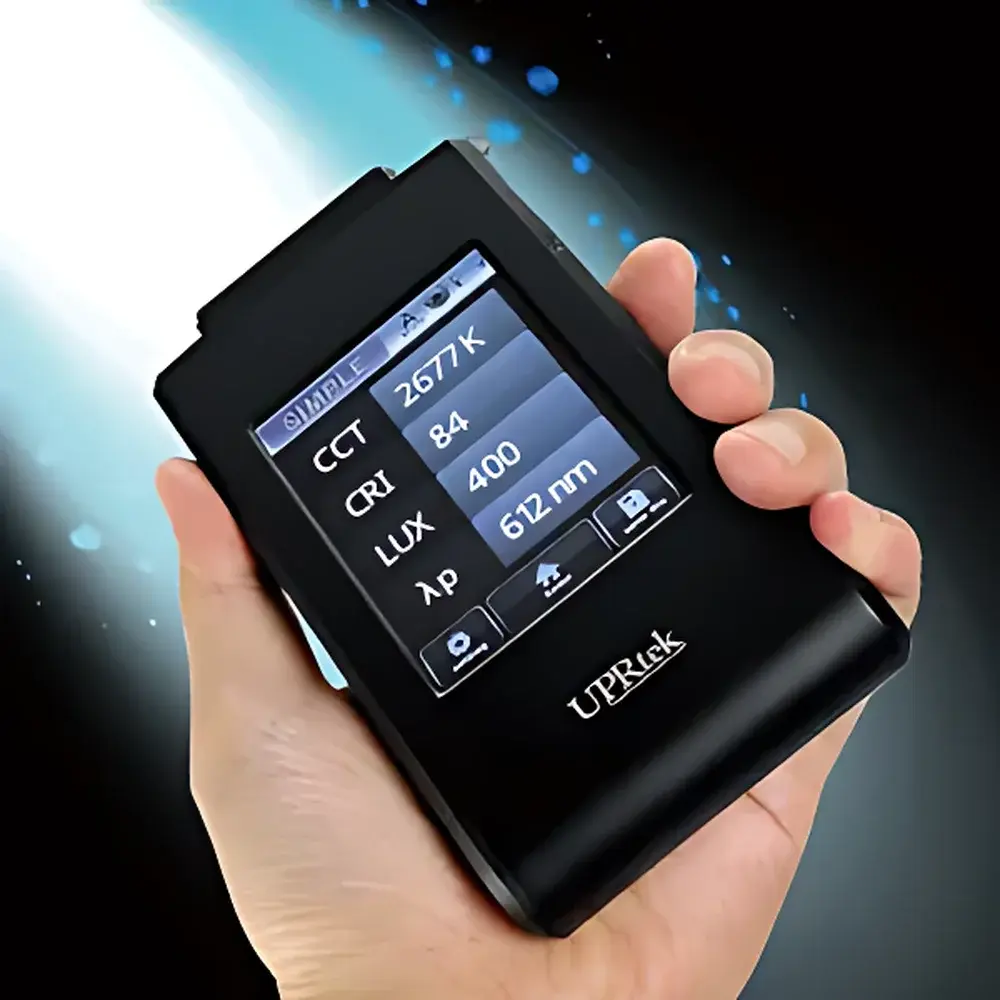
| Measurement Capabilities | Relative spectral power distribution, Correlated Color Temperature (CCT), Color Rendering Index (CRI Ra), Illuminance (Lux), Dominant Wavelength (λ<sub>P</sub>), CIE 1931 (x, y) chromaticity coordinates, CIE 1976 (u′, v′) chromaticity coordinates |
Overview
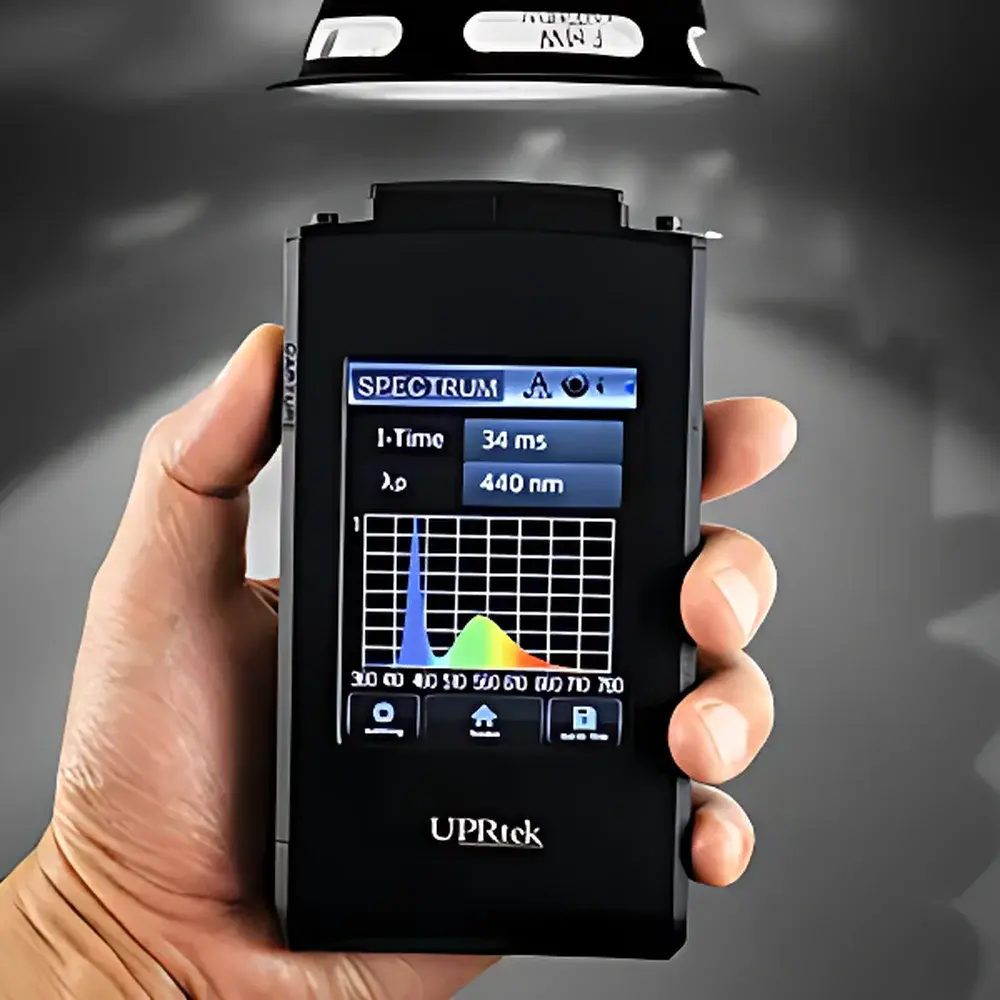
The Ushio MK350 Handheld Spectrometer is a portable, field-deployable optical measurement instrument engineered for precision spectral characterization of visible light sources across industrial, architectural, and quality assurance environments. Operating on the principle of grating-based diffraction spectroscopy, the MK350 captures and analyzes relative spectral power distribution (SPD) within the 340–750 nm range with a fixed optical resolution of 12 nm (FWHM). Its compact form factor—measuring just 144.2 × 78.0 × 24.0 mm and weighing 200 g—enables direct, in-situ measurements without external computing hardware or darkroom conditions. Designed for metrological integrity in variable ambient settings, the device incorporates real-time dark calibration functionality to compensate for thermal drift and sensor offset, ensuring traceable repeatability under dynamic lighting conditions. The MK350 complies with fundamental photometric and colorimetric definitions per CIE Publication No. 15:2018 and supports calculation methodologies aligned with ISO/CIE 11664 series standards for colorimetry.
Key Features
- Field-ready handheld operation with integrated 3.5-inch full-color capacitive touchscreen (320 × 240 resolution) and intuitive menu navigation
- Four concurrent display modes: (1) Relative SPD plot, (2) Simplified numeric readout (CCT, CRI Ra, Lux, λP), (3) CIE 1931 (x, y) chromaticity diagram, and (4) CIE 1976 (u′, v′) uniform chromaticity scale
- Real-time continuous monitoring mode with 1 Hz refresh rate for dynamic source evaluation and iterative lighting tuning
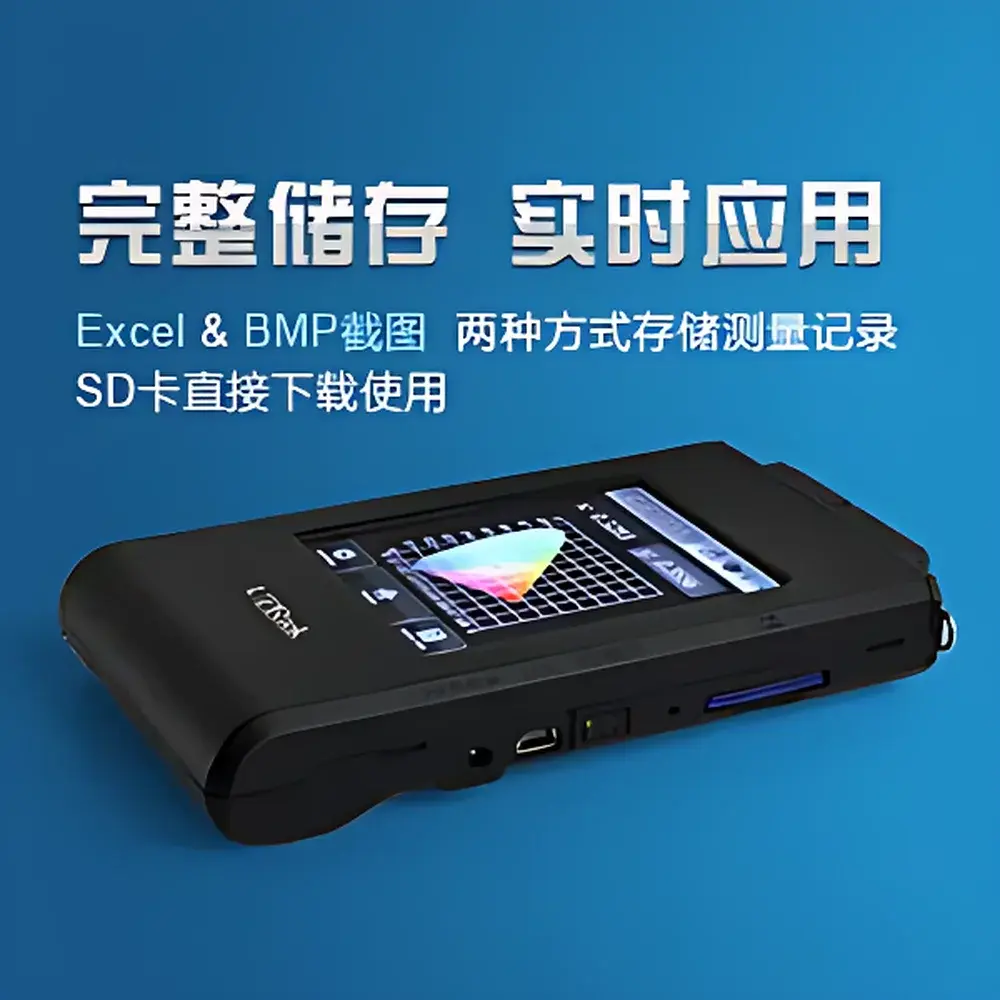
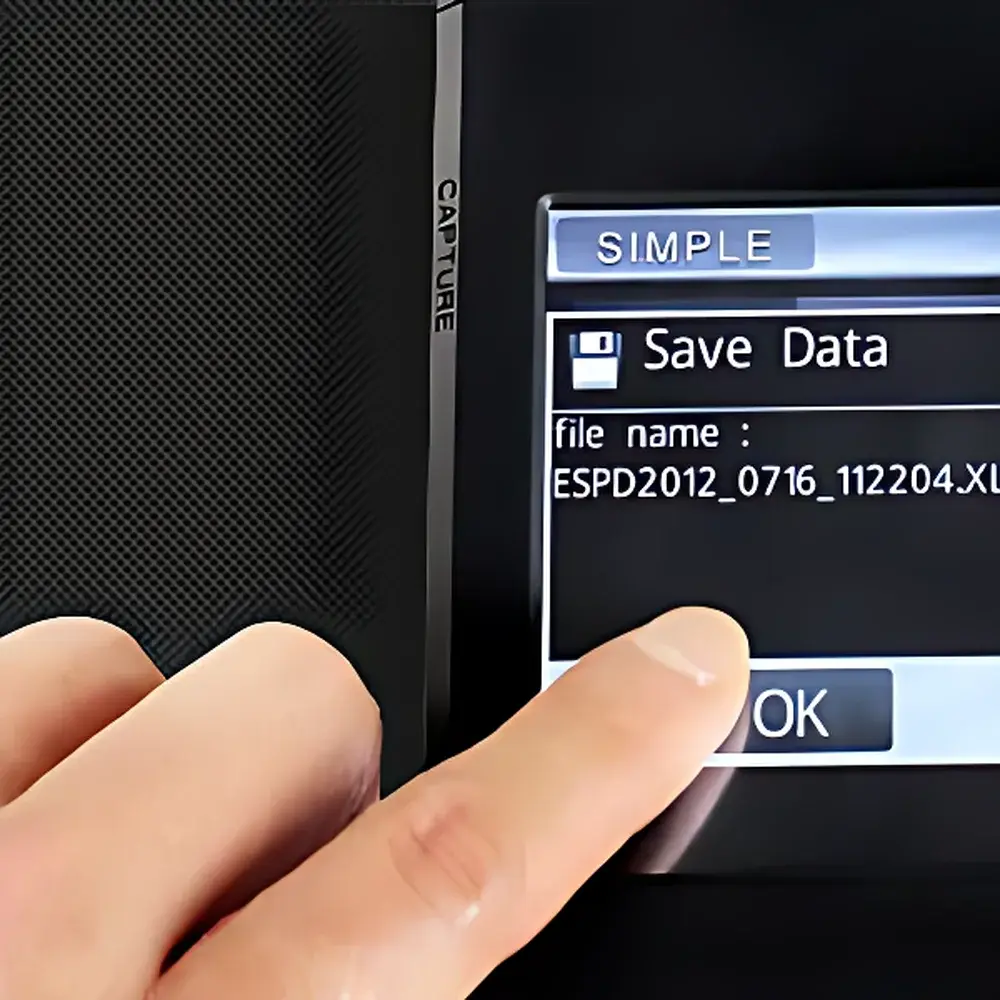
- Onboard data logging to microSD card: spectral data exported as CSV-compatible Excel files; graphical outputs saved as BMP images for each display mode
- USB 2.0 interface for direct file transfer and firmware updates; no proprietary software required for basic data retrieval
- 16-bit analog-to-digital conversion enabling high dynamic range and low-noise spectral acquisition
- Pre-measurement dark calibration routine to minimize environmental bias and maintain inter-session consistency
Sample Compatibility & Compliance
The MK350 is optimized for stable and pulsed visible-light emitters—including white LEDs, fluorescent lamps, OLED panels, and halogen sources—within typical indoor and controlled outdoor illumination environments. It does not support UV-C (750 nm) spectral regions. All photometric and colorimetric calculations adhere to internationally recognized frameworks: CCT is derived via McCamy’s cubic approximation (CIE TN 001:2014); CRI Ra follows CIE 224:2017 methodology using the standard set of 15 test color samples (TCS); illuminance values are weighted by the CIE V(λ) photopic luminosity function. While not certified to ISO/IEC 17025, the instrument’s measurement traceability aligns with GLP-aligned laboratory workflows when used with documented calibration protocols and environmental controls.
Software & Data Management
The MK350 operates autonomously without host PC dependency. Spectral datasets are stored natively in industry-standard formats: spectral irradiance curves as tab-delimited ASCII (importable into MATLAB, Python, or Excel); chromaticity diagrams and SPD plots as uncompressed BMP files. USB mass-storage mode allows drag-and-drop access to logged files without driver installation. For advanced analysis, users may import exported spectral data into third-party platforms supporting CIE color space transformations (e.g., NIST SP 250-95-compliant tools). Audit trails are maintained through timestamped filenames and embedded metadata (date/time, integration time, calibration status). Though not FDA 21 CFR Part 11 compliant out-of-the-box, the device supports manual record-keeping practices compatible with GMP documentation requirements when paired with controlled SOPs.
Applications
- LED manufacturing QA: binning verification, CCT/CRI consistency checks, and spectral shift monitoring across production batches
- Architectural lighting design: on-site validation of luminaires against specification sheets, daylight harvesting system commissioning
- Museum and gallery conservation: non-invasive assessment of illuminant spectral content to evaluate photochemical risk to pigments and textiles
- Academic optics labs: student experiments in color science, spectral filtering effects, and human visual response modeling
- Photography and cinematography: real-time white balance reference generation and gel filter transmission profiling
- Smart lighting R&D: feedback loop integration for adaptive control systems requiring closed-loop spectral feedback
FAQ
What is the recommended calibration frequency for field use?
For critical applications, perform dark calibration before each measurement session and after significant ambient temperature shifts (>5°C). No factory recalibration is required under normal operating conditions.
Can the MK350 measure pulsed or modulated light sources?
Yes—its 10 ms minimum integration time supports flicker-free capture of sources with modulation frequencies up to 100 Hz, provided duty cycle remains ≥30%.
Is CRI extended (R9–R15) or TM-30 metrics supported?
No—the MK350 calculates only CRI Ra (R1–R8) per CIE 224:2017. TM-30-15 analysis requires post-processing with external software.
Does the device support Bluetooth or Wi-Fi connectivity?
No—data transfer is limited to USB 2.0 and microSD card. This design prioritizes electromagnetic compatibility in electrically noisy industrial settings.
How is measurement uncertainty quantified for CCT and CRI?
Typical expanded uncertainties (k=2) are ±50 K for CCT (3000–6500 K range) and ±1.5 units for CRI Ra, based on repeatability testing under ISO/CIE 11664-6:2019 conditions.



