
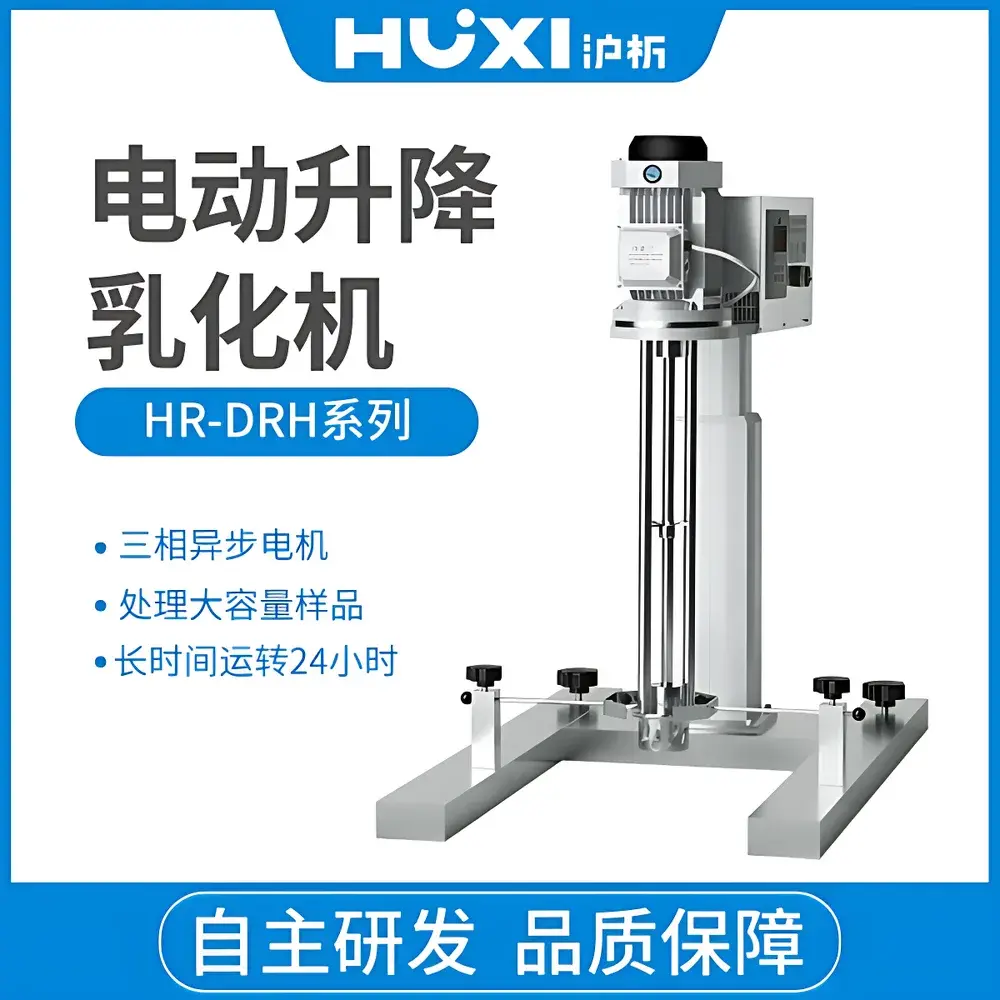
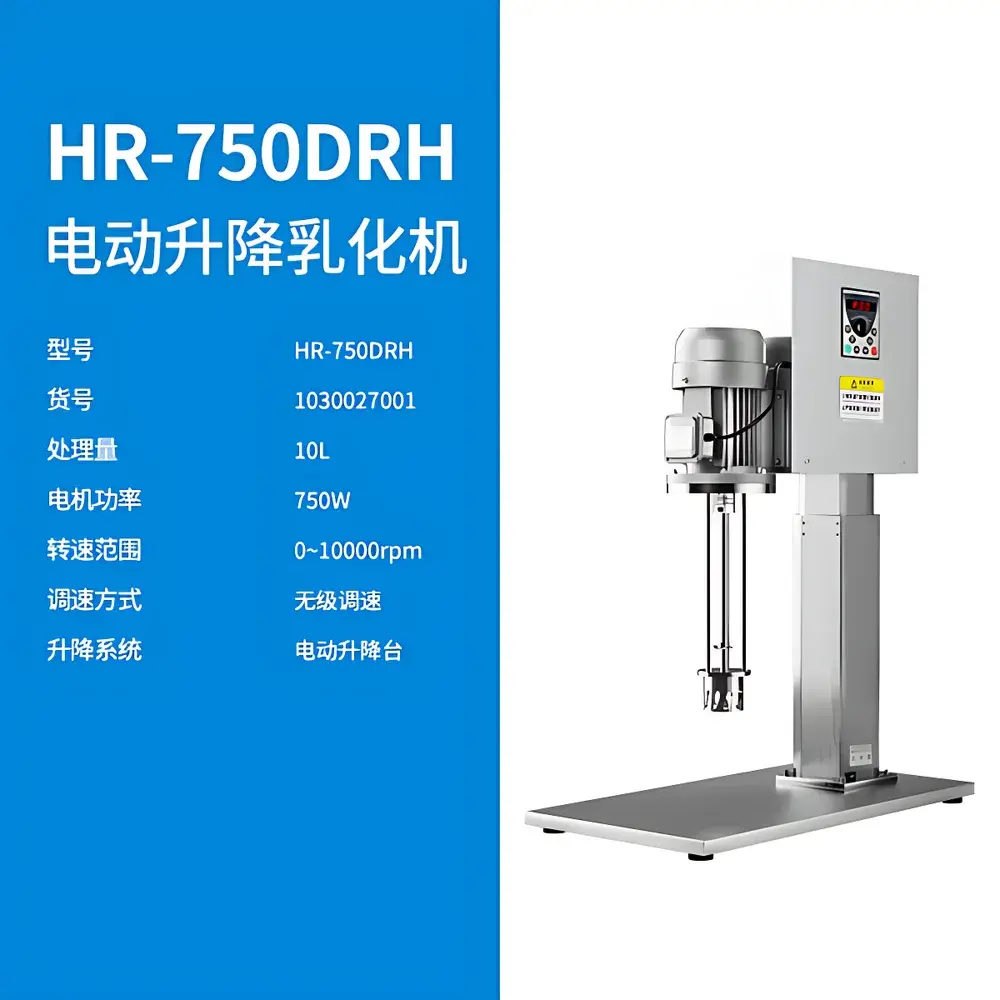
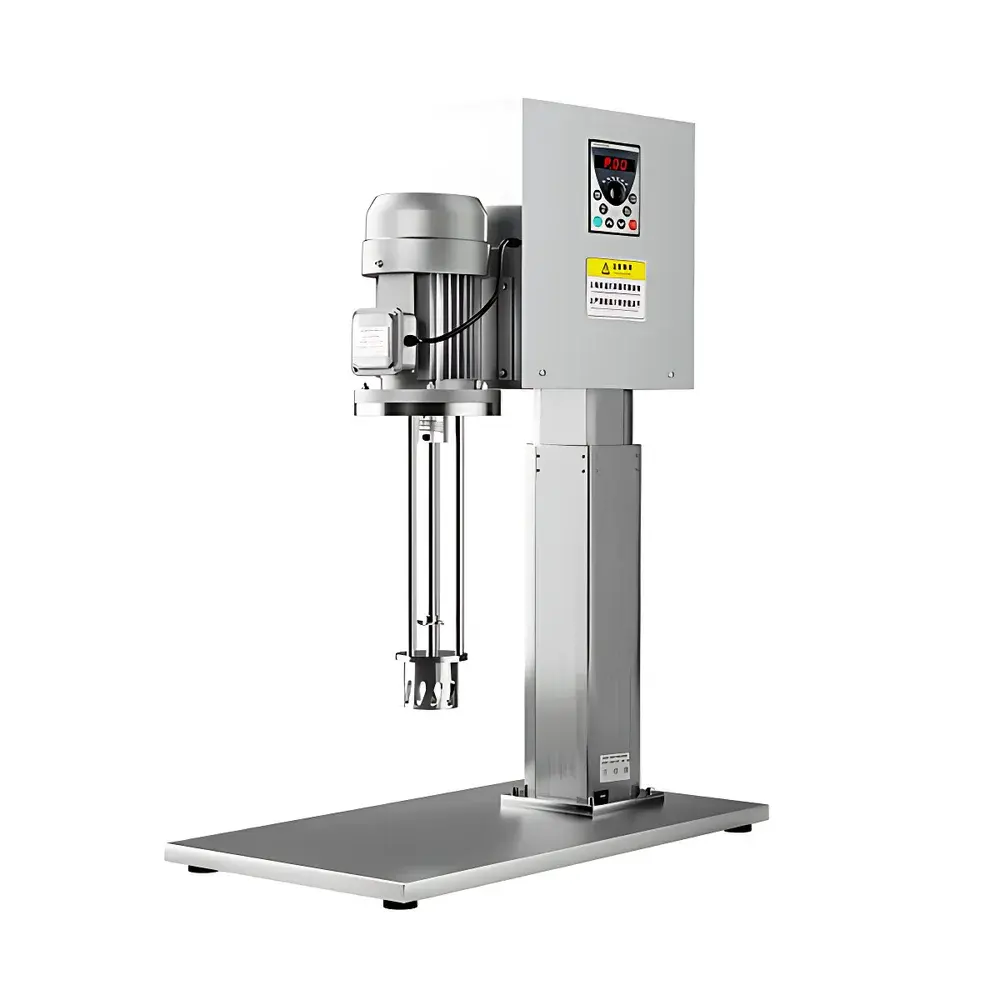
HUXI HR-750DRH Electric-Lift High-Shear Dispersing Emulsifier
| Brand | HUXI |
|---|---|
| Origin | Shanghai, China |
| Manufacturer Type | Direct Manufacturer |
| Country of Origin | China |
| Model | HR-750DRH |
| Voltage | 220 V |
| Motor Power | 750 W |
| Speed Range | 0–10,000 rpm |
| Speed Control | Continuous Variable (Inverter-Based) |
| Rotor Shaft Length | 300 mm |
| Lift Stroke | 300 mm |
| Maximum Batch Volume | 10 L |
| Emulsification Head | Precision-Machined Stainless Steel |
| Construction | Stainless Steel Clad Base & Electrical Enclosure |
| Dimensions (W×D×H) | 450 × 330 × 700 mm |
Overview
The HUXI HR-750DRH Electric-Lift High-Shear Dispersing Emulsifier is an engineered laboratory-scale system designed for reproducible, scalable dispersion, emulsification, homogenization, and mixing of immiscible liquid–liquid, solid–liquid, and gas–liquid systems. It operates on the principle of high-shear rotor–stator hydrodynamics: a precision-machined rotating shaft (rotor) generates intense localized shear gradients within a fixed stator geometry, inducing turbulent energy dissipation that breaks down droplets or particles into submicron distributions. This mechanism enables rapid kinetic stabilization of emulsions and suspensions—critical for formulation development in pharmaceuticals, cosmetics, food science, and advanced materials research. Unlike gravity-fed or magnetic stirrer systems, the HR-750DRH delivers consistent energy input across batch volumes up to 10 L, supporting both exploratory lab work and pilot-scale process transfer.
Key Features
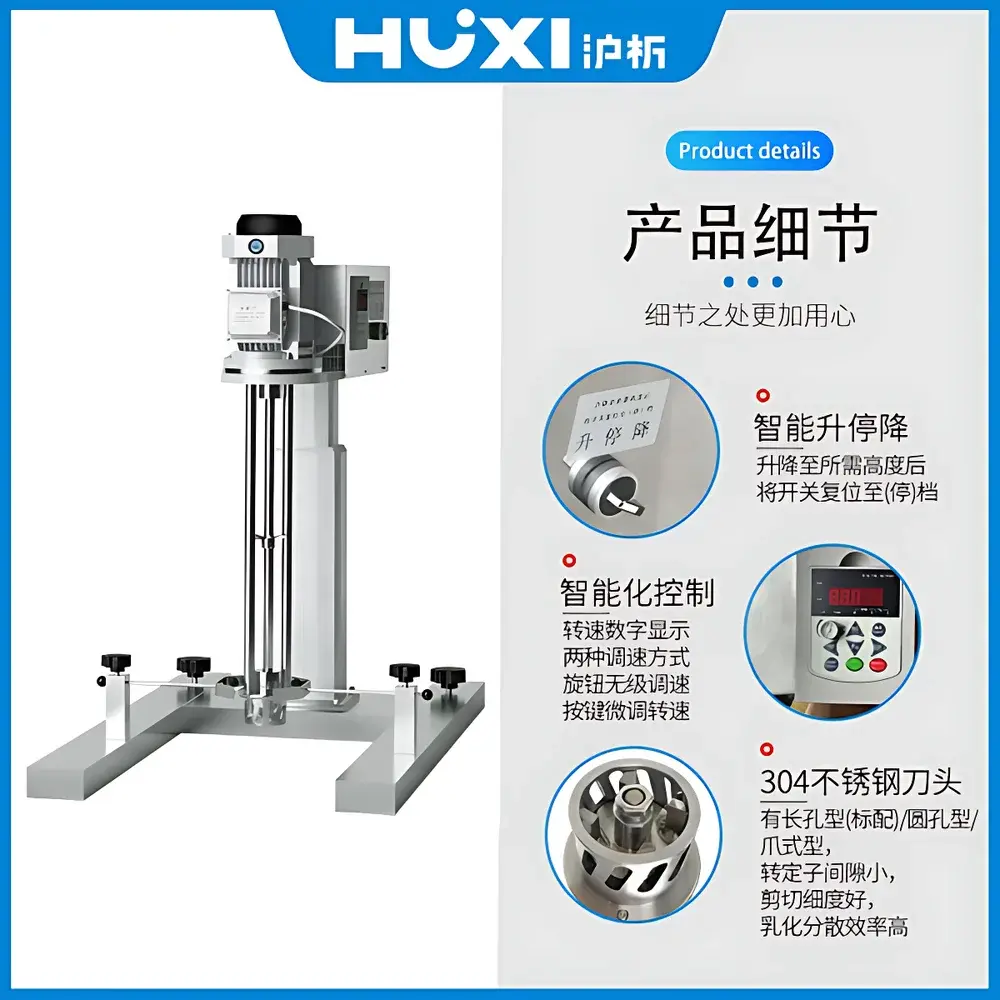
- 750 W three-phase asynchronous motor with integrated inverter drive, delivering smooth, spark-free operation and low acoustic emission (<68 dB(A) at 1 m), suitable for continuous duty cycles in regulated environments.
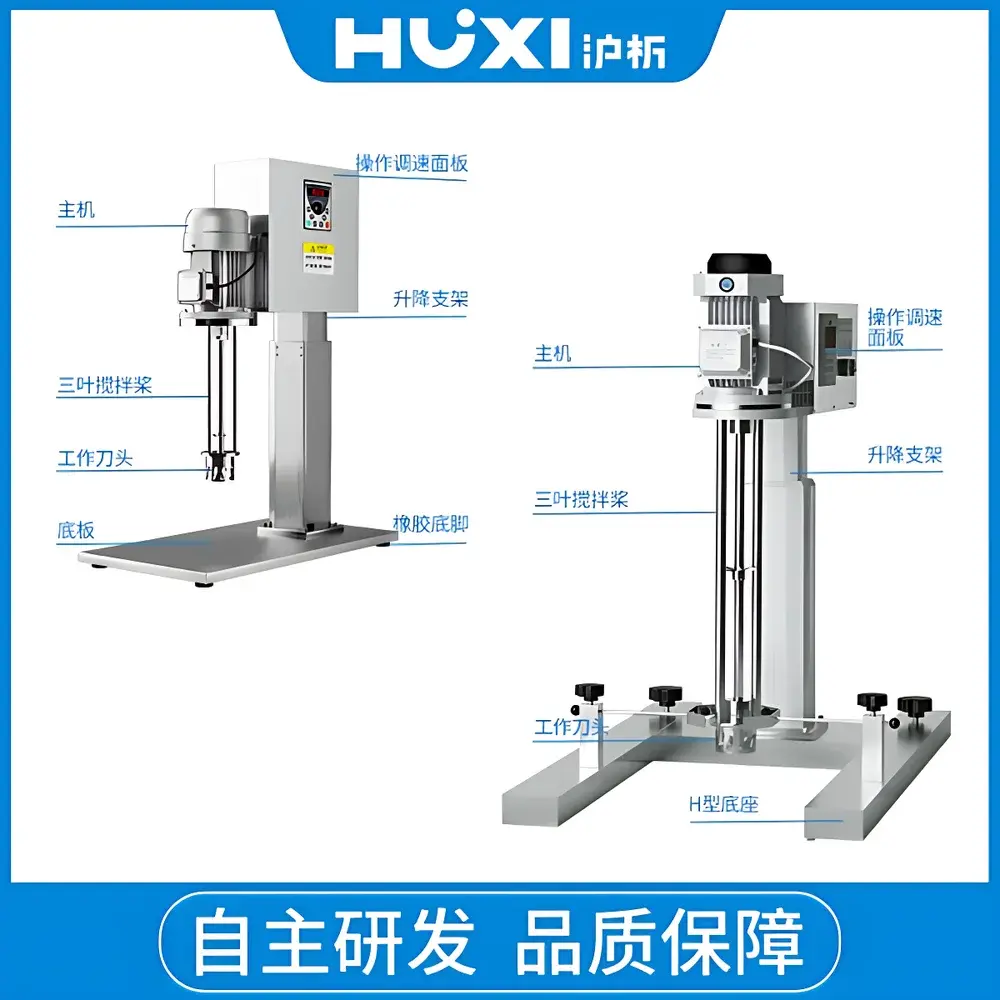
- Electrically actuated vertical lift platform with 300 mm stroke and position-locking capability, enabling precise immersion depth control and repeatable head-to-vessel geometry—essential for method transfer and inter-laboratory comparability.
- Stainless steel clad base and IP54-rated electrical enclosure resist corrosion from solvent exposure, acid/base splashes, and routine CIP (Clean-in-Place) protocols; compliant with ISO 14644-1 Class 8 cleanroom-compatible handling practices.
- Rotor–stator assembly fabricated from AISI 316 stainless steel with ≤0.4 µm Ra surface finish; optimized for minimal dead volume and laminar flow avoidance during high-viscosity processing (up to 50,000 mPa·s).
- Full-range variable speed control (0–10,000 rpm) with real-time digital RPM feedback, supporting ASTM D2196-compliant viscosity sweep protocols and shear-rate-dependent stability assessment.
Sample Compatibility & Compliance
The HR-750DRH accommodates aqueous, organic, and semi-aqueous media—including surfactant-stabilized oil-in-water emulsions, polymer nanocomposites, pigment dispersions, and biopolymer gels. Its design supports GLP-aligned documentation workflows: speed setpoints, lift position, and runtime are manually logged per batch; optional RS-485 interface allows integration with LIMS for electronic record retention. While not certified to IEC 61000-6-2/6-4 or FDA 21 CFR Part 11 out-of-the-box, its mechanical architecture meets foundational requirements for GMP Annex 15 qualification (IQ/OQ/PQ), and all wetted parts comply with USP Class VI extractables testing guidelines when validated with appropriate cleaning agents.
Software & Data Management
The HR-750DRH operates via front-panel membrane keypad with LED display showing real-time rpm, direction, and elapsed time. No proprietary software is bundled; however, its analog 0–10 V speed control input and Modbus RTU (RS-485) port enable seamless integration with third-party SCADA platforms (e.g., LabVIEW, Ignition, Siemens SIMATIC) for automated parameter logging, alarm triggering, and audit-trail generation. For traceability, users may configure external PLCs to timestamp start/stop events and associate them with batch IDs—supporting ISO/IEC 17025 clause 7.7 data integrity requirements.
Applications
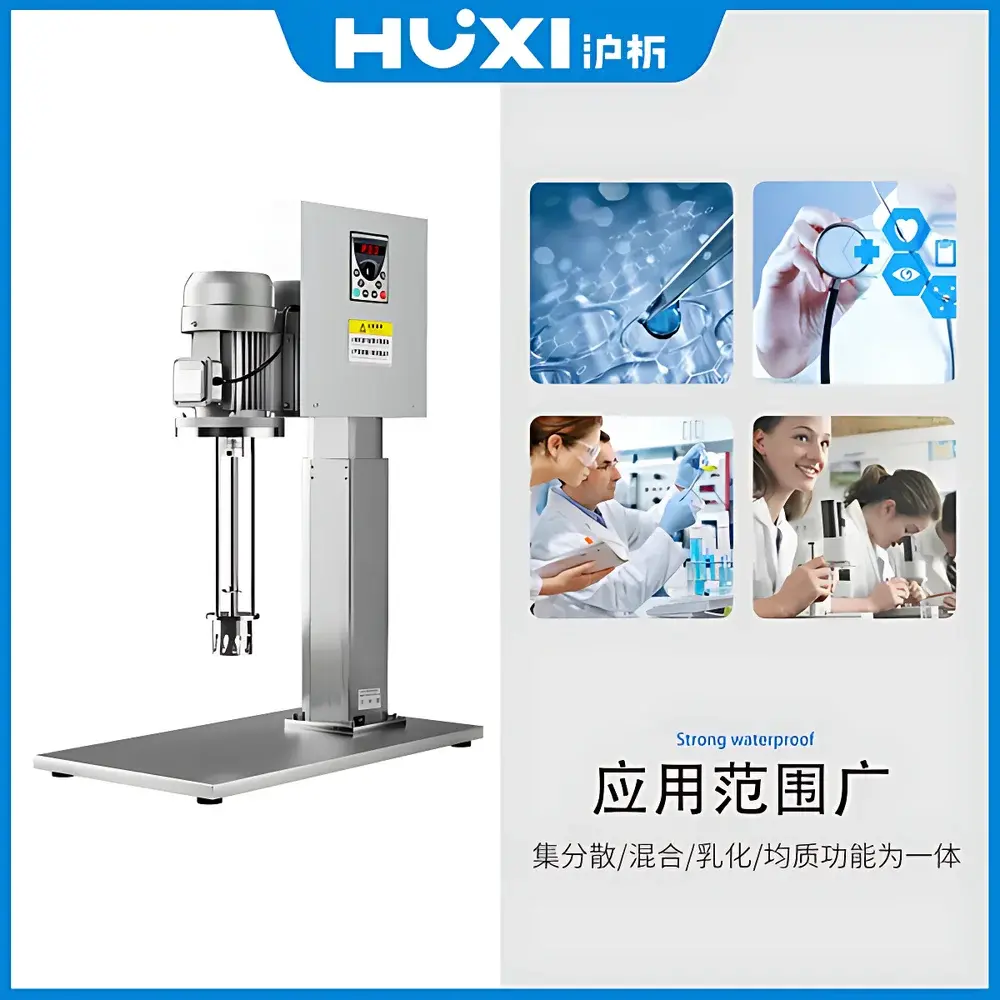
- Pharmaceutical: Preparation of nanoemulsions for oral delivery, lipid nanoparticle (LNP) pre-formulation, and suspension stabilization prior to lyophilization.
- Food Science: Development of plant-based dairy alternatives, flavor oil dispersion in beverages, and starch–protein matrix homogenization.
- Materials Chemistry: Exfoliation of 2D nanomaterials (e.g., graphene oxide, MXenes) in aqueous surfactant systems; carbon black dispersion in elastomer masterbatches.
- Academic Research: Teaching fluid mechanics principles (Reynolds number scaling, power number correlation), interfacial rheology sample prep, and comparative study of emulsifier efficacy under controlled shear history.
FAQ
What is the maximum viscosity this unit can process continuously?
It is rated for continuous operation with Newtonian fluids up to 50,000 mPa·s at 3,000 rpm; performance at higher viscosities depends on thermal management and rotor geometry selection.
Can the emulsification head be autoclaved?
No—the rotor–stator assembly is not autoclavable due to sealed bearings and thermal expansion mismatch; it is designed for chemical sterilization (e.g., 70% ethanol, 0.5% sodium hypochlorite) and validated CIP cycles.
Is the lift mechanism programmable?
Not natively; lift position is manually controlled via footswitch or panel button, but external PLC control is possible via dry-contact inputs.
Does the unit include a cooling jacket interface?
No built-in jacket port is provided; however, custom double-walled vessels with external recirculating chillers may be used with compatible clamp fixtures.
What safety certifications does the HR-750DRH hold?
It complies with CE marking requirements under Machinery Directive 2006/42/EC and Low Voltage Directive 2014/35/EU; full test reports available upon request for site-specific risk assessments.
Related Products



