
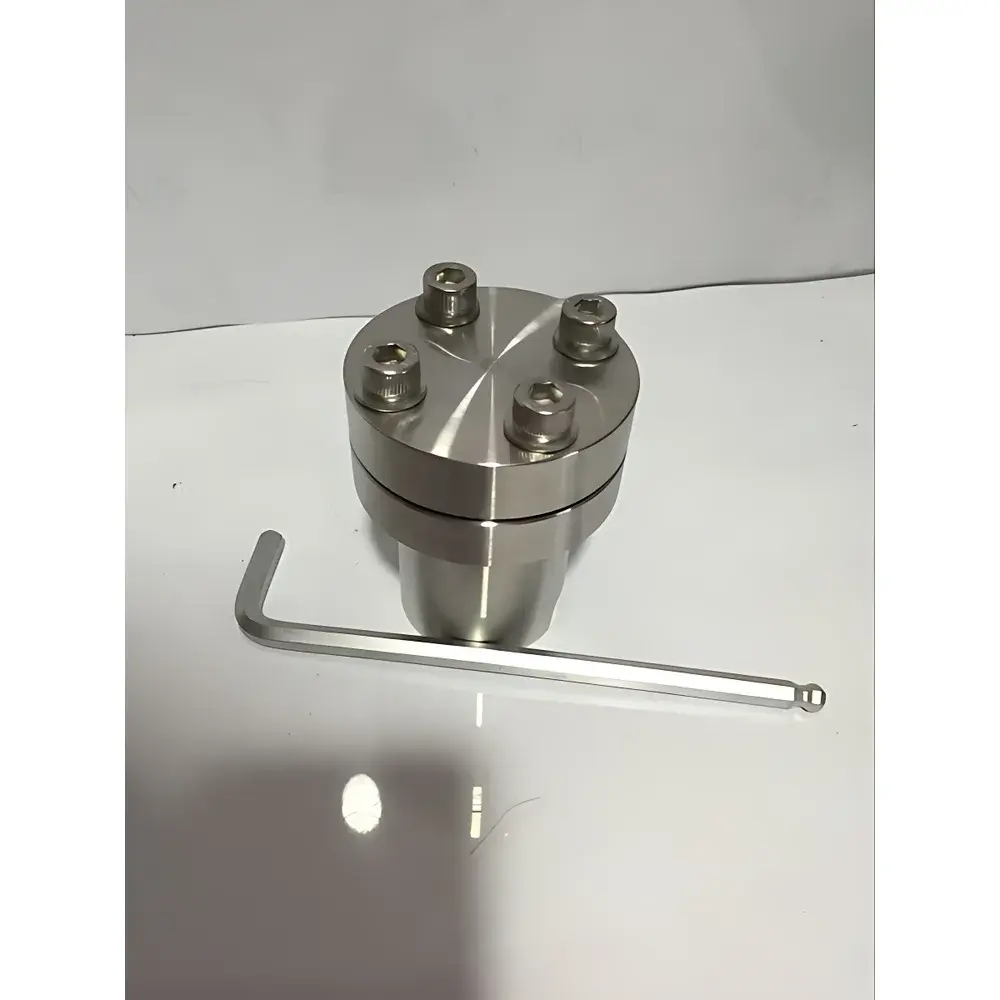
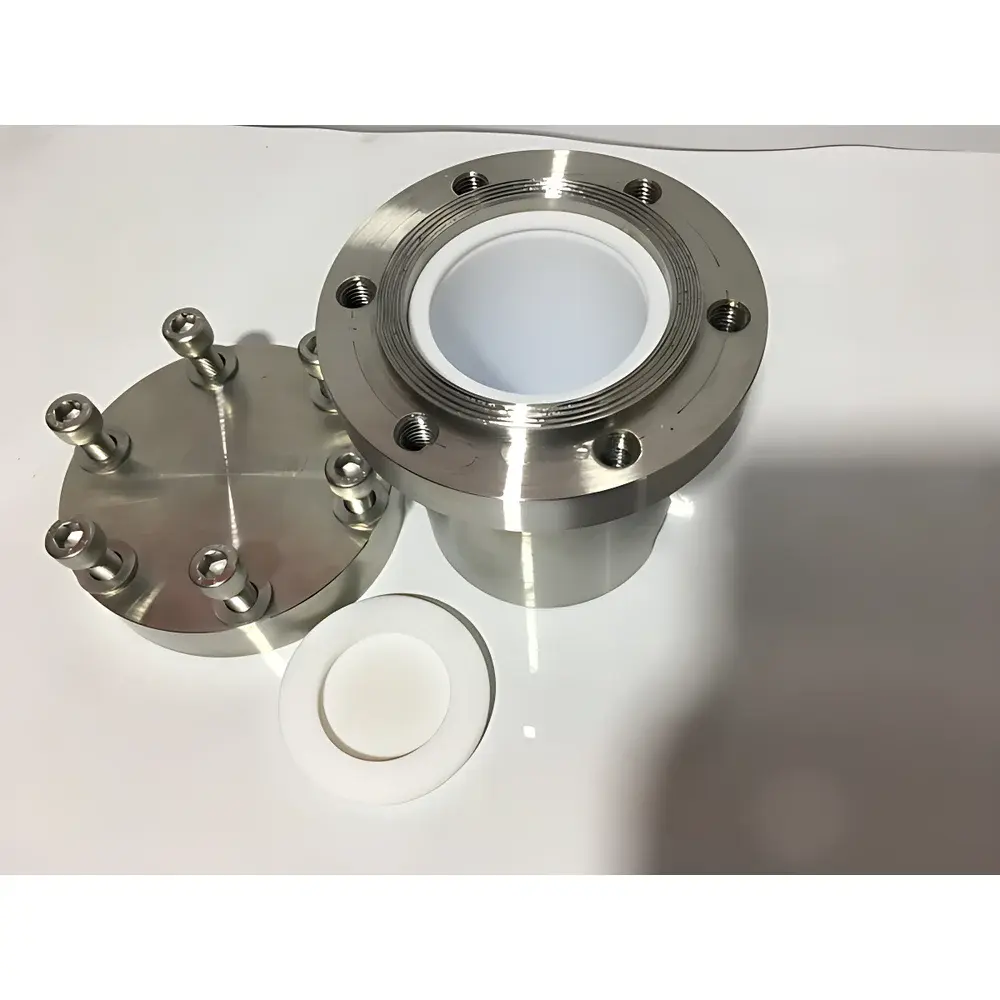
Zhengxin PFA-50ML Hydrothermal Synthesis Autoclave Reactor
| Brand | Zhengxin Instrument Factory |
|---|---|
| Origin | Jiangsu, China |
| Model | PFA-50ML |
| Vessel Capacity | 50 mL |
| Construction Material | Stainless Steel (304/316L standard) |
| Operating Pressure Range | –0.1 to 6 MPa |
| Operating Temperature Range | 0–400 °C |
| Pressure Rating | Low-to-Medium Pressure |
| Vacuum Capability | Up to –0.1 MPa (absolute) |
| Heating Method | Electric Resistance Heating |
| Temperature Control | LCD PID Intelligent Controller |
| Temperature Accuracy | ±1 °C (standard), optional ±0.1 °C |
| Heating Rate | Adjustable up to 10 °C/min |
| Power Input | 400–3500 W (model-dependent) |
| Optional Accessories | High-Temperature Gas Inlet/Outlet Needle Valves (1/8″ & 1/4″ Swagelok®-compatible), Digital Pressure Gauge, Internal Thermocouple Probe, Burst Disc Safety Relief System, Finned Heat Dissipation Sleeve, Liquid Sampling Tube, Quartz or Metal Liner Kits |
Overview
The Zhengxin PFA-50ML Hydrothermal Synthesis Autoclave Reactor is a precision-engineered benchtop pressure vessel designed for controlled high-temperature, high-pressure chemical synthesis under inert, reducing, or oxidizing atmospheres. Based on the principles of hydrothermal and solvothermal reaction kinetics, this reactor enables reproducible crystallization, nanoparticle synthesis, catalytic material preparation, and solid-state phase transformations in sealed environments. Its robust stainless steel (304 or 316L) construction—optionally upgradeable to corrosion-resistant alloys such as Hastelloy®, titanium, or zirconium—ensures structural integrity across a wide operational envelope: temperatures from ambient to 400 °C and pressures ranging from full vacuum (–0.1 MPa) to 6 MPa. The reactor’s compact 50 mL internal volume is optimized for small-scale exploratory synthesis, method development, and catalyst screening where reagent economy and rapid thermal response are critical.
Key Features
- Modular pressure vessel architecture with interchangeable liners—including quartz, stainless steel, and custom alloy options—to accommodate aggressive media (e.g., HF-containing solutions, molten alkalis, or halogenated solvents).
- Integrated electric heating system with adjustable ramp rate (≤10 °C/min) and PID-controlled temperature regulation (±1 °C standard; ±0.1 °C optional), ensuring thermal stability during extended hold periods.
- Standardized 1/8″ and 1/4″ Swagelok®-compatible needle valves for precise gas introduction, vacuum evacuation, inert gas purging, and controlled venting—enabling dynamic atmosphere management pre-, during, and post-reaction.
- Optional real-time monitoring suite: digital pressure transducer (0–10 MPa range), Type K thermocouple with internal probe port, and dual-channel data logging capability.
- Passive safety engineering: factory-installed rupture disc assembly compliant with ASME BPVC Section VIII Div. 1 guidelines, rated for 1.2× maximum allowable working pressure (MAWP); optional secondary mechanical pressure relief valve.
- Finned aluminum heat sink sleeve for accelerated cooldown after high-temperature runs—reducing cycle time without compromising seal integrity or gasket service life.
Sample Compatibility & Compliance
The PFA-50ML supports heterogeneous and homogeneous reactions involving aqueous, organic, and mixed-solvent systems. It is routinely employed in the synthesis of metal oxides (e.g., TiO₂, ZnO), perovskites, MOFs, quantum dots, and layered double hydroxides (LDHs). Vessel materials and liner options comply with ASTM A240 (stainless steels), ASTM B564 (nickel alloys), and ISO 15156-3 (materials for H₂S-containing environments). When equipped with audit-trail-capable controllers and calibrated sensors, the system meets GLP documentation requirements for academic and industrial R&D labs. All pressure components are CE-marked per PED 2014/68/EU and undergo hydrostatic proof testing at 1.5× MAWP prior to shipment.
Software & Data Management
While the base unit operates via standalone PID controller, optional RS485/Modbus RTU interface enables integration into centralized lab automation platforms (e.g., LabVIEW™, DeltaV™, or custom SCADA). Temperature and pressure profiles can be exported in CSV format for post-run analysis in MATLAB®, OriginLab®, or Python-based scientific computing environments. Firmware supports user-defined recipe storage (up to 20 programs), event-triggered data capture (e.g., on pressure deviation >0.2 MPa), and timestamped alarm logs—facilitating traceability in regulated environments subject to FDA 21 CFR Part 11 or ISO/IEC 17025 requirements.
Applications
- Hydrothermal growth of single-crystal nanomaterials and thin-film precursors.
- Solvothermal synthesis of battery cathode materials (e.g., NMC, LFP) and solid electrolytes.
- Catalyst aging studies under simulated industrial process conditions (T, P, gas composition).
- Green chemistry applications: subcritical water reactions, biomass depolymerization, and solvent-free condensations.
- Geochemical simulation: mineral dissolution/precipitation kinetics under crustal P–T conditions.
- Pharmaceutical polymorph screening in confined, vapor-saturated environments.
FAQ
What maximum temperature and pressure ratings apply to the standard PFA-50ML configuration?
The base model is rated for continuous operation up to 400 °C and 6 MPa, with pressure containment verified per ASME Section VIII standards.
Can the reactor be used inside a muffle furnace?
Yes—its external dimensions and thermal mass allow safe insertion into standard laboratory muffle furnaces; however, internal temperature sensing requires a feedthrough-compatible thermocouple and appropriate insulation design.
Is third-party calibration certification available for pressure and temperature sensors?
NIST-traceable calibration certificates (ISO/IEC 17025 accredited) are available upon request for all optional transducers and controllers.
How is leak integrity verified before first use?
Each unit undergoes helium mass spectrometry leak testing (<1×10⁻⁹ mbar·L/s) at the factory; users are advised to perform a preliminary vacuum hold test (≥30 min at –0.095 MPa) prior to solvent introduction.
Are custom geometries or larger volumes supported?
Yes—Zhengxin offers OEM design services for capacities from 25 mL to 2000 mL, including vertical/horizontal orientation, multiple inlet/outlet ports, and jacketed variants for external heating/cooling.



