
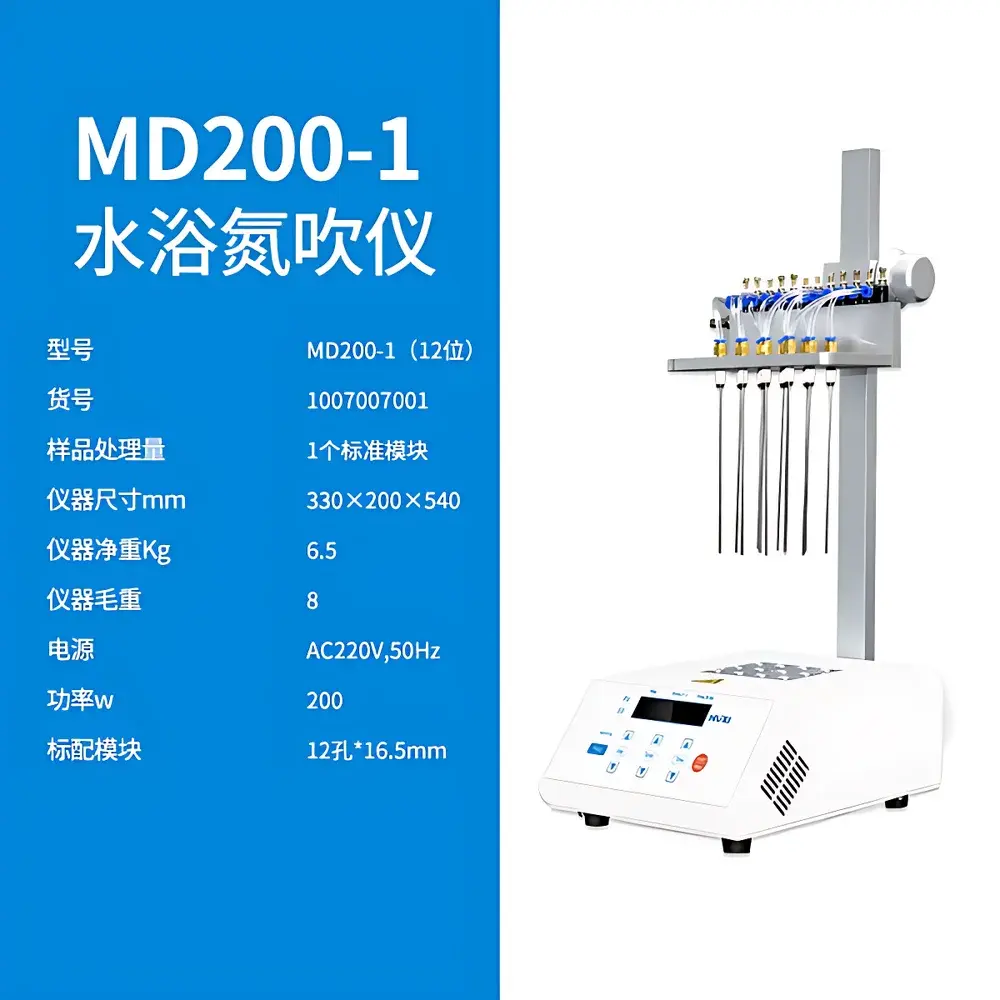
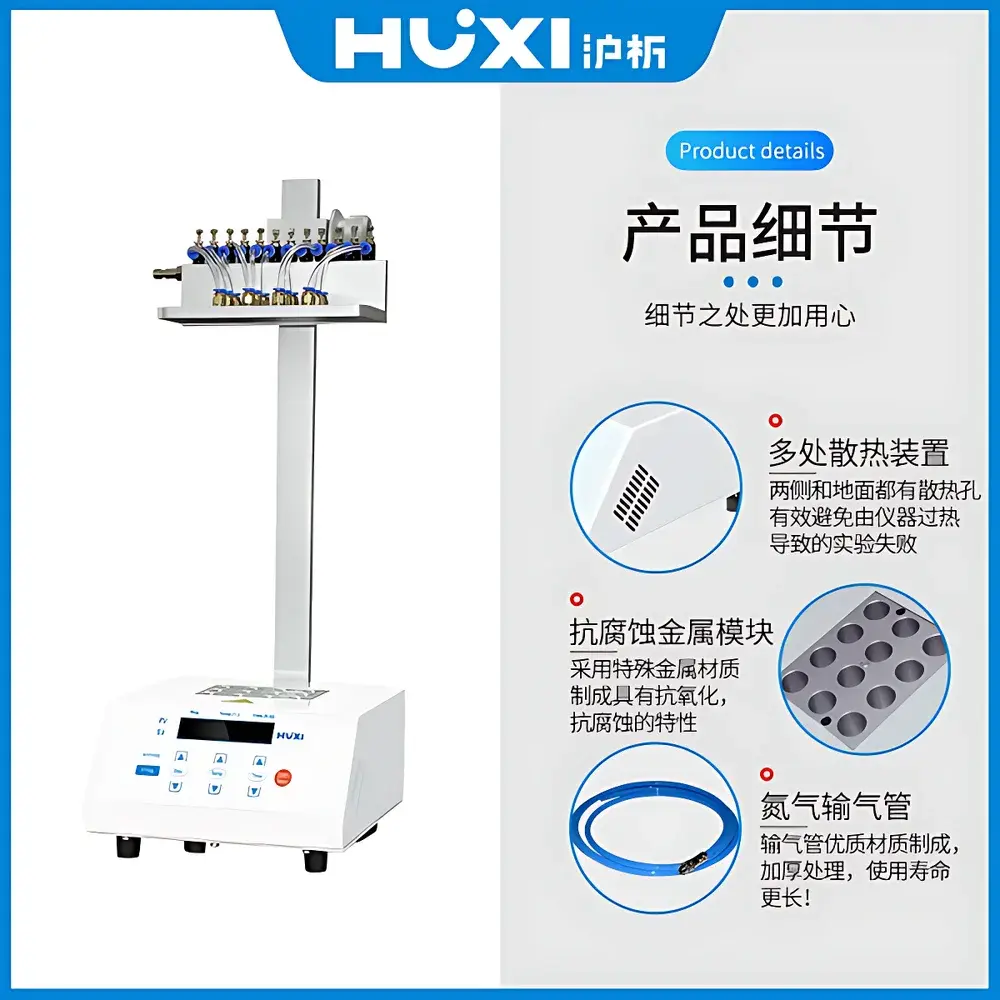
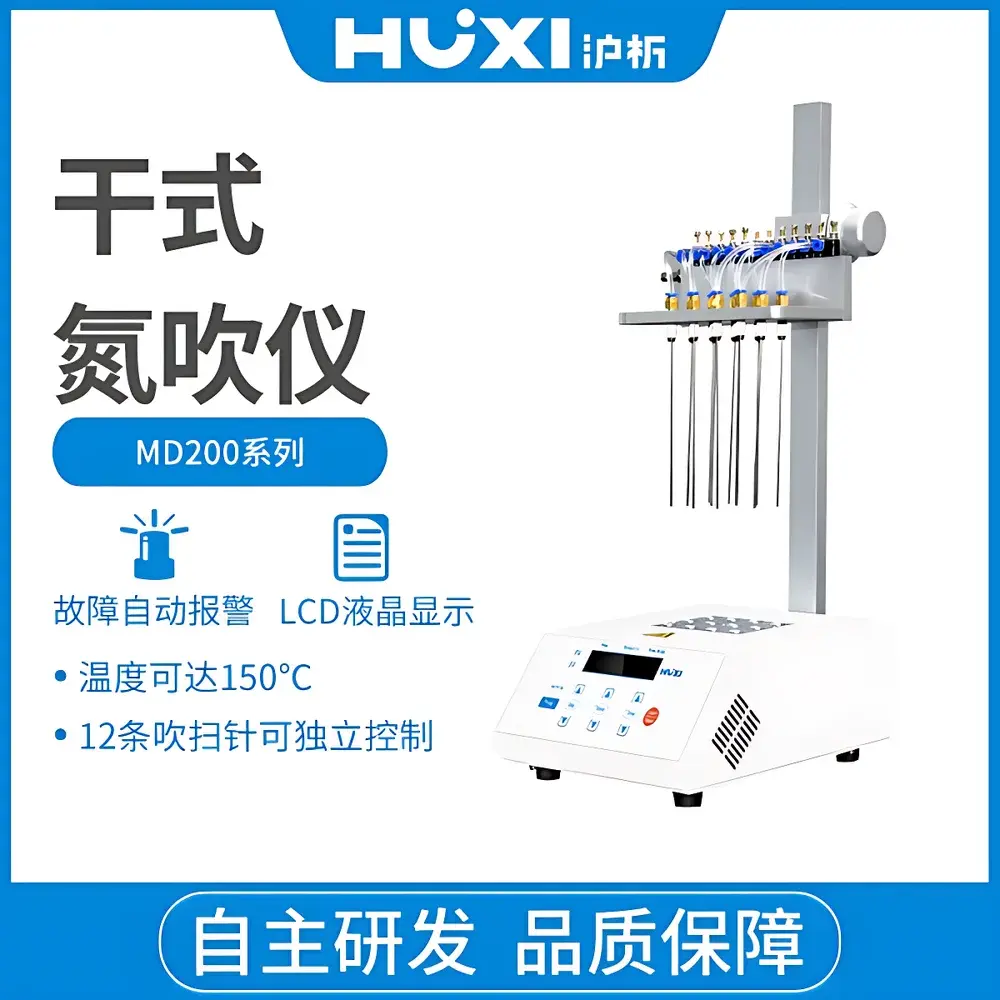
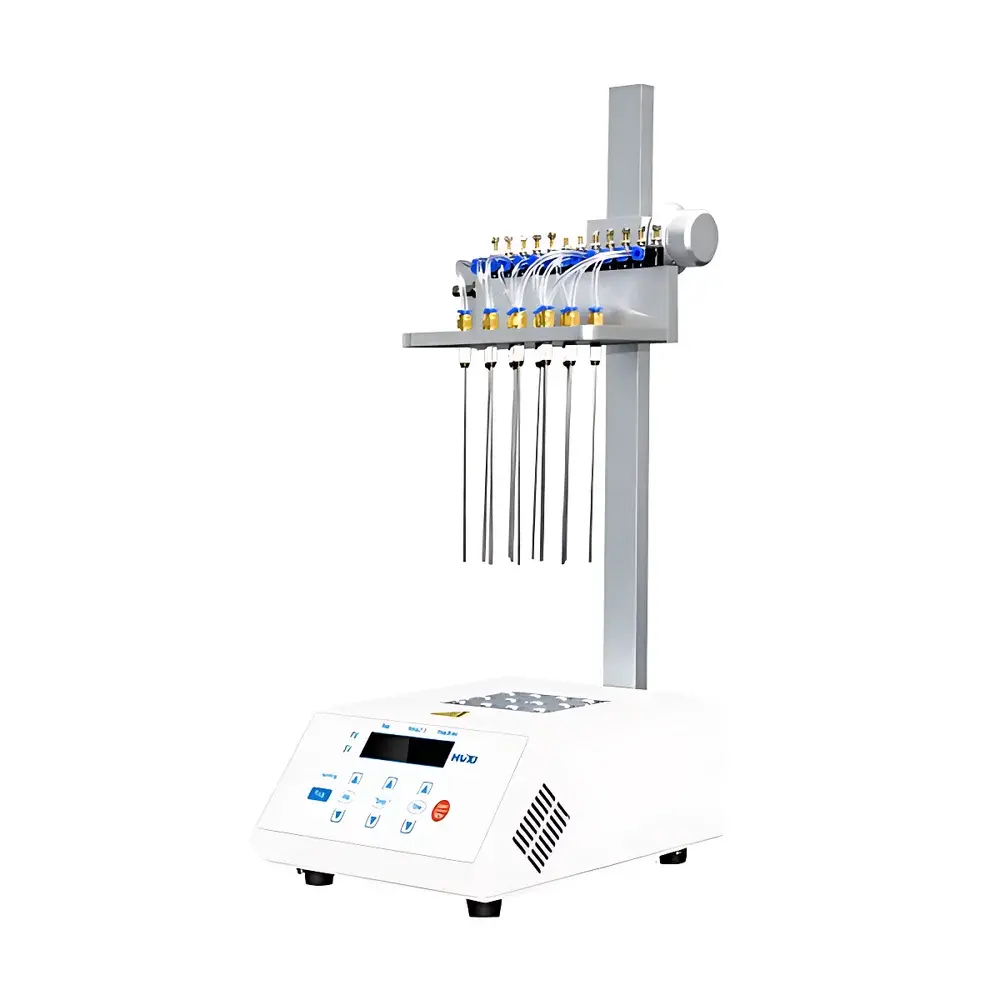
HUXI MD200-1 Dry Block Nitrogen Evaporator
| Brand | HUXI |
|---|---|
| Origin | Shanghai, China |
| Manufacturer Type | Direct Manufacturer |
| Country of Origin | China |
| Model | MD200-1 |
| Heating Method | Dry Block Heating |
| Temperature Range | RT+5°C to 150°C |
| Temperature Stability @40°C | ±0.3°C |
| Heating Power | 200 W |
| Sample Capacity | 1 standard block module (12×16.5 mm) |
| Gas Flow Rate | 0–10 L/min |
| Gas Pressure Limit | ≤0.1 MPa |
| Needle Length | 150 mm |
| Dimensions (W×D×H) | 330×200×540 mm |
| Net Weight | 6.5 kg |
| Power Supply | AC 220 V, 50 Hz |
| Ramp Time | ≤15 min (20°C to 100°C) |
| Timer Range | 1 min – 100 h |
| Display Resolution | 0.1°C |
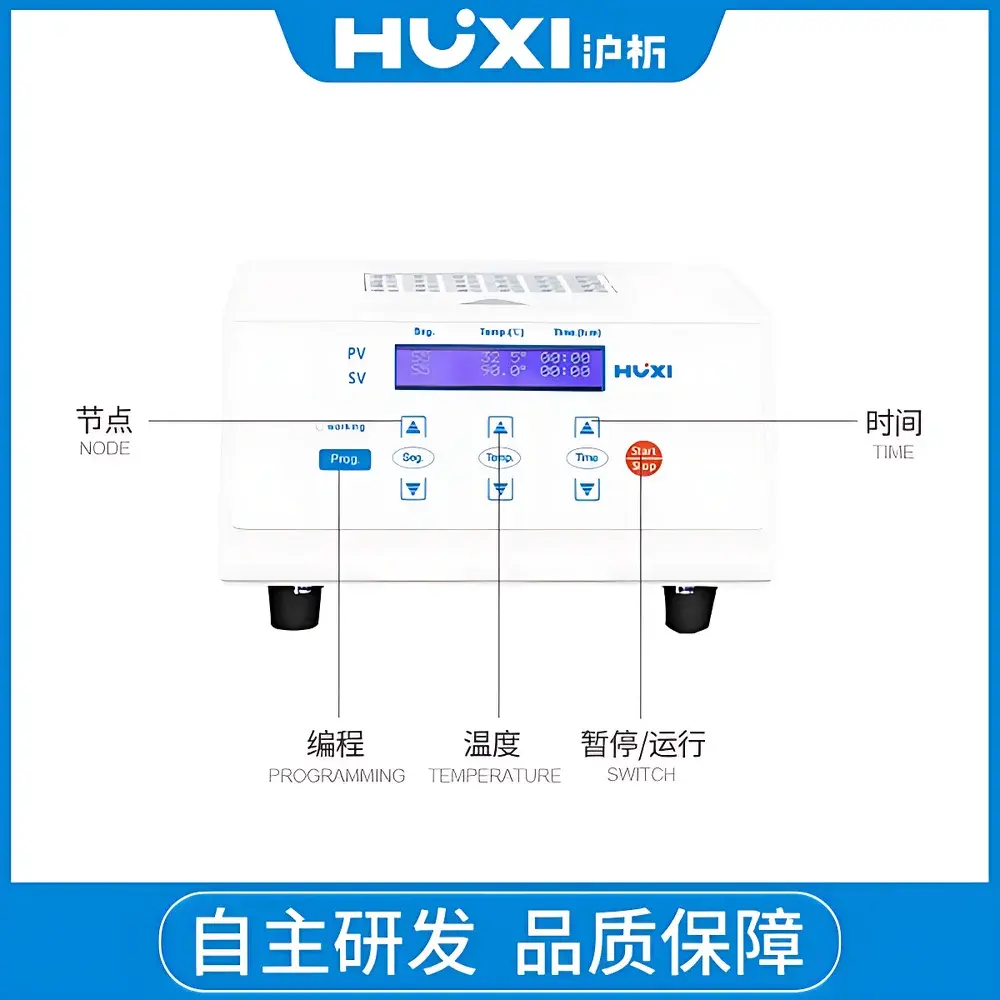
| Control Interface | LCD with 5-segment programmable protocol |
Overview
The HUXI MD200-1 Dry Block Nitrogen Evaporator is an engineered solution for controlled, inert-gas-assisted solvent removal in analytical and preparative laboratories. Unlike water bath or open-vessel evaporation methods, this instrument employs precise dry-block heating combined with regulated nitrogen gas flow to accelerate solvent volatilization while minimizing thermal degradation, oxidation, and cross-contamination. The system operates on the principle of forced convection: nitrogen gas—delivered via adjustable stainless-steel needles—is directed tangentially across the liquid surface of samples held in standardized tubes. Simultaneously, the aluminum heating block maintains uniform thermal transfer to each tube base, enabling reproducible evaporation kinetics across all positions. Designed for compatibility with high-throughput workflows in pharmaceutical QC, environmental testing, clinical research, and omics sample preparation, the MD200-1 supports method consistency under GLP-compliant environments when integrated with documented SOPs and calibration protocols.
Key Features
- Dry-block heating architecture with rapid thermal response (≤15 min to reach 100°C from ambient), eliminating water contamination risks and reducing maintenance overhead compared to water bath systems.
- Independent 12-channel gas control manifold—each needle features individual on/off switching to prevent nitrogen waste during partial-load operation.
- Adjustable gas chamber height accommodates varying solvent volumes; vertical positioning ensures optimal needle-to-surface distance regardless of evaporation stage.
- Modular block design accepts interchangeable aluminum blocks (standard: 12×16.5 mm; optional: HX05–HX22 series) for diverse tube formats including culture tubes, GC vials, and microcentrifuge tubes.
- Integrated safety architecture includes over-temperature cutoff (auto-shutdown above set limit), real-time temperature monitoring with 0.1°C display resolution, and countdown timer with audible end-of-cycle alert.
- LCD interface supports up to five programmable segments—enabling multi-step protocols such as ramp-hold-cool sequences for thermally sensitive analytes like steroids, vitamins, or labile metabolites.
Sample Compatibility & Compliance
The MD200-1 is validated for use with common organic solvents (e.g., acetonitrile, methanol, ethyl acetate, dichloromethane) and aqueous buffers used in LC-MS, GC-MS, ELISA, and immunoassay workflows. Its sealed dry-block construction and low-pressure nitrogen delivery (<0.1 MPa) meet general laboratory safety requirements for handling volatile and moderately hazardous solvents. While not intrinsically rated for Class I Div 1 hazardous locations, the unit may be operated inside certified fume hoods when processing toxic or odorous compounds—its compact footprint (330×200×540 mm) and rear-mounted gas inlet facilitate safe integration into containment systems. For regulatory traceability, users are advised to perform annual temperature uniformity mapping (per ASTM E220 or ISO/IEC 17025 guidelines) and maintain calibration logs aligned with internal QA/QC policies.
Software & Data Management
The MD200-1 operates via embedded firmware without external PC dependency. All operational parameters—including target temperature, dwell time, gas flow initiation logic, and segment transitions—are stored locally in non-volatile memory. The LCD panel provides real-time feedback on actual block temperature, elapsed/remaining time, and active program step. Though no USB or Ethernet connectivity is provided, the device supports audit-ready documentation through manual logbook entries synchronized with batch records. When deployed in FDA-regulated environments, the instrument can be qualified per IQ/OQ protocols; its deterministic behavior, lack of software update dependencies, and absence of cloud-linked components simplify 21 CFR Part 11 compliance planning where electronic signatures and audit trails are managed at the LIMS or ELN layer.
Applications
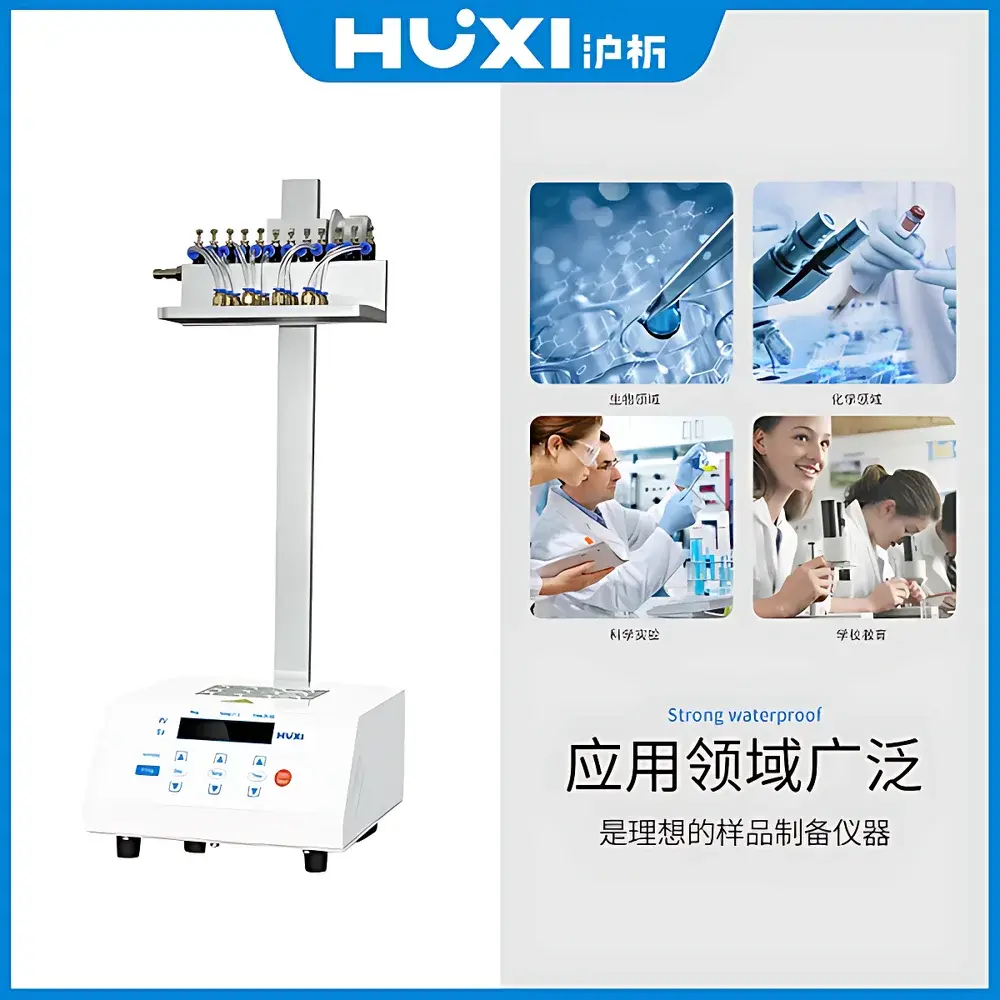
- Routine concentration of extracts prior to LC-MS/MS analysis in bioanalytical labs (e.g., plasma, urine, tissue homogenates).
- Parallel cleanup of pesticide residues in food safety testing per AOAC or EN 15662 methodologies.
- Pre-concentration of environmental water samples for PAHs, PCBs, and organochlorine pesticides.
- High-efficiency solvent exchange steps in solid-phase extraction (SPE) workflows.
- Stabilization of unstable reference standards by oxygen-free drying under inert atmosphere.
FAQ
What types of sample tubes are compatible with the MD200-1?
Standard configuration supports 12×16.5 mm test tubes. Optional blocks (HX05–HX22) accommodate diameters from 10 mm to 29 mm and heights up to 150 mm, including 1.5 mL and 2.0 mL microcentrifuge tubes, 4 mL glass vials, and 15 mL conical tubes.
Can the MD200-1 be used for quantitative recovery studies?
Yes—when paired with gravimetric verification and calibrated gas flow meters, the system demonstrates high inter-run reproducibility (RSD <3% for triplicate n-hexane evaporation at 40°C, 3 L/min). Users should validate recovery rates for each analyte-solvent combination per ICH Q2(R2) guidance.
Is nitrogen purity critical for optimal performance?
Instrument function is unaffected by nitrogen grade; however, ≥99.5% purity is recommended for trace-level analyses to avoid hydrocarbon or moisture interference in downstream detection.
How often should temperature calibration be performed?
Initial qualification requires 9-point mapping across the block surface. Routine verification is recommended quarterly—or before critical batches—using NIST-traceable PT100 probes placed in representative tube positions.



