
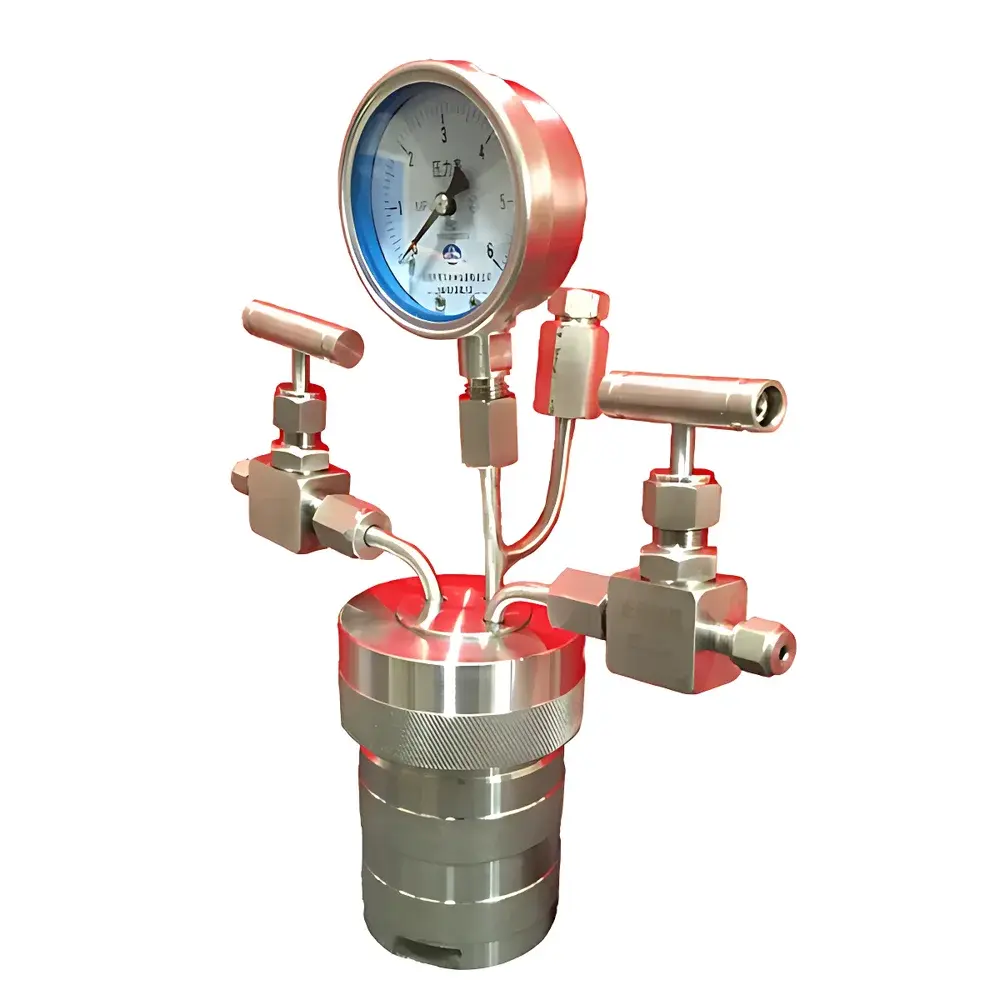
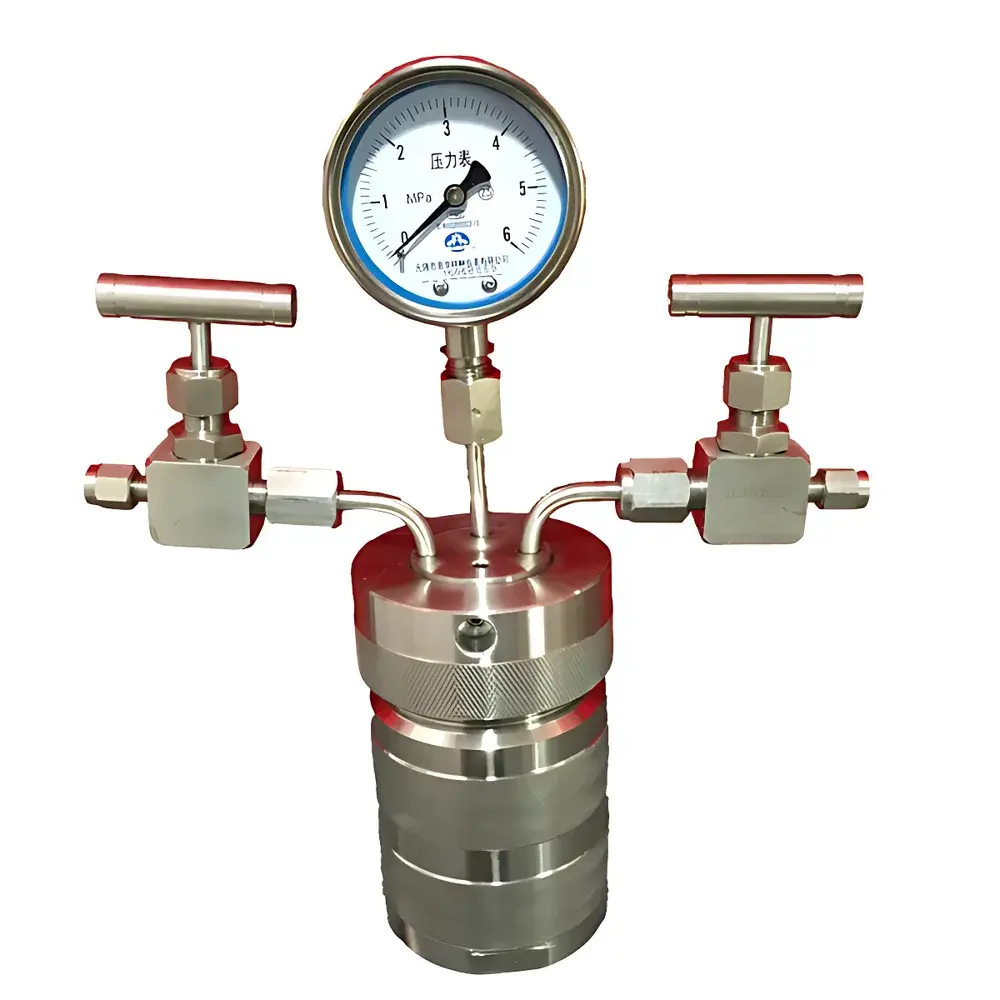
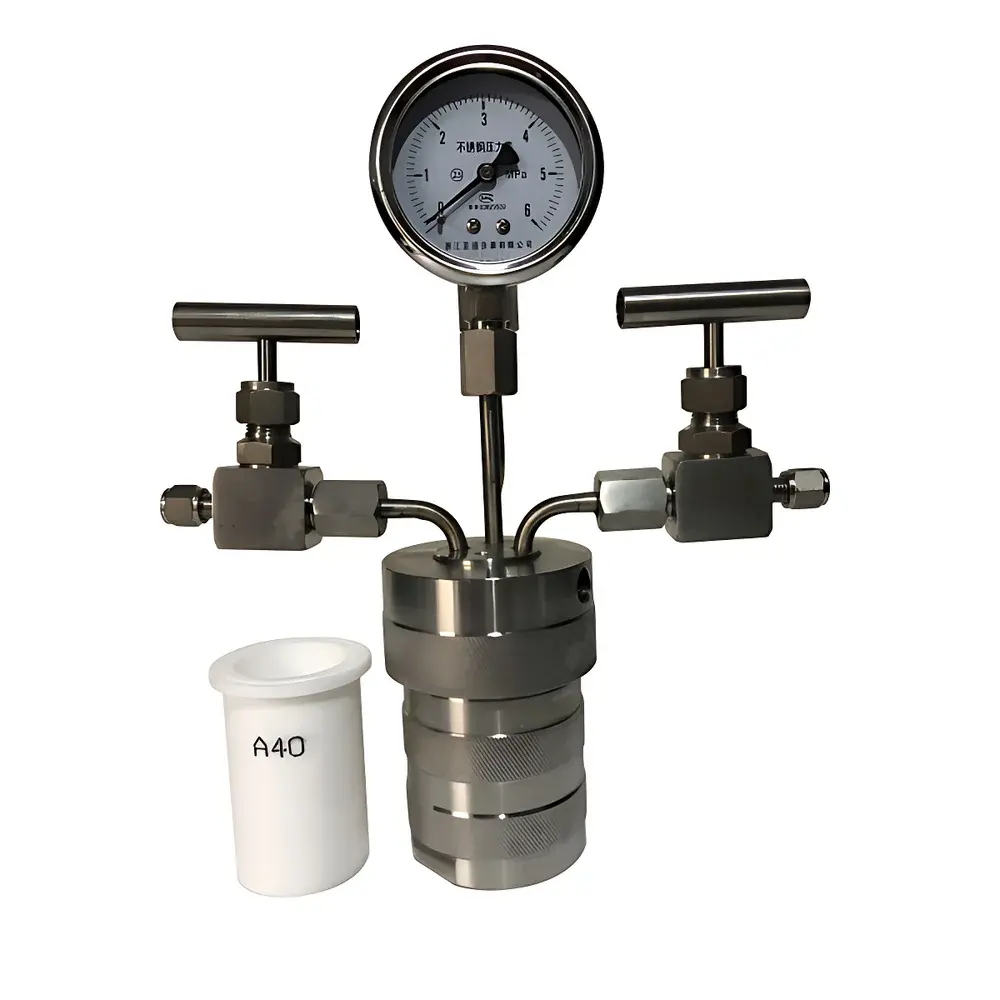
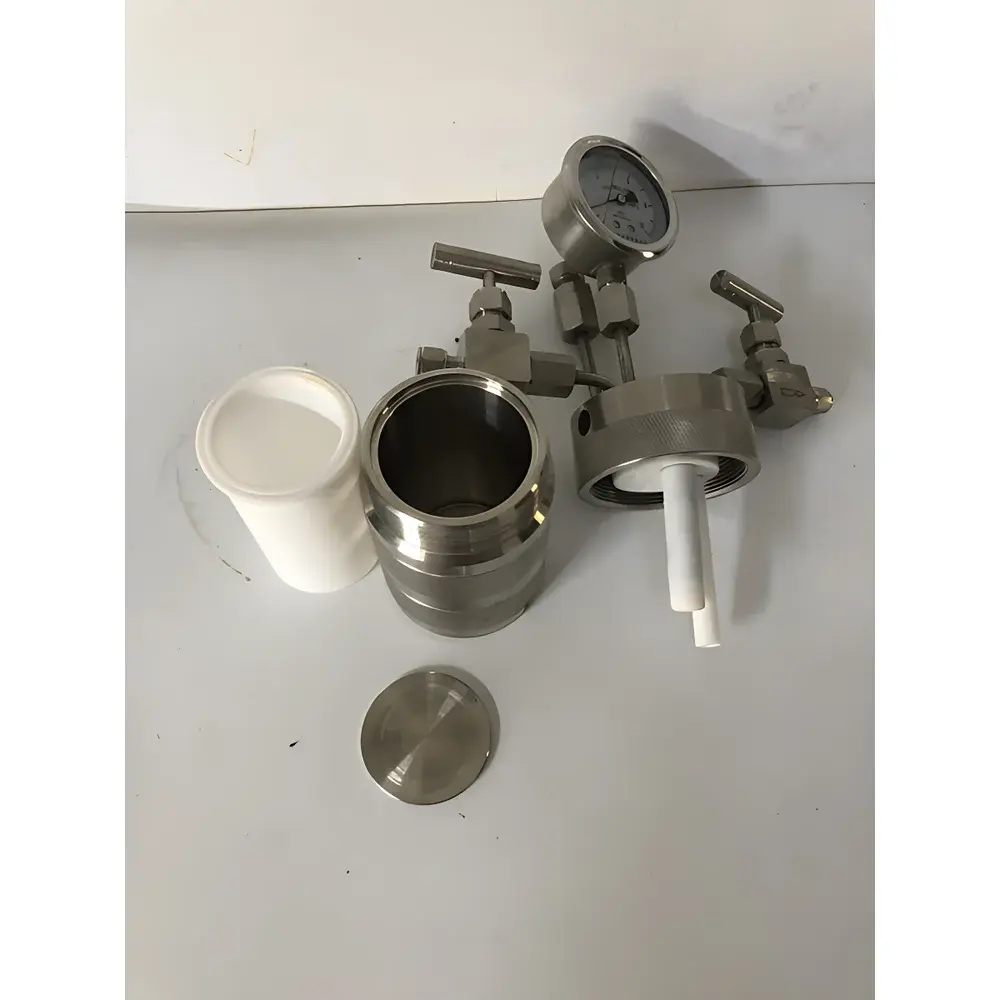
EPS-100ML Gas-Connected Stainless Steel Laboratory Reactor (ZXYIQI)
| Brand | ZXYIQI |
|---|---|
| Origin | Jiangsu, China |
| Manufacturer Type | Authorized Distributor |
| Country of Origin | China |
| Model | EPS-100ML |
| Usable Volume | 100 mL |
| Construction Material | 304 Stainless Steel (body), PTFE inner liner (standard), optional PPL liner |
| Operating Pressure | ≤ 6 MPa |
| Vacuum Capability | Up to –0.1 MPa (absolute) |
| Temperature Range | PTFE liner ≤ 240 °C |
| Inlet/Outlet Fitting | 1/4″ or 1/8″ stainless steel double ferrule compression ports |
| Safety Features | Rupture disc pressure relief device |
| Temperature Monitoring | Integrated 316L thermowell for K-type thermocouple insertion |
| Pressure Monitoring | Full stainless steel analog pressure gauge |
| Sampling | Dedicated stainless steel sampling valve |
| Gas Handling | Dual needle valves (inlet & outlet), ball valve option available |
| Compliance | Designed for GLP-aligned laboratory practice |
Overview
The EPS-100ML Gas-Connected Stainless Steel Laboratory Reactor is a compact, pressure-rated benchtop reactor engineered for controlled gas-phase and liquid-phase chemical reactions under inert, reducing, or oxidizing atmospheres. Based on Couette-type sealed-vessel design principles, it operates via a robust threaded closure mechanism ensuring leak-tight integrity up to 6 MPa. Its core architecture integrates a 304 stainless steel outer shell with a chemically inert, non-reactive polytetrafluoroethylene (PTFE) inner liner—standard configuration—offering resistance to strong acids, bases, halogens, and organic solvents at temperatures up to 240 °C. An optional perfluoroalkoxy alkane (PPL) liner extends thermal stability to 280 °C while maintaining equivalent corrosion resistance. The reactor is explicitly designed for micro-scale synthesis, catalytic screening, hydrogenation, oxidation, and gas-sorption studies where precise atmosphere control, reproducible pressure management, and in situ process monitoring are critical.
Key Features
- Threaded dual-seal closure system with precision-machined 304 SS flange and PTFE gasket ensures high-integrity sealing without torque-dependent over-tightening.
- Dual stainless steel needle valves (inlet and outlet) with 1/4″ or 1/8″ double-ferrule compression fittings enable secure, repeatable gas line connection and rapid atmospheric exchange.
- Integrated full-stainless analog pressure gauge (0–10 MPa range) provides real-time mechanical pressure readout with ±0.1 MPa accuracy under static conditions.
- 316L stainless steel thermowell accommodates standard K-type thermocouples, enabling direct immersion temperature measurement within the reaction zone with axial positioning control.
- Stainless steel sampling valve allows for quantitative, low-contamination withdrawal of gaseous or liquid phase samples during active reaction without depressurization.
- Optional rupture disc safety device rated at 6.5 MPa activates automatically upon overpressure event, complying with ASME BPVC Section VIII Division 1 minimum safety margin requirements.
- Modular accessory compatibility includes custom-length gas inlet/outlet tubing, external heating mantles (up to 300 °C), magnetic stirrer coupling kits, and digital pressure transducer interfaces (0–10 V or 4–20 mA output).
Sample Compatibility & Compliance
The EPS-100ML supports heterogeneous, homogeneous, and catalytic reactions involving volatile organics, aqueous electrolytes, corrosive reagents (e.g., HF,浓H₂SO₄, Cl₂), and reactive gases (H₂, O₂, NH₃, CO, CH₄). Its PTFE liner prevents metal leaching and surface catalysis, preserving stoichiometric fidelity in sensitive syntheses such as Grignard formation or lithium–sulfur battery electrolyte testing. All wetted components meet USP Class VI biocompatibility standards. While not certified to PED 2014/68/EU or ASME U Stamp, the reactor conforms to ISO 17025 clause 5.4.2 for equipment suitability verification and supports audit-ready documentation when used with calibrated external instrumentation (e.g., validated pressure transducers, NIST-traceable thermocouples). It is routinely deployed in laboratories adhering to GLP (OECD Series No. 1) and GMP Annex 11 data integrity expectations when paired with compliant data logging software.
Software & Data Management
The EPS-100ML is a hardware-only platform requiring external instrumentation for digital data acquisition. When integrated with third-party systems—such as LabVIEW-based DAQ modules, Omega iSeries controllers, or Siemens Desigo CC environments—it enables time-synchronized logging of pressure, temperature, and gas flow rate. All analog outputs (pressure gauge signal, thermocouple mV) are compatible with FDA 21 CFR Part 11-compliant electronic lab notebooks (ELNs) including LabArchives and Benchling when configured with user authentication, audit trail activation, and electronic signature workflows. Raw sensor data may be exported in CSV or TDMS format for statistical analysis (e.g., JMP, MATLAB) and kinetic modeling (e.g., Chemkin, Aspen Custom Modeler).
Applications
- Catalytic hydrogenation of unsaturated compounds under controlled H₂ partial pressure (0.1–4 MPa).
- CO₂ capture and conversion studies using amine-functionalized sorbents in sealed batch mode.
- Hydrothermal synthesis of metal–organic frameworks (MOFs) and perovskite nanocrystals.
- Electrolyte stability testing for next-generation batteries (Li–S, Na–ion) under inert argon atmosphere.
- Enzymatic reaction kinetics under regulated O₂ or N₂ headspace conditions.
- Photochemical reactions using quartz viewport-compatible variants (optional).
- Teaching labs: Demonstration of Le Chatelier’s principle, gas law validation (pV = nRT), and safe high-pressure technique fundamentals.
FAQ
What is the maximum recommended fill volume for safe operation?
For optimal mixing, heat transfer, and pressure safety, liquid phase volume should not exceed 66% of total internal liner capacity (i.e., ≤ 66 mL for the EPS-100ML). For exothermic or gas-evolving reactions, limit fill to ≤ 33% (≤ 33 mL).
Can the reactor be used with hydrofluoric acid (HF)?
Yes—with PTFE or PPL liners only. Avoid contact with stainless steel wetted surfaces; ensure all valves, gauges, and fittings are fluoropolymer-lined or fully passivated prior to HF use.
Is automated pressure control possible?
Not natively. However, external mass flow controllers (MFCs) and back-pressure regulators (BPRs) can be integrated upstream/downstream using standard Swagelok or Parker fittings.
Does the reactor support magnetic stirring?
No built-in stirrer, but optional bottom-mounted magnetic coupling adapters (sold separately) allow integration with external hotplate stirrers rated for ≥ 6 MPa containment.
How often should the PTFE liner be replaced?
Inspect before each use for discoloration, cracking, or swelling. Replace after 50 cycles at >200 °C or immediately following exposure to aggressive oxidizers (e.g., fuming nitric acid, peroxymonosulfuric acid).



