
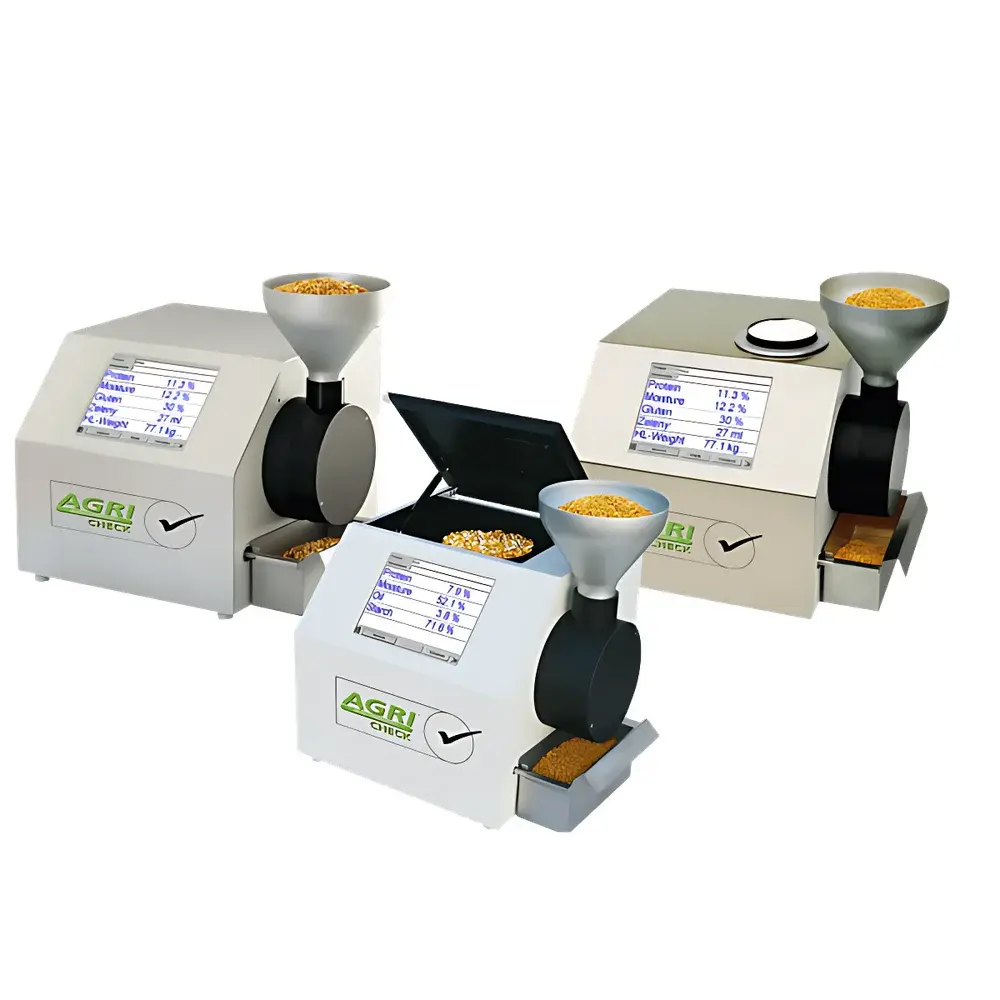
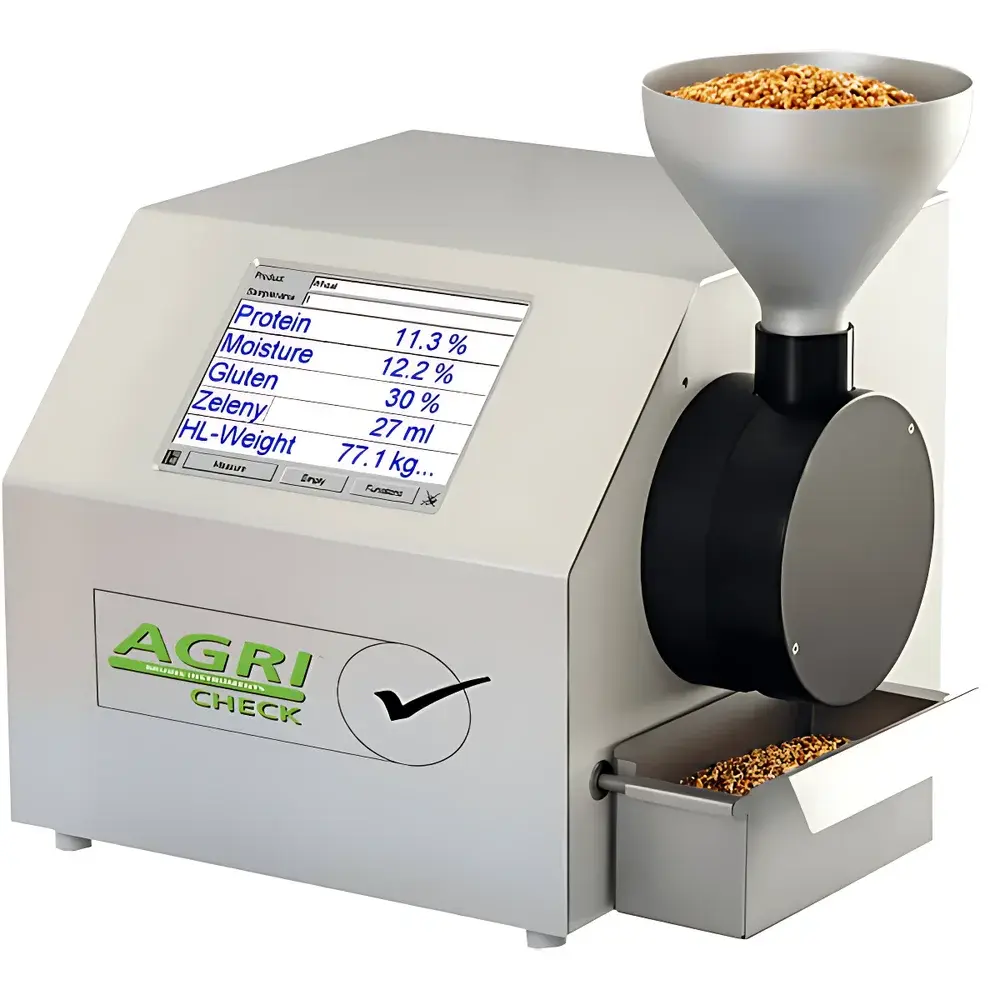
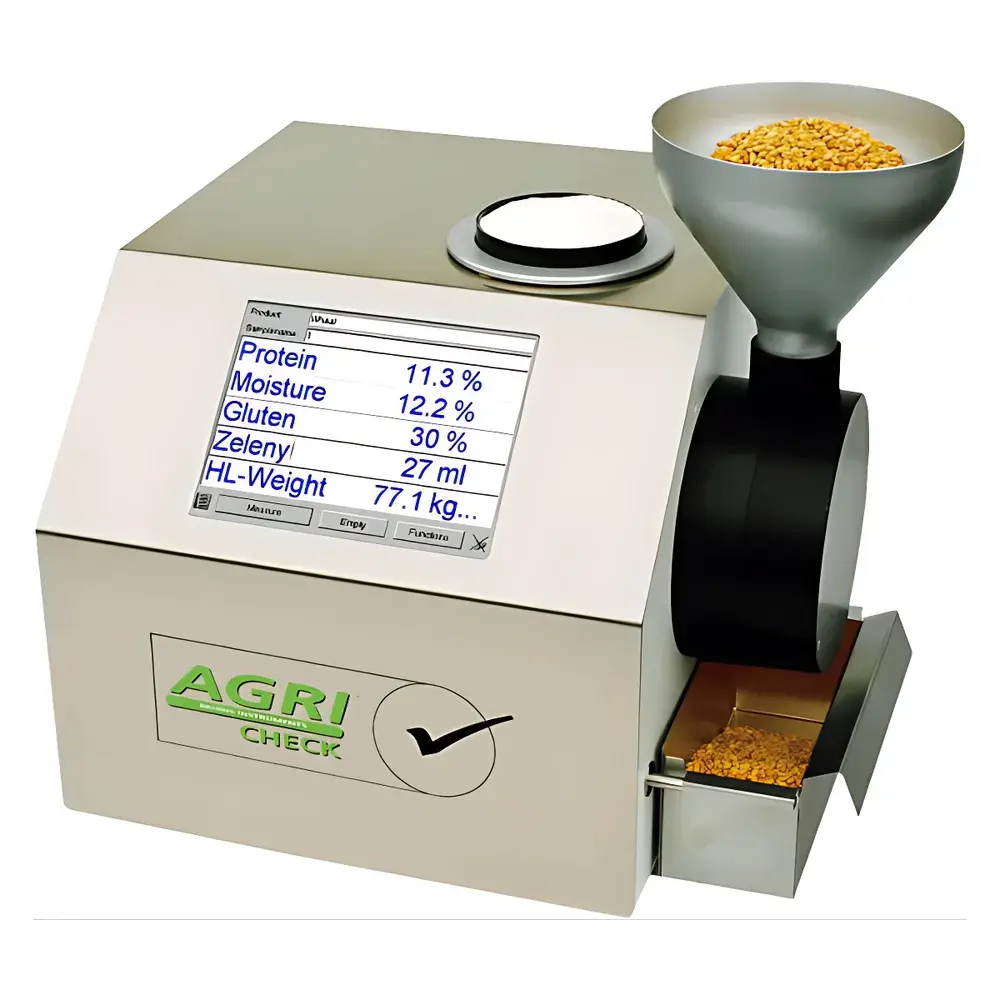
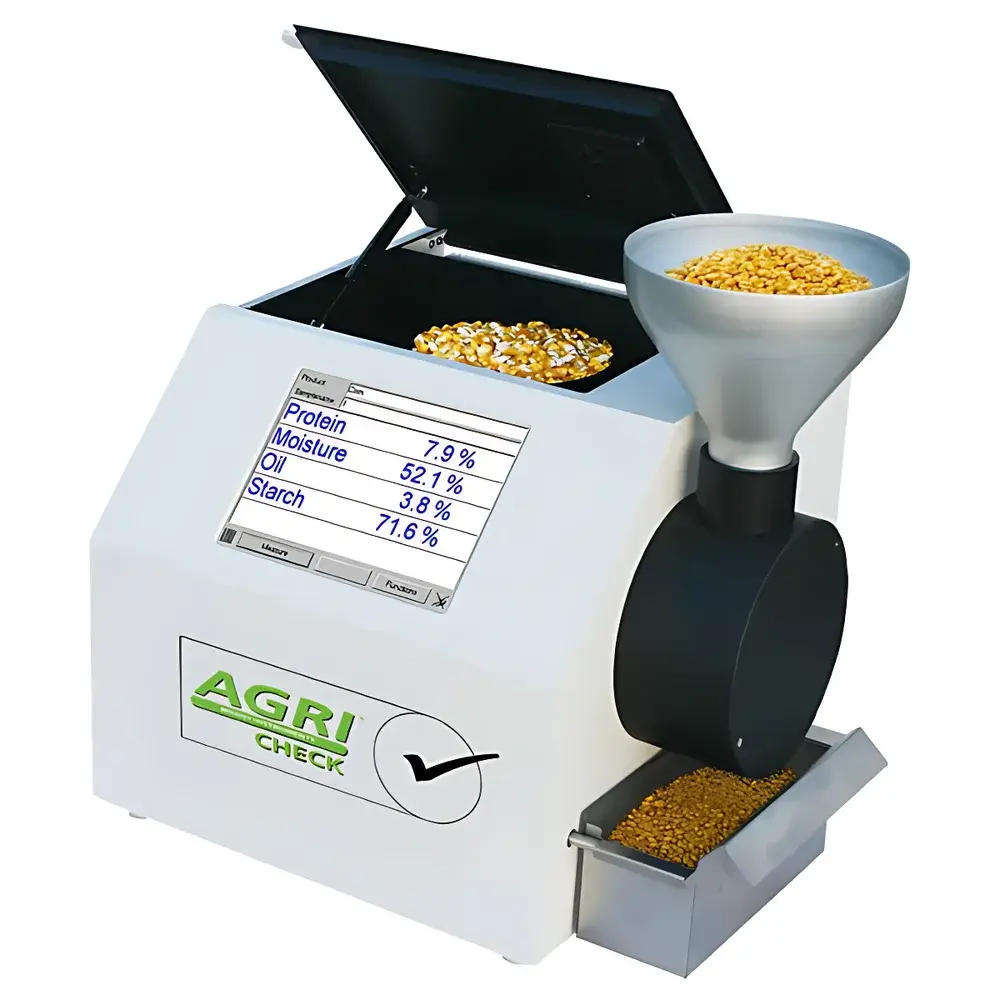
Agricheck XL/Plus Near Infrared Spectrometer by KPM Bruins
| Brand | KPM Bruins |
|---|---|
| Origin | USA |
| Model | Agricheck XL/Plus |
| Instrument Type | Laboratory NIR Spectrometer |
| Optical Design | Grating Scanning System |
| Wavelength Range | 730–2500 nm |
| Scan Time | 10–60 s |
| Data Sampling Interval | 1 nm |
| Application Domain | Agricultural Commodities, Feed & Food Processing, Research & Academia |
| Compliance | Designed for ISO 12099, ASTM D6342, and AOAC Official Methods alignment |
Overview
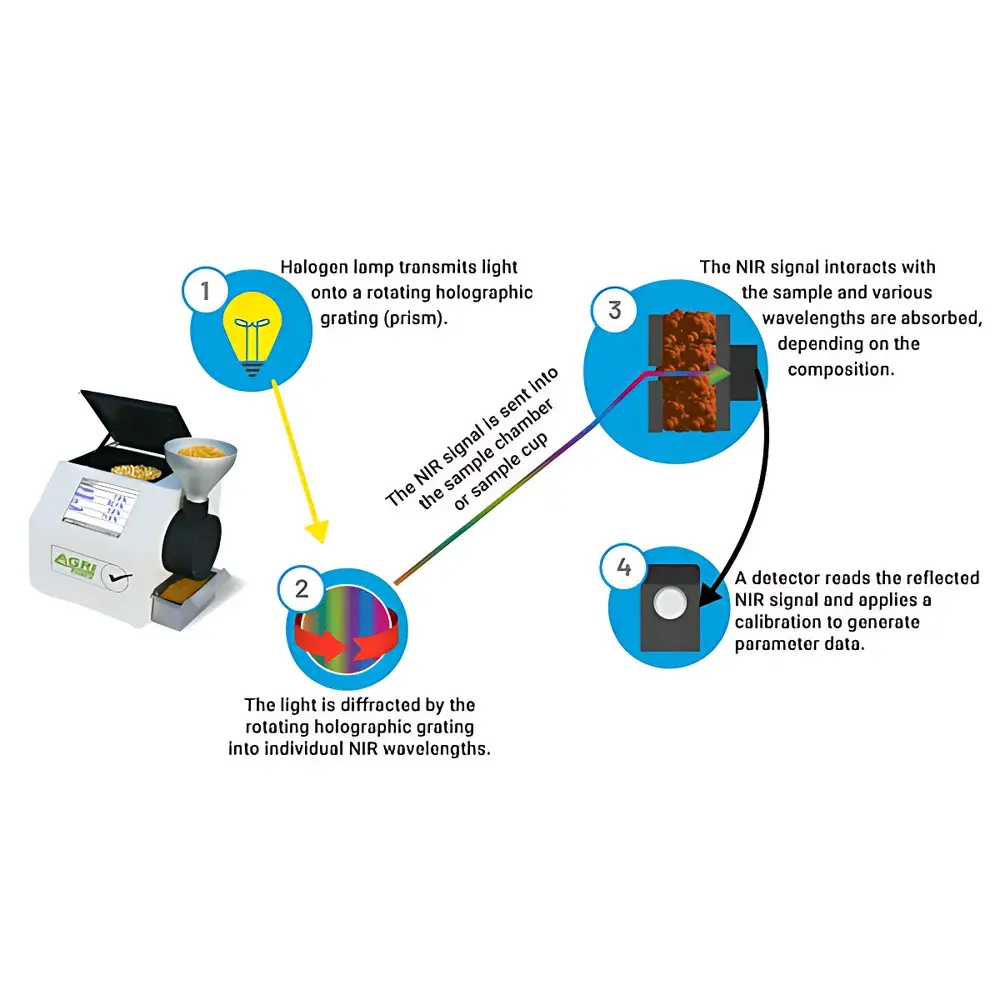
The Agricheck XL/Plus Near Infrared Spectrometer, engineered by KPM Bruins in the United States, is a laboratory-grade grating-scanning NIR instrument optimized for rapid, non-destructive compositional analysis of agricultural commodities. Operating on the principle of diffuse reflectance and transmission spectroscopy across the short-wave near-infrared region (730–2500 nm), it captures molecular vibrational overtones and combination bands—primarily from O–H, N–H, and C–H functional groups—to quantify key quality parameters in intact or ground samples. Its optical architecture employs a high-stability, linear grating monochromator with 1 nm spectral resolution, ensuring consistent wavelength registration and long-term photometric reproducibility. Unlike filter-based or diode-array systems, the scanning design minimizes stray light and enables precise calibration transfer across instruments—critical for multi-site laboratories and contract testing facilities serving feed mills, grain elevators, flour processors, and university research programs.
Key Features
- Grating-scanning optical system with 1 nm data sampling interval, delivering high spectral fidelity for robust chemometric model development and validation
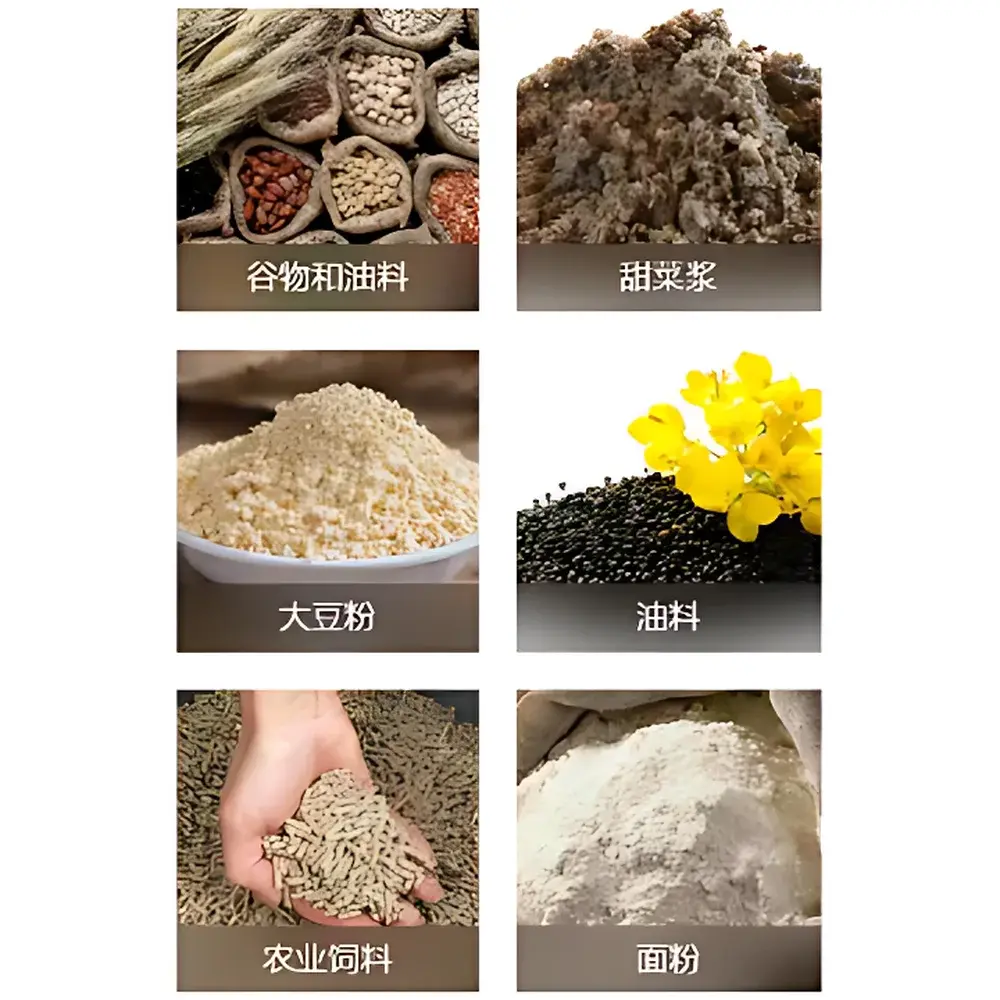
- Dual-mode measurement capability: transmission mode for whole grains (e.g., wheat, corn, soybeans) and reflectance mode for milled flours, meal, pellets, beet pulp, and oilseed cakes
- Integrated optional bulk density module for simultaneous determination of test weight (kg/hL or lb/bu), aligned with USDA and ISO 7970 protocols
- 10.1-inch capacitive touchscreen interface with intuitive, icon-driven workflow—designed for operation by technicians with minimal spectroscopy training
- Rugged, temperature-stabilized optical bench and sealed detector housing ensure stable performance under variable lab conditions (15–30 °C, 30–80% RH)
- Pre-installed global calibration libraries covering >35 cereal, oilseed, and forage matrices—including hard red winter wheat, yellow dent corn, extruded soybean meal, and desugared beet pulp—validated per ISO 12099:2017 guidelines
Sample Compatibility & Compliance
The Agricheck XL/Plus accommodates heterogeneous, high-moisture, and fibrous agricultural materials without homogenization or chemical reagents. It supports sample forms ranging from whole kernels (3–12 mm diameter) to coarse-ground meals (<2 mm particle size) and semi-liquid by-products such as wet distillers grains (WDGS) and pressed甜菜浆 (beet pulp). All factory calibrations are developed using reference methods traceable to AOAC International, AACC, and ICC standards. The instrument meets the instrumental requirements outlined in ISO 12099:2017 (Animal feeding stuffs, cereals and milled cereal products — Guidelines for the application of near infrared spectroscopy) and ASTM D6342 (Standard Practice for Determination of Moisture and Volatile Matter in Animal Feeds by NIR). While not inherently 21 CFR Part 11 compliant, its software architecture supports audit trail configuration and user access controls when deployed in GLP/GMP environments.
Software & Data Management
The proprietary Agricheck Analysis Suite runs on Windows 10 IoT Enterprise and provides full lifecycle support for method development, validation, and routine operation. It includes PCA-based outlier detection, PLS regression modeling tools, and automated calibration update workflows. All spectra are stored in vendor-neutral .jdx format; quantitative results export to CSV, Excel, or LIMS via configurable ODBC drivers. Raw spectral data, prediction confidence intervals, and residual plots are retained with time/date stamps, operator ID, and instrument serial number—enabling full traceability. For regulated users, optional software modules add electronic signatures, change control logs, and versioned calibration archives compliant with FDA expectations for analytical instrument qualification (AIQ).
Applications
- Grain receiving & blending: Real-time moisture, protein, and test weight screening of truck- or rail-delivered lots prior to storage or milling
- Flour mill QC: Monitoring starch damage, ash content, and gluten index in durum semolina and soft wheat flour batches
- Feed formulation: Rapid quantification of crude protein, ether extract, NDF, and free fatty acids (FFA) in soybean meal, canola meal, and DDGS
- Research applications: Supporting breeding programs through high-throughput phenotyping of kernel composition traits (e.g., lysine in maize, oleic acid in sunflower)
- By-product valorization: Assessing nutritional value and stability indicators (e.g., peroxide value, Maillard reaction products) in dried beet pulp and brewers’ spent grain
FAQ
What reference methods are used to develop Agricheck calibrations?
Calibrations are built using primary reference data generated by AOAC-approved wet chemistry methods (e.g., Kjeldahl for protein, Soxhlet for fat, AACC 44-15A for moisture) and validated against independent inter-laboratory studies.
Can the Agricheck XL/Plus be integrated into an existing LIMS?
Yes—via standard ODBC connectivity and configurable CSV/XML export templates compatible with Thermo Fisher SampleManager, LabVantage, and STARLIMS platforms.
Is method transfer possible between different Agricheck units?
Yes—the grating-scanning architecture and factory spectral alignment protocol enable direct calibration transfer with <±0.5% RMSEP deviation across instruments, verified per ISO 12099 Annex B.
Does the system require regular wavelength recalibration?
No—each unit undergoes permanent wavelength calibration at manufacture using rare-earth oxide filters; annual verification with NIST-traceable standards is recommended but not mandatory for routine use.
What maintenance is required for the optical system?
The sealed monochromator and InGaAs detector require no user-serviceable optics; only periodic cleaning of the sample port window and calibration check with certified reference tiles every 6 months.
Related Products





