
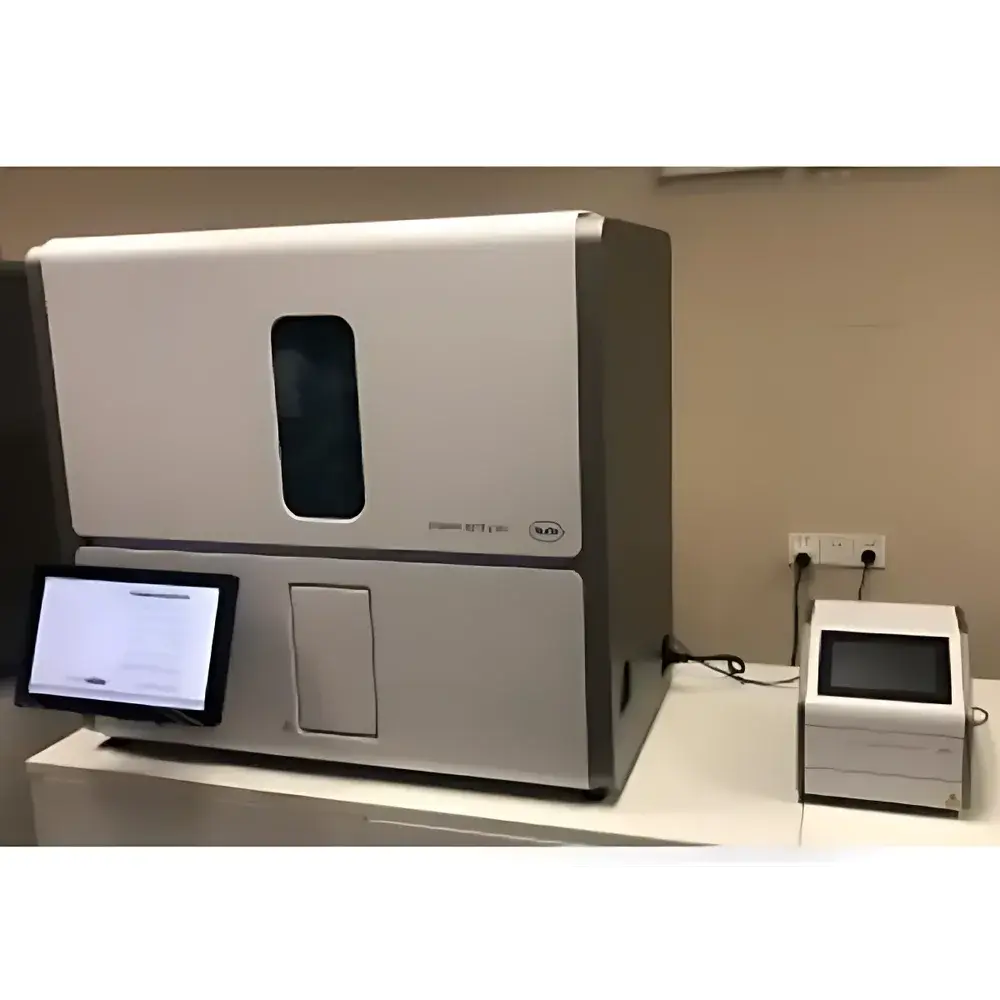
Roche Digital PCR Digital LC
| Brand | Roche Diagnostics |
|---|---|
| Origin | Switzerland |
| Instrument Type | Digital PCR System |
| Model | Roche Digital LC |
| Regulatory Status | CE-IVD, FDA-cleared for in vitro diagnostic use (where applicable) |
| Compliance | ISO 13485, IVD Directive 98/79/EC, aligned with CLIA and CAP laboratory requirements |
Overview
The Roche Digital PCR Digital LC is a fully integrated, high-precision digital polymerase chain reaction (dPCR) platform engineered for absolute nucleic acid quantification without reliance on standard curves. Unlike conventional qPCR, this system partitions each sample into >20,000 nanoliter-scale reaction chambers—either via microfluidic chip-based partitioning or oil-emulsion droplet generation—enabling binary (positive/negative) endpoint detection of target DNA or RNA molecules. Each partition undergoes independent amplification under stringent thermal cycling conditions, followed by fluorescence-based endpoint readout using dual-channel optical detection (FAM/HEX or equivalent). The system delivers single-molecule sensitivity, exceptional precision at low copy numbers (<10 copies/μL), and robust reproducibility across inter-run and inter-laboratory settings—making it particularly suitable for rare mutation detection, copy number variation (CNV) analysis, residual disease monitoring, and reference material characterization.
Key Features
- Integrated workflow architecture: Sample preparation, partitioning, thermal cycling, and fluorescence imaging are consolidated into a single instrument footprint—minimizing manual handling and contamination risk.
- Dual-channel high-sensitivity optical detection: Optimized for multiplexed assays using two spectrally distinct fluorophores, supporting simultaneous detection of target and reference sequences within the same partition.
- Automated data analysis pipeline: Embedded software performs automatic thresholding, Poisson correction, and confidence interval estimation per sample—outputting absolute concentration (copies/μL), coefficient of variation (CV), and statistical confidence metrics.
- Thermally stable block design: Precision-machined aluminum heating block with closed-loop PID control ensures consistent ramp rates and minimal thermal overshoot during cycling.
- Modular consumables ecosystem: Compatible with Roche-certified microfluidic chips and reagent kits—including probe-based and intercalating dye chemistries—validated for clinical and research use cases.
- Secure audit trail functionality: Full electronic record retention with user authentication, timestamped event logging, and change tracking—supporting compliance with 21 CFR Part 11, ISO 15189, and GLP/GMP documentation standards.
Sample Compatibility & Compliance
The Digital LC accepts input nucleic acid samples ranging from purified genomic DNA, fragmented cfDNA, cDNA, and viral RNA (following reverse transcription). It supports both singleplex and duplex assay formats across human, microbial, and synthetic targets. All consumables and protocols are CE-marked as IVD devices and have received FDA clearance for specific oncology and infectious disease indications. The platform adheres to ISO 13485 quality management system requirements and is validated for use in CLIA-certified laboratories. Method verification documentation—including limit of detection (LoD), linearity, precision, and specificity—is provided per Roche’s technical validation reports and aligns with ISO/IEC 17025 guidelines for testing laboratories.
Software & Data Management
Control and analysis are managed through Roche’s proprietary Digital PCR Software Suite (v3.x or later), installed locally on a Windows-based workstation bundled with the instrument. The software enables method setup, real-time run monitoring, automated QC flagging (e.g., partition saturation, background drift), and export of raw fluorescence intensity matrices in CSV or HDF5 format. Data files include embedded metadata (user ID, timestamp, instrument serial number, calibration version) and support encrypted storage. For enterprise integration, the system offers HL7 and ASTM E1384-compliant interfaces for LIS connectivity and optional cloud-based backup via Roche’s secure, GDPR- and HIPAA-aligned data vault—subject to local regulatory approval and institutional IT policy review.
Applications
- Minimal residual disease (MRD) monitoring in hematologic malignancies using patient-specific fusion transcripts or SNV markers.
- Non-invasive prenatal testing (NIPT) for fetal aneuploidy and monogenic disorders via maternal plasma cfDNA.
- Quantitative assessment of gene editing efficiency (e.g., CRISPR-Cas9 indel frequency) in cell line development.
- Standardization of molecular reference materials for external quality assessment (EQA) schemes.
- Low-abundance pathogen detection in immunocompromised hosts—including BK virus, CMV, and SARS-CoV-2 variants.
- Validation of NGS library quantification prior to sequencing—reducing over-clustering and improving run efficiency.
FAQ
Is the Digital LC compliant with FDA 21 CFR Part 11 for electronic records and signatures?
Yes—the system includes configurable user roles, biometric or token-based authentication, full audit trail generation, and electronic signature capture for critical actions such as result approval and method validation.
Can the instrument be integrated into a LIMS environment?
Yes—via standardized ASTM E1384 or HL7 v2.x messaging protocols; integration requires coordination with Roche Field Application Scientists and site-specific validation per CAP/CLIA requirements.
What maintenance intervals are recommended for optimal performance?
Preventive maintenance is advised every 12 months or after 1,000 runs, including optical alignment verification, thermal block calibration, and fluidic system integrity testing—performed by Roche-certified service engineers.
Are training resources available for new users?
Roche provides on-site initial commissioning, operator certification workshops, and access to an online learning portal with video modules, SOP templates, and troubleshooting guides—all included in the standard service agreement.





