
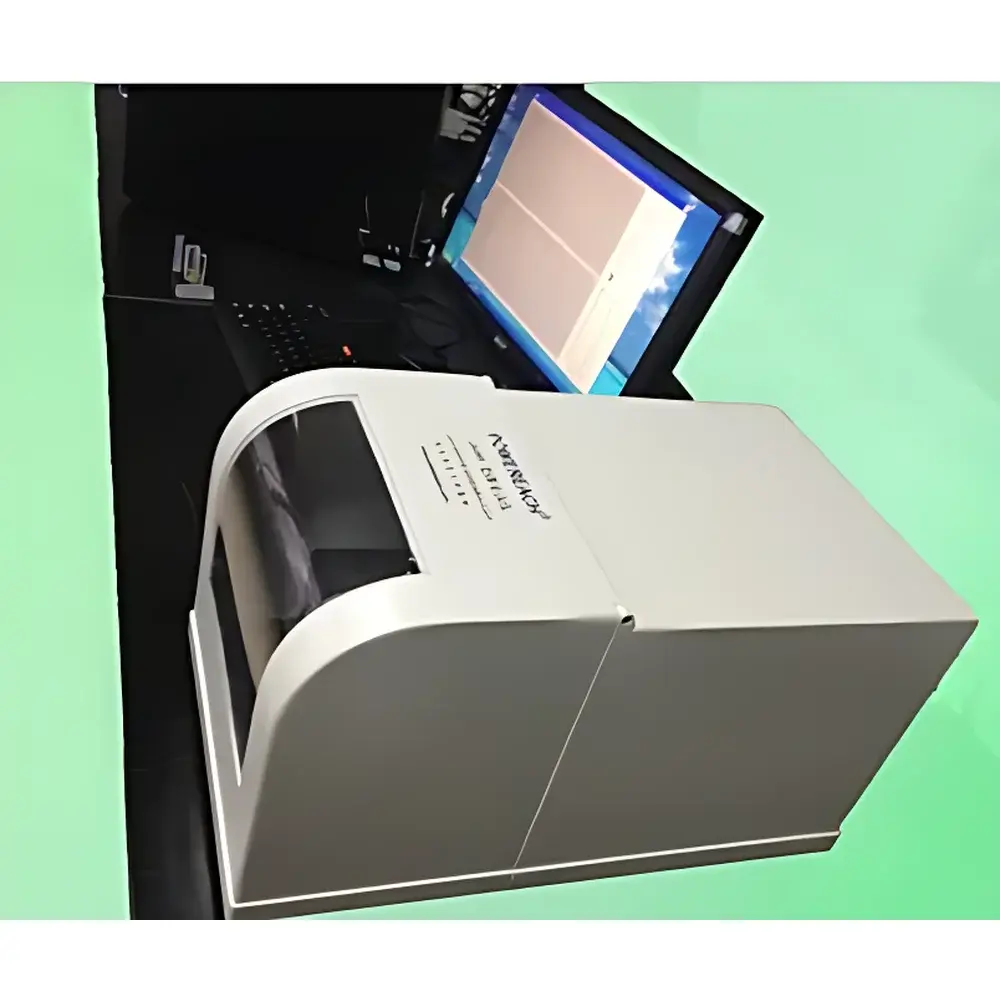
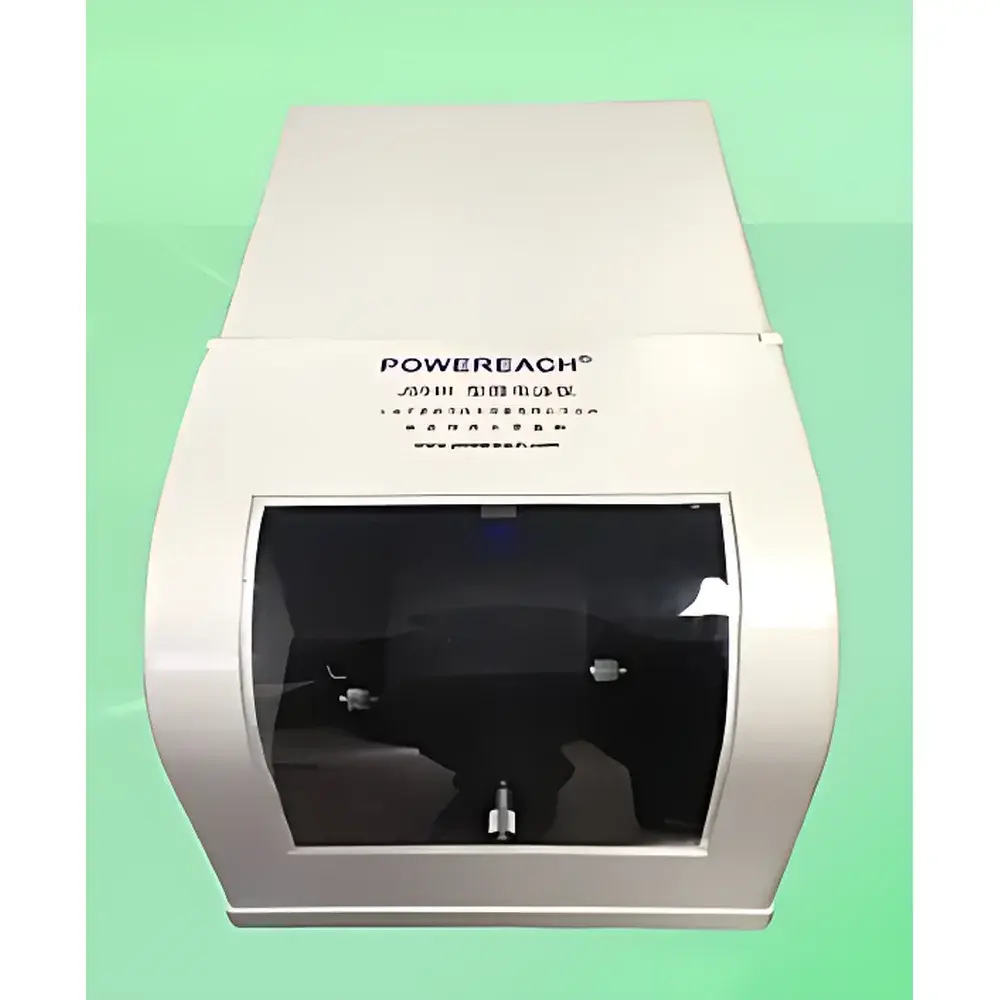
Zeta Potential Analyzer JS94HM by ZYKX
| Brand | ZYKX |
|---|---|
| Model | JS94HM |
| Measurement Principle | Laser Doppler Electrophoretic Light Scattering |
| Zeta Potential Range | ±3000 mV |
| Accuracy | ±5% |
| pH Range | 0.00–14.00 |
| pH Resolution | 0.1 pH |
| Zeta Resolution | 1 mV |
| Temperature Range | −5.0 to 105.0 °C (±0.1 °C) |
| Optional Thermostatic Stage | −10 to 95 °C |
| Sample Volume per Test | 0.5 mL |
| Optical System | Low-power semiconductor laser (blue/green, <100 µW), 1200× magnification |
| Voltage Polarity Switching Time | 0.30–1.20 s (adjustable) |
| Sampling Duration | 3–10 s |
| Power Supply | 220 V AC, 50 Hz, 150 W |
| Compliance | Designed for GLP-compliant lab environments |
| Environmental Requirement | Vibration-isolated platform, temperature- and dust-controlled room |
Overview
The ZYKX JS94HM Zeta Potential Analyzer is a precision electrophoretic instrument engineered for the quantitative determination of zeta potential (ζ) in colloidal dispersions and emulsions. It operates on the principle of laser Doppler electrophoretic light scattering (LDELS), where charged particles undergo electrophoretic motion under an applied electric field, and their velocity is measured via Doppler shift analysis of scattered monochromatic light. This velocity—converted to electrophoretic mobility—is directly related to surface charge density at the hydrodynamic shear plane. The system supports both aqueous and non-aqueous dispersions within the particle size range of 0.5–50 µm, enabling robust characterization of nanoparticles, liposomes, polymer colloids, and biological macromolecules. Its design emphasizes measurement reproducibility, minimal sample consumption, and operational stability in regulated laboratory settings.
Key Features
- Integrated micro-electrophoresis cell with 0.5 cm-thick optical-grade glass walls and embedded Ag/AgCl, Pt, and Ti electrodes—surface-treated for electrochemical stability and low polarization.
- Optimized microfluidic geometry validated via computational fluid dynamics (CFD) modeling to suppress electro-osmotic flow and eliminate stagnant layer artifacts.
- High-sensitivity near-field optical detection system: semiconductor-based blue/green laser (<100 µW output) minimizes thermal perturbation; 1200× real-time magnification enables resolution of sub-micron particles.
- Programmable bipolar voltage source with adjustable polarity reversal timing (0.30–1.20 s), minimizing electrode polarization while ensuring rapid data acquisition (3–10 s per measurement).
- Dual-channel real-time temperature monitoring using calibrated Pt100 probes; automatic thermal compensation applied during ζ calculation per ISO 13099-2:2012.
- Computer-controlled image capture and gray-scale analysis of four sequential electrophoretic frames (two forward, two reverse), supporting mobility vector averaging and outlier rejection.
Sample Compatibility & Compliance
The JS94HM accommodates a broad spectrum of dispersed systems including metal oxides (e.g., SiO₂, TiO₂), polymeric nanoparticles (PLGA, PS), lipid vesicles, protein aggregates, and mineral suspensions. It supports pH-adjusted measurements across the full aqueous scale (0.00–14.00) and integrates seamlessly into quality control workflows compliant with ISO 20998-2, ASTM D7825, and USP . While not FDA 21 CFR Part 11–certified out-of-the-box, its software architecture supports audit-trail configuration, electronic signature integration, and raw data export in CSV/ASCII formats—enabling validation per GMP/GLP requirements when deployed with documented SOPs.
Software & Data Management
The instrument is operated via Windows-based acquisition and analysis software featuring automated calibration routines, batch processing, and statistical reporting. Raw video frames and mobility time-series are stored with metadata (date/time, operator ID, temperature, pH, voltage settings). Export options include ζ distribution histograms, mobility vs. pH titration curves, and isoelectric point (IEP) estimation via polynomial fitting. Data files conform to IUPAC-recommended formatting standards and support traceability through embedded timestamps and instrument serial identifiers. Software updates are delivered via secure HTTPS channels with version-controlled release notes.
Applications
This analyzer serves critical roles in formulation development (e.g., optimizing colloidal stability of drug delivery systems), surface modification studies (e.g., quantifying grafting efficiency of silanes or PEG chains), mineral processing (e.g., flotation reagent selection based on ζ-pH profiles), and environmental science (e.g., predicting nanoparticle fate in natural waters). In academic research, it supports teaching modules on interfacial electrochemistry, colloid science, and soft matter physics. Industrial users leverage its low sample volume requirement (0.5 mL/test) and rapid turnaround for high-throughput screening of surfactant libraries or pH-responsive polymers.
FAQ
What particle size range is suitable for accurate zeta potential measurement on the JS94HM?
The system is optimized for particles between 0.5 µm and 50 µm in aqueous media. Submicron particles require careful dilution and refractive index matching to minimize multiple scattering effects.
Does the instrument support non-aqueous solvents?
Yes—provided the solvent has sufficient conductivity (≥10 µS/cm) and optical clarity at 450–532 nm. Common compatible media include ethanol, isopropanol, and low-viscosity silicone oils.
How is electrode polarization mitigated during measurement?
Through programmable low-frequency bipolar voltage switching (0.3–1.2 s period) combined with high-purity noble-metal electrodes and surface passivation protocols.
Can the system determine isoelectric point (IEP) automatically?
Yes—the integrated pH titration module allows sequential ζ measurements across a user-defined pH gradient, with IEP calculated as the zero-crossing point of the fitted ζ vs. pH curve.
Is third-party software integration possible?
Raw data export (CSV, ASCII) and COM/ActiveX interfaces enable integration with LIMS platforms, MATLAB, or Python-based analysis pipelines for custom modeling and statistical validation.



