
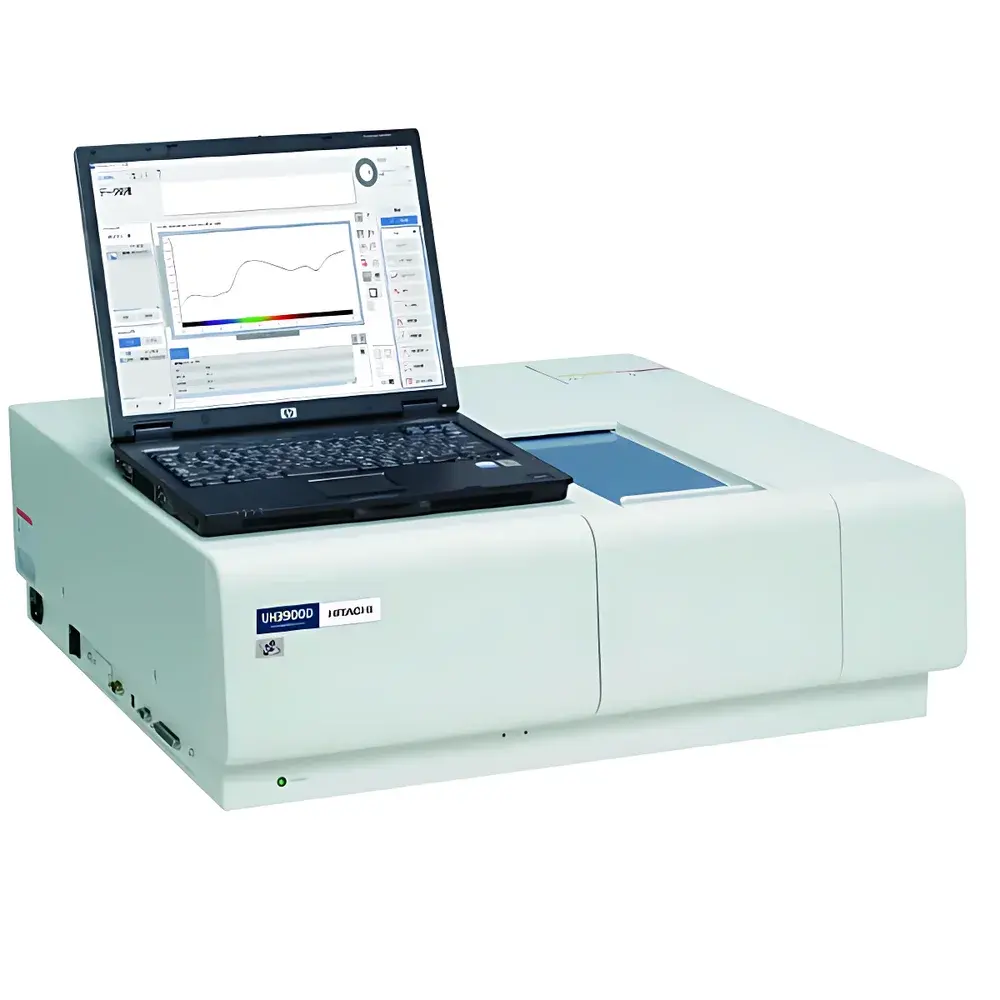
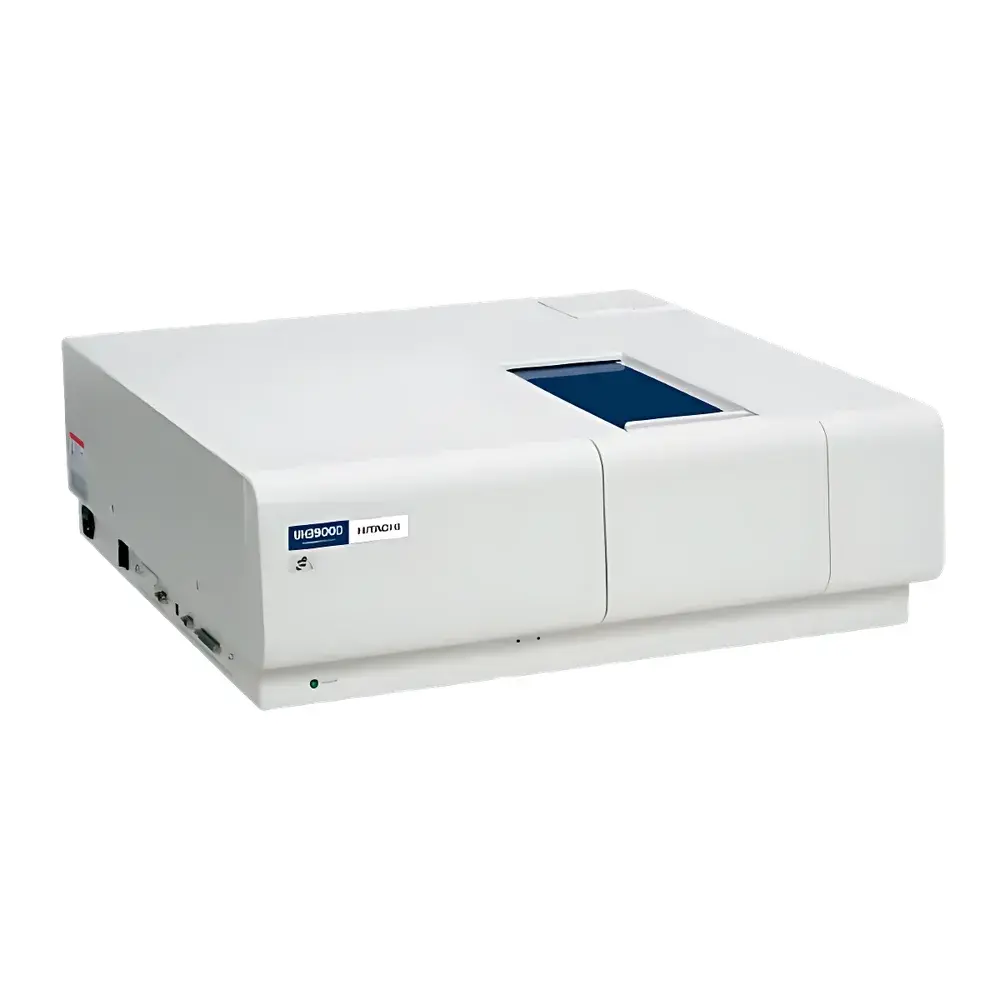
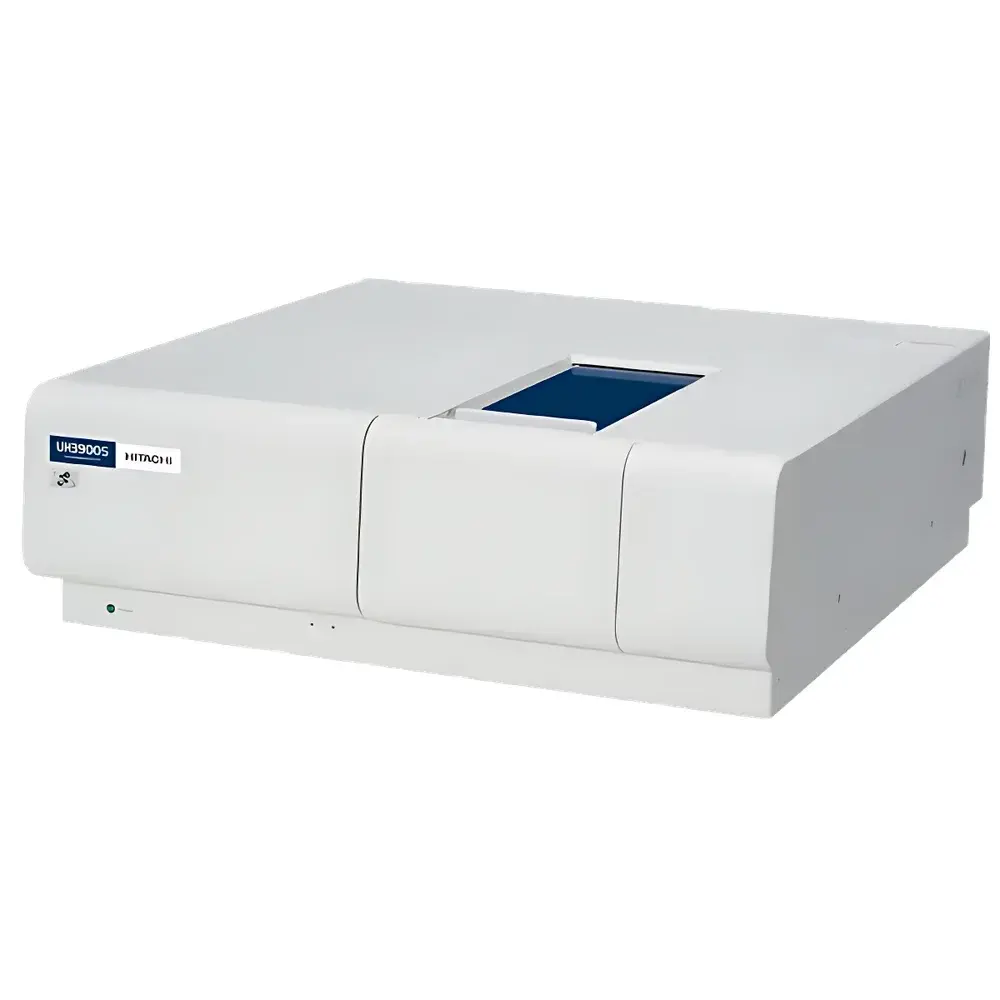
Hitachi UH3900S / UH3900D Dual-Beam UV-Vis-NIR Spectrophotometer
| Brand | Hitachi |
|---|---|
| Origin | Japan |
| Manufacturer Type | Original Equipment Manufacturer (OEM) |
| Instrument Architecture | Dual-beam |
| Detector Type | Photomultiplier Tube (PMT) |
| Wavelength Range | 190–2600 nm |
| Wavelength Accuracy | ±0.1 nm |
| Spectral Bandwidth | 0.1 / 0.5 / 1 / 2 / 4 / 5 nm |
| Automation Level | Motorized Wavelength Scanning |
| Monochromator Configuration | UH3900S — Single Monochromator |
Overview
The Hitachi UH3900S and UH3900D are high-performance dual-beam ultraviolet-visible-near infrared (UV-Vis-NIR) spectrophotometers engineered for precision absorbance, transmittance, and reflectance measurements across a broad spectral range (190–2600 nm). These instruments employ a Seya-Namioka optical configuration integrated with aberration-corrected concave holographic gratings—eliminating the need for additional focusing mirrors and thereby minimizing optical loss and spectral distortion. The dual-beam architecture ensures real-time compensation for source intensity drift and detector sensitivity variation by simultaneously directing split monochromatic light to both reference and sample paths. This design delivers exceptional baseline stability and photometric accuracy, particularly critical for kinetic studies, quantitative assays, and regulatory-compliant workflows in pharmaceutical, environmental, and materials laboratories.
Key Features
- Dual-beam optical system with automatic lamp switching between deuterium (D2) and tungsten-halogen (WI) sources for seamless UV–Vis–NIR coverage
- Aberration-corrected concave holographic grating monochromator—optimized for high throughput and low stray light (<0.0001% at 220 nm)
- Selectable monochromator configurations: UH3900S (single monochromator) for general-purpose analysis; UH3900D (dual monochromator) for ultra-low stray light applications requiring high absorbance linearity up to 4.0 AU
- Photomultiplier tube (PMT) detector with low-noise electronics enabling high signal-to-noise ratio (S/N > 400:1 at 0.5 AU, 260 nm, 2 nm SBW)
- Six-step adjustable slit widths (0.1–5 nm) supporting resolution-flexible method development per ASTM E275 and ISO 9001 calibration requirements
- Motorized wavelength scanning (up to 300 nm/min on UH3900D) with ±0.1 nm wavelength accuracy traceable to NIST-certified holmium oxide and didymium filters
Sample Compatibility & Compliance
The UH3900 series accommodates diverse sample formats—including cuvettes (10 mm to 5 µL microvolume), solid reflectance accessories (integrating sphere, specular reflectance stage), and fiber-optic probes—enabling direct analysis of liquids, powders, thin films, and opaque materials. Its optical path is optimized for microvolume analysis: focused beam geometry maintains consistent illumination across 5–50 µL sample volumes, ensuring reproducible quantification of nucleic acids, proteins, and nanoparticles without dilution. Instrument compliance supports GLP/GMP environments through built-in performance verification protocols (wavelength accuracy, photometric linearity, stray light, baseline flatness) aligned with USP , EP 2.2.25, and FDA 21 CFR Part 11 data integrity requirements when used with ASDAMS software.
Software & Data Management
UV Solutions Plus serves as the primary control and analysis platform, offering intuitive workflow navigation, multi-sample data list views, customizable report templates (exportable as PDF, JPG, PNG, BMP), and full audit trail functionality. Key enhancements over legacy UV Solutions include parametric data tables (peak area, FWHM, λmax), reversible data processing history (non-destructive editing), and embedded instrument qualification modules. When deployed with ASDAMS (Analytical Solutions Data Management System), the system provides centralized database management, role-based access control, electronic signatures, and automated backup—fully compliant with ALCOA+ principles for regulated laboratories. ASDAMS operates in client-server mode and integrates natively with UV Solutions Plus for secure, version-controlled data archiving.
Applications
The UH3900S/D supports method development and routine QC across multiple sectors: nucleic acid and protein quantification (A260/A280 ratios); dissolution testing per USP ; catalyst characterization via diffuse reflectance spectroscopy (DRS); polymer film thickness estimation using interference fringe analysis; water quality monitoring (nitrate, phosphate, COD); and photostability assessment under ICH Q1B guidelines. Its extended NIR capability (up to 2600 nm) enables functional group analysis (e.g., O–H, C–H, N–H stretching) in pharmaceutical excipients and agricultural products without requiring separate FT-NIR instrumentation.
FAQ
What is the difference between the UH3900S and UH3900D models?
The UH3900S uses a single monochromator optimized for routine UV-Vis analysis (190–900 nm), while the UH3900D incorporates two cascaded monochromators with aberration-corrected gratings—reducing stray light by two orders of magnitude and extending reliable absorbance measurement to 4.0 AU.
Can the instrument measure solid samples directly?
Yes—optional integrating spheres (for diffuse reflectance) and fixed-angle reflectance stages enable quantitative analysis of powders, coatings, and semiconductor wafers without KBr pellet preparation.
Is UV Solutions Plus compatible with LIMS or ELN systems?
Through ASDAMS, raw and processed data can be exported in ASTM E1381-compliant formats (CSV, XML) and integrated into third-party LIMS/ELN platforms via ODBC or REST API interfaces.
How often should performance qualification be performed?
Daily verification of wavelength accuracy and photometric noise is recommended; full PQ (Performance Qualification) per IQ/OQ protocols should be conducted after installation, major maintenance, or relocation—and annually thereafter per ISO/IEC 17025 requirements.
Does the system support GMP-compliant electronic records?
When configured with ASDAMS and enabled audit trail settings, all user actions, method changes, and result modifications are timestamped, attributed, and immutable—meeting FDA 21 CFR Part 11 and EU Annex 11 validation criteria.




