Stalker II SVR Doppler Radar Surface Velocity Meter
| Origin | USA |
|---|---|
| Manufacturer Type | Authorized Distributor |
| Origin Category | Imported |
| Model | Stalker II SVR |
| Pricing | Upon Request |
Overview
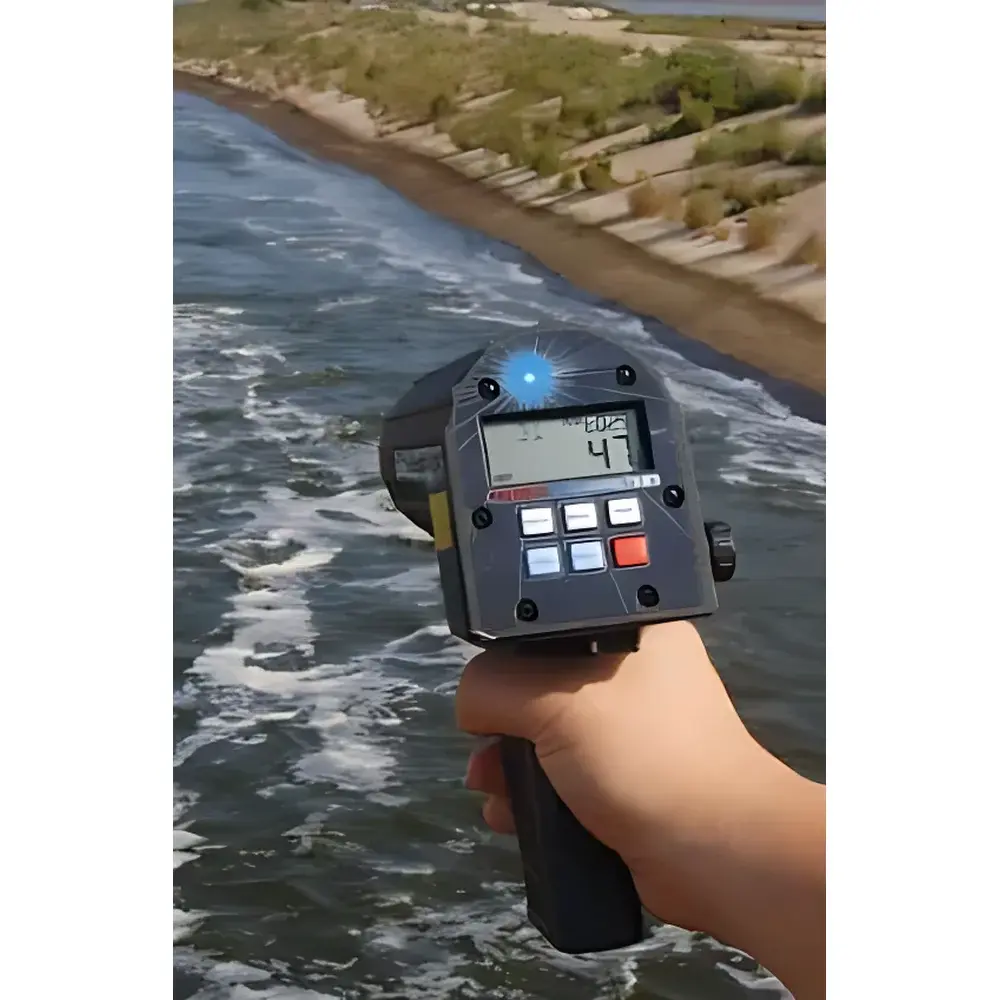
The Stalker II SVR Doppler Radar Surface Velocity Meter is an engineered field instrument designed for non-contact, real-time measurement of surface water velocity in open channels, rivers, streams, and floodplains. Built upon ACI’s proprietary Ka-band (34.7 GHz) continuous-wave Doppler radar technology—originally developed for law enforcement and military speed enforcement—the Stalker II SVR integrates domain-specific signal processing enhancements to meet hydrological measurement requirements. It operates on the principle of coherent Doppler shift detection: microwave energy transmitted at 34.7 GHz reflects off moving water surface scatterers (e.g., ripples, debris, foam), and the frequency shift between transmitted and received signals is linearly proportional to radial surface velocity. Unlike ultrasonic or electromagnetic methods, this radar-based approach requires no in-water installation, zero calibration against physical reference points, and remains unaffected by turbidity, aeration, or sediment load.
Key Features
- Ka-band (34.7 GHz) Doppler radar with 50 mW peak transmit power and 12° beam divergence—optimized for high angular resolution and minimal ground clutter interference
- Intelligent spectral analysis firmware that discriminates surface-velocity-correlated echoes from wind-driven noise, vegetation motion, or static reflections using adaptive thresholding and multi-peak tracking
- Integrated angle correction algorithm enabling accurate velocity computation when the instrument is deployed at non-perpendicular incidence angles (user-input elevation angle)
- Dual-mode timing: real-time stopwatch (0–99.9 s, ±1 s accuracy) synchronized with velocity acquisition for manual section-based discharge estimation
- Simultaneous display of instantaneous velocity, time-weighted average velocity (up to 10 stored readings), elapsed measurement time, echo strength indicator (dB scale), flow direction relative to radar line-of-sight, and transmission status
- IP68-rated waterproof enclosure rated for full submersion; operational temperature range: –30 °C to +70 °C; rain-resistant operation validated per IEC 60529
- Removable lithium-ion battery pack providing ≥10 hours of continuous field operation; hot-swappable design minimizes downtime during extended surveys
Sample Compatibility & Compliance
The Stalker II SVR is compatible with natural and engineered water bodies exhibiting surface roughness sufficient to generate detectable Doppler returns—including gravel-bed streams, vegetated floodplains, concrete-lined canals, and tidal estuaries. It does not require reflective markers, floats, or tracer injection. While not certified to ISO/IEC 17025 for accredited calibration, its performance specifications align with accepted field measurement practices referenced in ASTM D3858 (Standard Practice for Open-Channel Flow Measurement Using Surface Velocity Rods and Current Meters) and USGS Techniques and Methods Book 3, Chapter A22 (Surface-Water Techniques). The device meets FCC Part 15 Subpart C emission limits for unlicensed industrial/scientific/medical (ISM) band transmitters and complies with RoHS 2 directive (2011/65/EU) for hazardous substance restrictions.
Software & Data Management
Data capture is performed locally via the integrated LCD interface; up to 10 velocity measurements (each including timestamp, average velocity, duration, and echo quality index) are retained in non-volatile memory. No proprietary PC software or USB connectivity is included—measurements are manually recorded or transcribed into external hydrologic databases (e.g., HEC-RAS, WMS, or custom GIS workflows). Audit trails are maintained through user-documented field logs. For regulatory applications requiring electronic records with integrity controls, the instrument may be operated within a documented GLP-compliant field protocol where raw readings are entered directly into validated spreadsheet templates with version-controlled metadata.
Applications
- Rapid assessment of flood-stage surface velocities during emergency response operations
- Calibration and validation of acoustic Doppler current profilers (ADCPs) and stage-discharge rating curves
- Non-intrusive verification of hydraulic model outputs in urban drainage and watershed studies
- Field training and education in open-channel hydraulics and stream gauging methodology
- Monitoring of irrigation canal flows where submerged sensors are impractical or subject to biofouling
- Post-storm debris-flow velocity estimation in mountainous catchments
FAQ
Can the Stalker II SVR measure velocity underwater or through ice?
No. It measures only surface velocity via reflected microwave energy; subsurface or ice-covered flow requires alternative instrumentation such as ADCPs or pressure transducers.
Does it require line-of-sight to the water surface?
Yes. Unobstructed optical and RF path between antenna and target water surface is mandatory; dense overhanging vegetation or bridge decks will attenuate or block the signal.
How is measurement uncertainty quantified?
Manufacturer-specified velocity accuracy is ±0.03 m/s (±3 cm/s) under controlled conditions; field uncertainty increases with low echo strength, steep incidence angles (>30°), or highly aerated flow—users should apply empirical correction factors per site-specific validation.
Is firmware upgradeable in the field?
Firmware updates require return to authorized service centers; no end-user flash capability is provided.
What maintenance is required?
Routine cleaning of the antenna lens with isopropyl alcohol; annual verification of battery capacity and echo strength baseline using still-water reference tests is recommended.