
JiPu Portable 450 Handheld Energy Dispersive X-Ray Fluorescence (ED-XRF) Spectrometer for Alloy Analysis
| Origin | Beijing, China |
|---|---|
| Manufacturer Type | Authorized Distributor |
| Origin Category | Domestic (China-made) |
| Model | Portable 450 |
| Application | Field-deployable handheld analysis |
| Industry-Specific Use | Electronics, Petrochemical, Aerospace, Power Generation, Scrap Recycling |
| Elemental Range | Mg (Z=12) to U (Z=92) |
| Quantification Range | 1 ppm to 99.99 wt% |
| Energy Resolution | 149 ± 5 eV at Mn Kα |
| Repeatability | RSD ≤ 0.05% for major alloying elements |
Overview
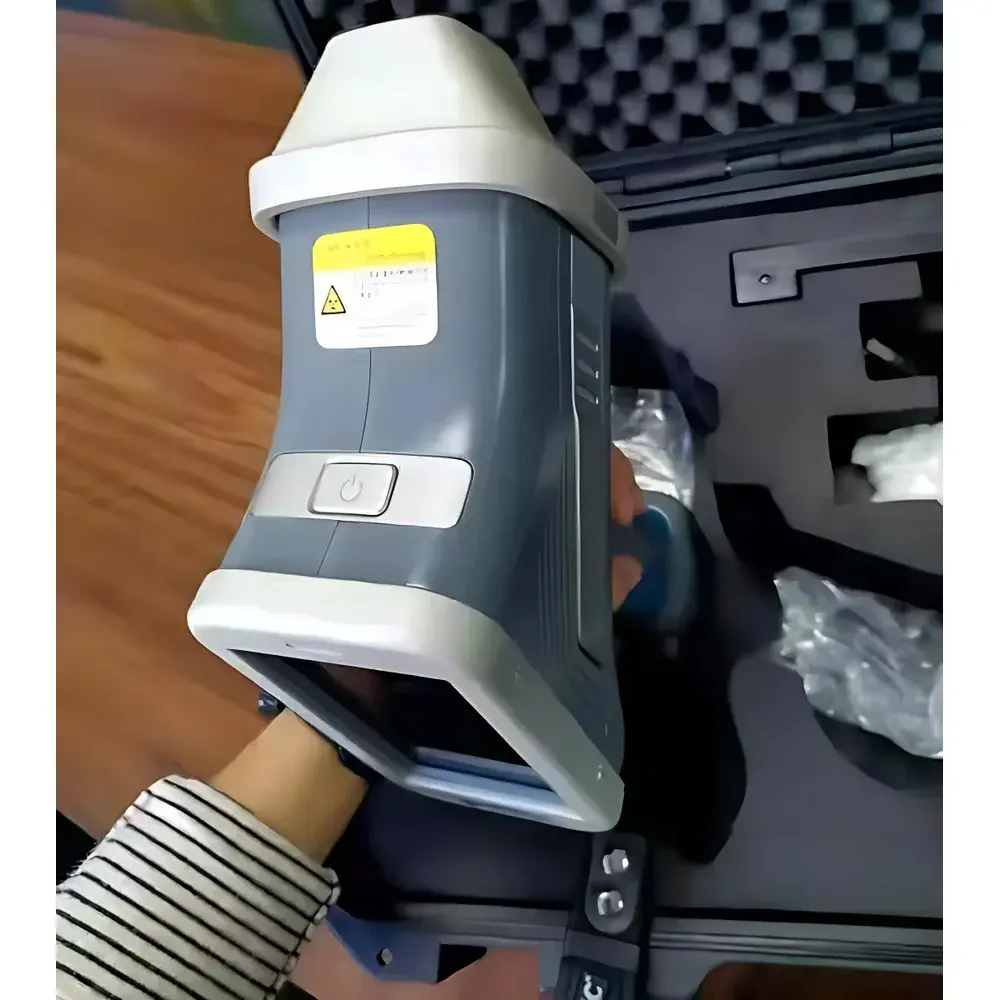
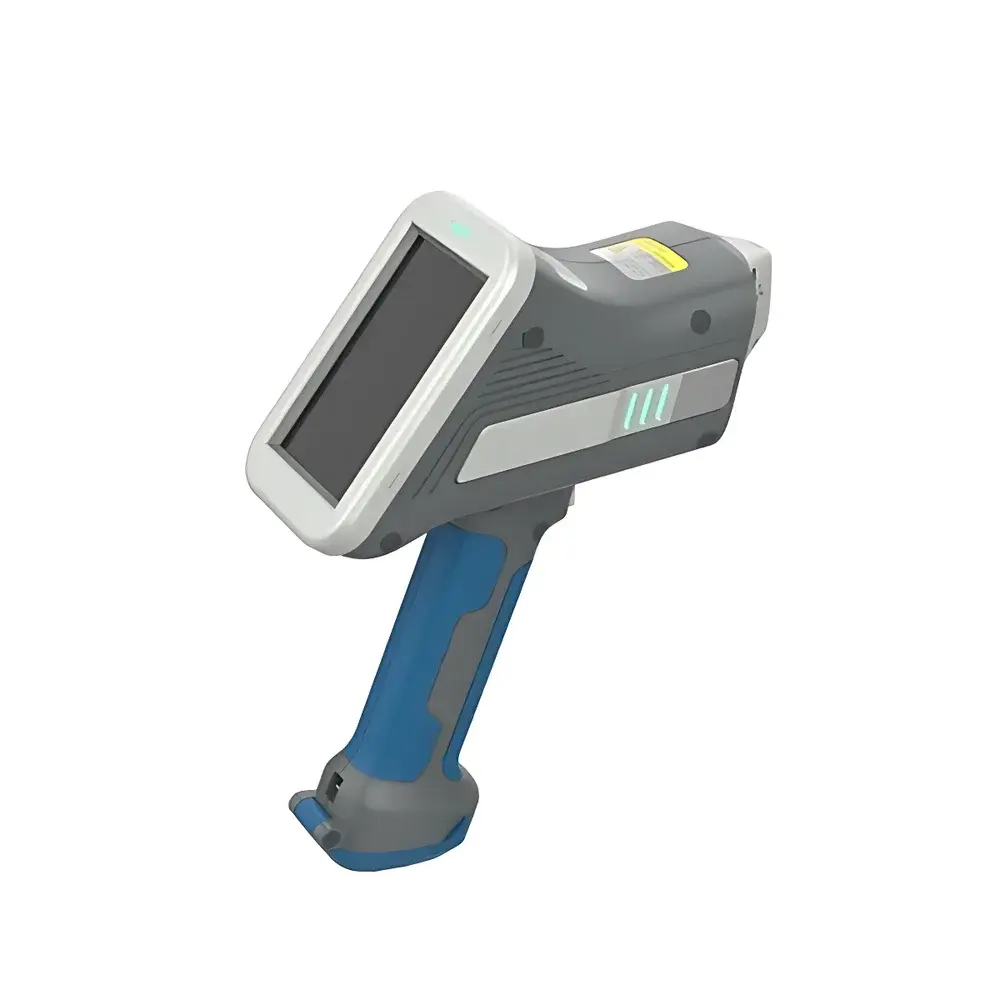
The JiPu Portable 450 is a field-deployable, battery-powered Energy Dispersive X-Ray Fluorescence (ED-XRF) spectrometer engineered for rapid, non-destructive elemental analysis of metallic alloys in situ. Based on fundamental physics principles—X-ray excitation of inner-shell electrons and subsequent emission of characteristic fluorescent photons—the instrument delivers laboratory-grade quantitative and qualitative compositional data within seconds. Its core architecture integrates a high-efficiency silicon drift detector (SDD), a tungsten-target micro-focus X-ray tube with end-window geometry, and real-time spectral deconvolution algorithms. Designed explicitly for Positive Material Identification (PMI), the system meets operational requirements across high-risk industrial environments including pressure vessel fabrication, refinery piping installation, aerospace component verification, and nuclear-grade material control—where material misidentification poses critical safety and regulatory exposure.
Key Features
- Ultra-portable form factor: Weighs ≤1.75 kg (including integrated 6800 mAh Li-ion battery), enabling extended operation (>12 hours) without thermal shutdown or performance degradation.
- Industrial-grade human-machine interface: 5-inch sunlight-readable transflective touchscreen (1080 × 720 resolution) with glove-compatible touch response and real-time status indicators (LED color-coding for sample presence, measurement active, idle states).
- Intelligent hardware safeguards: Automatic X-ray tube shut-off when no sample is detected; radiation leakage ≤0.2 µSv/h at side port (measured per ISO 13753:2021); dual-layer collimation (3 mm aperture, radiation-shielded polymer housing) and optional protective cover for calibration stability and operator safety.
- Multi-platform software ecosystem: Native Android app and Windows desktop application support remote instrument control, live spectrum streaming, automated report generation (PDF/CSV), email export, and synchronized cloud storage via Wi-Fi or Bluetooth 5.0.
- Robust physical design: IP54-rated enclosure with MIL-STD-810G compliant shock/vibration resistance; included ruggedized carry case with waterproof, dustproof, and impact-dampening properties.
Sample Compatibility & Compliance
The Portable 450 is validated for solid metallic samples—including castings, forgings, welds, pipes, valves, fasteners, and scrap fragments—without surface preparation beyond routine cleaning. It supports ASTM E1558–22 (Standard Guide for PMI Using Portable XRF), ISO 21043–1:2021 (Handheld XRF—Part 1: General Requirements), GB/T 32285–2015 (Chinese national standard for portable XRF), API RP 578 (Material Verification Program for New and Existing Assets), and ASME B31.3 Appendix S (Process Piping PMI). All firmware and analytical libraries are pre-configured for UNS, ASTM, AISI, EN, JIS, and GB alloy grade identification, with built-in pass/fail logic against user-defined specification limits. The system supports full audit trail logging compliant with FDA 21 CFR Part 11 requirements for electronic records and signatures when deployed in GMP-regulated environments (e.g., pharmaceutical plant construction, bioreactor fabrication).
Software & Data Management
Data integrity and traceability are ensured through hierarchical user authentication (multi-level role-based access), encrypted local database storage, and timestamped spectral metadata (including GPS coordinates, operator ID, environmental temperature/humidity, and instrument calibration history). Spectral processing employs fundamental parameter (FP) algorithms with matrix correction for inter-element effects, alongside empirical calibration modes for high-precision quantification of key alloying elements (Cr, Ni, Mo, Cu, Al, Ti, Co, Nb, W, V). Reports include full-spectrum overlays, elemental heatmaps, statistical summaries (mean, SD, RSD), and compliance flags against industry-standard grade specifications. Data synchronization across device, PC, mobile, and cloud platforms enables seamless integration with enterprise resource planning (ERP) systems and quality management software (QMS) such as SAP QM or MasterControl.
Applications
The Portable 450 serves as a primary tool for material verification in asset-intensive industries. In petrochemical plants, it performs incoming inspection of piping spools and flanges prior to hydrotesting; in power generation facilities, it verifies austenitic vs. ferritic stainless steels in steam turbine casings and boiler tubes. For aerospace MRO providers, it confirms Ti-6Al-4V versus Ti-5Al-2.5Sn in airframe components. In scrap recycling operations, it discriminates between 304, 316, and duplex stainless grades—or identifies hazardous Pb/Sb contamination in brass feedstock. Additional use cases include failure analysis root-cause investigations (e.g., chloride-induced stress corrosion cracking due to Cr depletion), counterfeit electronics component screening (e.g., verifying Sn-Pb solder composition), and QA/QC validation during additive manufacturing post-processing (powder bed residue analysis).
FAQ
What regulatory standards does the Portable 450 comply with for radiation safety?
The instrument complies with IEC 62495:2010 (Handheld XRF devices—Radiation protection requirements) and national regulations enforced by CNAS-accredited metrology institutes. A certified leakage test report (≤0.2 µSv/h) is supplied with each unit.
Can the system identify unknown alloys not listed in the default library?
Yes—users may create custom alloy groups using the “Unknown Mode” with FP-based quantification and spectral pattern matching against reference spectra stored in the local database.
Is remote firmware update supported?
Yes—over-the-air (OTA) updates are delivered via secure HTTPS channel; version-controlled changelogs and rollback capability ensure system integrity during maintenance cycles.
How is measurement repeatability verified in the field?
Built-in ceramic calibration check standards (Cr/Ni/Fe/Cu/Zn) enable daily verification; RSD ≤0.05% is confirmed using NIST-traceable reference materials (e.g., NIST SRM 1250a) under ambient conditions.
Does the software support multi-language interfaces for global deployment?
Yes—English, Simplified Chinese, Spanish, French, German, and Japanese language packs are available and configurable per user account.




