
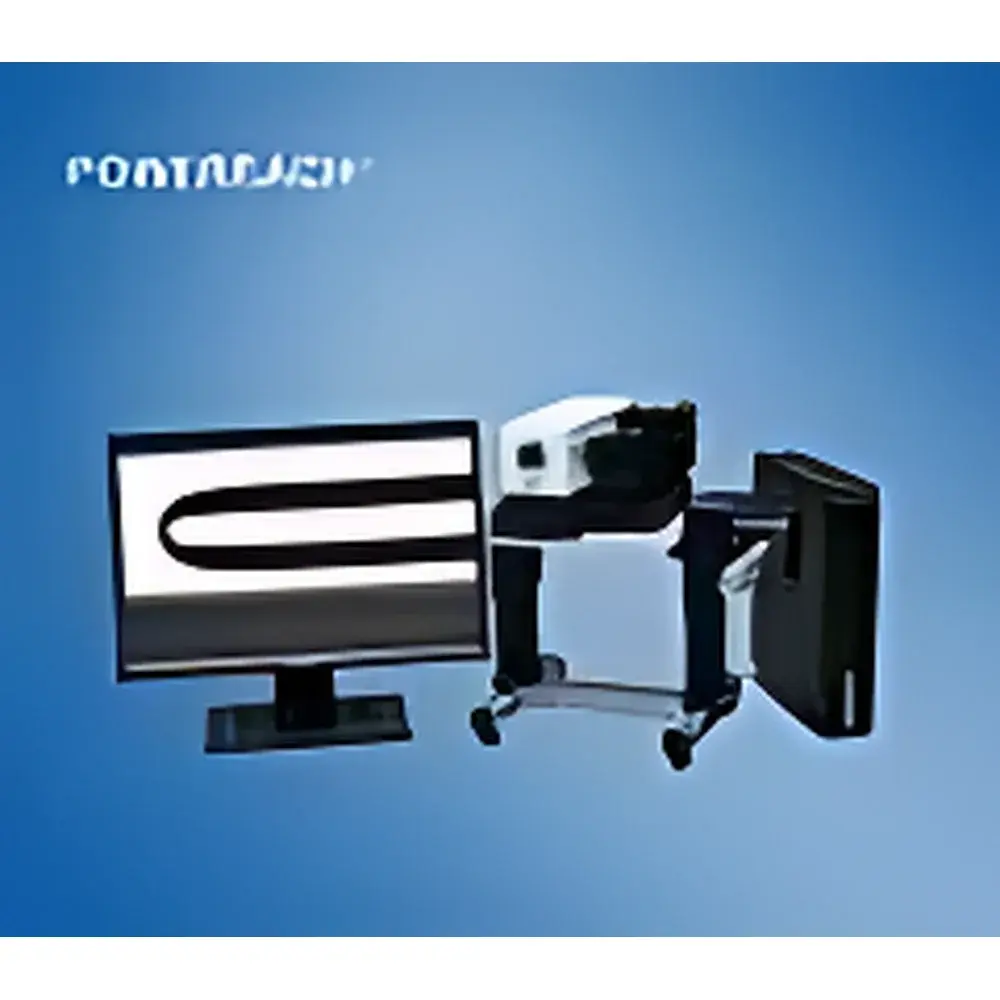
JJ2000B Rotational Drop Automated Surface & Interfacial Tensiometer
| Origin | Shanghai, China |
|---|---|
| Manufacturer Type | Authorized Distributor |
| Origin Category | Domestic (China) |
| Model | JJ2000B |
| Pricing | Upon Request |
Overview
The JJ2000B Rotational Drop Automated Surface & Interfacial Tensiometer is a precision instrument engineered for the quantitative determination of surface tension (γSV), liquid–liquid interfacial tension (γLL), and solid–liquid contact angle (θ) under controlled rotational hydrodynamic conditions. It operates on the well-established rotational drop principle—where a denser droplet of one liquid is suspended within a less-dense continuous phase inside a rotating quartz capillary—and leverages axisymmetric drop shape analysis (ADSA) to extract interfacial curvature from high-resolution video frames. This method enables accurate measurement across an exceptionally broad dynamic range—from ultra-low interfacial tensions down to 1 × 10⁻⁵ mN/m—critical for evaluating surfactant efficacy in enhanced oil recovery (EOR), microemulsion stability, and nanoscale interfacial phenomena. The system integrates real-time temperature regulation, motorized speed control, and digital image acquisition to ensure reproducible, GLP-compliant data generation in both research laboratories and industrial QC environments.
Key Features
- Full automation via dual-control architecture: Windows-based host PC software coordinates with an embedded single-board controller for synchronized rotation, thermal regulation, and image capture.
- Ultra-wide interfacial tension measurement range: 1 × 10⁻⁵ – 100 mN/m—spanning seven orders of magnitude—without hardware switching or calibration reconfiguration.
- High-fidelity optical detection: 768 × 576 pixel resolution at 30 fps frame rate; adjustable magnification supports sub-pixel edge detection—enabling precise contour extraction even for droplets with diameters < 20 µm.
- Dual-function capability: Simultaneous acquisition of interfacial tension and contact angle from the same rotating droplet geometry—ideal for wetting behavior analysis under dynamic interfacial conditions.
- Thermal management system: Integrated resistive heating with ±0.1 °C stability over 5–80 °C; optional external circulation bath interface for extended low-temperature or high-precision applications.
- Precision mechanical drive: Motorized rotation stage with digitally regulated speed control (1000–10000 rpm, ±0.1% accuracy) and inertial damping to minimize torque-induced oscillation.
Sample Compatibility & Compliance
The JJ2000B accommodates standard high-purity fused quartz capillaries (2 mm and 6 mm inner diameter), compatible with aqueous, organic, and ionic liquid systems—including aggressive solvents used in petroleum, agrochemical, and pharmaceutical formulations. Its measurement methodology aligns with ASTM D971 (Standard Test Method for Interfacial Tension of Oil Against Water by the Ring Method—adapted for drop-based validation), ISO 6295 (Petroleum products—Determination of interfacial tension of mineral oil against water), and relevant sections of USP (Analytical Instrument Qualification). Data acquisition adheres to ALCOA+ principles (Attributable, Legible, Contemporaneous, Original, Accurate, Complete, Consistent, Enduring, Available); audit trails, user access logs, and electronic signature support can be implemented via optional compliant software modules meeting FDA 21 CFR Part 11 requirements.
Software & Data Management
The native Windows application provides intuitive graphical workflow navigation, real-time droplet contour overlay, and automated ADSA fitting using iterative Levenberg–Marquardt optimization. All acquired images are saved as uncompressed BMP files for archival integrity and third-party analysis. Measurement parameters—including rotation speed, temperature setpoint, pixel-to-length calibration, and curve-fit residuals—are embedded in metadata. Export options include CSV (for statistical process control), PDF reports (with embedded traceable calibration certificates), and XML (for LIMS integration). Remote monitoring and batch protocol scheduling are supported via TCP/IP API extension.
Applications
- Enhanced oil recovery (EOR): Quantitative screening of surfactant–cosurfactant–oil–brine systems for ultralow γLL (< 10−3 mN/m) required in chemical flooding design and field performance correlation.
- Formulation science: Stability assessment of emulsions, microemulsions, and foams in detergents, cosmetics, and functional coatings.
- Materials interface engineering: Contact angle hysteresis analysis on functionalized substrates under varying interfacial energy states—e.g., responsive polymer films or nanostructured surfaces.
- Fuel and lubricant development: Interfacial compatibility evaluation between base oils, additives, and water ingress scenarios.
- Agrochemical R&D: Wetting and spreading behavior of pesticide adjuvants on hydrophobic leaf cuticles under environmentally relevant temperature profiles.
FAQ
What is the minimum measurable interfacial tension using the JJ2000B?
The instrument achieves reliable measurements down to 1 × 10⁻⁵ mN/m under optimized conditions—requiring high-purity quartz capillaries, vibration-isolated mounting, and stable thermal equilibrium (±0.1 °C).
Can the system measure contact angle on rough or heterogeneous surfaces?
While designed primarily for smooth, homogeneous solids, the rotating droplet geometry mitigates gravitational distortion—enabling robust θ estimation on moderately textured surfaces when combined with multi-frame averaging and local curvature normalization.
Is external temperature control (e.g., refrigerated circulator) supported?
Yes—the unit features an RCA-style analog voltage output (0–10 V) for proportional control of external baths, extending operational range below RT+5 °C or above 80 °C.
Does the software support ASTM or ISO-compliant reporting templates?
Preconfigured report generators include fields aligned with ASTM D971 Annex A4 (drop shape analysis verification) and ISO 6295 Clause 8 (uncertainty estimation), with editable footers for lab-specific QA stamps and reviewer sign-offs.
What video input standards are natively supported?
The system accepts composite NTSC/PAL analog signals via RCA connector; digital USB3.0 camera upgrades are available as factory-validated accessories with SDK integration.



