JWQ03C Single-Fiber Compression and Bending Tester
| Origin | Beijing, China |
|---|---|
| Manufacturer Type | Authorized Distributor |
| Origin Category | Domestic (China-made) |
| Model | JWQ03C |
| Price Range | USD 7,000 – 14,000 |
| Measurement Principle | Euler Buckling-Based Mechanical Bending Analysis |
| Sample Length Range | 0.5 mm – 20 mm |
| Minimum Fiber Diameter | 1 µm |
| Max Length-to-Diameter Ratio | 200 |
| Force Resolution | 0.001 mN |
| Imaging Resolution | 12 pixels/µm |
Overview
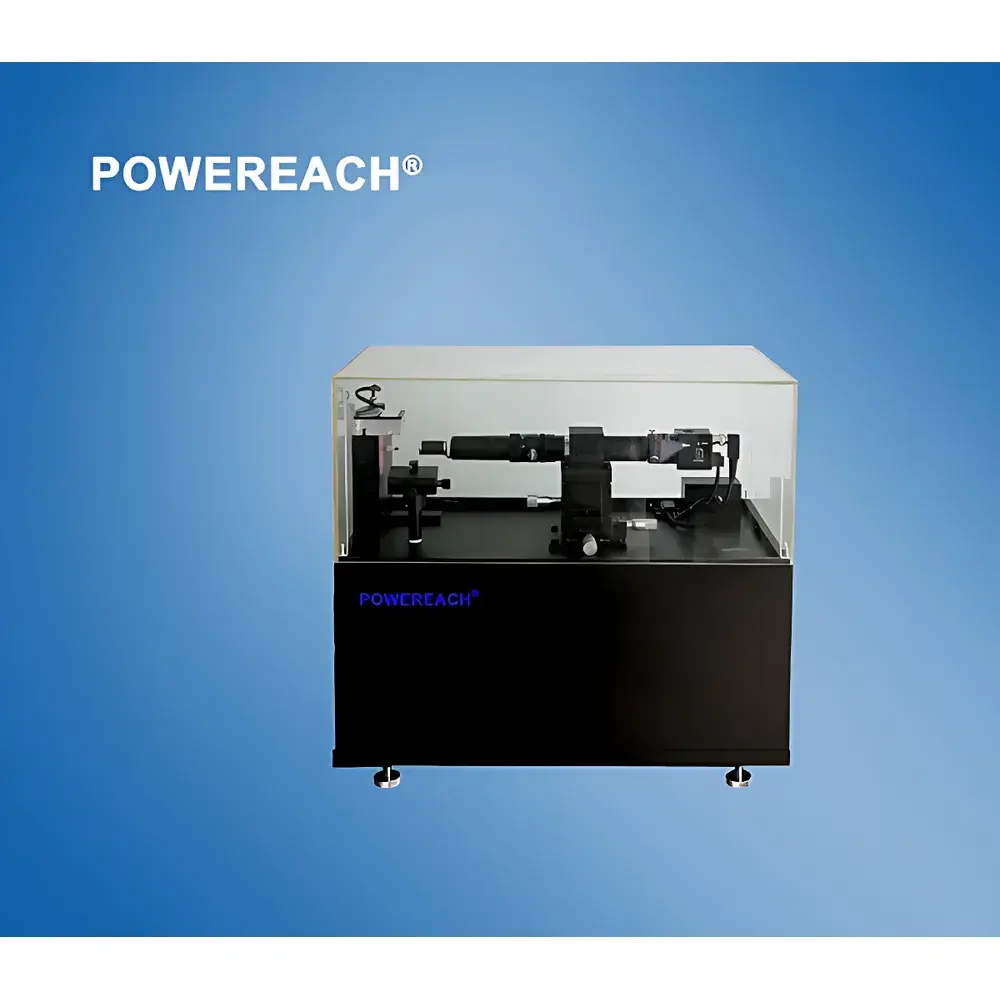
The JWQ03C Single-Fiber Compression and Bending Tester is a precision mechanical characterization instrument engineered for quantitative evaluation of bending stiffness, flexural recovery, and compressive deformation behavior in individual microscale fibers. Unlike conventional tensile testers, the JWQ03C operates on the Euler buckling principle—applying controlled axial compression to a vertically clamped fiber segment while simultaneously capturing high-resolution lateral deflection. This enables direct derivation of flexural rigidity (EI), bending modulus, maximum equilibrium bending force, bending hysteresis ratio, and cyclic bending fatigue parameters. Designed specifically for textile, biomaterial, and advanced fiber R&D laboratories, it supports rigorous mechanical phenotyping of natural, synthetic, and bioengineered filaments—including cashmere, spider silk, neural guidance conduits, electrospun nanofibers, and regenerated cellulose microfibers—under standardized ambient or conditioned environmental conditions.
Key Features
- Engineered Euler buckling platform with dual-axis motion control: vertical compression actuation (sub-micron displacement resolution) and orthogonal optical imaging axis.
- Modular sample holder accommodating fiber lengths from 0.5 mm to 20 mm; compatible with both free-standing and substrate-mounted microfibers.
- High-sensitivity load cell with 0.001 mN force resolution and thermal drift compensation, calibrated traceable to NIST-equivalent national standards.
- Integrated high-magnification optical path with 12 pixels/µm spatial resolution, enabling real-time visualization of buckling onset, lateral deflection profile, and post-buckling shape evolution.
- Programmable compression rate range: 0.1–50 µm/s, supporting quasi-static and dynamic bending protocols aligned with ISO 5079 and ASTM D3822 practices.
- Robust mechanical architecture with vibration-damped granite base and enclosed environmental shielding to minimize air current interference during sub-milligram force measurements.
Sample Compatibility & Compliance
The JWQ03C accommodates monofilaments across diverse material classes: protein-based (keratin, collagen, silk fibroin), polysaccharide-derived (viscose, lyocell, bacterial cellulose), synthetic polymers (PET, nylon-6, PTFE), carbon-based (PAN-derived carbon fibers), and hybrid bioelectronic fibers. It supports fibers with diameters ≥1 µm and length-to-diameter ratios up to 200—enabling valid Euler-based analysis per ISO 19747:2021 Annex C (Buckling Mechanics of Slender Fibers). All mechanical output parameters—including flexural modulus (GPa), bending resilience (%), and fatigue life cycles—are computed using algorithms compliant with ISO/IEC 17025 data integrity requirements. The system meets GLP documentation standards for raw data archiving, including timestamped force-displacement curves, image sequences, and metadata logging (operator ID, calibration status, ambient T/RH).
Software & Data Management
The proprietary FiberBend v3.2 software provides full instrument control, synchronized acquisition of load, displacement, and image streams, and automated parameter extraction. Each test generates a structured .fbd file containing raw sensor data (CSV-compatible), annotated video frames (AVI/H.264), and a PDF report with calculated metrics: flexural rigidity (nN·µm²), bending modulus (MPa), hysteresis area (nN·µm), and recovery ratio (%). Audit trails record all user actions, parameter changes, and calibration events—fully compliant with FDA 21 CFR Part 11 for electronic records and signatures. Data export supports ASTM E1447-compliant format for inter-laboratory comparison and integration into LIMS platforms via OPC UA interface.
Applications
- Quantitative ranking of softness and drape potential in luxury natural fibers (e.g., cashmere vs. alpaca vs. merino wool).
- Structure–property correlation studies in wet-spun or electrospun biopolymer fibers for tissue engineering scaffolds.
- Evaluation of plasticizer effects on bending fatigue resistance in regenerated cellulose medical textiles.
- Validation of crosslinking efficacy in collagen-based nerve guidance conduits through bending hysteresis analysis.
- Comparative assessment of thermal treatment impact on flexural recovery in flame-retardant aramid microfilaments.
- Supporting ISO 20784 (Textiles — Determination of bending behavior of single fibers) and GB/T 14337 (Chinese national standard for fiber mechanical testing).
FAQ
What fiber diameter range is supported by the JWQ03C?
The system measures fibers with diameters ≥1 µm. Sub-micron filaments require optional laser diffraction pre-screening to confirm geometric slenderness criteria prior to buckling testing.
Can the JWQ03C perform cyclic bending fatigue tests?
Yes—it supports programmable multi-cycle compression–recovery protocols with adjustable dwell times, enabling quantification of cumulative bending strain and residual curvature after N cycles.
Is environmental control (temperature/humidity) integrated?
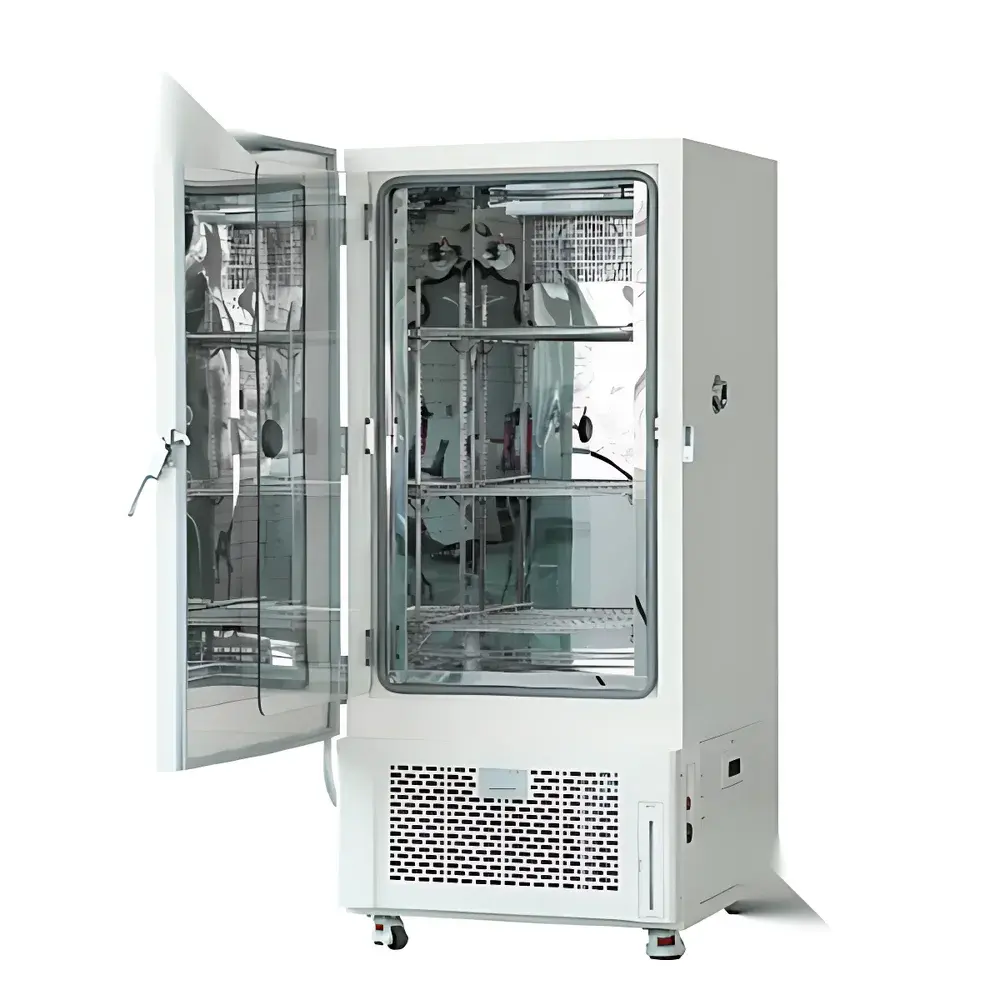
The base unit operates at ambient lab conditions (20–25°C, 40–60% RH). Optional climate chamber integration (−10°C to +60°C, 10–95% RH non-condensing) is available under custom configuration.
How is calibration verified between users?
Each instrument ships with certified reference fibers (stainless steel and polylactic acid standards) and a calibration verification SOP aligned with ISO/IEC 17025 Clause 6.6.
Does the system comply with textile industry regulatory reporting requirements?
All generated reports include mandatory fields for ISO/ASTM method identification, uncertainty estimation (k=2), and traceable calibration certificate references—satisfying audit requirements for ISO 9001-certified textile QA labs.