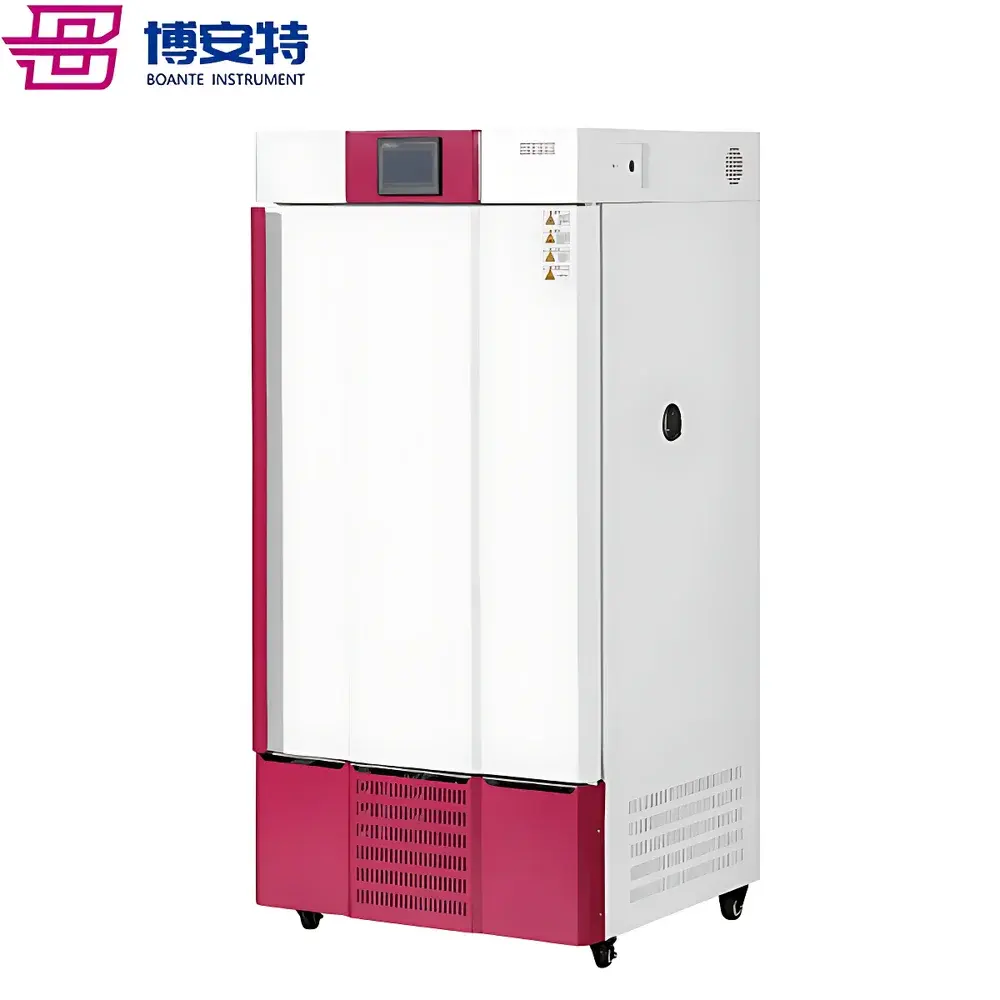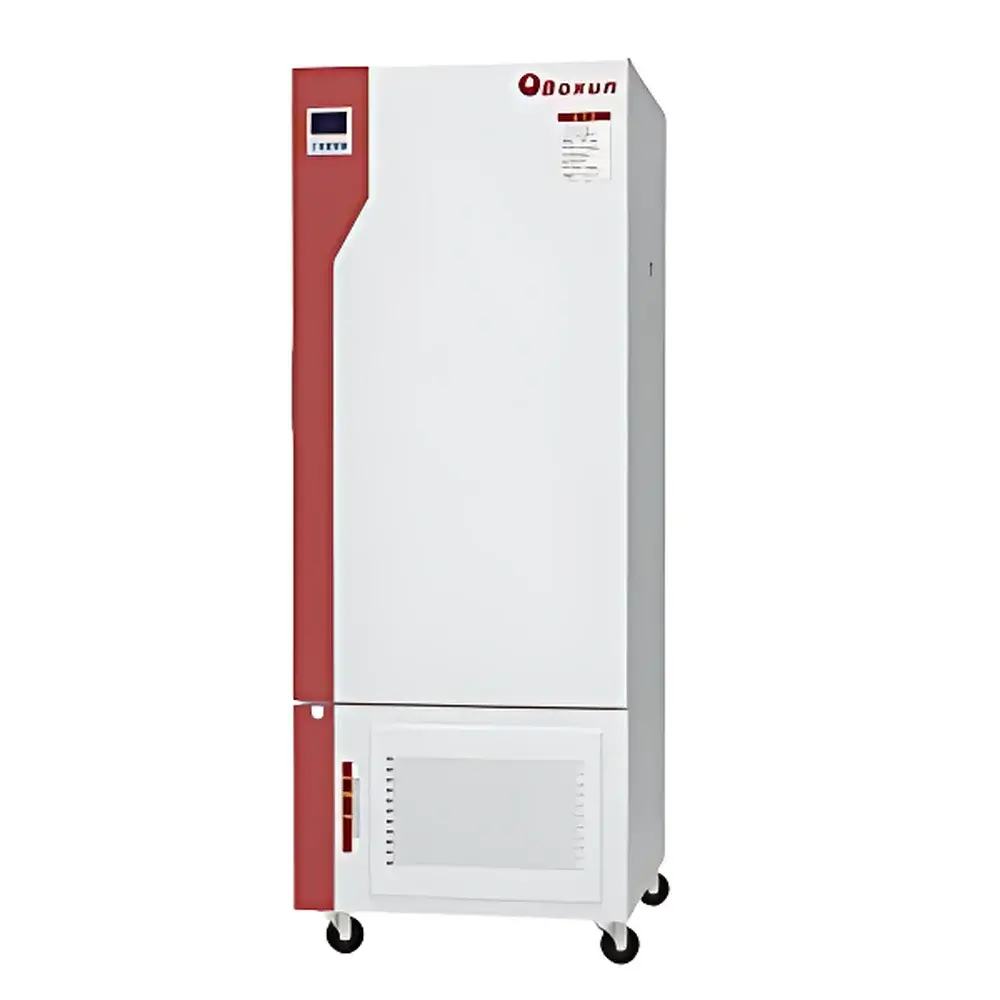
BOXUN BMJ-160C Mold Incubator with Humidity Control
| Brand | BOXUN |
|---|---|
| Origin | Shanghai, China |
| Manufacturer Type | Direct Manufacturer |
| Model | BMJ-160C |
| Temperature Range | 0–60 °C |
| Temperature Uniformity | ±1 °C (at 37 °C) |
| Humidity Range | 50–90 % RH |
| Humidity Fluctuation | ±5 % RH |
| Capacity | 150 L |
| Temperature Resolution | 0.1 °C |
| Temperature Stability | ±0.5 °C |
| Input Power | 1300 W |
| Timer Range | 0–9999 min |
| Interior Dimensions (W×D×H) | 510×390×760 mm |
| Exterior Dimensions (W×D×H) | 650×680×1400 mm |
| Shelf Quantity | 3 adjustable stainless steel shelves |
| Refrigerant | Eco-friendly non-CFC refrigerant |
| Interface | RS-485 for PC/data logger connectivity |
| Programmable Cycles | 30 segments × 99 cycles |
Overview
The BOXUN BMJ-160C Mold Incubator with Humidity Control is a precision-engineered environmental chamber designed specifically for the reliable cultivation, isolation, and maintenance of filamentous fungi (e.g., Aspergillus, Penicillium, Cladosporium) and other humidity-sensitive microorganisms. Unlike standard temperature-only incubators, this model integrates active humidification and closed-loop humidity regulation—critical for morphological differentiation, spore production, and mycotoxin profiling studies. Its operation is based on dual-mode climate control: PID-regulated refrigeration and heating circuits maintain thermal setpoints across 0–60 °C, while a finned electric heating humidifier—coupled with a high-stability imported capacitive RH sensor—enables stable moisture delivery within 50–90 % RH. The chamber’s aerodynamic duct design, featuring a centrifugal blower and optimized internal airflow path, ensures uniform distribution of both temperature and humidity across the entire 150 L working volume (±1 °C uniformity at 37 °C; ±5 % RH fluctuation), minimizing edge effects during long-term static or semi-static fungal growth assays.
Key Features
- Integrated dual-climate control system: independent regulation of temperature (0–60 °C) and relative humidity (50–90 % RH) with real-time digital monitoring via backlit LCD interface
- Robust chamber construction: cold-rolled steel exterior with electrostatic epoxy coating; mirror-finish 304 stainless steel interior; three adjustable, load-rated stainless steel shelves
- Energy-efficient refrigeration: internationally certified hermetic compressor with non-ozone-depleting refrigerant (R134a or equivalent); patented auto-defrost technology eliminates thermal interruption during extended operation
- Intelligent safety architecture: over-temperature alarm with audible/visual alert; power-loss data retention with auto-restart and parameter recovery; mechanical door lock to prevent unauthorized access or accidental opening
- Expandable connectivity: standard RS-485 port compliant with Modbus RTU protocol for integration into centralized lab monitoring systems or third-party data loggers
- Programmable operational profiles: up to 30 programmable segments per cycle, 99 cycles total—supporting multi-stage protocols such as pre-incubation conditioning, growth phase modulation, and desiccation recovery
Sample Compatibility & Compliance
The BMJ-160C accommodates standard microbiological consumables including Petri dishes (up to 150 mm diameter), slant tubes, multi-well plates, and Erlenmeyer flasks placed on adjustable shelves. Its sealed chamber design (with optional silicone gasket enhancement) supports BSL-1 and BSL-2-compatible fungal handling when used in conjunction with appropriate biosafety cabinets. The unit meets key international design and performance benchmarks for laboratory incubation equipment, including ISO 13408-2 (aseptic processing environments), ASTM E1757 (standard practice for fungal growth chamber qualification), and GB/T 23754–2009 (Chinese national standard for biological incubators). While not inherently 21 CFR Part 11 compliant, its RS-485 interface and audit-ready parameter logging (via optional external recorder) facilitate alignment with GLP and GMP documentation requirements when deployed in regulated QC/QA workflows.
Software & Data Management
The BMJ-160C operates autonomously via its embedded microcontroller but supports external data acquisition through its RS-485 serial interface. When connected to a host PC running compatible terminal software (e.g., Modbus Master applications), users can remotely monitor real-time temperature/humidity values, download historical setpoint logs, and export timestamped CSV files for traceability. Optional accessories—including an integrated thermal printer (for hard-copy curve output) and GPRS-enabled SMS alert module—extend operational visibility beyond local network boundaries. All internal memory retains configuration parameters and runtime history during power interruption, ensuring continuity in multi-day fungal colony development studies without manual reprogramming.
Applications
This incubator serves validated roles across environmental microbiology, pharmaceutical quality control, food safety testing, and agricultural pathology laboratories. Typical use cases include: ISO 16212-compliant mold enumeration in water and wastewater samples; USP & EP chapter <51>-aligned fungal purity testing of raw materials and excipients; AOAC 997.05–based mycotoxin screening culture support; EPA Method 1603/1604 validation for ambient mold viability assessment; and controlled-humidity plant pathogen incubation (e.g., Fusarium sporulation assays under defined dew-point conditions). Its stability profile also supports CLSI M38-A3 antifungal susceptibility testing where precise RH modulation influences hyphal growth kinetics.
FAQ
What is the recommended calibration frequency for the humidity sensor?
We recommend quarterly verification using NIST-traceable hygrometers or saturated salt solutions (e.g., NaCl for 75 % RH, KNO₃ for 94 % RH), especially prior to critical validation runs.
Can the BMJ-160C operate continuously for >72 hours at 90 % RH?
Yes—the large-capacity external water reservoir and low-energy finned humidifier enable uninterrupted operation at maximum RH for up to 120 hours under typical ambient lab conditions (20–25 °C, 40–60 % RH).
Is the interior lighting UV-capable for sterilization?
No—this model does not include UV germicidal lamps. Sterilization must be performed externally using validated autoclaving or hydrogen peroxide vapor protocols.
Does the unit comply with IEC 61000-4 electromagnetic immunity standards?
Yes—the control electronics meet IEC 61000-4-2 (ESD), -4-3 (radiated RF), and -4-4 (electrical fast transients) requirements for laboratory-grade equipment.
What maintenance is required for long-term reliability?
Monthly cleaning of the humidifier heating element and water tank; biannual inspection of door seal integrity and condensate drain line; annual verification of temperature/humidity sensor drift against reference standards.