
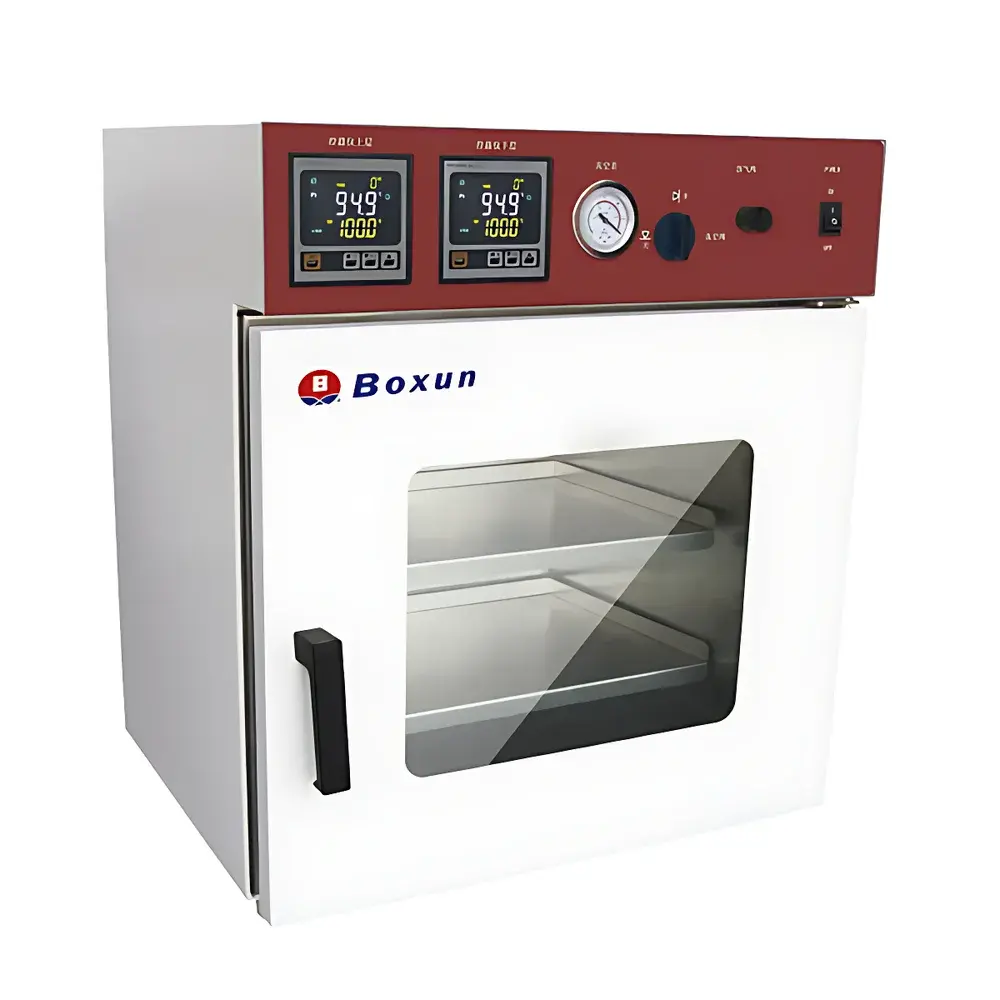
BOXUN BZF-250 Vacuum Drying Oven
| Brand | BOXUN |
|---|---|
| Origin | Shanghai, China |
| Manufacturer Type | Direct Manufacturer |
| Product Category | Domestic |
| Model | BZF-250 |
| Instrument Type | Vacuum Oven |
| Temperature Range | Ambient + 2 °C to 250 °C |
| Temperature Uniformity | ±0.5 °C |
| External Dimensions | 770 × 780 × 1030 mm |
| Internal Chamber Dimensions | 600 × 600 × 700 mm |
| Chamber Material | Stainless Steel (SUS304) |
| Heating Method | Heated Shelf System with Forced Convection |
| Vacuum Level | ≤133 Pa |
| Rated Power | 2200 W |
| Voltage | AC 220 V ±10%, 50/60 Hz |
| Timer Range | 0–9999 min |
| Capacity | 250 L |
| Standard Shelves | 3 pcs |
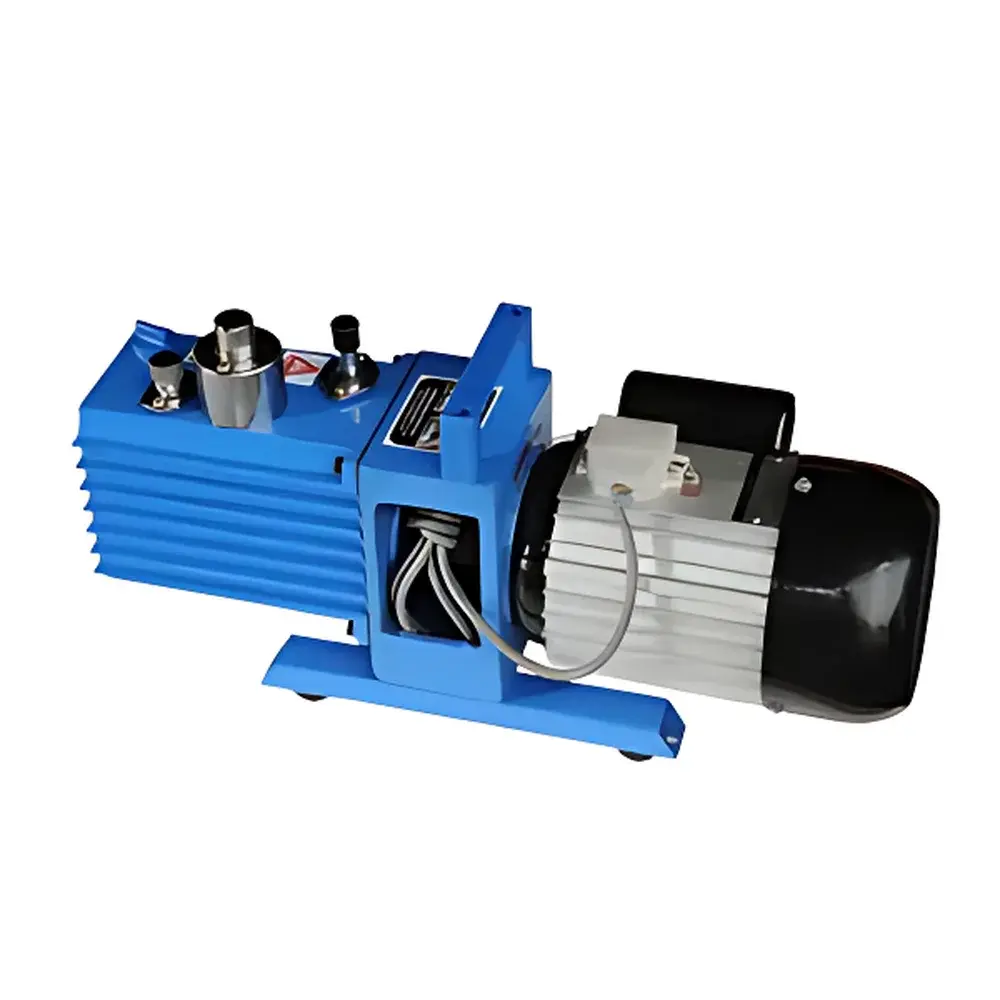
| Included Vacuum Pump | BOXUN BX-1 (Pumping Speed: 1 L/s |
| Ultimate Pressure | ≤6×10⁻² Pa partial, ≤133 Pa total |
| Motor Power | 0.25 kW) |
Overview
The BOXUN BZF-250 Vacuum Drying Oven is an engineered solution for controlled, low-temperature moisture removal under reduced pressure—principally leveraging the thermodynamic principle that vapor pressure decreases with ambient pressure. By evacuating air from the chamber to ≤133 Pa, the boiling point of water and volatile solvents is significantly lowered, enabling efficient drying of heat-sensitive, oxidation-prone, or structurally delicate samples without thermal degradation. This makes the BZF-250 particularly suitable for applications in pharmaceutical R&D (e.g., lyophilization pre-drying, API stability testing), biopolymer processing, ceramic precursor dehydration, and analytical sample preparation where residual solvent content, surface integrity, and compositional fidelity are critical. Its stainless steel (SUS304) chamber, semi-rounded internal corners, and dual-layer tempered glass door support both operational robustness and visual process monitoring under vacuum conditions.
Key Features
- Heated shelf system with independently controllable heating zones—each shelf equipped with embedded heating elements beneath a seamless stainless steel surface, delivering uniform thermal distribution and eliminating cold spots common in jacketed or wall-heated ovens.
- Microprocessor-based PID temperature controller with LCD interface, supporting real-time display of setpoint, chamber temperature, elapsed time, and remaining timer duration; includes over-temperature cut-off, auto-restart after power interruption, and parameter retention during power loss.
- High-integrity vacuum sealing: integrally molded silicone gasket with adjustable door-tightening mechanism ensures leak rates <0.5 Pa/min at operating vacuum, validated per ISO 2859-1 sampling protocols.
- Chamber design optimized for cleanability and contamination control—fully welded SUS304 interior with radius-curved corners, no crevices or screw recesses, compliant with GLP laboratory hygiene requirements.
- Triple-layer safety architecture: mechanical overpressure relief valve, electronic thermal fuse, and independent watchdog circuitry for fail-safe shutdown during sensor fault or controller anomaly.
Sample Compatibility & Compliance
The BZF-250 accommodates heterogeneous sample formats—including powders, granules, thin-film coatings, porous ceramics, biological tissue sections, and glassware—without displacement or aggregation, owing to its static vacuum environment (no forced airflow). It supports ASTM E145-22 Class II vacuum oven classification and meets key functional criteria outlined in USP for package integrity testing environments. While not certified as GMP-compliant out-of-the-box, its data logging capability (via optional RS485/Modbus interface), audit-trail-ready timer function, and stable temperature profile make it suitable for IQ/OQ validation in regulated QC labs. The included BX-1 two-stage rotary vane pump satisfies ISO 8573-1:2010 Class 4 compressed air purity equivalency for non-corrosive process vacuum generation.
Software & Data Management
The BZF-250 operates as a standalone instrument with embedded firmware supporting full-cycle programmability: up to 99 multi-step programs, each with independent ramp/soak segments, vacuum hold phases, and temperature-triggered venting sequences. Optional PC connectivity enables export of timestamped temperature/vacuum logs in CSV format for traceability. When integrated into networked lab infrastructures, the unit complies with FDA 21 CFR Part 11 requirements for electronic records via third-party validated SCADA platforms (e.g., LabVIEW or Ignition SCADA with digital signature modules). All parameter changes are logged with user ID, timestamp, and pre-/post-values—enabling retrospective review during internal audits or regulatory inspections.
Applications
- Pharmaceutical: Pre-lyophilization drying of monoclonal antibody formulations, residual solvent removal from tablet granules (ICH Q5C), and moisture content verification per USP .
- Materials Science: Debinding of metal injection molded (MIM) parts, solvent extraction from sol-gel derived aerogels, and thermal conditioning of battery electrode coatings.
- Environmental Testing: Gravimetric moisture analysis of soil/sediment per EPA Method 9030B; stabilization of reference standards prior to ICP-MS calibration.
- Academic Research: Low-temperature dehydration of hydrogels for SEM sample prep, preservation of enzymatic activity in immobilized biocatalysts, and accelerated aging studies of polymer films.
FAQ
What vacuum level can the BZF-250 achieve with the included BX-1 pump?
The system reaches ≤133 Pa (1 Torr) under standard operating conditions; ultimate partial pressure of ≤6×10⁻² Pa is attainable with extended pump-down time and chamber preconditioning.
Is the temperature uniformity verified across the entire chamber volume?
Yes—uniformity is specified as ±0.5 °C at 100 °C (measured per ASTM E2207-21 using nine-point thermocouple mapping), confirmed at three load conditions: empty, 50% loaded, and fully loaded with inert dummy loads.
Can the BZF-250 be used for oxygen-sensitive drying without inert gas purging?
While the vacuum environment inherently excludes atmospheric oxygen, for ultra-sensitive applications (e.g., alkali metal precursors), optional N₂ or Ar inlet ports (accessory) allow backfilling to controlled partial pressures prior to venting.
Does the unit support validation documentation packages for GxP environments?
Standard delivery includes Factory Acceptance Test (FAT) report and calibration certificate for chamber sensor; IQ/OQ protocols and 3Q documentation templates are available upon request for qualified customers.
How is shelf-level temperature monitored and controlled?
Each heated shelf incorporates a dedicated PT100 sensor and independent PID loop; setpoints and actual temperatures are displayed simultaneously on the main LCD, with inter-shelf deviation maintained within ±0.8 °C at steady state.



