
Water Maze System by TSE Systems
| Brand | TSE Systems |
|---|---|
| Origin | Germany |
| Model | Water Maze |
| Type | Automated Video-Tracking Morris Water Maze System for Rodent Spatial Learning and Memory Assessment |
Overview
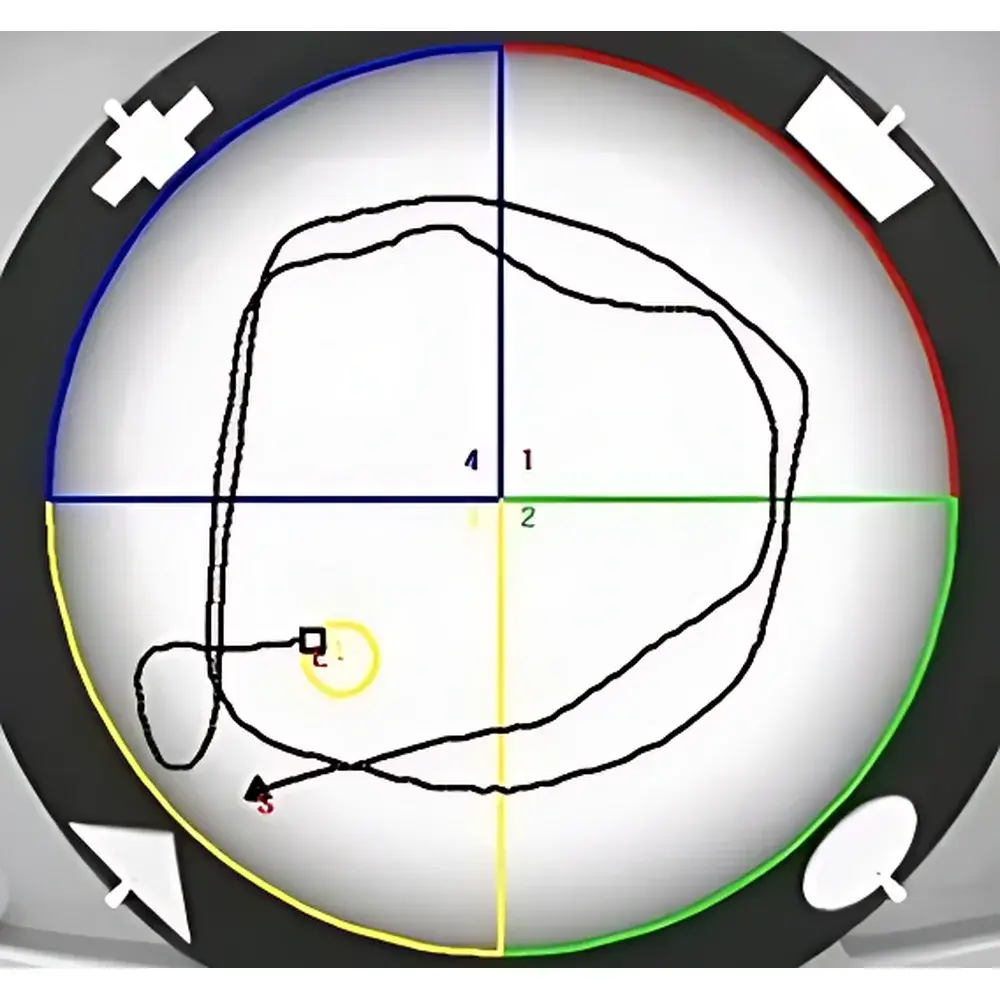
The TSE Systems Water Maze is a fully integrated, video-based behavioral testing platform engineered for rigorous assessment of spatial learning, reference memory, and cognitive flexibility in rodents—primarily mice and rats. Based on the classical Morris Water Maze (MWM) paradigm, the system relies on the natural aversion of rodents to water and their motivation to escape by locating a submerged, invisible platform. Spatial navigation is evaluated through quantifiable metrics derived from swim path trajectories, latency to platform, quadrant preference, and search strategy analysis. The system operates on the principle of ethologically valid, non-reinforced spatial discrimination, making it a cornerstone assay in neuroscience, pharmacology, and translational models of neurodegeneration (e.g., Alzheimer’s disease), neurodevelopmental disorders, and aging-related cognitive decline.
Key Features
- Fully automated video tracking powered by TSE’s validated VideoMot2 software, delivering sub-pixel resolution motion detection with real-time centroid calculation and noise-resistant trajectory reconstruction.
- Modular hardware configuration: includes a circular acrylic pool (standard 120 cm or 180 cm diameter; optional black/white interior finish), a removable submerged platform (10 cm diameter, adjustable height), and infrared-compatible illumination setup for low-contrast imaging.
- High-sensitivity monochrome CCD camera with C-mount lens (f/1.4, 12 mm focal length) mounted on a fixed overhead gantry, ensuring consistent field-of-view and geometric calibration across sessions.
- Integrated acquisition control: tracking initiates via IR remote or software trigger; automatic stop conditions include platform contact detection or user-defined trial duration (e.g., 60–120 s).
- Compact, lab-space-optimized design featuring a portable laptop-based control unit with embedded PCIe frame-grabber card—no external server rack or dedicated workstation required.
- Support for Atlantis platform automation: optional motorized platform submersion/elevation controlled directly through VideoMot2, enabling seamless transition between hidden-platform training and probe trials without manual intervention.
Sample Compatibility & Compliance
The system is validated for use with adult C57BL/6, BALB/c, CD-1, and Sprague-Dawley rodents (18–35 g mice; 200–300 g rats). All components comply with EU CE marking requirements for laboratory equipment (2014/30/EU EMC Directive and 2014/35/EU LVD Directive). Experimental protocols align with established guidelines from the National Institutes of Health (NIH) Office of Laboratory Animal Welfare (OLAW) and the European Directive 2010/63/EU on protection of animals used for scientific purposes. Data export formats (CSV, XML) support audit-ready documentation for GLP-compliant studies.
Software & Data Management
VideoMot2 provides a comprehensive, scriptable analysis environment with built-in modules for MWM-specific parameters: escape latency, path efficiency ratio, cumulative distance to platform, thigmotaxis index, target quadrant time/distance %, platform crossings, and search strategy classification (e.g., spatial, looping, scanning, chaining). All analyses are timestamped and linked to raw video files stored in standardized AVI/H.264 format. Software supports multi-user role-based access, encrypted project databases, and full audit trail logging per FDA 21 CFR Part 11 requirements when deployed with optional electronic signature module. Exported datasets include metadata (animal ID, trial number, date/time, experimenter, protocol version), enabling direct import into SPSS, GraphPad Prism, or R for mixed-effects modeling.
Applications
- Evaluation of hippocampal-dependent spatial memory in transgenic mouse models (e.g., APP/PS1, 5xFAD, Tau P301L).
- Pharmacological screening of nootropic, neuroprotective, or cognition-enhancing compounds (dose-response and chronic treatment paradigms).
- Assessment of cognitive deficits following traumatic brain injury (TBI), stroke, or chronic stress exposure.
- Validation of optogenetic or chemogenetic interventions targeting entorhinal-hippocampal circuits.
- Standardized behavioral phenotyping in large-scale mutagenesis or knockout consortia (e.g., IMPC, KOMP).
FAQ
What is the minimum recommended pool size for rat studies?
For adult rats, TSE recommends the 180 cm diameter pool to ensure adequate spatial resolution and reduce wall-hugging artifacts.
Can VideoMot2 distinguish between floating and active swimming?
Yes—velocity thresholds and movement variance filters allow configurable classification of immobility vs. purposeful navigation.
Is calibration required before each session?
A single geometric calibration (using supplied grid template) suffices for stable setups; recalibration is only necessary after camera repositioning or lens change.
Does the system support integration with third-party physiological recorders?
Yes—VideoMot2 offers TTL pulse I/O and TCP/IP API for synchronized acquisition with EEG, EMG, or telemetry systems.
How is data integrity ensured during long-term multi-lab studies?
Each video file embeds MD5 checksums; project archives include version-stamped analysis scripts and parameter presets to guarantee reproducibility across sites and timepoints.
Related Products





