
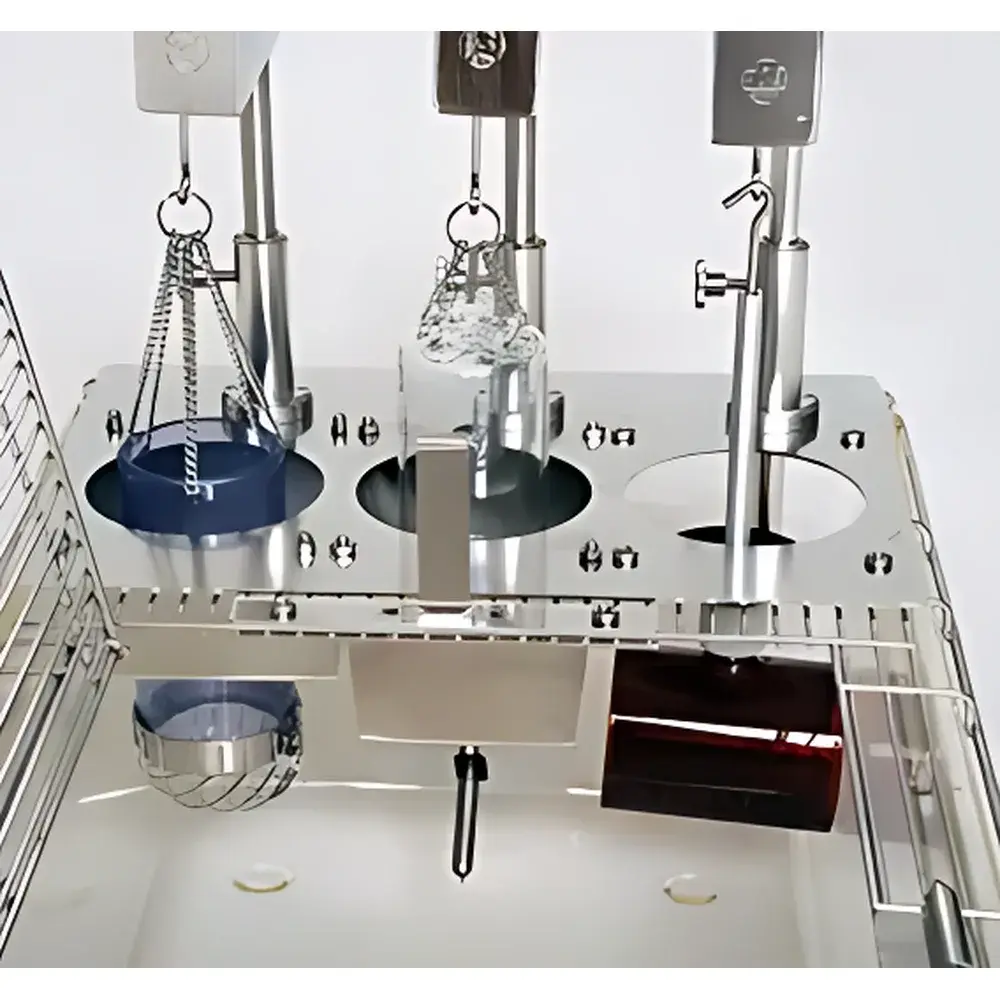
TSE Systems Drinking & Feeding & Body Weight Monitoring System
| Brand | TSE Systems |
|---|---|
| Origin | Germany |
| Model | PermaSensor DF-BW Series |
| Sensor Capacity | Up to 6 per cage |
| Measurement Types | Liquid intake, solid food consumption, body weight |
| Sensor Flexibility | Interchangeable assignment (drink/food/weight) |
| Cage Compatibility | Standard IVC and static cages (no modification required) |
| Integration | Compatible with TSE PhenoMaster® metabolic monitoring platforms |
| Data Resolution | Sub-gram weight resolution |
| Temporal Resolution | Continuous logging at user-defined intervals (e.g., 1–60 s) |
| Environmental Robustness | Designed for long-term operation in controlled vivarium conditions |
Overview
The TSE Systems PermaSensor DF-BW Series is a modular, high-precision behavioral phenotyping platform engineered for continuous, non-invasive quantification of ingestive behavior and longitudinal body weight dynamics in rodent models. Based on load-cell transduction technology, the system measures mass changes in real time at designated loci—water spouts, food hoppers, or animal resting zones—within standard laboratory housing cages. Its core architecture adheres to the principles of cumulative mass balance: fluid withdrawal from a bottle, pellet consumption from a hopper, or animal weight shifts are each resolved as discrete mass deltas, sampled at configurable temporal frequencies and aggregated into time-stamped event streams. This enables rigorous experimental paradigms requiring precise chronobiological alignment (e.g., circadian feeding rhythms), caloric restriction protocols, or metabolic challenge assessments—all without manual intervention or cage disturbance. The system operates independently of cage ventilation or environmental control hardware, yet maintains full interoperability with TSE’s PhenoMaster® suite for simultaneous acquisition of oxygen consumption (VO₂), carbon dioxide production (VCO₂), respiratory exchange ratio (RER), and locomotor activity.
Key Features
- Modular sensor design: Each PermaSensor unit is functionally agnostic—configurable in software as a drinking, feeding, or body weight transducer—allowing dynamic reassignment across experimental phases.
- Scalable deployment: A single home cage supports up to six sensor positions; configurations include dual-sensor baseline setups (1 drink + 1 feed), five-sensor preference assays (3 food types + 1 drink + 1 weight), or six-sensor multi-access paradigms (e.g., nutrient choice + hydration + weight + activity-correlated posture).
- Zero-modification cage integration: Sensors mount directly beneath standard IVC or static polycarbonate cages (e.g., Tecniplast Sealsafe®, Allentown Lab Products) using TSE’s proprietary cage support frames—no drilling, adhesive bonding, or structural alteration required.
- Automated temporal gating: Integrated scheduling logic permits programmable access windows—enabling controlled food deprivation, timed meal initiation, or intermittent fasting regimens synchronized to light/dark cycles or external stimuli.
- Vivarium-grade durability: Load cells are hermetically sealed, temperature-compensated, and calibrated to maintain sub-gram repeatability over >6-month continuous operation under typical SPF housing conditions (20–24°C, 40–60% RH).
Sample Compatibility & Compliance
The PermaSensor DF-BW system is validated for use with C57BL/6, BALB/c, DBA/2, and other common inbred/outbred mouse strains, as well as juvenile, aged, and diet-induced obese (DIO) models exhibiting impaired mobility or altered feeding kinetics. It accommodates both liquid diets (e.g., sucrose solutions, ethanol admixtures) and solid chow formats (standard pellets, high-fat diet blocks, gel-based nutrition). All hardware complies with EU Machinery Directive 2006/42/EC and carries CE marking for laboratory use. Data acquisition workflows support ALARA-aligned animal welfare practices by eliminating handling stress associated with manual weighing or scheduled feeding. When deployed within GLP-compliant facilities, the system’s audit trail functionality—including operator ID, timestamped parameter changes, and raw sensor file versioning—meets OECD Principles of Good Laboratory Practice and FDA 21 CFR Part 11 requirements for electronic records and signatures.
Software & Data Management
Data acquisition and analysis are managed through TSE’s PhenoSoft® Acquisition Suite v8.x, a Windows-based platform supporting synchronized multi-parameter ingestion. Raw sensor outputs are logged as binary time-series files (.pdt) with embedded metadata (cage ID, sensor type, calibration coefficients, environmental timestamps). Built-in algorithms distinguish true consumption events from incidental cage contact via adaptive noise filtering and minimum-delta thresholds. Export options include CSV (time-resolved mass differentials), Excel (summary statistics per 1-hr bin), and HDF5 (for MATLAB/Python-based custom modeling). The software enforces role-based access control, automatic backup to network-attached storage (NAS), and encrypted local archiving—ensuring data integrity across multi-user vivarium deployments.
Applications
- Circadian rhythm studies: Quantifying diurnal patterns of water intake and food anticipation under 12:12 LD cycles or constant darkness.
- Nutrient preference assays: Discriminating between macronutrient sources (e.g., high-carb vs. high-fat vs. high-protein chow) or palatability gradients (sucrose concentration series).
- Metabolic disease modeling: Longitudinal tracking of weight gain/loss trajectories in DIO, ob/ob, or db/db mice alongside caloric intake efficiency calculations.
- Pharmacological screening: Assessing acute or chronic effects of CNS-active compounds (e.g., orexigenic/anorexigenic agents, antipsychotics) on ingestive microstructure (bout frequency, duration, size).
- Behavioral phenotyping in genetic models: Characterizing feeding abnormalities in autism- or depression-related transgenic lines (e.g., Shank3⁻/⁻, Flinders Sensitive Line rats).
FAQ
Can the system distinguish between drinking and grooming-related liquid contact?
Yes—adaptive thresholding and dwell-time filters suppress transient mass fluctuations (<0.5 g for <2 s), effectively excluding grooming or cage-lip contact while retaining true licking events.
Is calibration required before each experiment?
No—factory calibration is retained across power cycles; optional daily zero-check routines can be scheduled via PhenoSoft® to verify baseline stability.
Does the system support paired-housing or social feeding paradigms?
Yes—dual-weight sensor configurations enable real-time differential weight tracking in co-housed pairs, facilitating dominance hierarchy or cooperative feeding analyses.
How is data synchronized with indirect calorimetry measurements?
Via shared IEEE 1588 Precision Time Protocol (PTP) clock domain across PhenoMaster® modules, ensuring sub-millisecond temporal alignment between ingestive events and metabolic gas exchange.
What cage sizes are supported?
Standard mouse cages (up to 450 cm² floor area); custom mounting kits available for rat-sized enclosures (e.g., 900 cm²) upon request.




