
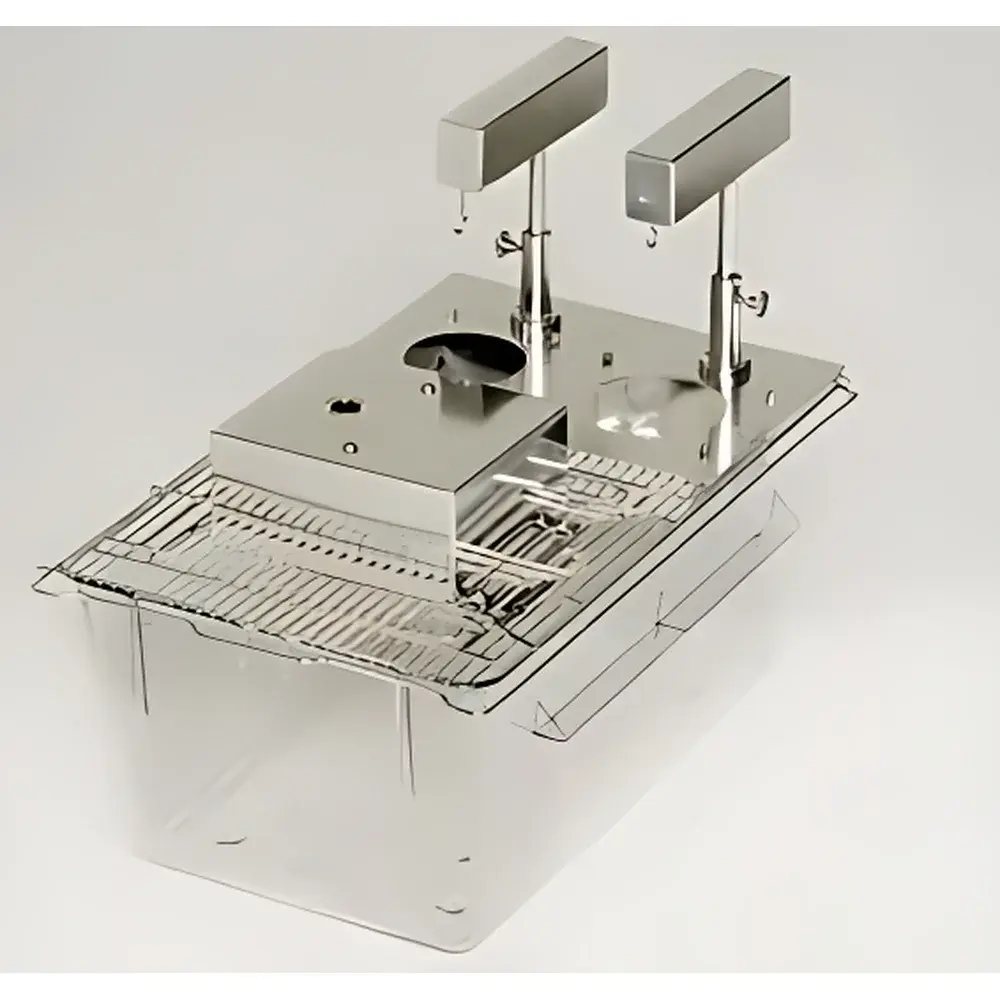
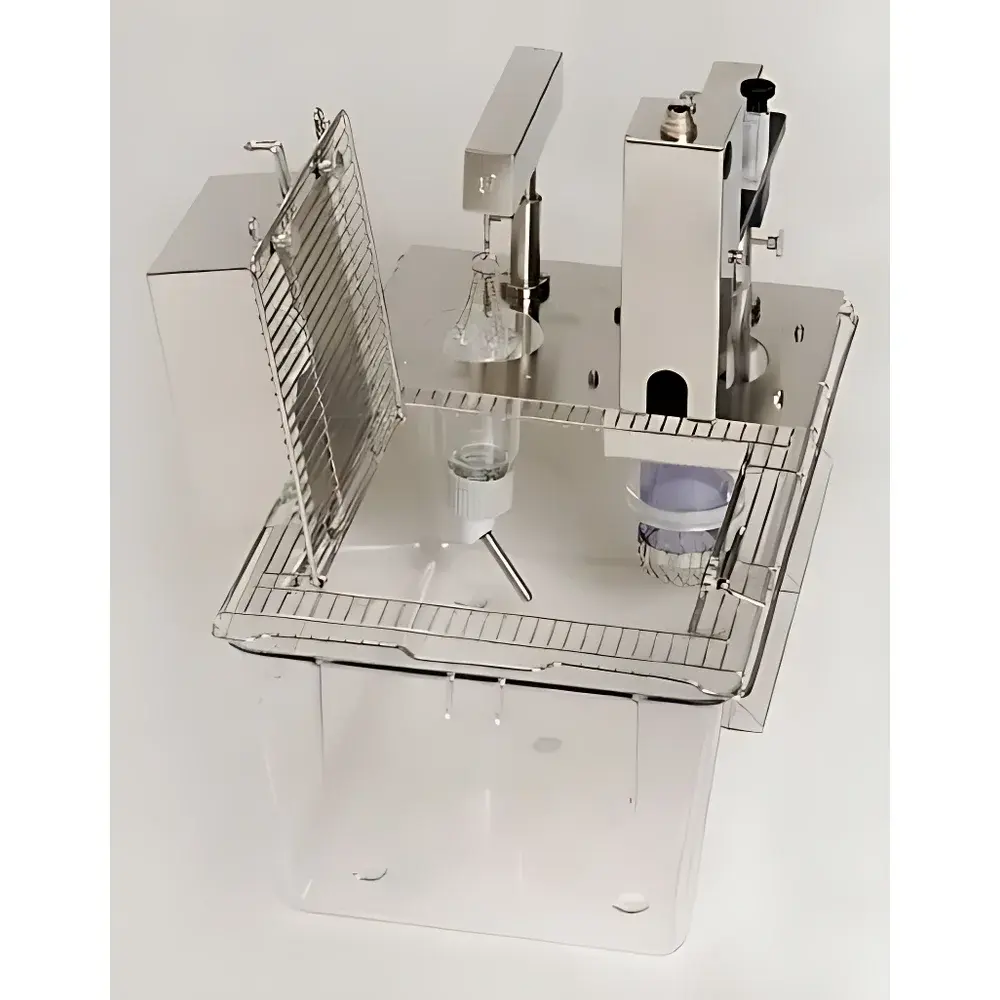
InfraMot Activity System by TSE Systems
| Brand | TSE Systems |
|---|---|
| Origin | Germany |
| Model | InfraMot – Activity System |
| Detection Principle | Passive Infrared (PIR) Thermal Imaging |
| Measurement Type | Total Locomotor and Postural Activity |
| Cage Compatibility | Universal (all standard rodent housing sizes) |
| Installation | Top-mounted or flexible spatial positioning |
| Light Condition Independence | Full spectrum — operates in total darkness |
| Temporal Resolution | Millisecond-level motion event detection |
| Calibration | Zero-calibration required |
| Integration | Modular component of PhenoMaster® and LabMaster® platforms |
| Cleaning | Removable sensor unit for routine decontamination |
| Compliance | Designed for GLP-compliant longitudinal phenotyping studies |
Overview
The InfraMot Activity System is a non-invasive, passive infrared-based behavioral monitoring solution engineered by TSE Systems (Germany) for continuous, high-fidelity quantification of total locomotor and postural activity in freely moving rodents. Unlike optical or beam-break systems, InfraMot detects minute changes in thermal radiation emitted by the animal’s body surface—capturing both gross movement (e.g., ambulation, rearing) and subtle postural shifts (e.g., standing, stretching) without requiring physical contact, wearable tags, or ambient light. Its core sensing architecture relies on a wide-angle, low-noise PIR (passive infrared) detector array mounted above the housing environment—typically integrated into the lid of standard metabolic or home-cage phenotyping cages. This design enables true 24/7 operation under photoperiod-controlled, dim-light, or complete darkness conditions—critical for circadian rhythm analysis and sleep-wake state inference. As a native module within the PhenoMaster® and LabMaster® automated phenotyping ecosystems, InfraMot delivers time-synchronized behavioral data streams that co-register with parallel physiological metrics—including food/water intake, wheel-running kinetics, indirect calorimetry (O₂/CO₂), and core temperature—enabling multivariate correlation analysis across experimental timelines.
Key Features
- Passive thermal imaging detection: No animal handling, restraint, or sensor attachment required—ensuring stress-free, ethologically valid activity measurement.
- Millisecond temporal resolution: Capable of resolving transient motion events as brief as 10 ms, supporting precise onset/offset timing for behavioral microstructure analysis.
- Universal cage integration: Sensor unit mounts directly onto lids of standard IVC cages (e.g., Tecniplast Sealsafe®, Allentown, Eurostandard), custom enclosures, or operant chambers without structural modification.
- Zero-calibration architecture: Factory-characterized PIR response eliminates need for user calibration—reducing setup variability and enhancing inter-laboratory reproducibility.
- Modular interoperability: Fully compatible with PhenoMaster® and LabMaster® software and hardware stacks; supports synchronized acquisition alongside feeding, drinking, respiratory exchange ratio (RER), and voluntary exercise modules.
- Routine maintenance support: Sensor housing is tool-free removable and autoclavable or ethanol-wipe compatible—ensuring compliance with institutional biosafety and sanitation protocols.
Sample Compatibility & Compliance
InfraMot is validated for use with mice (C57BL/6, BALB/c, CD-1, etc.) and rats (Sprague-Dawley, Wistar, Long-Evans) housed in single- or group-housed configurations across standard vivarium cage formats (up to 4–6 animals per cage, depending on size). It meets essential design criteria for GLP-compliant longitudinal studies, including traceable firmware versioning, audit-log-enabled data acquisition, and timestamped raw signal export (binary + CSV). While not FDA-cleared as a medical device, its architecture aligns with principles outlined in ISO/IEC 17025 for testing laboratories and supports adherence to NIH Guide for the Care and Use of Laboratory Animals and EU Directive 2010/63/EU requirements for refinement in behavioral assessment.
Software & Data Management
Data acquisition and visualization are managed via TSE’s proprietary PhenoMaster® Software Suite (v6.0+), which provides real-time activity heatmaps, cumulative activity plots, circadian periodogram analysis (via FFT or Lomb-Scargle), and customizable binning (1-min to 24-h intervals). Raw thermal signal traces are stored in vendor-neutral HDF5 format with embedded metadata (cage ID, animal ID, timestamp, environmental sensor readings). Export options include MATLAB (.mat), Python-compatible .h5, and ANSI-compliant CSV for downstream statistical modeling (e.g., R, Python SciPy, ChronoStar). Audit trail functionality logs all user actions, parameter modifications, and software updates—supporting 21 CFR Part 11 readiness when deployed with appropriate IT infrastructure controls.
Applications
- Circadian and ultradian rhythm profiling in wild-type and genetically modified models.
- Pharmacological screening of CNS-active compounds (e.g., stimulants, sedatives, antipsychotics) under undisturbed conditions.
- Metabolic phenotyping: Correlating activity onset/offset with feeding bouts, respiratory quotient shifts, and thermogenesis patterns.
- Neurodegenerative disease modeling: Quantifying hypoactivity progression in models of Parkinson’s, Alzheimer’s, or Huntington’s disease.
- Behavioral validation of optogenetic or chemogenetic interventions with millisecond-scale temporal alignment.
- Environmental enrichment and housing density impact studies—without confounding handling artifacts.
FAQ
Does InfraMot require visible light to function?
No. It operates exclusively via passive infrared detection and functions identically in total darkness, making it ideal for nocturnal species monitoring and circadian experiments.
Can InfraMot distinguish between different types of movement (e.g., walking vs. rearing)?
Yes—its wide-angle thermal field-of-view captures vertical displacement gradients, enabling algorithmic classification of ambulatory vs. upright postures when combined with cage geometry metadata.
Is the system compatible with non-standard or custom-built cages?
Yes. The sensor unit features universal mounting brackets and adjustable focal depth, supporting integration into bespoke enclosures, isolation chambers, or multi-compartment behavioral arenas.
How is data synchronization achieved across multiple modules (e.g., feeding + activity)?
All PhenoMaster®-integrated modules share a common hardware clock and trigger bus, ensuring sub-millisecond temporal alignment of timestamps across behavioral, metabolic, and consumption channels.
What is the recommended maintenance interval for the sensor unit?
Routine cleaning is advised after each cohort study; no scheduled recalibration or hardware servicing is required due to the drift-compensated PIR architecture.






