
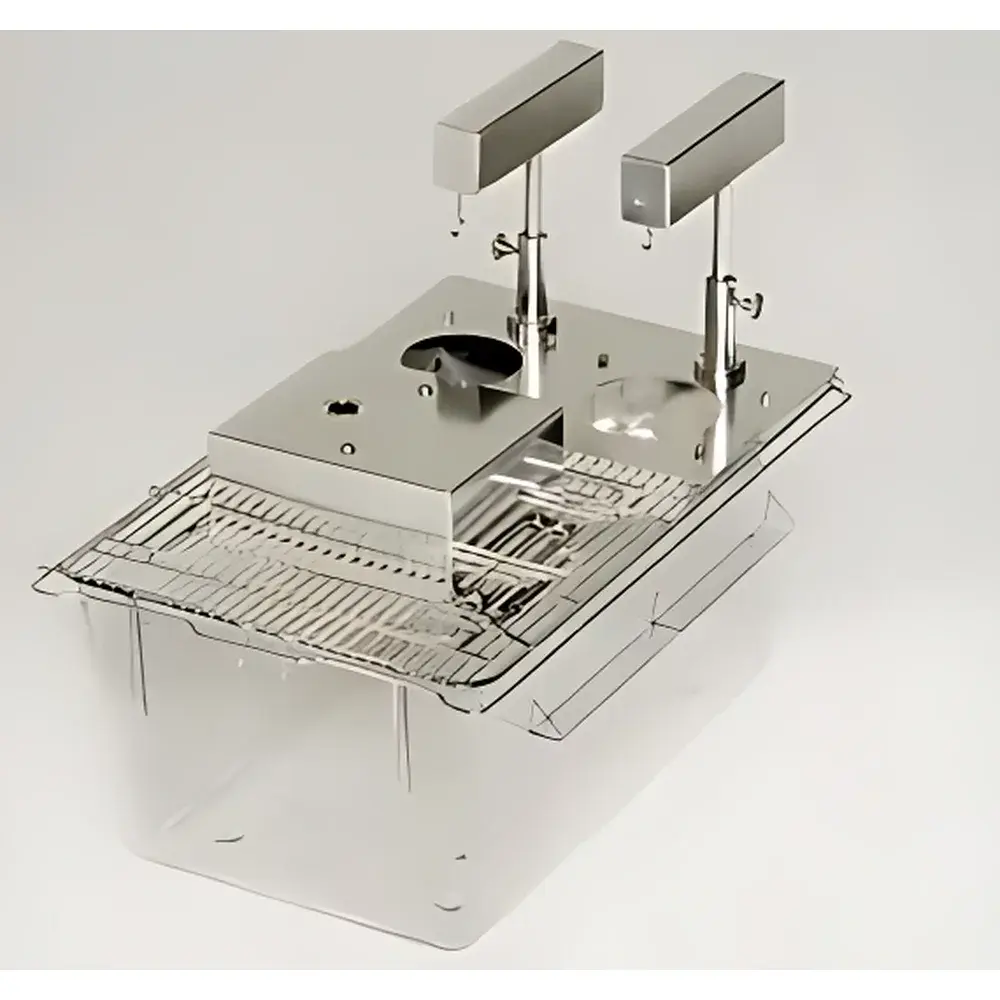
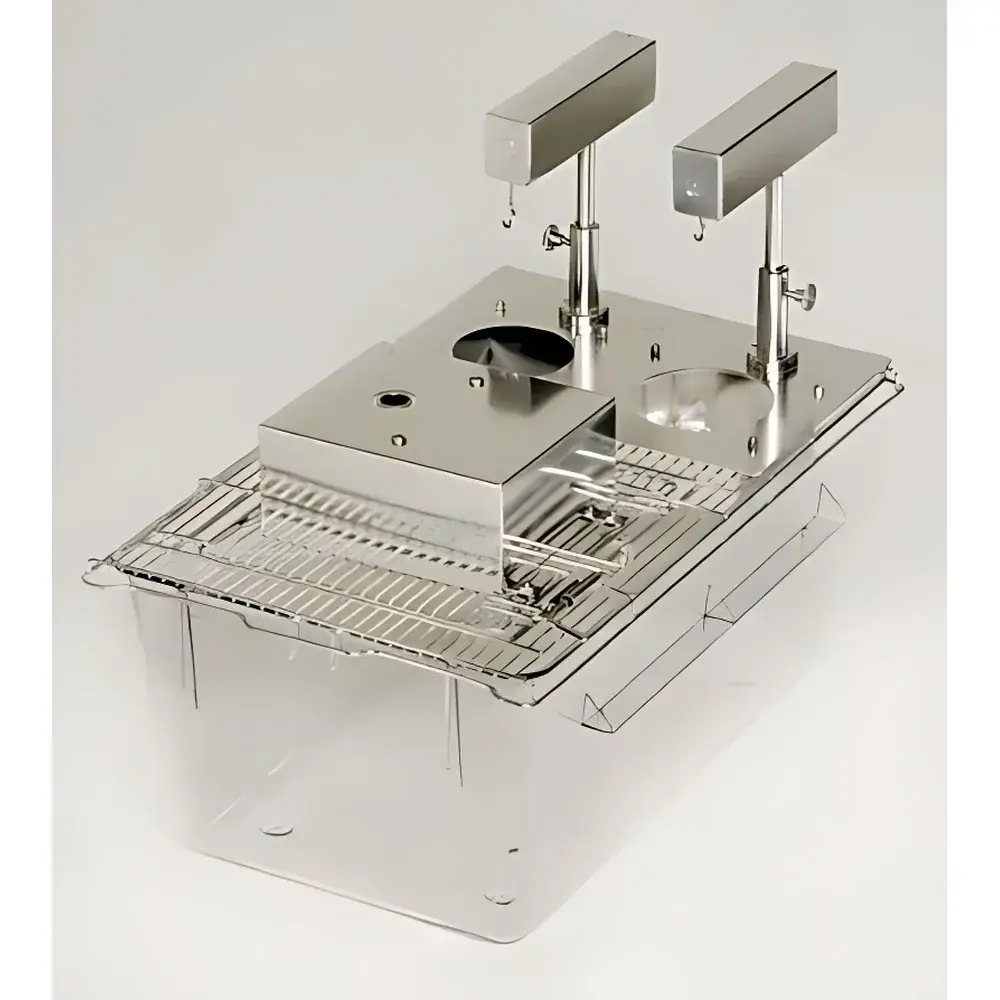
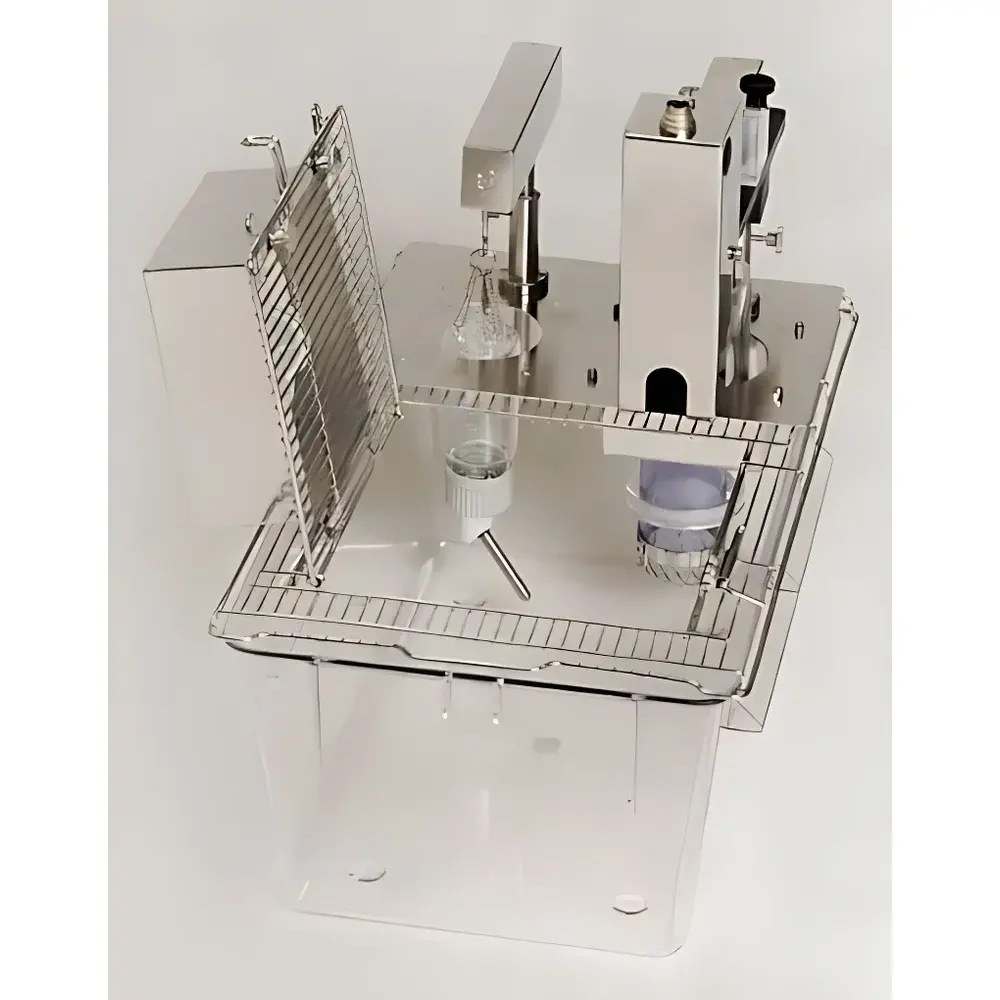
InfraMot by TSE Systems – Infrared-Based Total Activity Monitoring System for Rodent Behavioral Phenotyping
| Brand | TSE Systems |
|---|---|
| Origin | Germany |
| Model | InfraMot |
| Detection Principle | Passive Infrared (PIR) Thermal Imaging |
| Spatial Resolution | Cage-wide volumetric activity mapping |
| Temporal Resolution | Millisecond-level motion event detection |
| Installation | Top-mounted modular sensor unit compatible with PhenoMaster/LabMaster caging systems |
| Calibration | Factory-calibrated, zero user calibration required |
| Environmental Operation | Full light-independence (operational in total darkness or standard lighting) |
| Cage Compatibility | Universal fit for standard and custom rodent housing dimensions |
| Hygiene Design | Tool-free removable sensor head for autoclave-compatible cleaning |
Overview
The InfraMot system, developed by TSE Systems (Germany), is a non-invasive, infrared-based activity monitoring module engineered for longitudinal, high-fidelity quantification of total locomotor and postural activity in rodents under undisturbed housing conditions. Unlike optical or beam-break systems, InfraMot operates on passive infrared thermography—detecting minute temporal and spatial variations in emitted thermal radiation from the animal’s body surface. This principle enables reliable discrimination of movement events—including subtle shifts in posture, rearing, and brief locomotor bursts—as changes in infrared intensity patterns across the sensor’s wide-angle field of view. Designed as a core behavioral phenotyping component within the PhenoMaster and LabMaster platforms, InfraMot delivers continuous, label-free activity data without requiring implants, collars, or environmental modifications. Its millisecond-level temporal resolution supports circadian rhythm analysis, sleep-wake cycle staging, and detection of micro-movements associated with anxiety-related behaviors or neurological deficits. The system’s intrinsic light independence ensures consistent performance across photoperiod manipulation protocols, making it suitable for chronobiology, metabolic phenotyping, and neuropharmacological studies where environmental control is critical.
Key Features
- Passive infrared sensing—no emitted light, no animal restraint, no behavioral artifacts induced by illumination or tagging
- Millisecond temporal resolution for detection of transient motor events (e.g., startle responses, tremor episodes, grooming micro-movements)
- Wide-field thermal imaging coverage enabling simultaneous monitoring of multiple animals per cage and integration of rearing behavior into activity metrics
- Modular, top-mount design compatible with standard and custom rodent cages—including PhenoMaster metabolic cages, home-cage operant chambers, and isolation units
- Tool-free, autoclavable sensor head for rapid decontamination between experimental cohorts—compliant with GLP hygiene standards
- Zero-user calibration architecture: factory-aligned sensitivity and thermal baseline; no routine recalibration required during deployment
- Native integration with TSE’s PhenoMaster/LabMaster software suite for synchronized acquisition with metabolic, ingestive, and wheel-running parameters
Sample Compatibility & Compliance
InfraMot is validated for use with mice (C57BL/6, BALB/c, CD-1, FVB, etc.) and rats (Sprague-Dawley, Wistar, Long-Evans) housed in standard ventilated cages (IVCs), metabolic cages, and custom behavioral enclosures. Sensor geometry accommodates cage dimensions ranging from 20 × 20 cm to 45 × 30 cm footprint, with vertical clearance up to 35 cm. The system meets ISO 17025-relevant traceability requirements for measurement instrumentation used in preclinical research. Data output complies with FAIR principles (Findable, Accessible, Interoperable, Reusable) and supports audit trails required under GLP and 21 CFR Part 11 when deployed with validated PhenoMaster software configurations. All hardware components are CE-marked and manufactured under ISO 13485-certified quality management systems.
Software & Data Management
InfraMot data is acquired and processed exclusively via TSE’s PhenoMaster Suite (v6.5+), which provides real-time visualization, epoch-based activity binning (1-min to 1-h intervals), and automated event classification (e.g., ambulation vs. rearing). Raw thermal intensity time-series are stored in HDF5 format with embedded metadata (cage ID, timestamp, sensor gain, ambient temperature). Export options include CSV, MATLAB .mat, and standardized BIDS-compliant derivatives for cross-platform analysis. The software supports multi-cage parallel acquisition—up to 32 InfraMot units per host PC—and integrates seamlessly with third-party tools such as EthoVision XT (Noldus) via TCP/IP API for hybrid behavioral pipelines. Audit logs record all user actions, parameter changes, and data export events to fulfill regulatory documentation requirements.
Applications
- Circadian rhythm profiling: Continuous 24/7 activity monitoring across light-dark cycles, constant darkness, or jet-lag paradigms
- Neurobehavioral phenotyping: Quantification of hypoactivity in depression models, hyperactivity in ADHD or mania models, and bradykinesia in Parkinsonian rodents
- Metabolic-behavior coupling: Synchronized analysis of activity onset relative to feeding bouts, respiratory exchange ratio (RER), and energy expenditure
- Toxicology & drug safety: Detection of sedative, stimulant, or neuromuscular side effects in repeat-dose studies
- Aging research: Longitudinal tracking of age-related declines in spontaneous activity and diurnal amplitude
- Genetic screening: High-throughput behavioral characterization of transgenic or knockout lines in home-cage environments
FAQ
Does InfraMot require visible light to function?
No. It relies solely on passive infrared radiation emitted by the animal’s body and operates identically in total darkness, standard laboratory lighting, or infrared-only illumination.
Can InfraMot distinguish between multiple animals in one cage?
It quantifies total integrated activity per cage; individual animal separation requires complementary modules (e.g., RFID-tagged identification paired with PhenoMaster).
Is the sensor sensitive to ambient temperature fluctuations?
Yes—however, the system incorporates dynamic thermal drift compensation algorithms and is validated for stable operation across 18–26 °C ambient ranges typical of rodent facilities.
How is data synchronized with other PhenoMaster modules?
All modules share a common hardware clock and trigger bus; timestamps are aligned to sub-millisecond precision using IEEE 1588 PTP synchronization.
What maintenance is required?
Annual verification of thermal baseline stability is recommended; no routine optical cleaning or recalibration is necessary due to sealed optical path and factory calibration traceability.




