
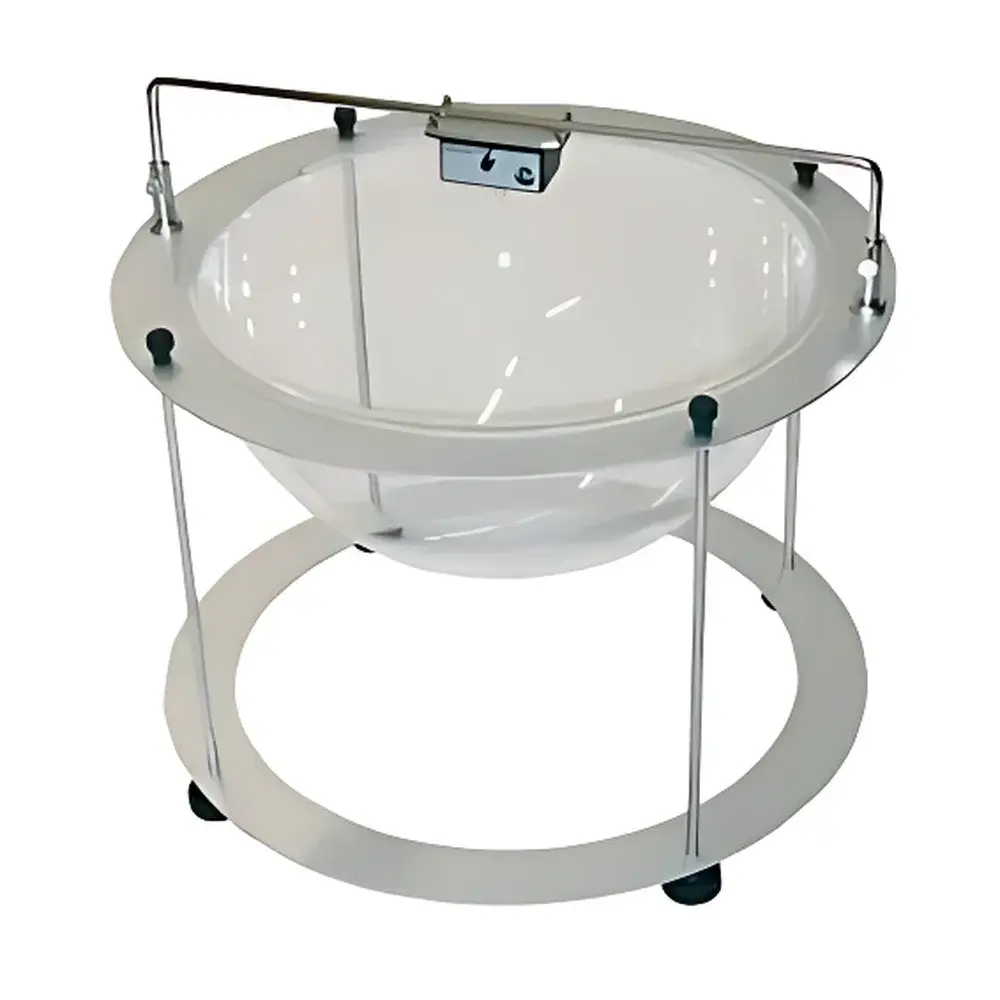
TSE Systems Rotameter Automated Circling Behavior Analyzer for Rodent Neurological Assessment
| Brand | TSE Systems |
|---|---|
| Origin | Germany |
| Manufacturer Type | Authorized Distributor |
| Origin Category | Imported |
| Model | Rotameter |
| Pricing | Upon Request |
Overview
The TSE Systems Rotameter is a computer-controlled, high-resolution circling behavior analysis system engineered for objective quantification of spontaneous rotational asymmetry in rodent models following unilateral brain lesions—particularly those induced by 6-OHDA, MPTP, or focal ischemia. Based on precise angular displacement sensing via an optomechanical rotary encoder, the system detects and differentiates clockwise (CW) and counterclockwise (CCW) rotations with a resolution of 1/250th of a full revolution (1.44°), enabling detection of subtle directional bias indicative of striatal dopaminergic imbalance. The device operates under open-field conditions within a defined behavioral arena, eliminating tethering artifacts while preserving natural locomotor freedom—a critical requirement for longitudinal neuropharmacological studies and preclinical validation of antiparkinsonian therapeutics.
Key Features
- High-fidelity rotary motion detection using a contactless optical encoder with bidirectional discrimination and 1.44° angular resolution
- Modular arena design: choice of transparent acrylic cylindrical or bowl-shaped enclosures (standard diameters: 20 cm and 30 cm) for optimal visual monitoring and video-synchronization capability
- Optional opaque polycarbonate cylinder variants for controlled photic environment testing (e.g., circadian or light-aversion paradigms)
- Interchangeable animal harnesses and lightweight, low-inertia coupling interfaces compatible with mice (18–35 g) and rats (200–400 g)
- USB 2.0 interface with plug-and-play driver support under Windows 10/11; no external power supply required
- Independent start/stop control across multiple units—enabling parallel cohort testing with synchronized or staggered acquisition protocols
- Remote operation capability via LAN or USB extension up to 5 m, supporting integration into centralized vivarium data acquisition networks
Sample Compatibility & Compliance
The Rotameter is validated for use with C57BL/6, Sprague-Dawley, and Wistar rodents under standardized housing and acclimatization conditions (12-h light/dark cycle, ambient temperature 22 ± 2°C, humidity 50–60%). All acrylic components comply with ISO 10993-5 (biocompatibility) and EU Directive 2002/72/EC for food-contact-grade polymers. System firmware and software architecture adhere to GLP-compliant data integrity principles: raw angular position timestamps are stored in binary format with embedded metadata (operator ID, session timestamp, calibration checksum), supporting audit-ready traceability. While not FDA-cleared as a medical device, the platform meets ASTM E2500-13 guidelines for verification of nonclinical laboratory instrumentation and supports 21 CFR Part 11-compliant electronic signatures when deployed with validated third-party LIMS environments.
Software & Data Management
The included Rotameter Control Suite (v4.2+) runs natively on Windows OS and provides real-time visualization of cumulative CW/CCW revolutions, instantaneous rotation rate (rev/min), and directional switch frequency. Users may configure adaptive filtering thresholds (e.g., minimum dwell time ≥200 ms per directional segment) to suppress noise from grooming or brief postural adjustments. Export options include CSV (tabular time-series), MATLAB .mat, and HDF5 formats—preserving native timestamp precision (10-ms resolution). Batch processing tools enable automated calculation of net rotation index [(CW − CCW)/(CW + CCW)], total rotation count, and latency-to-first-rotation metrics across multi-day datasets. Audit logs record all parameter modifications, ensuring reproducibility across laboratories.
Applications
- Quantitative assessment of dopaminergic denervation in Parkinson’s disease models
- Evaluation of neuroprotective or restorative efficacy of novel therapeutics (e.g., GDNF analogs, stem cell grafts, gene therapies)
- Pharmacokinetic–pharmacodynamic correlation of D2 receptor agonists/antagonists
- Validation of lesion symmetry and stability prior to behavioral phenotyping in transgenic lines
- Integration with simultaneous EEG, EMG, or fiber photometry setups for multimodal neural-behavioral correlation
FAQ
What species and weight ranges are supported?
Mice (18–35 g) and rats (200–400 g) are routinely tested; custom harness adapters are available upon request.
Is calibration required before each experiment?
A one-time factory calibration is embedded in firmware; users perform daily zero-point verification using the software’s “static baseline” routine.
Can data be synchronized with video tracking systems?
Yes—TTL pulse output (5 V, 10 ms width) is provided for hardware-triggered frame synchronization with Noldus EthoVision, ViewPoint, or custom OpenCV pipelines.
Does the system support automated threshold-based event triggering?
Yes—user-defined rotation count thresholds (e.g., “start recording after 5 consecutive CCW turns”) can initiate downstream actions including TTL output or external device activation.
What is the maximum continuous recording duration?
Limited only by host storage capacity; typical 7-day recordings at 100 Hz sampling generate <1.2 GB per channel.



