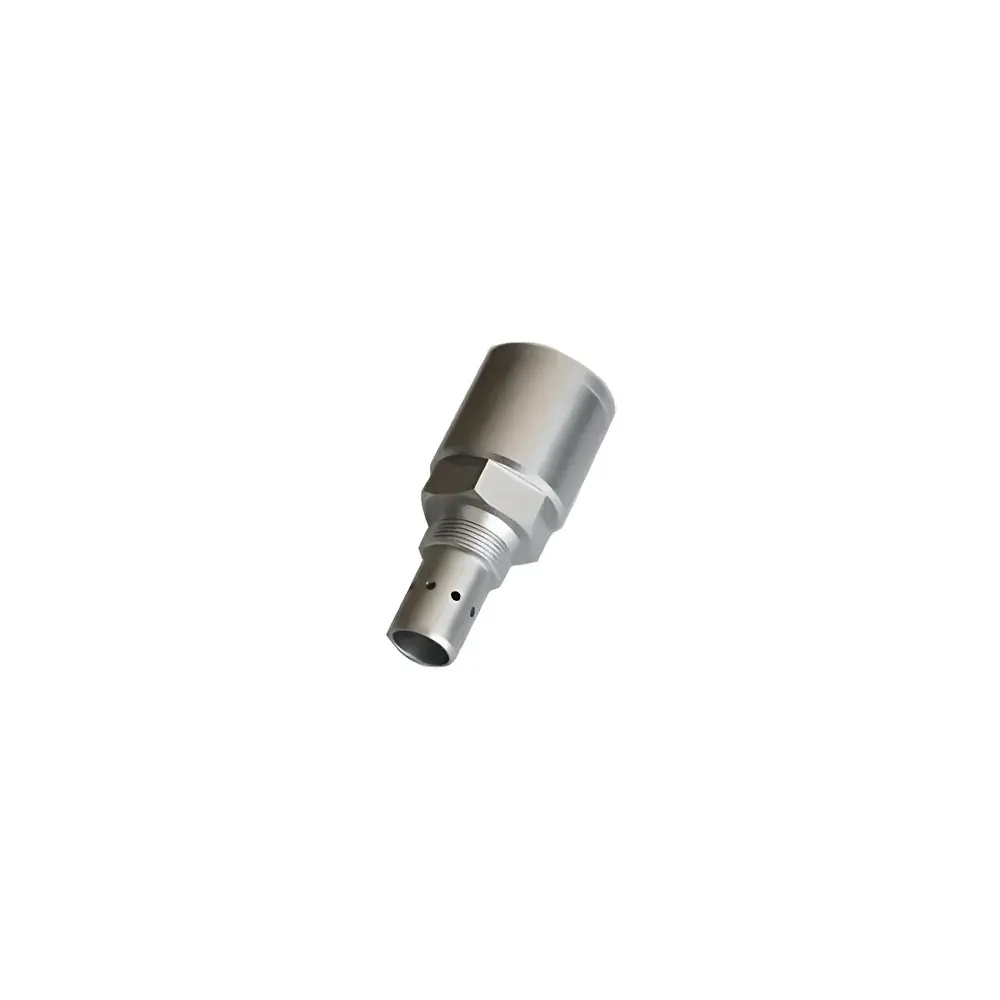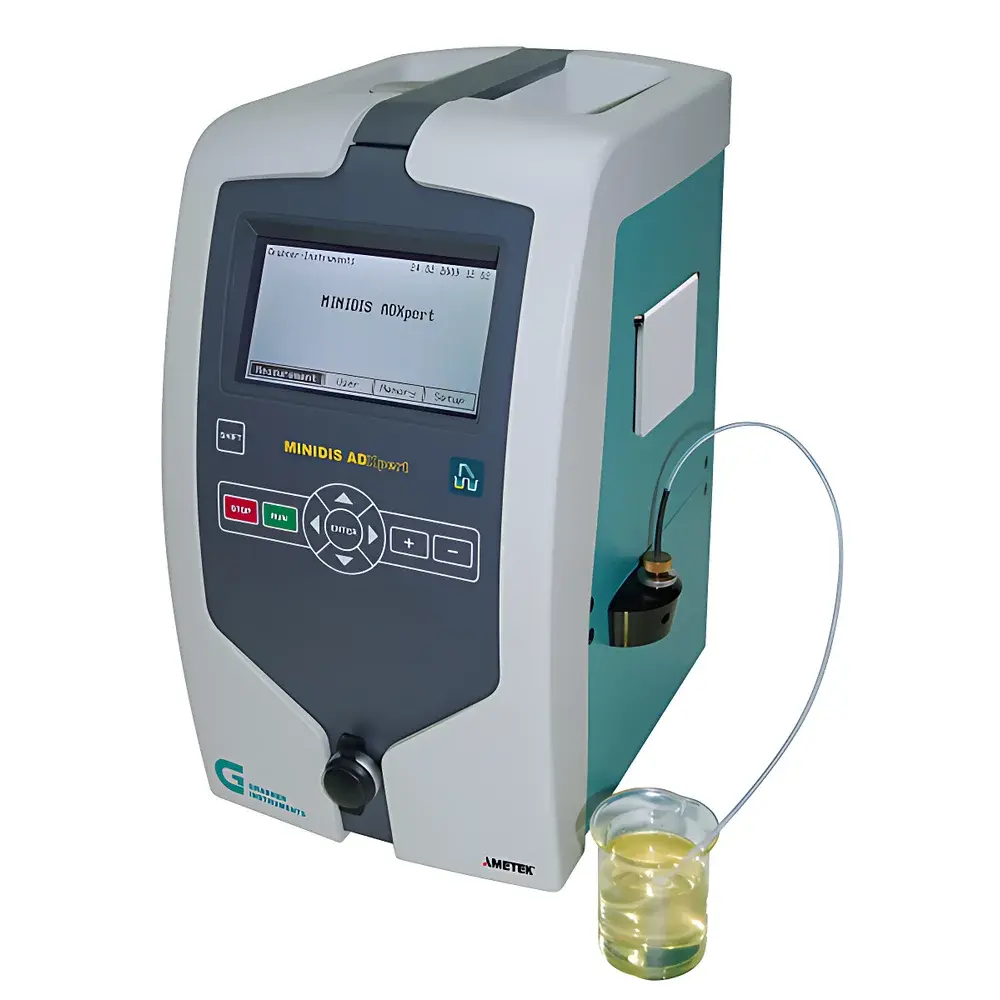
MiniDIS ADXpert Automated Micro Distillation Analyzer by GRABNER
| Brand | GRABNER |
|---|---|
| Origin | Austria |
| Model | MiniDIS ADXpert |
| Temperature Range | 0–400 °C |
| Temperature Accuracy | ±0.1 °C |
| Cold Bath Range | −20 °C to 60 °C |
| Distillation Rate | 1–11 mL/min |
| Volume Detection Range | 0.1 mL |
| Volume Resolution | 0.1 mL |
| Sample Volume | 6 mL |
| Residue Measurement Accuracy | ±0.003 g |
| Dimensions | 200 × 320 × 220 mm |
| Weight | 13 kg |
| Power Supply | 100–240 V AC, 50/60 Hz, 150 W |
| Optional DC Power | 12 V / 10 A |
Overview
The MiniDIS ADXpert is a fully automated micro distillation analyzer engineered for precise, rapid, and safe determination of distillation characteristics of petroleum and related liquid hydrocarbons in accordance with ASTM D86, ASTM D7344, ISO 3405, IP 123, and DIN 51751. Unlike conventional atmospheric distillation apparatuses relying on fragile glassware and manual operation, the MiniDIS ADXpert implements a sealed, metal-cup-based micro-distillation principle under true ambient pressure—eliminating open-flame heating, vapor leakage risks, and operator-dependent procedural variability. Its core measurement methodology combines Peltier-controlled heating and cooling, high-resolution gravimetric residue detection (±0.003 g), and real-time volume tracking via calibrated optical sensing. With a nominal sample volume of just 6 mL and typical test duration of 15 minutes for gasoline, the instrument delivers full D86-compliant distillation curves—including initial boiling point (IBP), 10%, 50%, 90%, and final boiling point (FBP)—while operating within a compact footprint (200 × 320 × 220 mm) suitable for benchtop, mobile lab, or field deployment.
Key Features
- Only micro distillation analyzer certified to ASTM D7344—the standard specifically developed for automated, low-sample-volume atmospheric distillation;
- True ambient-pressure distillation using robust, disposable stainless-steel sample cups—no glassware handling, no fire hazard, no external fire suppression systems required;
- Integrated Peltier thermoelectric cooling/heating system enabling precise, programmable temperature ramping (0–400 °C) with ±0.1 °C accuracy and dynamic cold bath control (−20 °C to 60 °C);
- Automated sample introduction, distillate collection, residue weighing, and solvent-based cleaning cycle (using acetone or approved solvents) — eliminating carryover and operator-induced error;
- Ten pre-configured test methods covering ASTM D86 Groups 0–4 (gasoline, aviation turbine fuel, diesel, kerosene, and heavy distillates), plus customizable endpoints and user-defined cut points;
- Onboard high-resolution display with guided menu navigation—no prior distillation expertise required; intuitive workflow from loading to report generation;
- Embedded pressure sensor with automatic barometric correction ensuring compliance across varying elevation and ambient conditions;
- Portable design (13 kg), optional 12 V DC vehicle-battery operation, and ruggedized enclosure validated for mobile laboratory and refinery-side deployment.
Sample Compatibility & Compliance
The MiniDIS ADXpert is validated for a broad spectrum of volatile and semi-volatile liquid samples, including but not limited to: unleaded gasoline (Group 0), aviation turbine fuels (Jet A-1, JP-8; Group 1), light and middle distillates (diesel, kerosene; Groups 2–3), and heavier fractions such as biodiesel blends, naphthas, solvents, aromatic hydrocarbons, and contaminated or blended feedstocks. Its low thermal mass and controlled heating profile allow successful distillation of traditionally problematic materials—including condensates, partially oxidized fuels, and viscous bio-oil mixtures—where conventional D86 setups fail due to cracking, foaming, or incomplete volatilization. All reported data meet repeatability (r) and reproducibility (R) criteria defined in ASTM D86 Annex A1 and are traceable to NIST-traceable reference standards. The system supports GLP-compliant audit trails when connected to LIMS via RS-232 or USB, and its firmware includes full 21 CFR Part 11–ready electronic signature and user-access logging capabilities.
Software & Data Management
Control and data acquisition are managed through MINIWIN PC software—a Windows-based application supporting remote instrument operation, method development, multi-user access control, and automated report export (PDF, CSV, XML). MINIWIN enables full integration into enterprise LIMS environments via standard OPC UA or HL7 interfaces. Each analysis generates a complete dataset including time-stamped temperature/volume pairs, derivative curves (dT/dV), residue mass, barometric correction logs, and calibration history. Up to 75 test results can be stored onboard with timestamp, operator ID, method name, and QC flagging. All raw and processed data are encrypted at rest and support configurable retention policies aligned with ISO/IEC 17025 documentation requirements. Software updates are delivered via secure HTTPS channel with SHA-256 integrity verification.
Applications
- Quality assurance of finished gasoline and blending components in refinery QC labs;
- Rapid distillation profiling of jet fuel batches prior to aircraft refueling;
- Field verification of diesel specifications at distribution terminals or marine bunkering sites;
- Research-grade characterization of biofuel blends (e.g., FAME, HVO) and synthetic hydrocarbons;
- Forensic analysis of contaminated or adulterated fuel samples in regulatory compliance testing;
- Distillation curve modeling input for process simulation (e.g., ASPEN, Petro-SIM) and crude assay reconciliation;
- Teaching laboratories requiring safe, repeatable, and standards-aligned distillation demonstrations.
FAQ
Is the MiniDIS ADXpert compliant with ASTM D86?
Yes—it produces data fully equivalent to ASTM D86 Group 0–4 results and is explicitly referenced in ASTM D7344 as the benchmark for micro-distillation validation.
Can it measure final boiling point (FBP) and residue accurately?
Yes—integrated precision balance (±0.003 g) enables gravimetric residue quantification, and the system automatically calculates FBP based on thermal plateau detection and volume termination logic.
What maintenance does the instrument require?
No routine mechanical calibration is needed; only periodic verification using certified reference oils and cleaning of the condenser path per GRABNER’s documented SOPs (every 50–100 runs).
Does it support unattended overnight operation?
Yes—queue-based batch processing, automatic shutdown, and fault-detection routines enable lights-out operation with email/SNMP alerting on completion or error.
How is method validation performed?
GRABNER provides a full IQ/OQ/PQ protocol package aligned with ISO/IEC 17025, including uncertainty budgeting, linearity assessment, and interlaboratory comparison templates.
Related Products