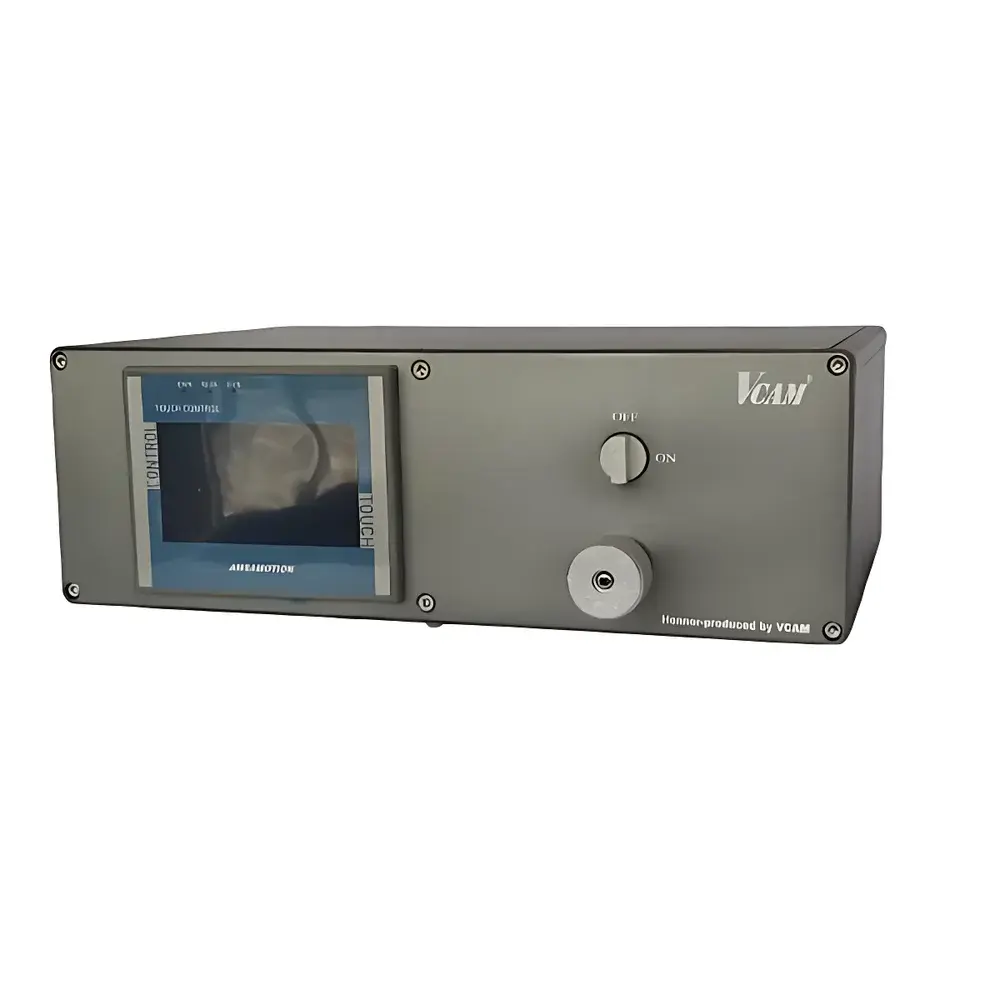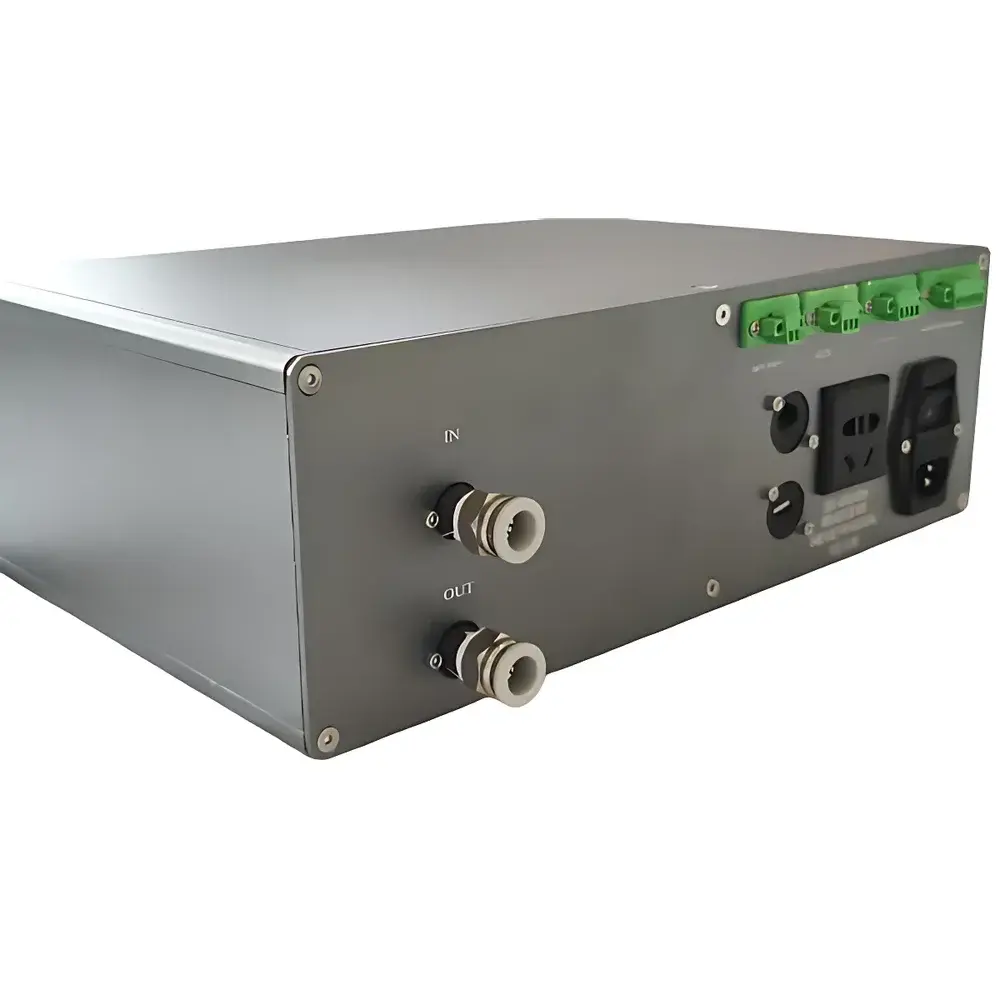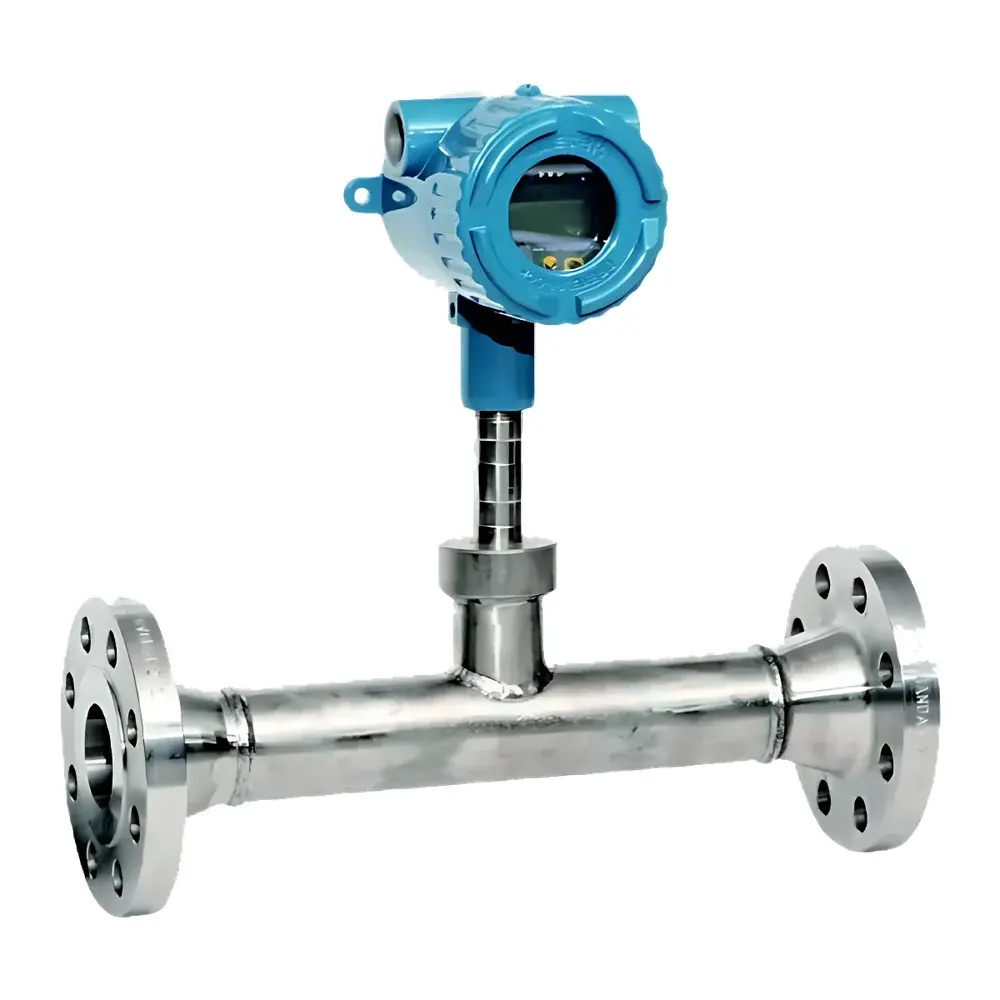
Drexelbrook VC Series In-Line Water-in-Oil Analyzer
| Brand | Drexelbrook |
|---|---|
| Origin | Shanghai, China |
| Manufacturer Type | Authorized Distributor |
| Product Category | Level Meter / Water-in-Oil Analyzer |
| Model | Drexelbrook VC Series In-Line Water-in-Oil Analyzer |
| Measurement Principle | Radio Frequency Admittance (RF Admittance) |
| Water-in-Oil Range | 0–50% for light oils |
| Max. Operating Temperature | 232 °C |
| Max. Operating Pressure | 10 MPa |
| Output Signal | 4–20 mA with HART Protocol |
| Installation | Flanged |
| Certifications | ATEX, IECEx, CSA, FM (Class I, Div 1/2, Groups B, C, D) |
| Sensor Maintenance | Cleanable, Robust Stainless Steel Construction |
| Flow & Wax Immunity | Yes |
| Configuration Options | Integral or Remote Electronics, Multiple Probe Lengths and Process Connections |
Overview
The Drexelbrook VC Series In-Line Water-in-Oil Analyzer is an industrial-grade, process-integrated measurement instrument engineered for continuous, real-time quantification of water concentration in hydrocarbon-based liquids. It operates on the well-established radio frequency admittance (RFA) principle — a capacitance-based sensing technique enhanced with conductance compensation to eliminate errors from coating, buildup, or conductivity variations. Unlike optical or microwave methods, RFA provides stable, drift-resistant output in viscous, opaque, or electrically heterogeneous media such as crude oil, refinery tar, lubricating oils, and fuel blends. The analyzer is designed for permanent installation directly into pressurized pipelines, eliminating the need for sample extraction, conditioning, or bypass loops. Its core function is not level detection per se, but rather the precise discrimination of dielectric contrast between hydrocarbon phases and dispersed aqueous phases — enabling reliable water cut monitoring in upstream production, midstream transfer, and downstream refining applications.
Key Features
- True in-line measurement architecture with no moving parts or consumables
- Wide dynamic range: 0–50% water-in-light-oil (e.g., naphtha, diesel) and 0–80% water-in-heavy-oil (e.g., bitumen, vacuum residue,焦油)
- High-temperature and high-pressure rated sensor: up to 232 °C and 10 MPa (1450 psi), suitable for direct installation on heater treaters, desalters, and multiphase manifolds
- Coating-tolerant probe design with self-compensating RF excitation; immune to wax deposition, sludge accumulation, and flow-induced turbulence
- Flanged mounting per ANSI/ASME B16.5 (Class 150–2500) or DIN/EN 1092-1 standards; available with integral or remotely mounted electronics for hazardous area zoning compliance
- 4–20 mA analog output with full HART 7 protocol support for configuration, diagnostics, and live parameter readout via handheld or DCS-integrated tools
- Global intrinsic safety and explosion protection certifications: ATEX II 1/2G Ex ia IIC T6 Ga/Gb, IECEx Ex ia IIC T6 Ga, FM Class I, Div 1, Groups B, C, D, T6, CSA C1/D1
Sample Compatibility & Compliance
The VC Series is validated for use across a broad spectrum of petroleum-derived fluids, including but not limited to: crude oil (API 10–45°), synthetic crude, emulsified bitumen, refinery slops, spent caustic, lube base stocks, and jet fuel blends. It does not require phase separation, temperature stabilization, or density correction — making it inherently compatible with turbulent, unsteady, or multiphase flow regimes typical in automatic transfer stations, wellhead manifolds, and pipeline custody transfer points. From a regulatory standpoint, the device supports audit-ready operation under GLP and GMP frameworks through configurable HART-tagged calibration logs and timestamped diagnostic events. While not a pharmaceutical-grade instrument, its output traceability, repeatability (<±0.5% full scale), and long-term stability meet ASTM D4006 (Standard Test Method for Water in Crude Oil by Distillation) verification requirements when used as a process control surrogate.
Software & Data Management
The VC Series integrates seamlessly into modern DCS, SCADA, and MES environments via native HART communication. Configuration is performed using Drexelbrook’s proprietary VC Configurator software (Windows-based), which enables field or engineering station setup of zero/span calibration, damping filters, alarm thresholds, and linearization curves based on fluid-specific dielectric databases. All configuration changes are logged with user ID, timestamp, and parameter delta — satisfying FDA 21 CFR Part 11 requirements for electronic records and signatures when deployed in regulated refining units. Optional Modbus TCP or Foundation Fieldbus H1 interface modules are available for legacy system integration. No cloud connectivity or firmware-over-the-air updates are supported; all firmware revisions undergo IEC 61508 SIL 2 functional safety validation prior to release.
Applications
- Real-time water cut monitoring at wellhead automatic transfer stations and manifold headers
- Custody transfer verification for crude oil pipelines and terminal loading arms
- Emulsion breakage optimization in heater treaters and electrostatic desalters
- Water ingress detection in turbine lubrication systems and hydraulic reservoirs
- Process control feedback for automated demulsifier dosing systems
- Compliance reporting for environmental discharge limits (e.g., EPA 40 CFR Part 112)
FAQ
Is the VC Series suitable for measuring water in biodiesel or bio-oil blends?
Yes — provided the blend viscosity remains below 500 cSt and free water content does not exceed 80%. Calibration against reference Karl Fischer titration data is recommended for non-petroleum feedstocks.
Can the sensor be installed vertically or only horizontally?
It supports both orientations; however, vertical installation requires confirmation of full pipe fill and absence of air pockets upstream. Orientation-specific mounting brackets are available.
Does the analyzer require periodic recalibration?
Field zero calibration is recommended every 6–12 months depending on service conditions; span verification against a known standard is advised after major process upsets or maintenance events.
What materials are available for wetted parts?
Standard construction uses 316L stainless steel; Hastelloy C-276 and Alloy 825 options are available for highly corrosive sour service or high-chloride environments.
How is sensor fouling addressed during operation?
The RFA sensing method inherently compensates for thin, uniform coatings. For heavy wax or asphaltene buildup, optional ultrasonic cleaning interfaces or mechanical scraper couplings can be integrated at the flange level.