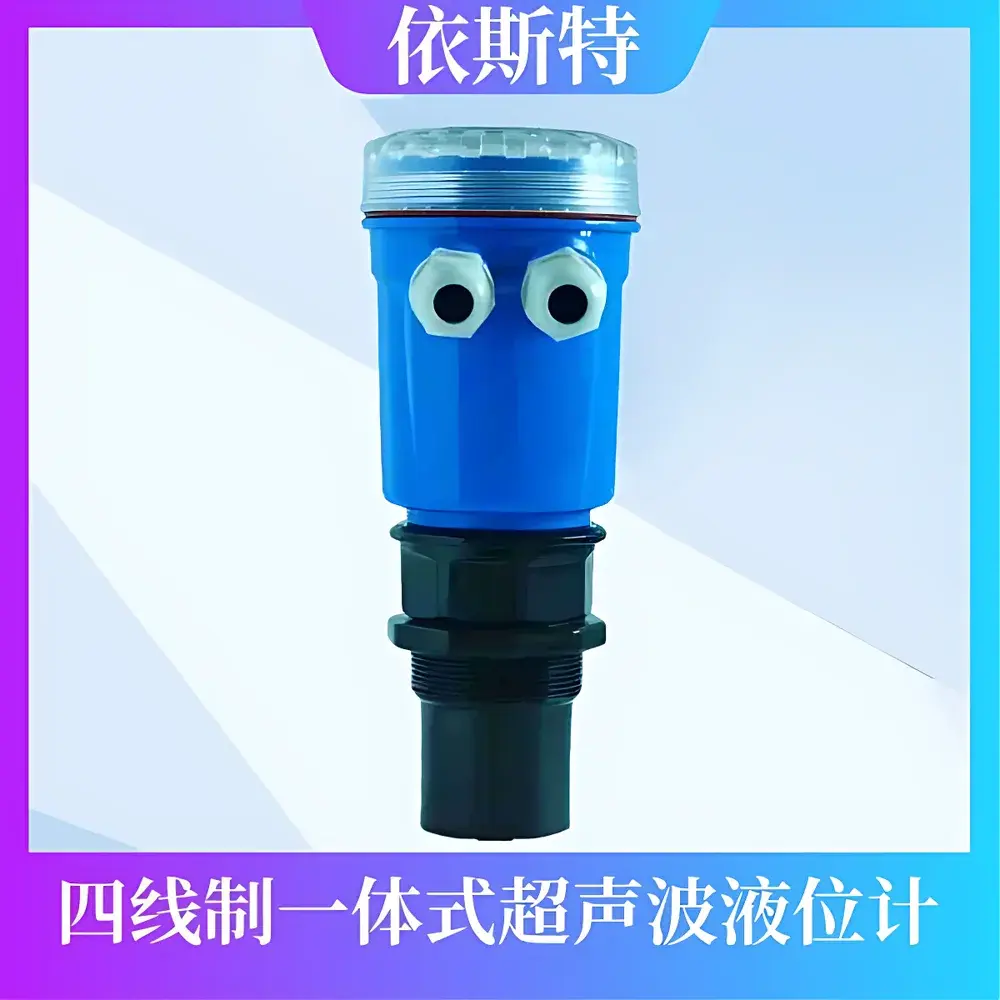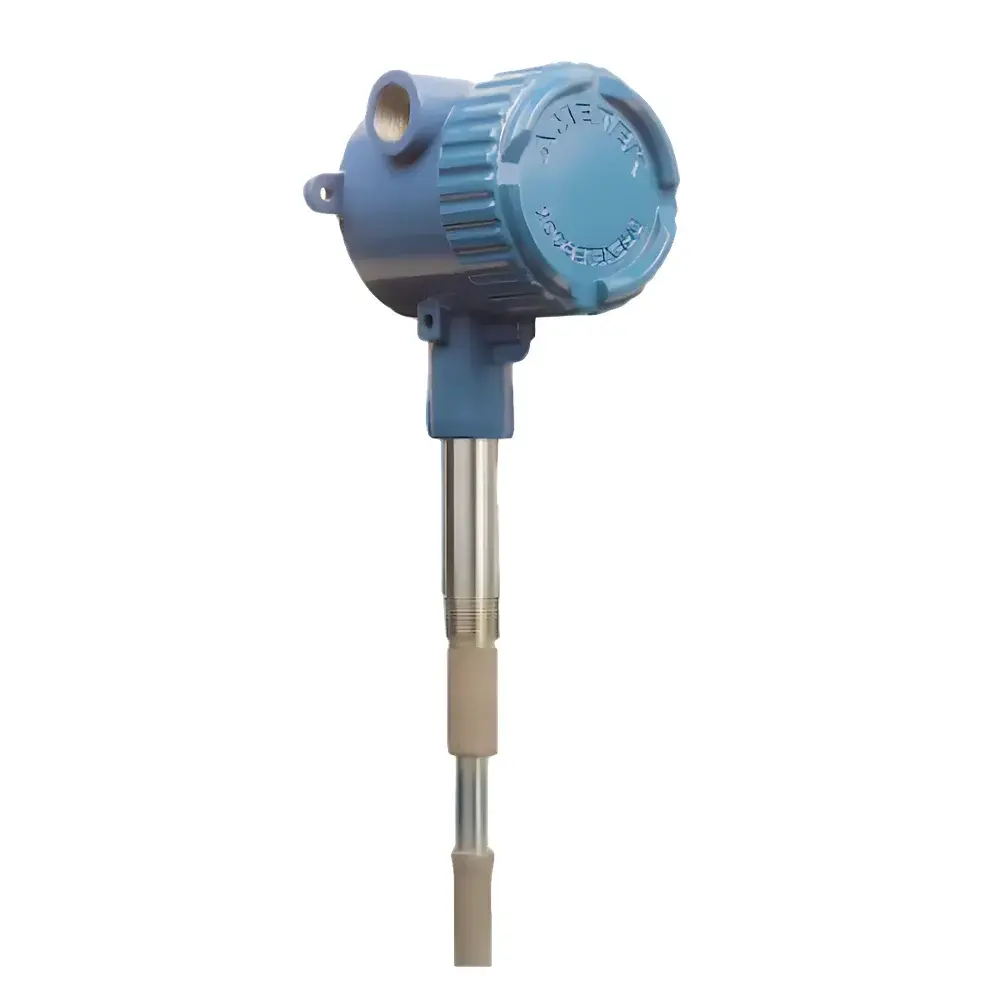
Drexelbrook ThePoint RF Admittance Level Switch
| Brand | Drexelbrook |
|---|---|
| Origin | Shanghai, China |
| Model | ThePoint RF Admittance Level Switch |
| Product Type | Level Switch |
| Power Supply | Dual AC/DC or Loop-Powered |
| Certification | ATEX, IECEx, CSA Class I Div 1/2, FM Class I Div 1/2 |
| Max Operating Temperature | 815 °C (with optional high-temp probe) |
| Max Operating Pressure | 27.5 MPa (with optional high-pressure housing) |
| Sensor Configurability | Field-trimmable length, no moving parts |
| Dielectric & Conductivity Immunity | Yes |
| Calibration | Factory-set, zero-field calibration required only for extreme process changes |
Overview
The Drexelbrook ThePoint RF Admittance Level Switch is an intrinsically robust, field-proven point-level detection instrument engineered for reliable on/off level signaling in demanding industrial process environments. Utilizing radio-frequency (RF) admittance measurement technology, the device detects changes in the composite impedance—comprising capacitance and conductance—at the sensor tip when material contacts or departs the probe. Unlike traditional capacitive switches, ThePoint employs a three-terminal sensing architecture that actively compensates for coating, buildup, and variations in dielectric constant (εr) or bulk conductivity—enabling stable operation across solids, slurries, viscous liquids, and foaming media without false tripping. Designed for continuous duty in critical safety- and availability-sensitive applications—including boiler drum level interlocks, hopper high-level alarms, and separator interface detection—the switch operates independently of material density, temperature drift, or pressure fluctuations within its rated envelope.
Key Features
- True RF admittance sensing with guard-driven electrode architecture for immunity to coating, bridging, and dielectric variability
- No mechanical moving parts—eliminates wear, maintenance, and failure modes associated with float, paddle, or tuning fork mechanisms
- Flexible power options: 24 VDC loop-powered configuration (compatible with HART-enabled systems), or universal 20–265 VAC/VDC input without internal jumpers
- Field-adaptable probe length: stainless steel or Hastelloy C-276 sensors can be cut or extended on-site to match vessel geometry and mounting constraints
- Comprehensive hazardous area certification portfolio—including ATEX II 1G Ex ia IIC T6 Ga, IECEx ia IIC T6 Ga, FM Class I, Div 1, Groups A–D, and CSA C1/D1—supporting both flameproof (d) and intrinsic safety (ia) installations
- High-temperature and high-pressure variants available: probe assemblies rated up to 815 °C (1500 °F) and housings qualified to 27.5 MPa (4000 psi) per ASME B16.5 and PED 2014/68/EU
Sample Compatibility & Compliance
The ThePoint switch reliably detects level presence across heterogeneous process media—including abrasive powders (e.g., cement, fly ash), conductive slurries (e.g., kaolin, lime slurry), non-conductive granules (e.g., plastic pellets, grain), and aggressive liquids (e.g., caustic soda, sulfuric acid). Its adaptive signal processing rejects false triggers caused by condensation, steam blanketing, or sensor fouling. All units comply with IEC 61508 SIL 2 functional safety requirements when integrated into certified SIS architectures. Electrical design conforms to IEC 61000-6-2 (immunity) and IEC 61000-6-4 (emissions); mechanical construction adheres to ISO 9001:2015 manufacturing controls and NIST-traceable calibration protocols. Documentation supports FDA 21 CFR Part 11-compliant validation packages for pharmaceutical and biotech users.
Software & Data Management
While ThePoint is a hardwired, analog-level switch with no embedded microprocessor or firmware, its output interface is fully compatible with distributed control systems (DCS), programmable logic controllers (PLC), and safety instrumented systems (SIS) via discrete 24 VDC or relay dry-contact signals. Optional HART 7 digital overlay enables remote verification of sensor health, diagnostic status (e.g., short-circuit, open-circuit, coating alarm), and configuration lockout—accessible through standard handheld communicators or asset management platforms such as Emerson DeltaV or Honeywell Experion. Audit trails and change logs are maintained at the host system level per ISA-84.00.01 / IEC 61511 lifecycle requirements.
Applications
- High-temperature steam drum level monitoring in utility and waste-to-energy boilers
- Interface detection between immiscible phases in API refinery separators and desalters
- Overfill protection for silos handling hygroscopic or electrostatically charged powders
- Low-level alarm in agitated reactors containing polymer melts or catalyst slurries
- Critical level verification in nuclear service feedwater heaters and condensate storage tanks
- Non-invasive retrofitting into legacy vessels where invasive insertion or vibration-based technologies are prohibited
FAQ
Does ThePoint require periodic recalibration during service life?
No—factory-set sensitivity remains stable over time due to solid-state electronics and temperature-compensated oscillator design. Re-calibration is only advised after physical probe modification or exposure to extreme thermal shock beyond specification limits.
Can it detect level in highly viscous or coated applications such as bitumen or molasses?
Yes—the guard electrode actively nullifies the effect of conductive or dielectric coatings; empirical testing confirms stable switching performance even with 3 mm of cured asphalt buildup.
Is third-party SIL verification documentation available?
Yes—TÜV Rheinland and exida-certified FMEDA reports, PFDavg calculations, and hardware fault tolerance analysis are provided upon request for SIS integration planning.
What mounting configurations are supported?
Standard NPT, BSPP, and flanged (ANSI 150–2500#, DIN PN10–400) options; side-entry, top-entry, and sanitary tri-clamp variants available for hygienic applications.