
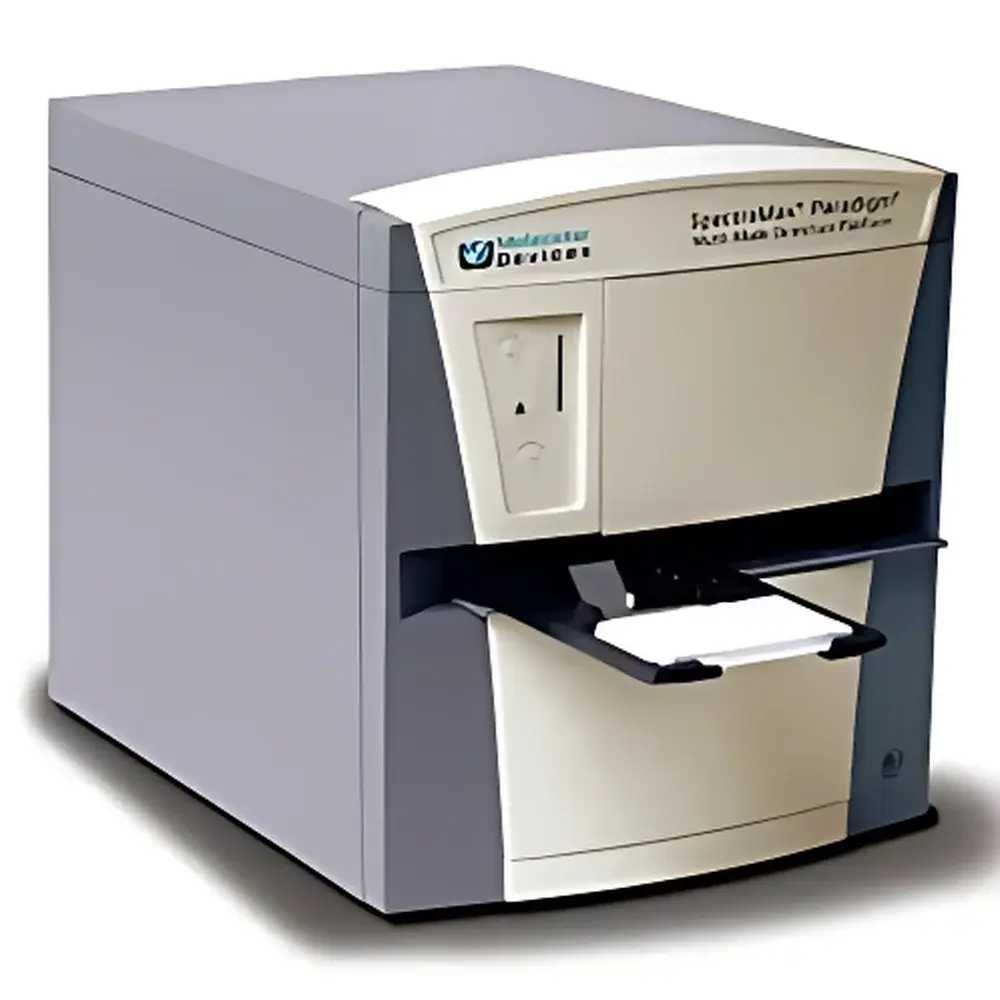
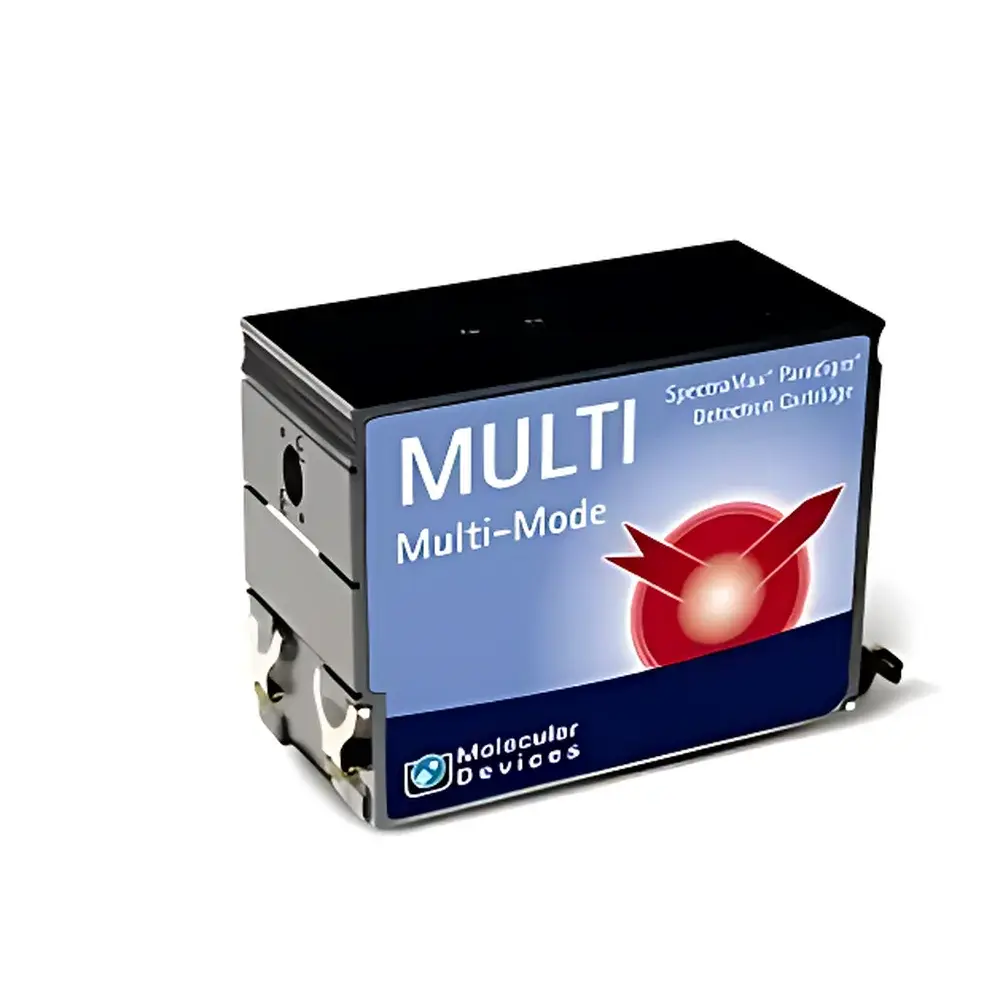
Molecular Devices SpectraMax Paradigm Modular Microplate Reader
| Brand | Molecular Devices |
|---|---|
| Origin | USA |
| Manufacturer Type | Original Equipment Manufacturer (OEM) |
| Origin Category | Imported |
| Model | SpectraMax Paradigm |
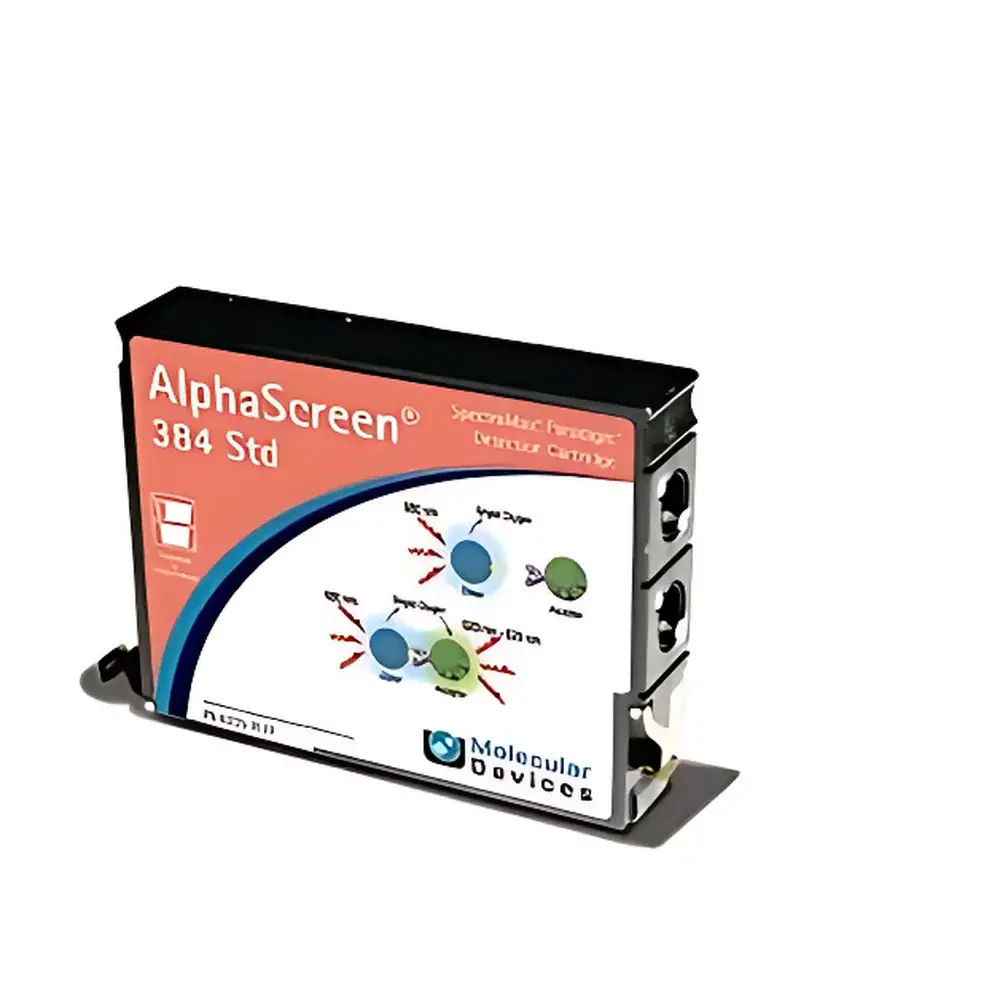
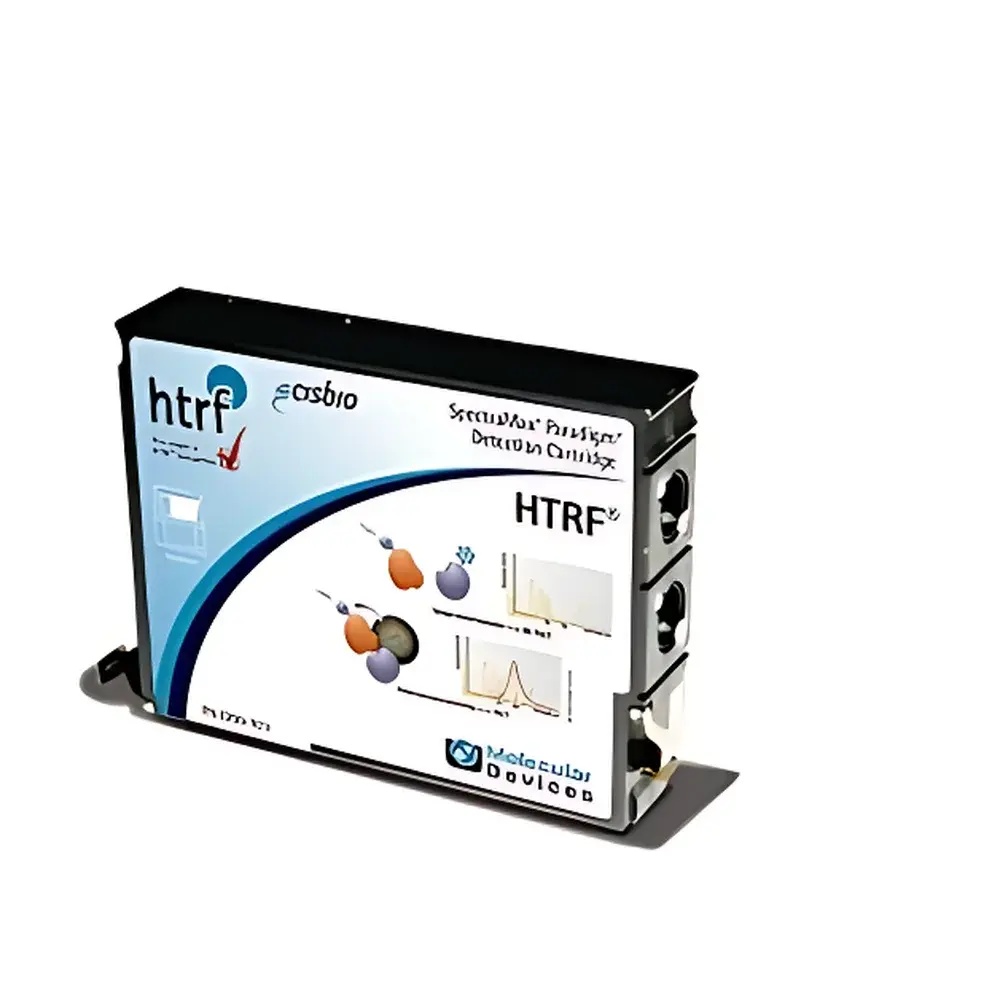
| Detection Methods | Absorbance, Fluorescence Intensity (FI), Time-Resolved Fluorescence (TRF), Fluorescence Polarization (FP), Homogeneous Time-Resolved Fluorescence (HTRF), AlphaScreen/AlphaLISA, Chemiluminescence (GL) |
| Automation Level | Fully Automated |
| Assay Modes | Endpoint, Kinetic, Spectral Scan, Linear Scan, Well Scan |
| Wavelength Range | 230–1000 nm |
| Absorbance Range | 0–3.5 OD (linear) |
| Wavelength Accuracy | ±1 nm |
| Photometric Precision | ±1% + 0.005 OD |
| Detector System | Dual Independent Photomultiplier Tubes (PMTs) |
| Upgrade Mechanism | Hot-swappable Application-Specific Cartridges (≤2 min installation) |
Overview
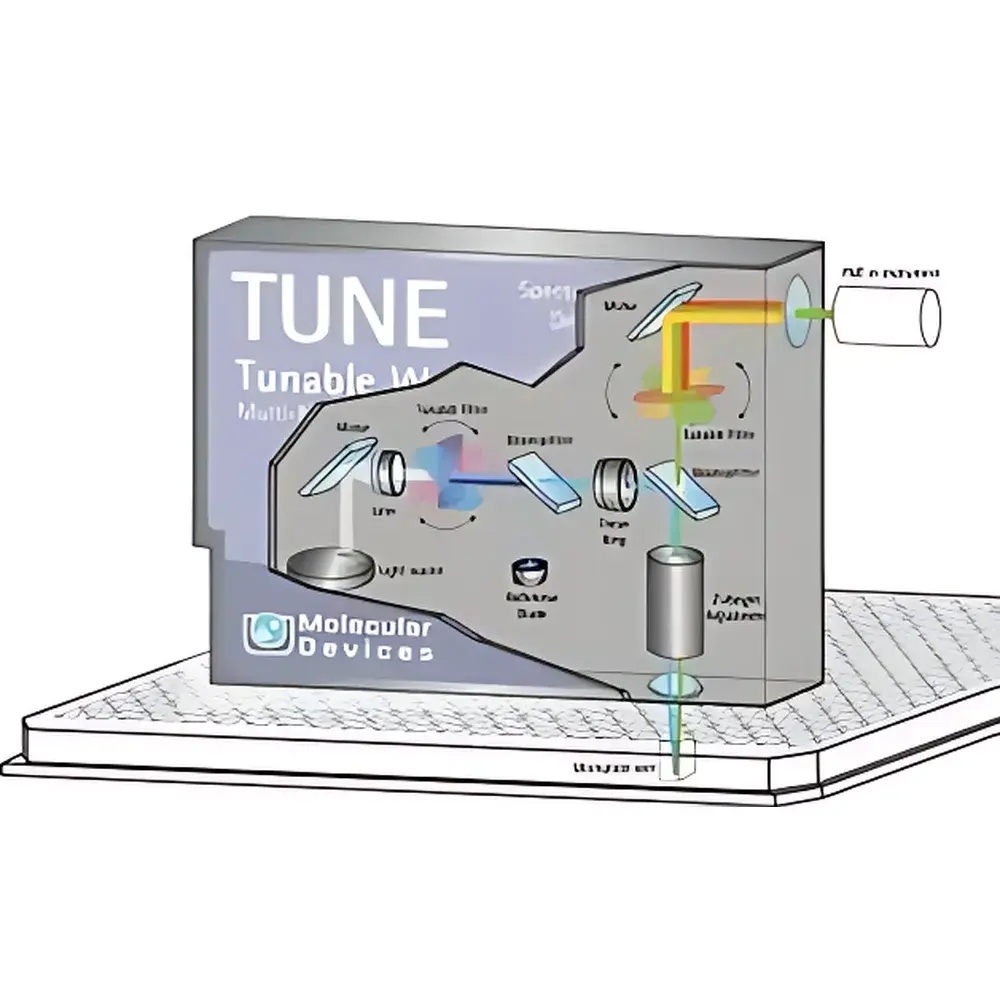
The Molecular Devices SpectraMax Paradigm Modular Microplate Reader is an engineered platform for quantitative multi-mode detection in life science research and drug discovery laboratories. Built upon a patented cartridge-based optical architecture, it implements discrete, application-optimized excitation and emission pathways—each housed within a self-contained, field-replaceable module. This design decouples hardware evolution from instrument obsolescence: users retain full system compatibility while incrementally integrating new detection modalities—including absorbance (ABS), fluorescence intensity (FI), time-resolved fluorescence (TRF), fluorescence polarization (FP), homogeneous time-resolved fluorescence (HTRF), AlphaScreen/AlphaLISA, and both glow- and flash-type chemiluminescence (GL)—without recalibration or service intervention. The core measurement principle varies per cartridge: ABS relies on Beer–Lambert law-compliant photodiode or PMT-based transmittance; FI and FP employ high-stability LED or xenon flash sources with dichroic filtering and dual-PMT detection; TRF and HTRF utilize pulsed excitation and gated acquisition to suppress short-lived background; chemiluminescence modes leverage ultra-low-noise PMTs with dark-current compensation. All modules operate under unified firmware control and share common plate-handling mechanics, Z-height auto-focusing, and thermal regulation—ensuring cross-mode reproducibility and assay transferability.
Key Features
- Modular cartridge architecture enabling field-upgradable detection capabilities—no downtime, no service engineer required.
- Auto Z-height optimization for top- and bottom-read configurations, dynamically adjusting focal plane across variable well geometries (e.g., 384-well, 1536-well, or low-volume plates).
- Gain-free fluorescence detection via energy-intensity optimization: single-plate dynamic range spans seven orders of magnitude without manual gain adjustment.
- Dual independent PMT detectors supporting simultaneous dual-emission or ratiometric measurements with <1 ms inter-channel latency.
- Application-specific optical engines per cartridge: high-power LEDs for stable FI, pulsed xenon for broad-spectrum scanning, or laser-diode sources for Alpha assays—each paired with dye-matched bandpass filters and optimized light collection optics.
- Integrated PathCheck sensor for real-time pathlength correction across microplate formats, converting raw OD values into standardized 1-cm equivalent absorbance.
Sample Compatibility & Compliance
The SpectraMax Paradigm supports standard ANSI/SLAS-compliant microplates (6–1536-well), including clear-bottom, black, white, and UV-transparent plates. It accommodates opaque membranes (e.g., for ScanLater Western Blot cartridges) and adherent-cell assays requiring bottom-read geometry. All detection cartridges are validated against ISO/IEC 17025 traceable reference standards and comply with GLP/GMP documentation requirements when used with SoftMax Pro 7 software’s audit-trail-enabled workflows. The system meets FDA 21 CFR Part 11 criteria for electronic records and signatures when configured with user authentication, session logging, and immutable data archiving. HTRF cartridges carry official Cisbio certification for TR-FRET assay performance; AlphaScreen/AlphaLISA modules adhere to PerkinElmer’s published sensitivity benchmarks (e.g., ≥100 mP polarization resolution at 1 nM fluorescein).
Software & Data Management
SoftMax Pro 7 software provides native instrument control, protocol automation, and integrated data analysis. It includes over 140 pre-validated assay templates—covering ELISA, qPCR quantification, cAMP second-messenger profiling, kinase activity, cytotoxicity (e.g., CellTiter-Glo), and Western blot densitometry—with editable parameters and validation metadata. Real-time data visualization supports kinetic overlays, spectral deconvolution, well-scanned heatmaps, and 3D surface plots. Advanced analysis features include plate cloning for parallel computation across datasets, cross-plate interpolation using reference standards, EC50/IC50 curve fitting (with 19 nonlinear regression models), Z’-factor calculation for assay robustness assessment, and custom formula scripting via SyntaxHelper. Raw data exports conform to MIAME-compliant CSV and XML formats; audit logs record all user actions, parameter changes, and calibration events with timestamps and operator IDs.
Applications
The platform serves diverse applications across academic, biopharma, and clinical research settings. Absorbance cartridges enable nucleic acid/protein purity assessment (A260/A280, A260/A230), cell viability (MTT, XTT), and enzymatic kinetics (e.g., β-galactosidase, LDH). Fluorescence cartridges support DNA/RNA quantification (Qubit, PicoGreen), GFP reporter assays, receptor-ligand binding (FP-based Kd determination), SNP genotyping, and protein-protein interaction screening (FRET, TR-FRET). Chemiluminescence modules facilitate ultrasensitive immunoassays (e.g., Luminex-compatible readouts), luciferase reporter gene assays (cAMP, NF-κB), and cytotoxicity endpoints (Caspase-3/7). Specialized cartridges extend utility to GPCR signaling (cAMP accumulation in live cells), membrane-bound kinase profiling, chromatin immunoprecipitation (ChIP) quantification, and high-content western blot analysis via ScanLater technology.
FAQ
How does the cartridge-based upgrade process work?
Cartridges are mechanically keyed and electrically authenticated. Upon insertion, the system auto-detects the module type, loads corresponding firmware drivers, and validates optical alignment via internal reference signals—all within 90 seconds.
Can multiple cartridges be used simultaneously?
No—only one detection cartridge operates at a time. However, the system retains full configuration memory for each installed cartridge, allowing seamless switching between modes without reconfiguration.
Is SoftMax Pro software included with purchase?
Yes—SoftMax Pro 7 is bundled with perpetual license, including all current assay templates, analysis modules, and remote monitoring capability via web browser interface.
What regulatory documentation is provided for GxP environments?
A complete validation package is available upon request, including IQ/OQ protocols, traceable calibration certificates, 21 CFR Part 11 compliance report, and risk-based validation guidance aligned with ASTM E2500 and ICH Q5A.
Does the system support temperature-controlled assays?
Yes—the optional integrated incubator maintains plate temperatures from ambient +4°C to 45°C with ±0.5°C uniformity across 96-well format, validated per ISO 15197 Annex B.




