
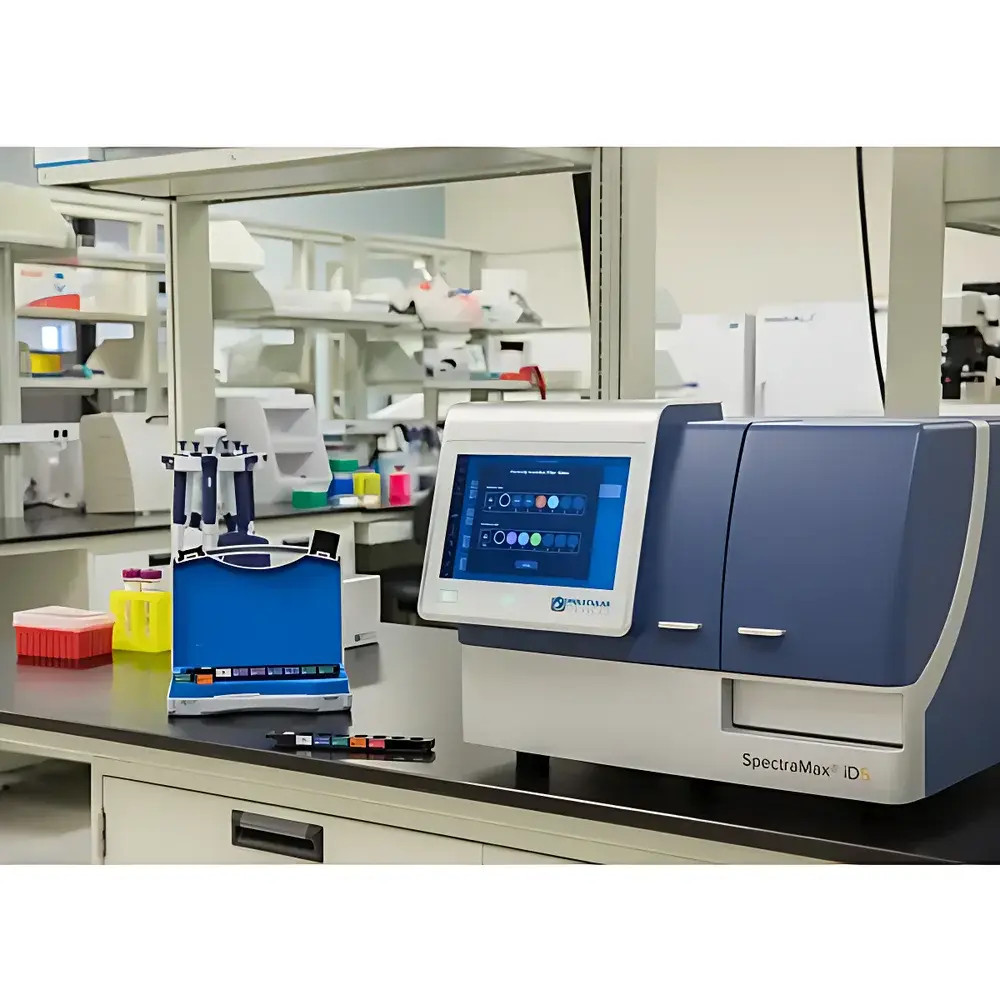
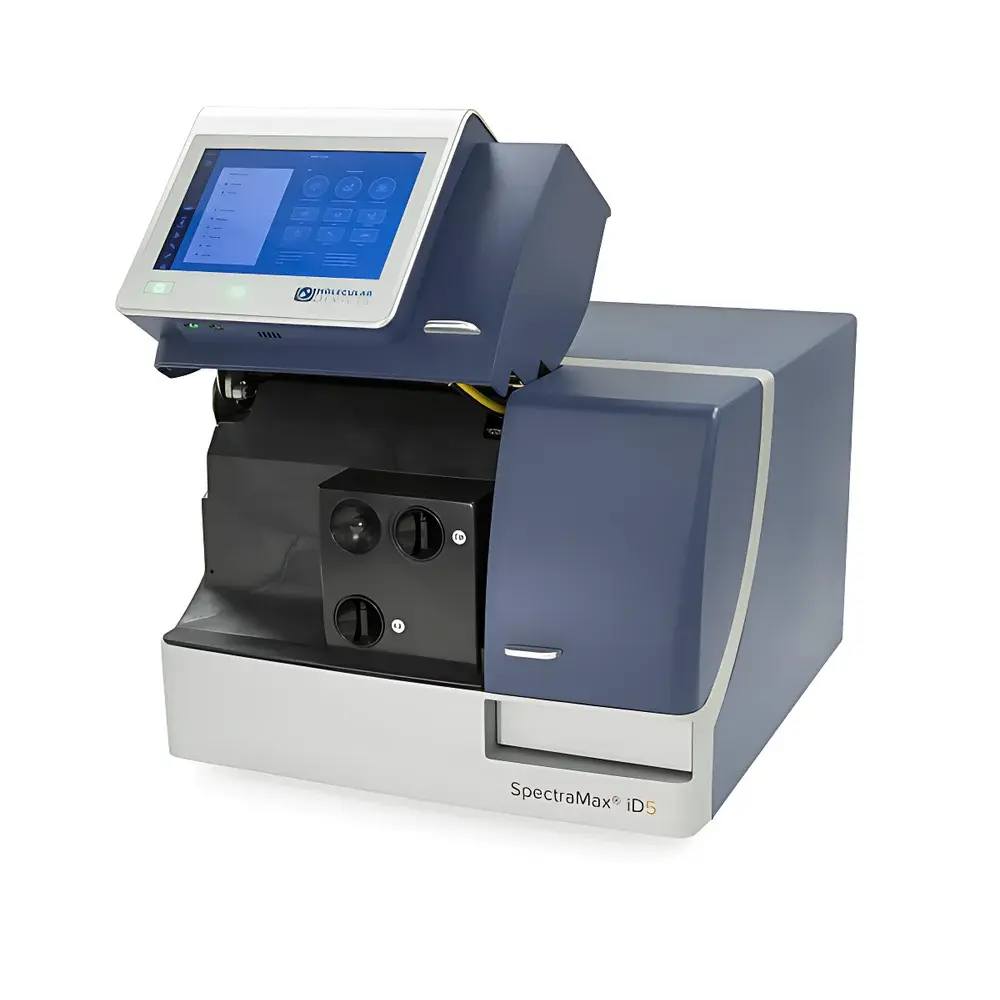
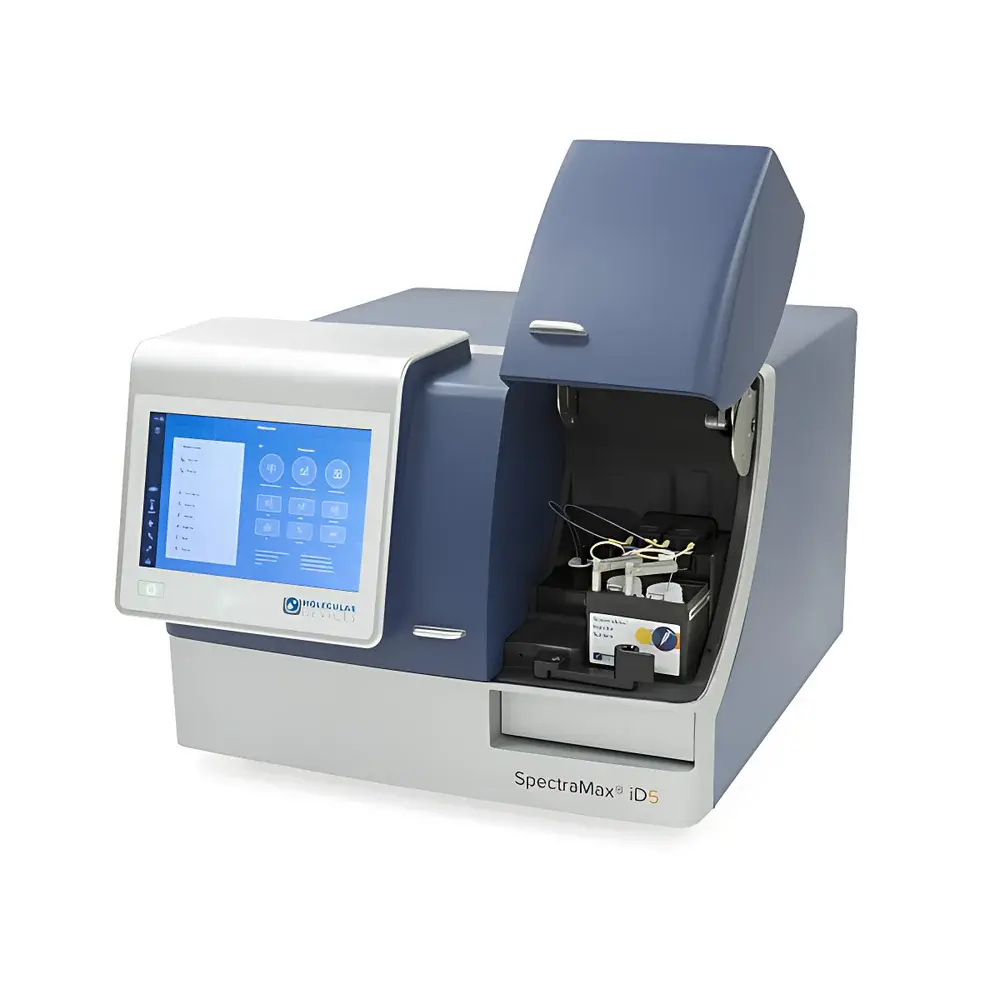
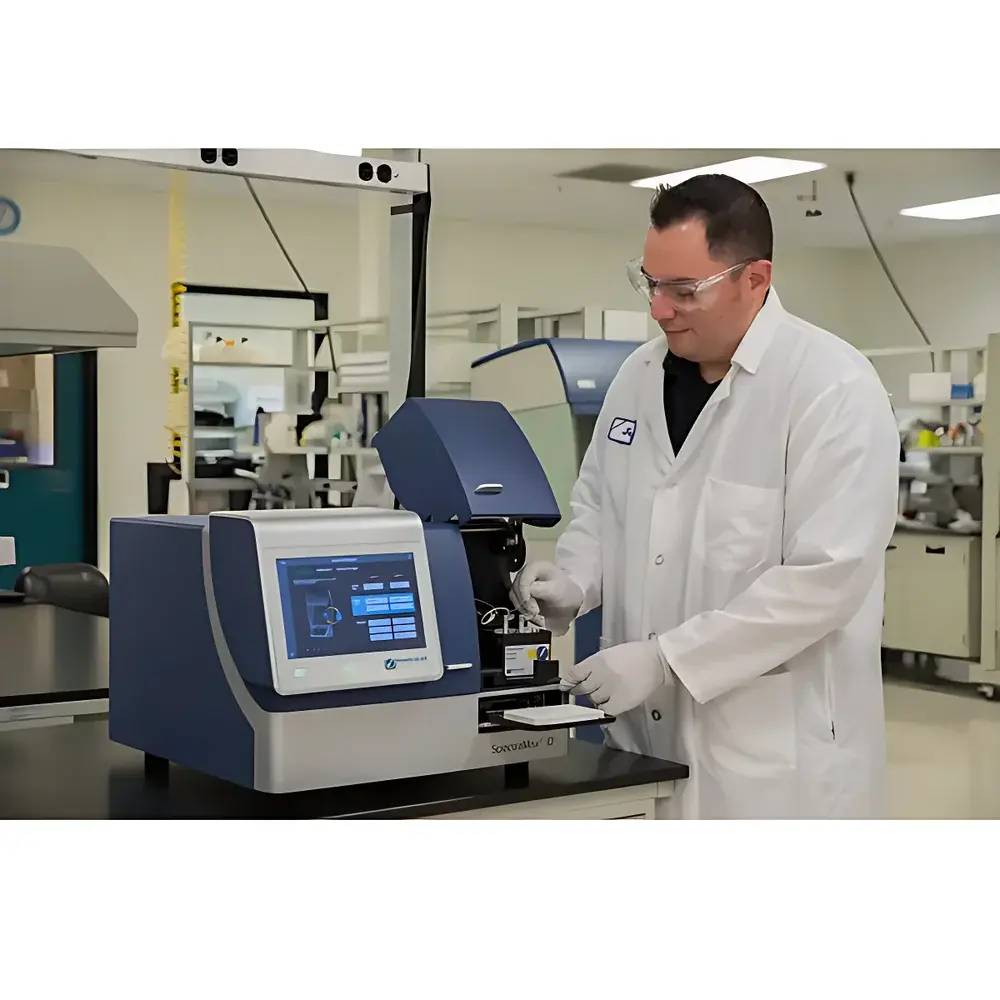
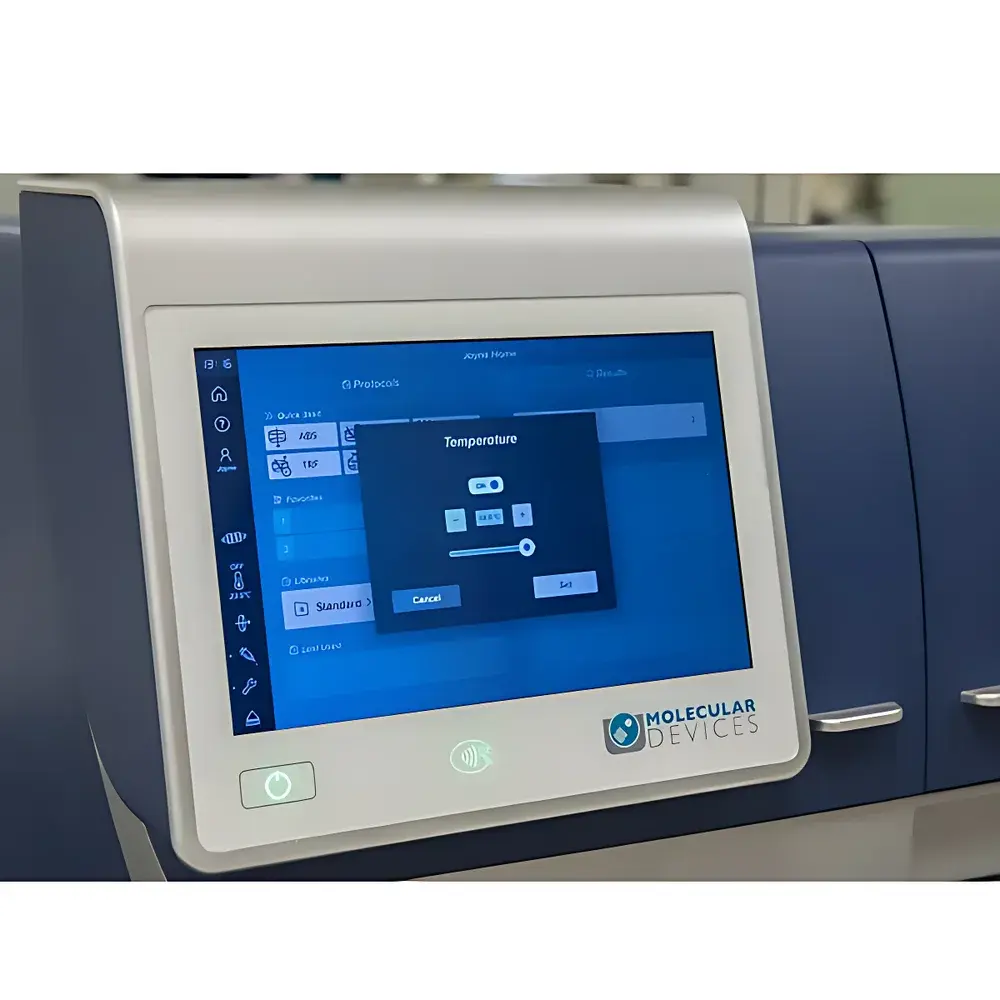
Molecular Devices SpectraMax iD5 Multimode Microplate Reader
| Brand | Molecular Devices |
|---|---|
| Origin | USA |
| Manufacturer Type | Original Equipment Manufacturer (OEM) |
| Product Origin | Imported |
| Model | SpectraMax iD5 |
| Functionality | Multimode |
| Automation Level | Fully Automated |
| Assay Methods | ELISA, Kinase Assays, Nucleic Acid & Protein Quantitation, Reporter Gene Assays (e.g., Dual-Luciferase), Calcium Flux, TR-FRET, HTRF, BRET, Western Blot Imaging |
| Curve Fitting Models | Linear, 4-Parameter Logistic (4PL), 5-Parameter Logistic (5PL), Logarithmic, Power, Double-Logarithmic |
| Detector Types | –5°C Cooled Photomultiplier Tube (PMT) and UV-Silicon Photodiode |
| Wavelength Range | 230–1000 nm |
| Absorbance Range | 0–4 OD |
| Absorbance Linearity | ±0.010 OD or ±1.0% (whichever is greater) across 0–3.0 OD |
| Wavelength Scan Speed | ≤30 seconds per full spectrum |
| Precision | <±0.010 OD ±1.0% (0–3.0 OD) |
Overview
The Molecular Devices SpectraMax iD5 Multimode Microplate Reader is an integrated, benchtop detection platform engineered for precision, flexibility, and regulatory readiness in modern life science laboratories. It employs a hybrid optical architecture—combining dual monochromators (four-grating system) with interchangeable filter-based detection—to deliver high-fidelity measurements across five core modalities: absorbance (Abs), fluorescence intensity (FI), luminescence (Lum), time-resolved fluorescence (TRF), and fluorescence polarization (FP). Its modular design supports advanced applications including TR-FRET, HTRF, BRET, dual-luciferase reporter assays (via SmartInject™ injectors), and quantitative Western blot imaging using europium-labeled membranes. The instrument’s optical path integrates a long-life xenon flash lamp, thermoelectrically cooled PMT (–5°C), and UV-optimized silicon photodiode—enabling low-noise signal acquisition, extended dynamic range (>7 decades in luminescence), and exceptional sensitivity for near-infrared (NIR) and red-shifted probes—up to 40× higher than conventional grating-only systems when using Molecular Devices’ proprietary IR filter sets.
Key Features
- Hybrid optical system: Selectable grating- or filter-based detection with automated filter identification via NFC-enabled filter sliders—eliminating manual configuration errors and ensuring traceable optical setup.
- Integrated touchscreen interface: 10.1-inch high-resolution capacitive display running SoftMax Touch software—enabling standalone operation without external PC; supports template recall, protocol editing, video-guided tutorials, and real-time data visualization.
- SmartInject™ injector system: Dual-channel, low-dead-volume (10 µL) injection with anti-drip valves, on-board mixing control, and plate-wide synchronization—critical for kinetic assays requiring precise reagent delivery (e.g., ATP quantitation, flash-type luciferase).
- Thermal control: Precise Peltier-based temperature regulation from ambient to 66°C with linear, orbital, or double-orbital shaking—validated for enzyme kinetics, cell-based assays, and thermosensitive binding studies.
- Western blot imaging capability: Optional Enhanced TRF module enables quantitative scanning of Eu³⁺-labeled membranes with resistance to photobleaching, supporting multi-scan reproducibility and densitometric analysis.
- Secure, audit-ready architecture: PIN/NFC user authentication, screen lock during long-term kinetics, local SSD storage with encrypted file handling, and optional SoftMax Pro GxP software compliant with 21 CFR Part 11, GLP, and GMP requirements.
Sample Compatibility & Compliance
The SpectraMax iD5 accommodates standard microplate formats from 6- to 384-well, including opaque, clear, and white-bottom plates, as well as specialized assay plates for AlphaScreen®, HTRF®, and TR-FRET. Its 20 × 20 well-scan resolution enables spatial mapping of heterogeneous samples (e.g., colony assays, membrane strips). All optical components—including excitation/emission filters, dichroics, and PMT gain settings—are programmatically logged and version-controlled within assay protocols. The system meets ISO/IEC 17025 calibration traceability standards and supports IQ/OQ documentation packages aligned with ASTM E2921 (Standard Guide for Validation of Microplate Readers) and USP (Biological Assay Validation). For regulated environments, SoftMax Pro GxP provides electronic signatures, role-based permissions, and immutable audit trails for every data acquisition, modification, and export event.
Software & Data Management
SoftMax Pro 7 serves as the primary desktop analysis environment, offering validated curve-fitting algorithms (including PLA, 4PL, and 5PL with residual diagnostics), statistical outlier detection, and batch processing for high-throughput screening. SoftMax Touch—embedded on the instrument—provides intuitive workflow execution and real-time QC flagging. QuickSync technology enables automatic, secure data push over LAN to designated network workstations or shared drives, eliminating manual USB transfers. Raw data (including spectral scans and kinetic traces) are stored in vendor-neutral .smv format with embedded metadata (instrument ID, user, timestamp, optical configuration). Integration with LIMS and ELN systems is supported via XML and CSV export, RESTful API, and direct database connectors (ODBC/JDBC).
Applications
The SpectraMax iD5 supports diverse workflows across drug discovery, academic research, and quality control labs: quantitative ELISA and immunoassay development; kinase activity profiling using ADP-Glo™ or Z’-LYTE™ substrates; nucleic acid quantification (dsDNA, RNA, oligos) via PicoGreen® or RiboGreen®; protein concentration determination (Bradford, BCA); calcium flux monitoring using Fluo-4 or Fura-2 dyes; reporter gene screening (Firefly/Renilla dual-luciferase); HTRF-based protein-protein interaction studies; and quantitative Western blot densitometry. Its NIR-optimized detection is routinely applied in hydrogen peroxide sensing, far-red antibody binding assays, and multiplexed cellular viability assays using Cy5/Cy7 derivatives.
FAQ
Does the SpectraMax iD5 support FDA 21 CFR Part 11 compliance?
Yes—when used with SoftMax Pro GxP software, the system provides electronic signatures, audit trail logging, and role-based access control required for regulated bioanalytical laboratories.
Can I perform TRF-based Western blot imaging without external hardware?
Yes—the optional Enhanced TRF module is fully integrated into the iD5 platform and requires no external scanners or detectors.
What is the minimum detectable luminescence signal?
Instrumental detection limit is <5 amol ATP (using ENLITEN® kit under optimized conditions); actual assay LOD depends on reagent sensitivity and plate type.
Is spectral scanning available for all detection modes?
Spectral scanning is supported for absorbance, fluorescence intensity, and luminescence; TRF and FP require fixed-wavelength or filter-based acquisition.
How does NFC filter recognition improve assay reproducibility?
NFC tags encode filter transmission profiles, center wavelengths, and bandwidths—automatically validating optical configuration against protocol specifications and preventing mismatched filter usage.




