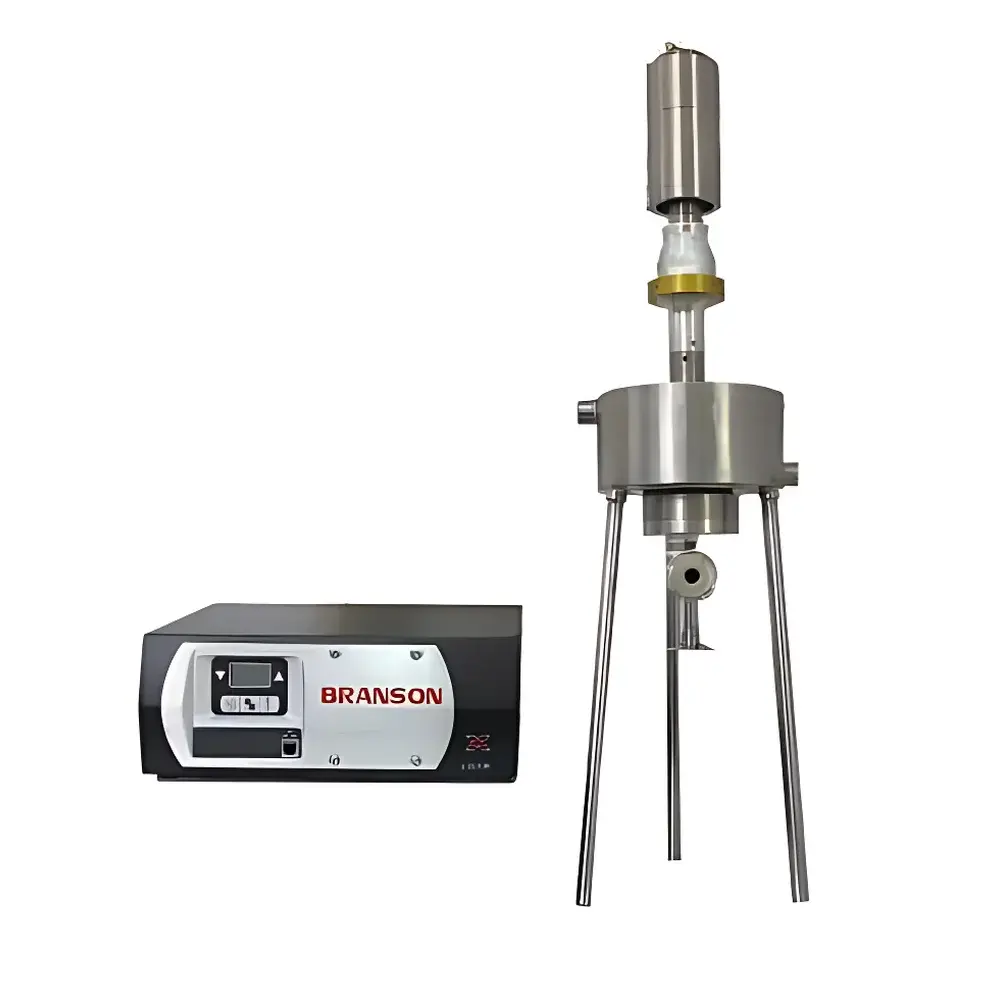
Branson CLP-DCX Series High-Power Continuous-Flow Ultrasonic Cell Disruptor
| Brand | Branson |
|---|---|
| Origin | USA |
| Model | CLP-DCX |
| Instrument Type | Continuous-Flow Ultrasonic Cell Disruptor |
| Output Power | 1250 W / 2500 W / 4000 W (max) |
| Frequency | 20 kHz ± 0.5 kHz |
| Input Voltage | 230 V AC, 50/60 Hz |
| Max Current Draw | 7 A / 14 A / 25 A |
| Flow Rate | Up to 10 GPM (45 L/min) |
| Treatment Chamber Volume | 150 mL (continuous recirculation mode, min. recommended batch: 5 L) |
| Amplitude Range | 10–100% (closed-loop controlled) |
| Temperature Control | External jacketed cooling, sample temp. maintained at 3–5 °C above coolant inlet |
| Probe Diameter | 38 mm |
| Amplification Ratio | 1:1.5 or 1:2 (aluminum booster) |
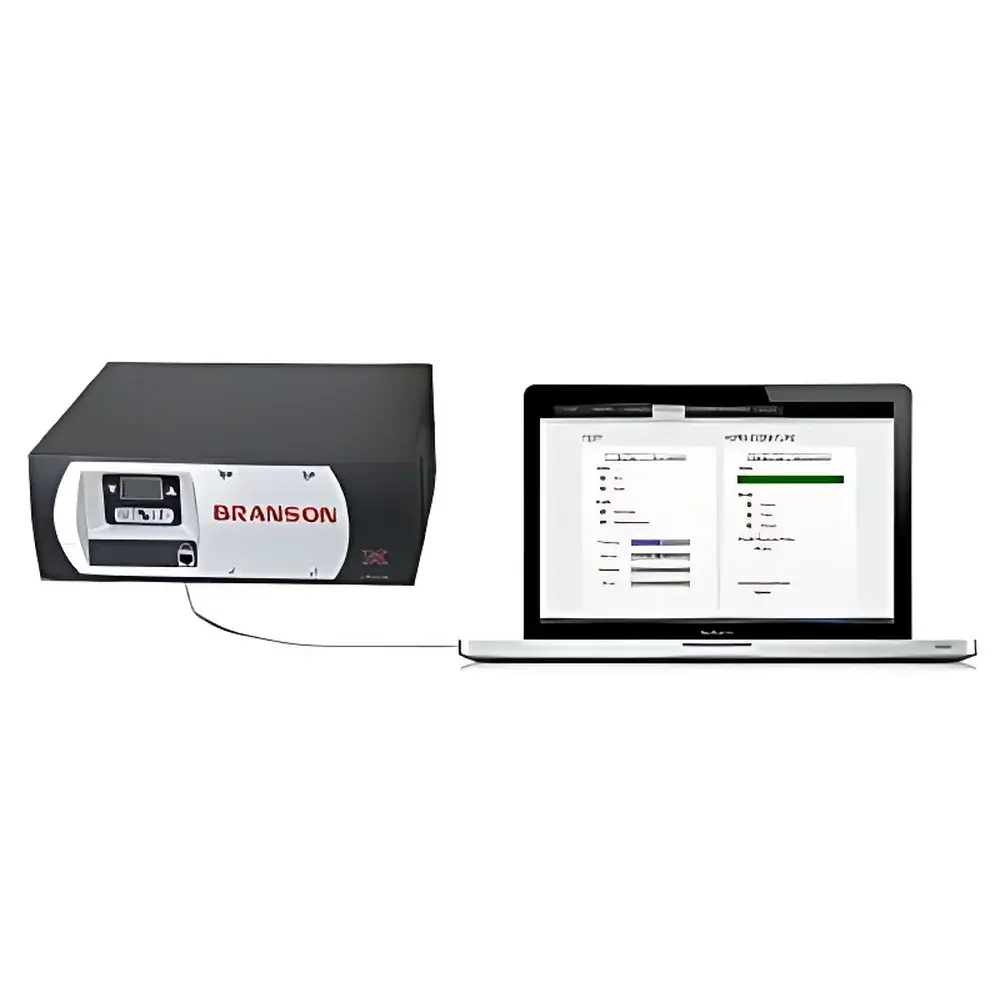
| Generator | CR-20S |
| Compliance | CE, UL 61010-1, RoHS |
Overview
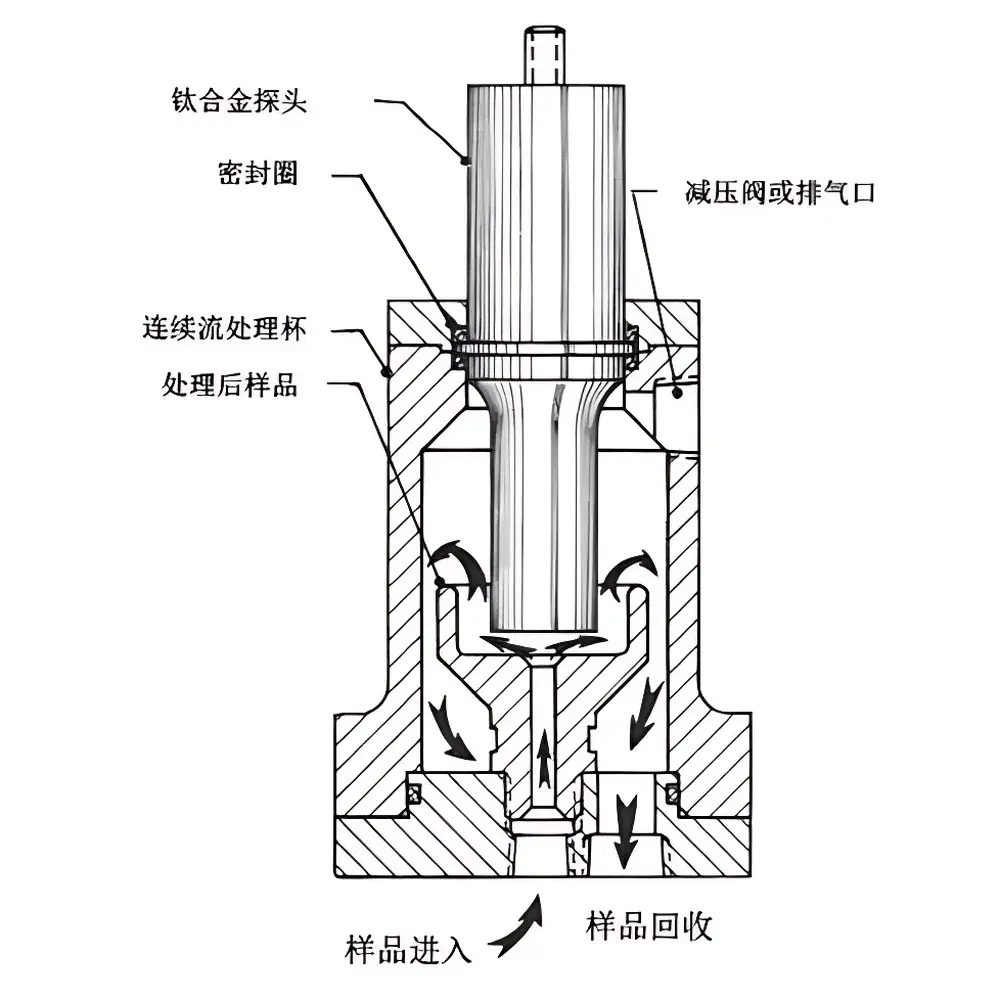
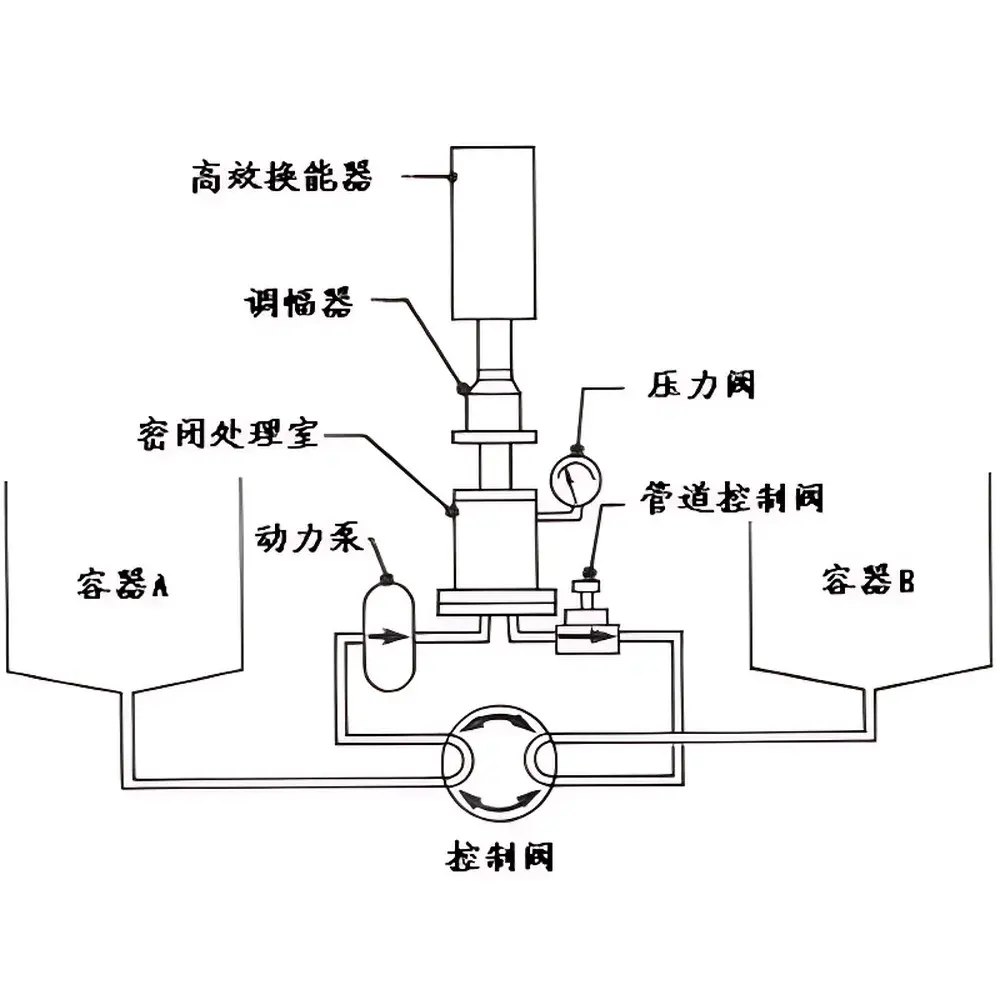
The Branson CLP-DCX Series is an industrial-grade, high-power continuous-flow ultrasonic cell disruptor engineered for scalable bioprocessing applications requiring consistent, reproducible, and controllable energy delivery. Unlike batch-mode sonicators, the CLP-DCX operates on a closed-loop fluidic principle—samples are continuously circulated through a precisely engineered, jacketed treatment chamber where high-intensity acoustic cavitation is generated via a 38 mm diameter titanium alloy probe coupled to a resonant aluminum booster (1:1.5 or 1:2 amplification ratio). The system utilizes piezoelectric transduction at a nominal frequency of 20 kHz, with real-time auto-tuning to maintain optimal resonance despite load variations—a critical requirement for viscous or particulate-laden streams in protein extraction, viral lysis, or nanoparticle dispersion. Its robust architecture supports uninterrupted operation under GMP-aligned process conditions, making it suitable for pilot-scale and cGMP-compliant manufacturing environments in biopharma, synthetic biology, and advanced material synthesis.
Key Features
- Three power tiers (1250 W, 2500 W, 4000 W max) enable scalability from process development to production-scale disruption.
- Closed-loop amplitude control (patented circuitry) dynamically compensates for voltage fluctuations and impedance shifts, ensuring ±1.5% amplitude stability across variable loads and extended duty cycles.
- CR-20S generator integrates six hardware-level protection mechanisms: over-current, over-temperature, frequency drift, impedance mismatch, arc detection, and thermal runaway—each triggering immediate shutdown and event logging.
- Jacketed treatment chamber with food-grade sanitary fittings (316L SS or FDA-compliant elastomers) allows precise thermal management; coolant inlet temperature directly governs sample exit temperature (typically stabilized within 3–5 °C of coolant setpoint).
- PLC-based HMI touchscreen interface supports recipe-driven operation, parameter locking, audit trail generation, and user role-based access control—fully compliant with FDA 21 CFR Part 11 when paired with validated software configuration.
- Remote diagnostic port enables secure, encrypted connection for Branson-certified service engineers to perform real-time health monitoring of transducer resonance, generator efficiency, probe wear estimation, and fault root-cause analysis without physical access.
Sample Compatibility & Compliance
The CLP-DCX accommodates aqueous, organic, and biphasic suspensions with viscosities up to 15,000 cP and solid contents ≤30% w/v. It has been validated for lysing Gram-negative and Gram-positive bacteria, yeast, insect cells, and mammalian suspension cultures—particularly where membrane integrity preservation or subcellular fractionation is not required. All wetted materials meet USP Class VI and FDA 21 CFR 177.2600 standards. Electrical safety conforms to UL 61010-1 and IEC 61000-6-4 (EMC). The system supports IQ/OQ documentation packages and is compatible with GLP/GMP validation protocols per ASTM E2500 and ISO 13485 Annex A guidelines.
Software & Data Management
The embedded PLC firmware logs all operational parameters—including real-time amplitude, forward/reflected power, coolant temperature, flow rate (via optional inline sensor), and fault codes—with timestamped records stored internally (≥1 year retention) and exportable via USB or Ethernet. Audit trails include operator ID, parameter changes, alarm events, and calibration history. Optional Branson ProcessLink™ software extends functionality with SPC charting, deviation alerts, electronic signature support, and integration into MES/SCADA systems via OPC UA or Modbus TCP.
Applications
- Large-volume microbial lysis for recombinant protein recovery (E. coli, P. pastoris)
- Continuous viral vector disruption in AAV and lentivirus purification workflows
- Homogenization of lipid nanoparticles (LNPs) and polymeric micelles
- Deagglomeration and surface functionalization of nanocellulose and graphene dispersions
- Accelerated enzymatic digestion kinetics in proteomics sample prep
- In-line degassing of sterile-filtered buffers prior to aseptic filling
FAQ
What is the minimum recommended processing volume for continuous recirculation?
For stable cavitation field formation and thermal equilibrium, a minimum circulating volume of 5 liters is required. Smaller volumes may cause erratic amplitude response and localized overheating.
Can the CLP-DCX be integrated into an existing skid-mounted bioreactor system?
Yes—standard 1.5″ tri-clamp ports, 4–20 mA analog outputs, and Modbus RTU/Ethernet interfaces enable seamless integration with third-party PLCs and distributed control systems.
Is the amplitude calibration traceable to NIST standards?
Amplitude calibration is performed using laser Doppler vibrometry against Branson’s internal reference standard, which is annually verified against NIST-traceable instrumentation per ISO/IEC 17025 accredited procedures.
Does the system support automated cleaning-in-place (CIP)?
The treatment chamber and fluid path are CIP-compatible with 0.5–2.0 bar pressure and 0.1–1.0 M NaOH or 0.5–2.0% phosphoric acid solutions; validation reports available upon request.
What maintenance intervals are recommended for sustained GMP operation?
Transducer performance verification every 500 operating hours; probe tip inspection and torque verification every 1,000 hours; full generator diagnostics and firmware update annually—or per change control protocol.