
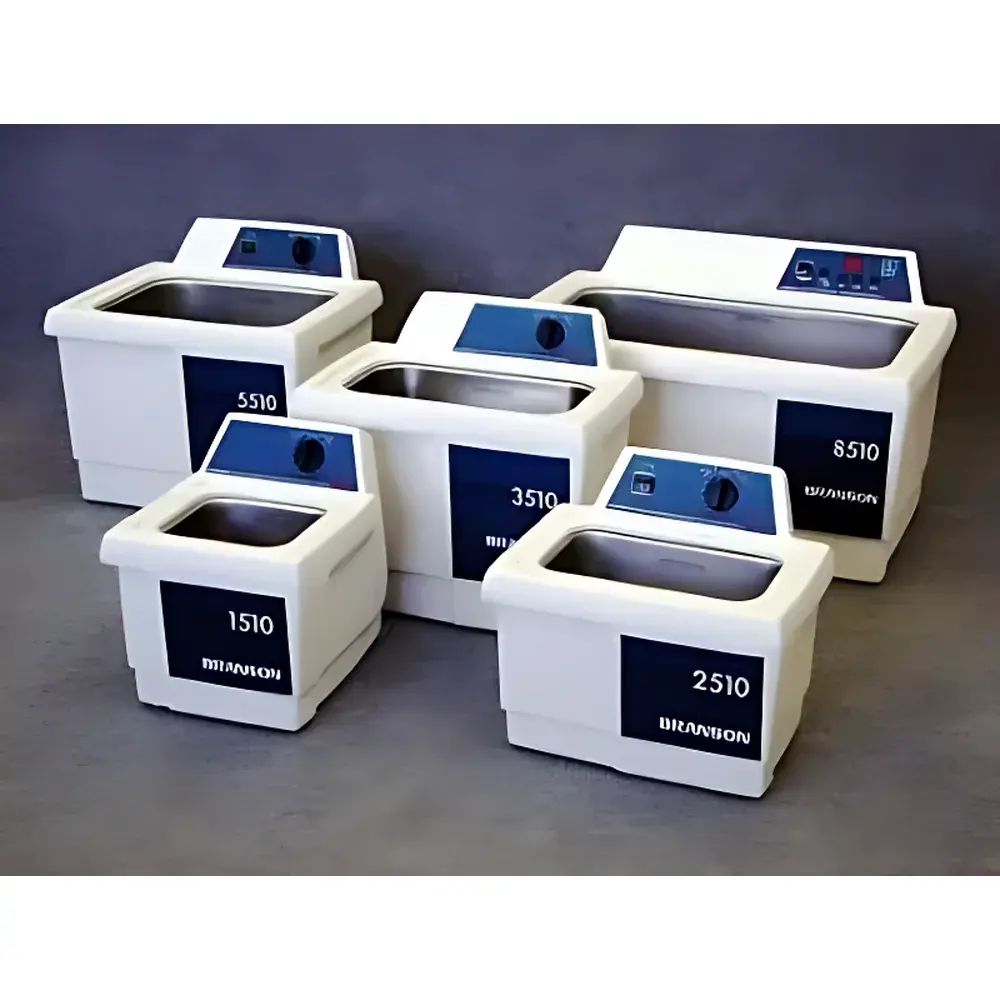
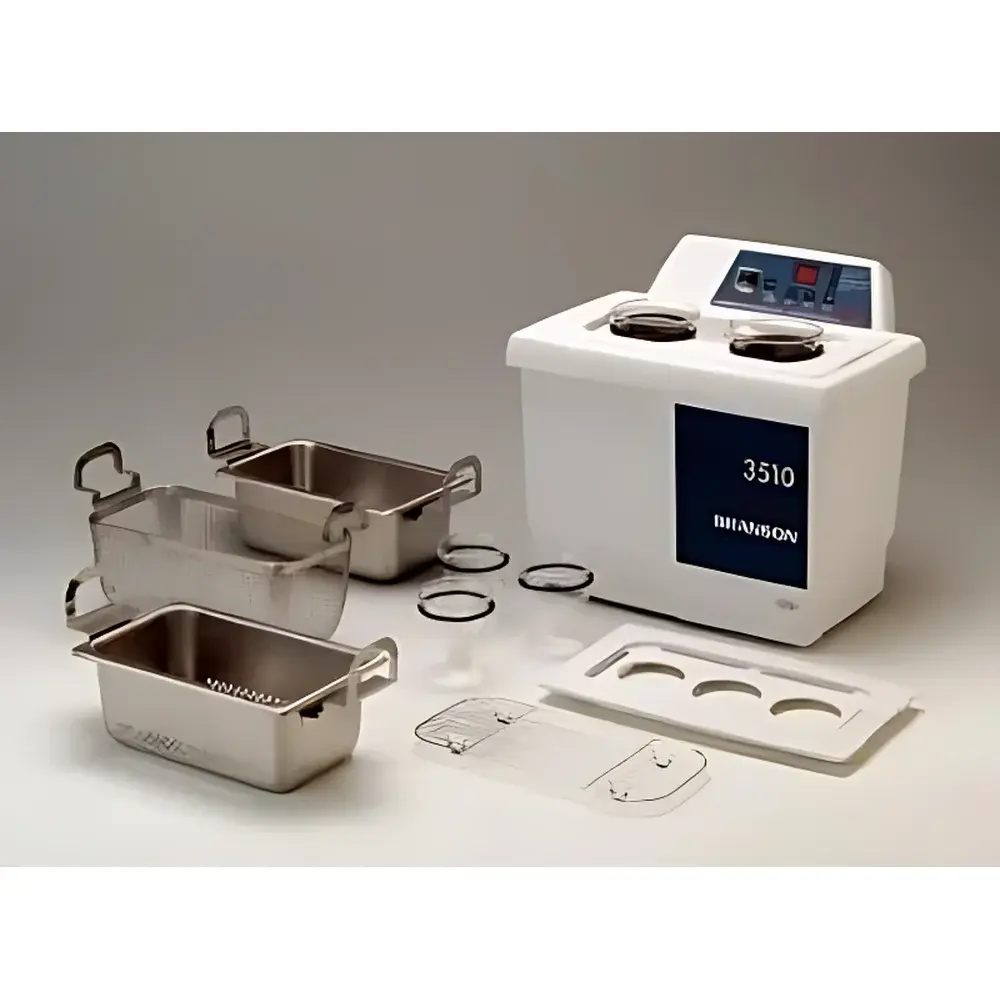
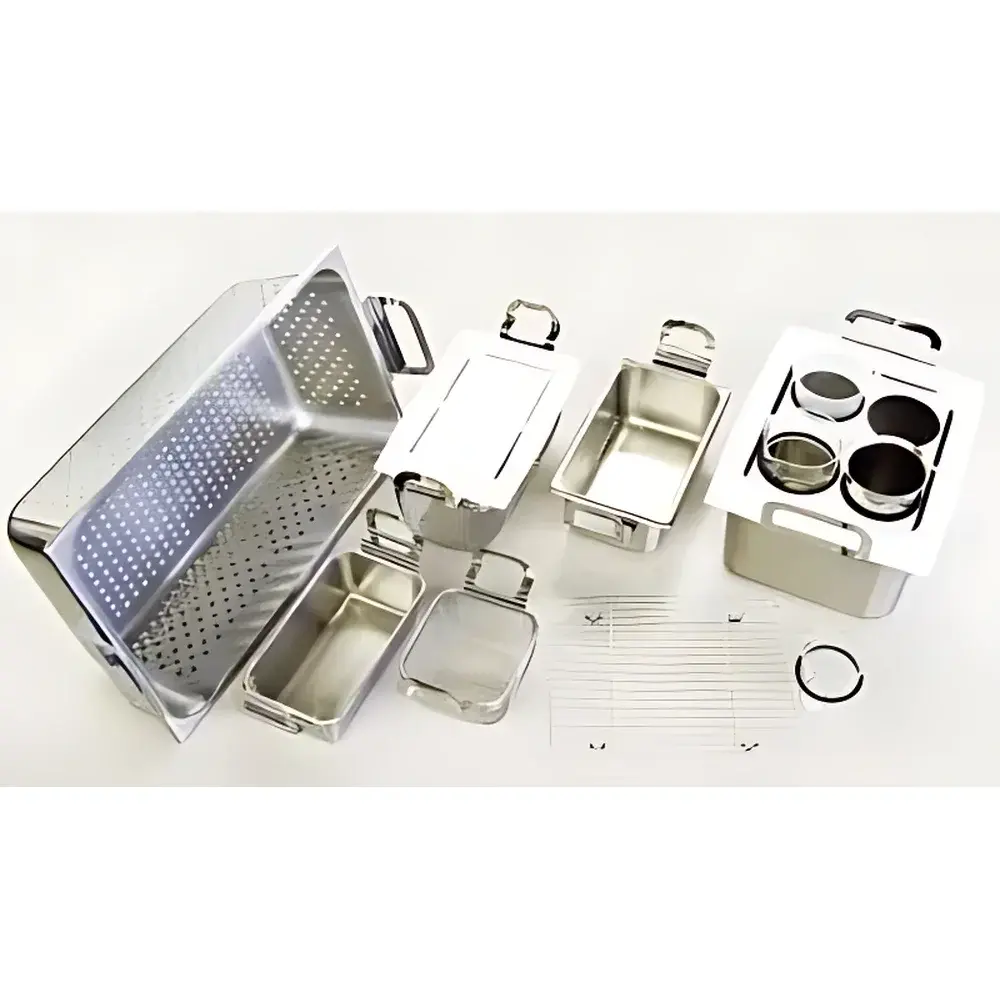
Branson Bransonic B1510E–B8510E Benchtop Ultrasonic Cleaner
| Brand | Branson |
|---|---|
| Origin | USA |
| Model Range | B1510E–B8510E |
| Type | Benchtop Ultrasonic Cleaning System |
| Application Domain | Laboratory, Medical, Industrial, Electronics, Jewelry |
| Compliance Context | Designed for GLP-compliant lab environments |
| Power Supply | 100–240 VAC, 50/60 Hz |
| Tank Material | Stainless Steel 304 |
| Heating Option | Available on select models (e.g., B2510E–B8510E) |
| Timer Range | 1–99 minutes (digital, programmable) |
| Degassing Mode | Yes |
| Sweep Frequency | 37–45 kHz (model-dependent) |
| Ultrasonic Power Output | 100–850 W (scalable by model) |
| Tank Capacity | 1.5–8.5 L (B1510E to B8510E) |
Overview
The Branson Bransonic B1510E–B8510E series represents a line of precision-engineered benchtop ultrasonic cleaners designed for reproducible, non-destructive cleaning across regulated scientific, clinical, and industrial settings. These systems operate on the principle of acoustic cavitation: high-frequency sound waves (37–45 kHz) propagate through an aqueous or solvent-based cleaning medium, generating transient microbubbles that collapse violently near solid surfaces. This implosive energy—localized yet highly effective—dislodges particulate contaminants, organic residues (e.g., proteins, blood, polishing compounds), hydrophobic films (oils, waxes, fluxes), and biofilms without mechanical abrasion or thermal stress. Unlike manual scrubbing, soaking, or steam cleaning, ultrasonic cleaning achieves uniform treatment of complex geometries—including blind holes, capillary channels, threaded components, and delicate microstructures—making it indispensable for critical pre-analytical preparation in life sciences and quality assurance in electronics manufacturing.
Key Features
- Stainless steel 304 tanks engineered for chemical resistance and long-term structural integrity under repeated thermal and acoustic cycling
- Digital microprocessor control with programmable timer (1–99 min), adjustable power output, and optional heater (up to 80 °C on higher-tier models)
- Frequency sweep technology minimizes standing wave formation, ensuring consistent energy distribution and eliminating “dead zones” within the tank
- Degassing mode facilitates rapid removal of dissolved gases from cleaning solutions—critical for achieving optimal cavitation efficiency and preventing premature bubble coalescence
- Quiet operation (<55 dB(A)) achieved via optimized transducer mounting and acoustic damping, suitable for shared laboratory environments
- UL/CSA-certified electrical architecture with over-temperature and dry-run protection circuits for operator and equipment safety
Sample Compatibility & Compliance
The Bransonic platform supports a broad spectrum of sample types while maintaining compatibility with internationally recognized cleaning validation frameworks. It is routinely employed for decontamination of borosilicate glassware (vials, pipettes, cuvettes), stainless-steel surgical instruments (hemostats, forceps, dental scalers), silicon wafers and PCB assemblies, quartz optical components, and precious metal jewelry. In regulated laboratories, cleaning cycles can be documented and audited per FDA 21 CFR Part 11 requirements when integrated with compliant data logging software. The system meets ISO 15883-1 for washer-disinfectors and aligns with ASTM F3127 guidance for ultrasonic cleaning process qualification in medical device reprocessing. No internal coatings or consumable filters are required—cleaning efficacy depends solely on solution chemistry, temperature, frequency, and exposure duration.
Software & Data Management
While the base B1510E–B8510E models feature standalone digital controls, select configurations support optional RS-232 or USB connectivity for integration into centralized lab management systems. When paired with Branson’s proprietary SoniClean™ software (v3.2+), users gain access to cycle parameter archiving, electronic signature capture, audit trail generation, and exportable CSV reports compliant with GLP and GMP documentation standards. All logged data—including start time, duration, set temperature, actual power draw, and user ID—is time-stamped and tamper-resistant. Remote monitoring via Ethernet-enabled controllers enables real-time status verification across multi-instrument deployments in core facilities.
Applications
- Life Sciences: Removal of cellular debris and protein residues from centrifuge tubes, electrophoresis combs, and cell culture flasks; preparation of samples for SEM/TEM imaging; degassing of buffer solutions prior to HPLC analysis
- Clinical Diagnostics: Decontamination of reusable endoscopic accessories, biopsy forceps, and hematology analyzers in accordance with AAMI ST91 guidelines
- Electronics Manufacturing: Post-soldering flux removal from SMDs, ceramic substrates, and RF shielding components without damaging fine-pitch interconnects
- Materials Research: Surface activation of polymers and metals prior to coating or bonding; particle dispersion in nanomaterial synthesis
- Jewelry & Precision Mechanics: Non-abrasive restoration of watch movements, optical lens mounts, and antique coin surfaces without compromising dimensional tolerances
FAQ
What cleaning solutions are compatible with Bransonic ultrasonic cleaners?
Aqueous alkaline, neutral, or mildly acidic formulations—as well as low-volatility solvents such as isopropanol or terpenes—are suitable. Avoid halogenated hydrocarbons and strong oxidizers unless explicitly approved by Branson for specific tank materials.
Can I use the cleaner for sterilization?
No—ultrasonic cleaning is a cleaning (soil removal) step, not a sterilization process. It must be followed by validated sterilization (e.g., autoclaving, ethylene oxide) where sterility is required.
How often should I change the cleaning solution?
Solution replacement frequency depends on soil load and application; typical practice is daily for high-throughput labs or after each batch in critical applications. Conductivity or pH drift may indicate depletion.
Is heating necessary for effective cleaning?
Elevated temperature enhances solubilization of organic soils and accelerates cavitation kinetics, but many applications (e.g., delicate optics or heat-sensitive polymers) perform optimally at ambient temperature.
What maintenance does the system require?
Routine tasks include periodic tank inspection for pitting or weld integrity, transducer surface cleaning with soft cloth, and verification of timer and temperature calibration per ISO/IEC 17025 guidelines.



