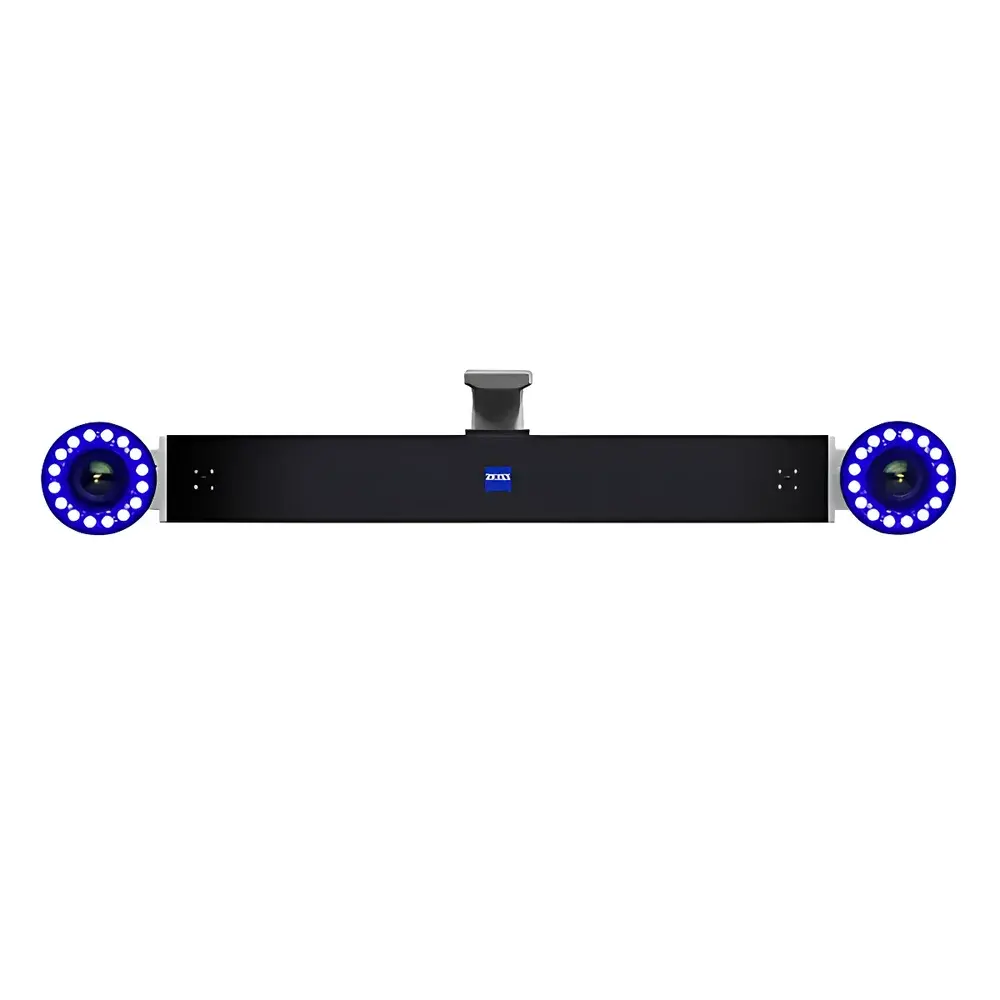
ZEISS ARAMIS 3D Camera System
| Brand | ZEISS |
|---|---|
| Origin | Shanghai, China |
| Manufacturer Type | Original Equipment Manufacturer (OEM) |
| Product Category | Optical 3D Digital Image Correlation (DIC) System |
| Model | ARAMIS |
| Imaging Sensor Resolution | 4096 × 3000 pixels (12 MP) |
| Adjustable Measurement Volume | 35 × 25 mm to 5000 × 4000 mm |
| Frame Rate (Full Resolution) | 25 fps (ARAMIS 12M), 335 fps (ARAMIS SRX) |
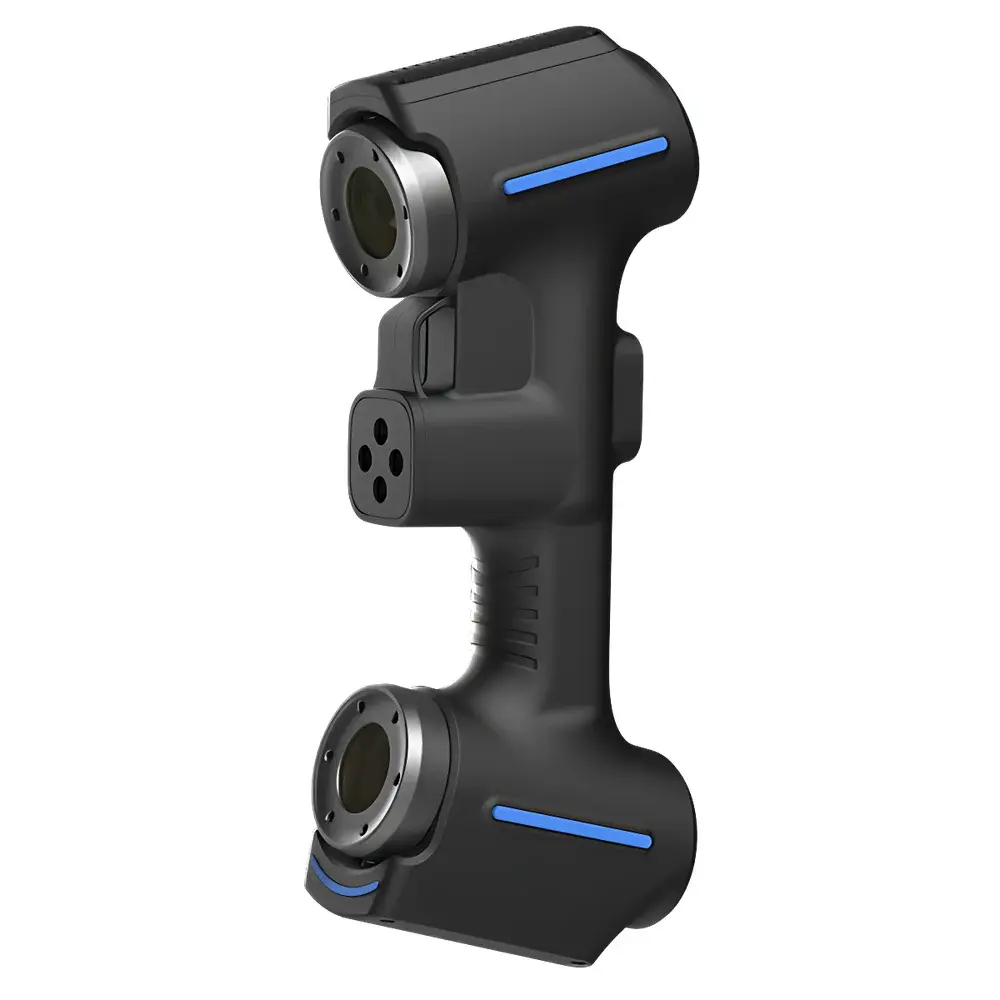
| Optical Architecture | Twin-camera stereoscopic setup with interchangeable lens mounts and certified calibration lenses |
| Synchronization Protocol | IEEE 1588 Precision Time Protocol (PTPv2) |
| Software Platform | ZEISS INSPECT Correlate (DIC & point tracking engine) |
Overview
The ZEISS ARAMIS 3D Camera System is a high-precision optical measurement platform engineered for non-contact, full-field three-dimensional deformation, strain, displacement, and velocity analysis. Based on digital image correlation (DIC) principles, the system captures synchronized stereo image pairs from two calibrated high-resolution cameras, reconstructing surface topography and tracking sub-pixel motion across successive frames. Unlike contact-based extensometers or strain gauges, ARAMIS delivers spatially continuous data—enabling quantification of local strain gradients, buckling onset, crack propagation, and heterogeneous deformation behavior in both quasi-static and dynamic regimes. Its modular architecture supports scalable measurement volumes—from millimeter-scale material coupons to multi-meter structural assemblies—without recalibration overhead, making it suitable for laboratory R&D, production validation, and accredited testing environments compliant with ASTM E837, ISO/IEC 17025, and aerospace standards such as NAS 410.
Key Features
- Modular twin-camera design with interchangeable, factory-certified lens sets enabling rapid reconfiguration of field-of-view and working distance (35 × 25 mm to 5000 × 4000 mm)
- 12-megapixel CMOS sensors (4096 × 3000 px) delivering dense, high-fidelity surface meshes with sub-pixel displacement resolution (<0.01 px RMS)
- Dual operating modes: ARAMIS 12M for high-accuracy quasi-static testing (up to 25 fps at full resolution); ARAMIS SRX for ultra-high-speed dynamics (335 fps at full resolution)
- Integrated ARAMIS Controller unit ensuring deterministic hardware-software communication, external trigger synchronization, and real-time signal acquisition (e.g., load cells, LVDTs, accelerometers)
- IEEE 1588 PTPv2 network time synchronization guaranteeing microsecond-level temporal alignment across distributed sensors and auxiliary instrumentation
- Ruggedized industrial enclosure rated for stable operation in vibration-prone test cells and temperature-controlled environmental chambers
Sample Compatibility & Compliance
The ARAMIS 3D Camera System accommodates a broad spectrum of specimen geometries and surface conditions—including metallic alloys, composites, polymers, concrete, and additively manufactured parts—provided appropriate stochastic speckle patterns are applied. Surface preparation follows ISO/IEC 17025-compliant protocols; speckle size, contrast, and distribution are validated per ASTM E1338 guidelines. The system supports traceable calibration using ZEISS-certified reference artifacts (e.g., 3D grid plates, step-height standards) and complies with metrological requirements for uncertainty budgeting per GUM (JCGM 100:2008). Data integrity adheres to FDA 21 CFR Part 11 principles through audit-trail-enabled user authentication, electronic signatures, and immutable project archiving in ZEISS INSPECT Correlate.
Software & Data Management
ZEISS INSPECT Correlate serves as the unified software environment for acquisition, processing, visualization, and reporting. It implements robust DIC algorithms—including inverse compositional Gauss-Newton optimization and adaptive subset selection—to minimize interpolation artifacts and ensure convergence even under large rigid-body motion. Real-time preview enables immediate feedback on pattern quality and camera focus. Post-processing includes automated strain tensor computation (εxx, εyy, γxy, von Mises), displacement vector fields, velocity/acceleration derivation, and cross-sectional slicing. Export formats include ASCII, CSV, HDF5, and native ZEISS .zdc files compatible with MATLAB, Python (via ZEISS SDK), and third-party FEA platforms (Abaqus, ANSYS). All projects maintain full metadata linkage—calibration history, environmental logs, and operator annotations—for GLP/GMP audit readiness.
Applications
- Material characterization: tensile/compression testing, fatigue life prediction, creep behavior, fracture mechanics (J-integral, CTOD)
- Structural validation: wing bending tests, landing gear impact analysis, wind tunnel model deformation, railway bogie stress mapping
- Manufacturing process monitoring: thermal distortion in welding, springback in sheet metal forming, curing shrinkage in composite layup
- Biomechanics: soft tissue deformation, implant-bone interface micromotion, orthopedic device performance under cyclic loading
- Automotive safety: full-vehicle crash test kinematics, airbag deployment dynamics, pedestrian impact headform deformation
FAQ
What is the minimum resolvable strain value achievable with ARAMIS?
Strain resolution depends on speckle quality, camera-to-specimen distance, and subset size; typical values range from 20–50 µε under optimized laboratory conditions.
Can ARAMIS be integrated with existing test machines (e.g., MTS, Instron)?
Yes—via analog/digital I/O, Ethernet TCP/IP, or LabVIEW-compatible drivers; synchronized triggering and load-displacement correlation are natively supported.
Is on-site calibration verification required before each test?
No—modular lens calibration is factory-certified and remains valid across interchangeable configurations; only environmental drift checks (e.g., thermal focus shift) are recommended for long-duration tests.
Does ZEISS INSPECT Correlate support batch processing of multiple DIC datasets?
Yes—scripted workflows via Python API enable automated processing pipelines for standardized test series, including report generation and pass/fail threshold evaluation.
What training and technical support options are available?
ZEISS offers certified instructor-led courses (fundamentals, advanced DIC, compliance documentation), remote diagnostics, and application engineering consultation for method development and validation.