
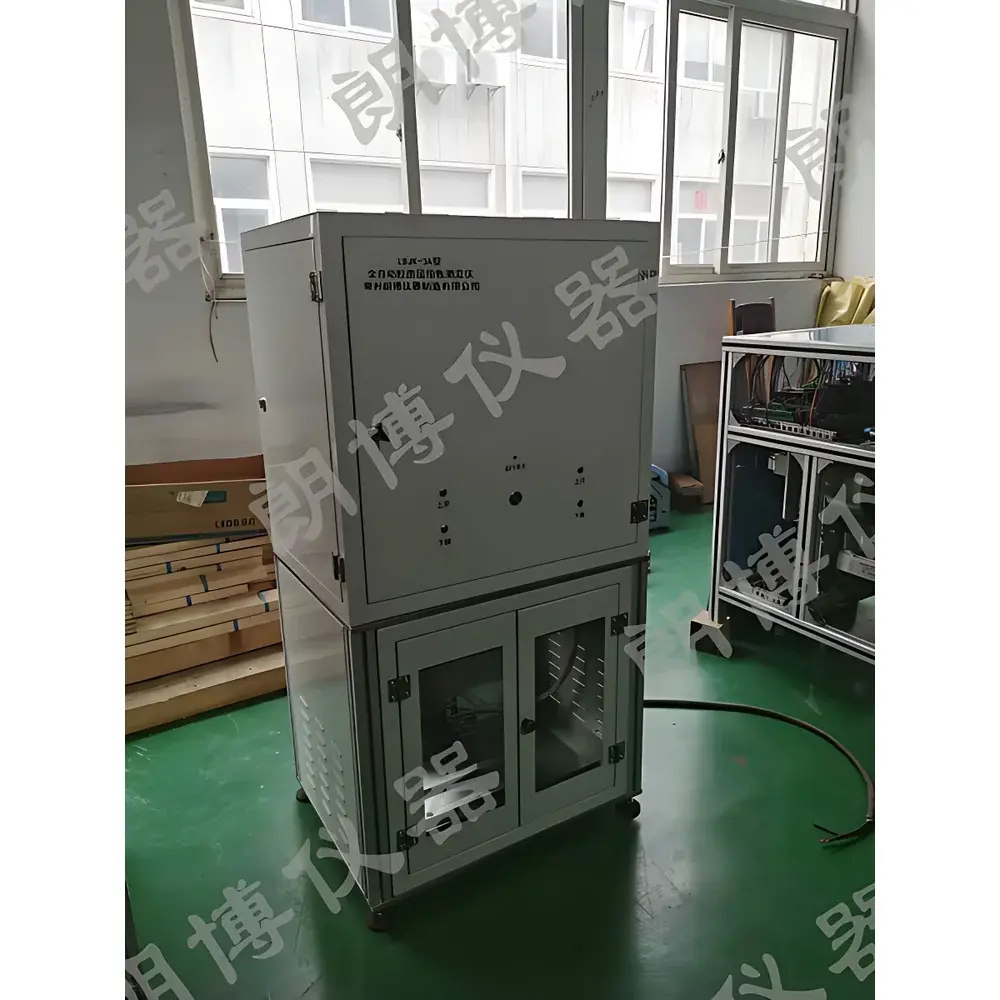
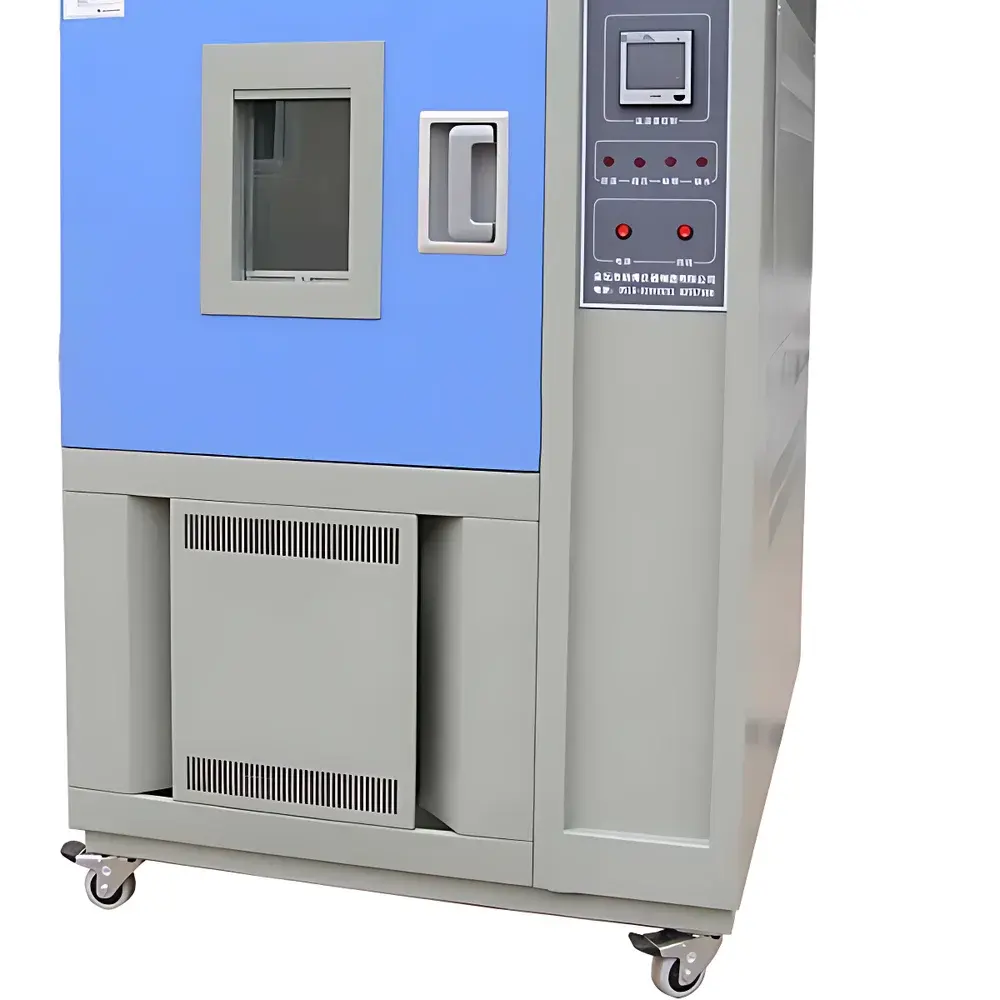
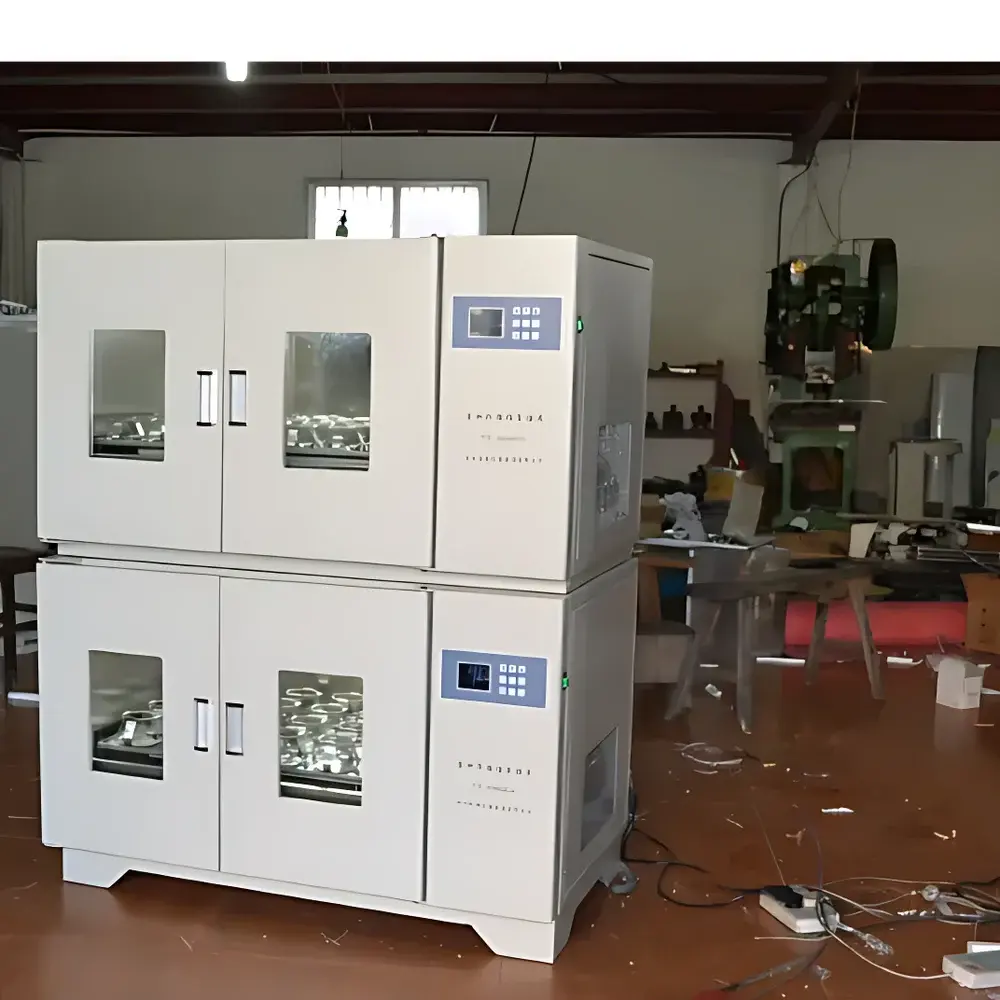
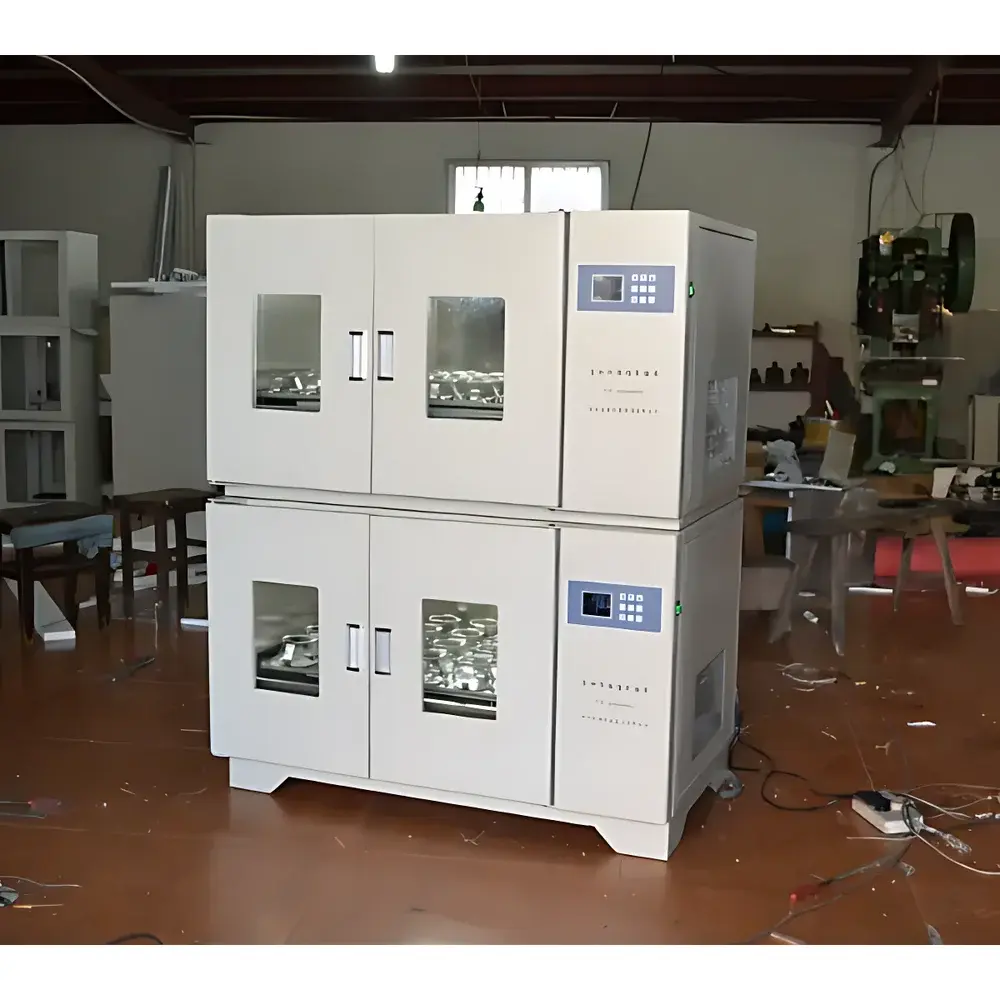
Langbo LBJK-3 Automatic Gieseler Plastometer (Gel Layer Index Tester)
| Brand | Langbo Instruments |
|---|---|
| Origin | Jiangsu, China |
| Manufacturer Type | Authorized Distributor |
| Country of Manufacture | China |
| Model | LBJK-3 |
| Price | USD 27,500 (FOB Jiangsu) |
| Temperature Control Range | 0–800 °C |
| Control Accuracy | ±3 °C |
| Power Supply | 220 V, 50 Hz, 8 kW |
| Y-value Accuracy | <2 mm (Y > 20 mm), <1 mm (Y < 20 mm) |
| X-value Accuracy | ΔX < 3 mm |
| Thermocouple Type | K-type |
| Accuracy Class | 0.5 |
| Load Cell Range | 0–10 kg |
| Displacement Sensor Range | 0–100 mm, Class 0.01 |
| Stepper Motor Holding Torque | 10 N·cm |
| Probe Design | Rotating, Auto-Alignment |
| Data Acquisition | PC-based, Real-time Curve Rendering (X/Y Volume Curves) |
| Compliance | Fully Conforms to GB/T 479–2016 |
| Safety | Integrated Power-Failure Protection |
| Software | Custom GUI with ASTM/ISO-aligned reporting templates, Manual & Auto Measurement Modes |
Overview
The Langbo LBJK-3 Automatic Gieseler Plastometer is a fully automated instrument engineered for precise determination of the plastic properties of bituminous coals—specifically the maximum thickness of the plastic layer (Y-value) and the distance between the upper and lower surfaces of the plastic layer (X-value)—in accordance with the national standard GB/T 479–2016. Based on the classical Gieseler plastometry principle, the instrument subjects a standardized coal charge in a carbonized silica crucible to a controlled linear temperature ramp (typically 3 °C/min from room temperature to 800 °C) while continuously monitoring the rheological deformation of the thermoplastic zone under a constant 10 kg load. The resulting X–Y volume curve reflects the coal’s fluidity, resolidification behavior, and caking capacity—key parameters used in coke oven feedstock blending, coal rank evaluation, and blast furnace optimization.
Key Features
- Fully automated measurement cycle: temperature control, real-time X-curve plotting, Y-value calculation, and dual-surface (upper/lower) plastic layer thickness detection are executed without manual intervention.
- Integrated intelligent servo manipulator: composed of a high-resolution displacement sensor (0–100 mm, class 0.01), precision load cell (0–10 kg), stepper motor (10 N·cm holding torque), and rotating alignment probe—all mounted rigidly on the original furnace column to preserve mechanical integrity and metrological traceability per GB/T 479–2016.
- Adaptive probe positioning: motorized XYZ adjustment enables precise spatial registration of the probe relative to the paper tube; auto-parallelism correction ensures orthogonal contact between probe tip and paper tube axis, minimizing lateral slippage and measurement drift.
- Intelligent layer recognition algorithm: analyzes the evolving X-curve morphology (e.g., “mountain”, “roof”, or “saddle” types) to determine optimal timing and vertical position for Y-value sampling—supplemented by operator-initiated manual trigger via GUI for method validation or atypical coal behavior.
- Robust thermal architecture: dual-zone heating elements with PID-controlled feedback deliver stable 0–800 °C operation (±3 °C accuracy) using calibrated K-type thermocouples (class 0.5); 8 kW power rating supports rapid, repeatable ramp profiles across diverse coal ranks.
- Fail-safe operation: built-in power-loss recovery retains last valid measurement state and resumes protocol upon re-powering; non-volatile data logging ensures continuity during extended batch runs.
Sample Compatibility & Compliance
The LBJK-3 accommodates standard 100 g coal samples prepared per GB/T 479–2016 specifications—including crushed, air-dried, and sieved (<1.5 mm) material—with no restriction on volatile matter content or caking index range. Its mechanical design maintains full compatibility with legacy crucibles, paper tubes, and thermocouple sleeves used in manual Gieseler testing. All hardware and software functions are validated against GB/T 479–2016 Annex A (Instrument Requirements) and Clause 7 (Test Procedure). While GB/T 479–2016 remains the primary compliance benchmark, the system’s digital data capture, timestamped audit trail, and user-accessible calibration logs support internal GLP documentation and facilitate alignment with ISO/IEC 17025 laboratory accreditation requirements.
Software & Data Management
The proprietary Windows-based control software provides a dedicated GUI with synchronized dual-channel visualization: real-time X-curve (horizontal displacement vs. temperature) and derived Y-curve (plastic layer thickness vs. temperature). All raw sensor data—temperature, load, displacement, time—are logged at 100 ms intervals and stored in .csv and encrypted binary formats. Reporting modules generate compliant test certificates with embedded metadata (operator ID, calibration date, furnace ID, ambient conditions). Audit trails record all user actions—including manual overrides, calibration events, and parameter edits—in tamper-evident format. Export options include PDF (with digital signature support), Excel, and XML for integration into LIMS environments. The software architecture supports 21 CFR Part 11 readiness via optional password policies, electronic signatures, and role-based access control.
Applications
- Coke plant quality assurance: rapid screening of coal blends for consistent plastic layer development and avoidance of over- or under-caking behavior in slot ovens.
- Coal trading and specification verification: objective quantification of Y and X values for contractual compliance (e.g., JIS M 8815, DIN 51700, or enterprise-grade coal procurement standards).
- Research laboratories: correlation studies between Gieseler parameters and maceral composition, vitrinite reflectance, or thermogravimetric behavior.
- Standards laboratories: reference measurement capability for inter-laboratory comparison programs under CNAS or APAC frameworks.
- Technical service centers: high-throughput analysis for mining companies performing routine seam characterization or washability assessment.
FAQ
Does the LBJK-3 comply with international standards such as ASTM D720 or ISO 501?
The LBJK-3 is designed and verified exclusively against GB/T 479–2016. While its physical measurement principle aligns with ASTM D720 (Gieseler plastometer) and ISO 501 (determination of plastic properties), formal conformance declarations for those standards require separate validation per jurisdictional regulatory protocols.
Can the instrument be integrated into an existing LIMS?
Yes—the software supports ODBC-compliant database export and includes a documented API for structured data push to third-party LIMS platforms via TCP/IP or local file drop.
What maintenance is required for the servo manipulator?
The stepper motor and linear guides are sealed and lubricated for life; annual verification of displacement sensor linearity and load cell zero-drift using NIST-traceable weights and shims is recommended.
Is remote diagnostics supported?
Standard Ethernet connectivity enables secure remote desktop support (with user consent) for firmware updates, configuration review, and troubleshooting—subject to site firewall policies.
How is measurement uncertainty estimated for Y-values?
Per GB/T 479–2016 Annex B, combined standard uncertainty is calculated from repeatability (≤0.8 mm for Y > 20 mm), reproducibility (≤1.5 mm), thermal gradient effects (±0.5 mm), and probe alignment error (±0.3 mm), yielding expanded uncertainty (k=2) of ≤2.2 mm for typical measurements.



