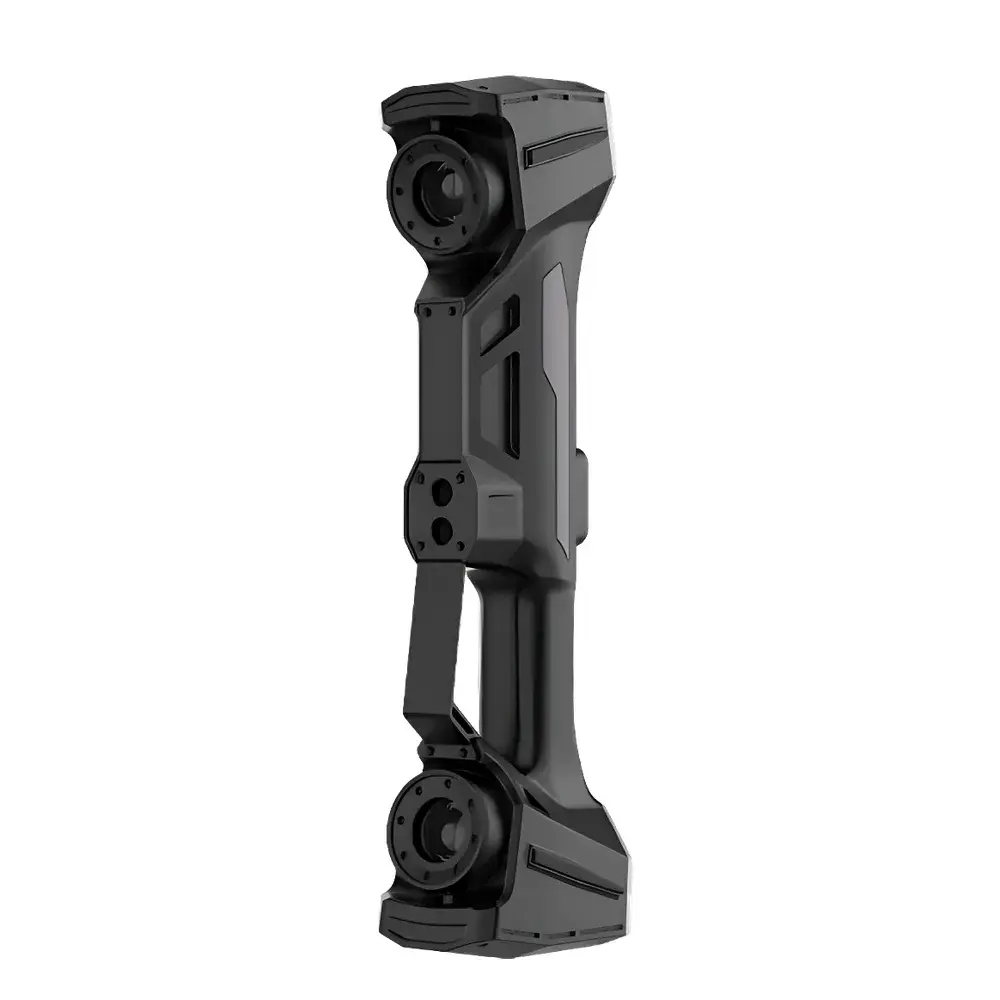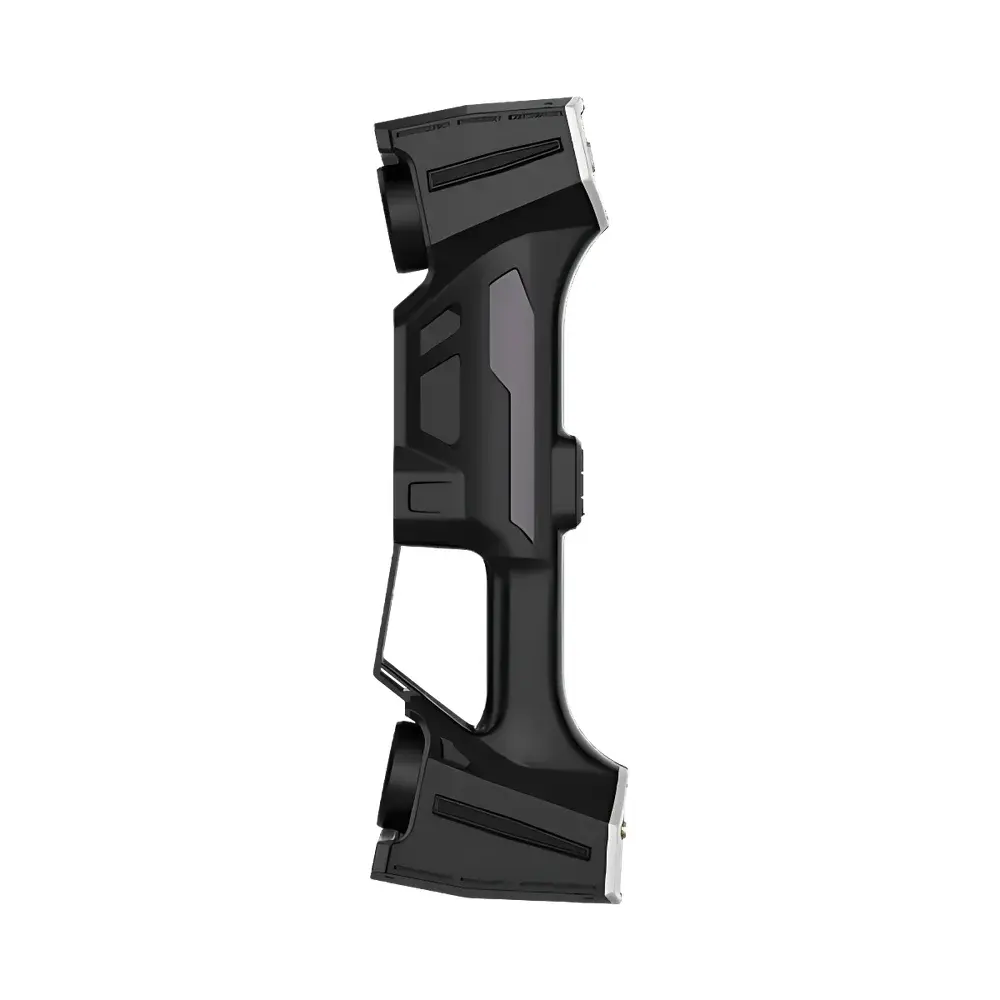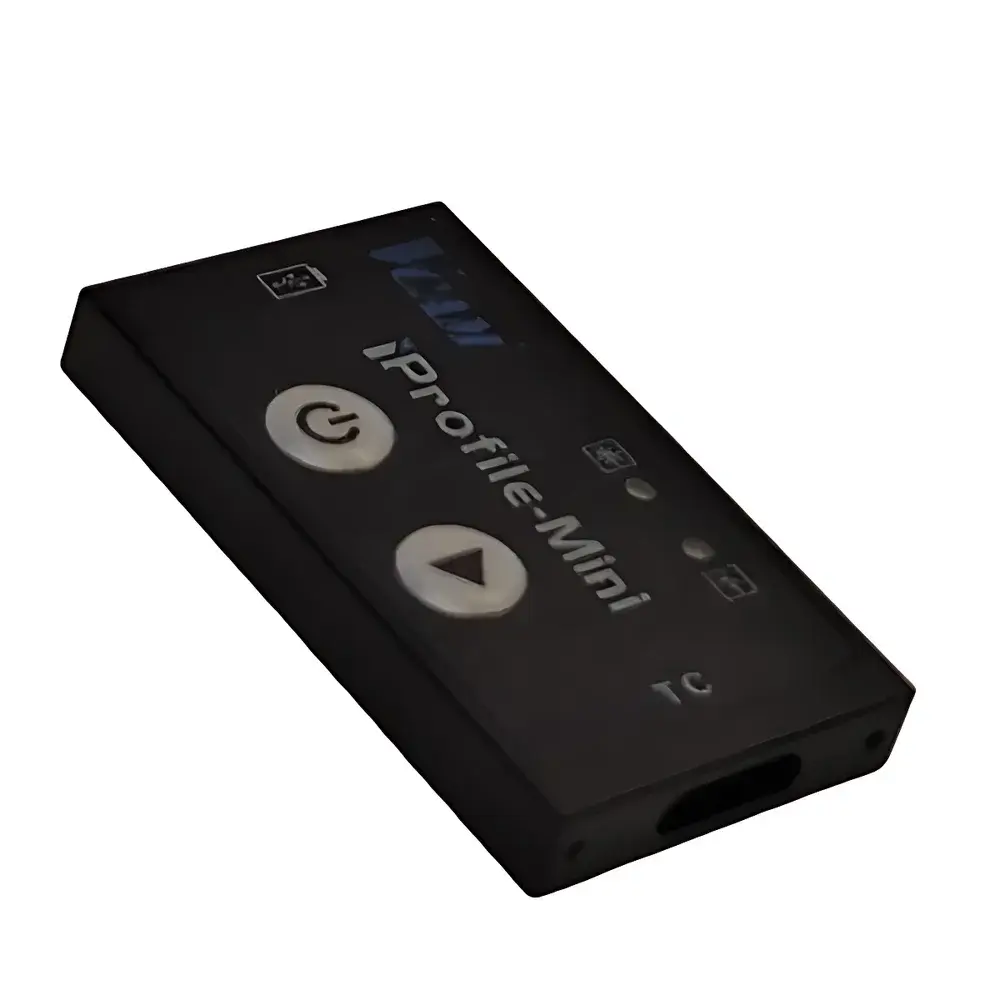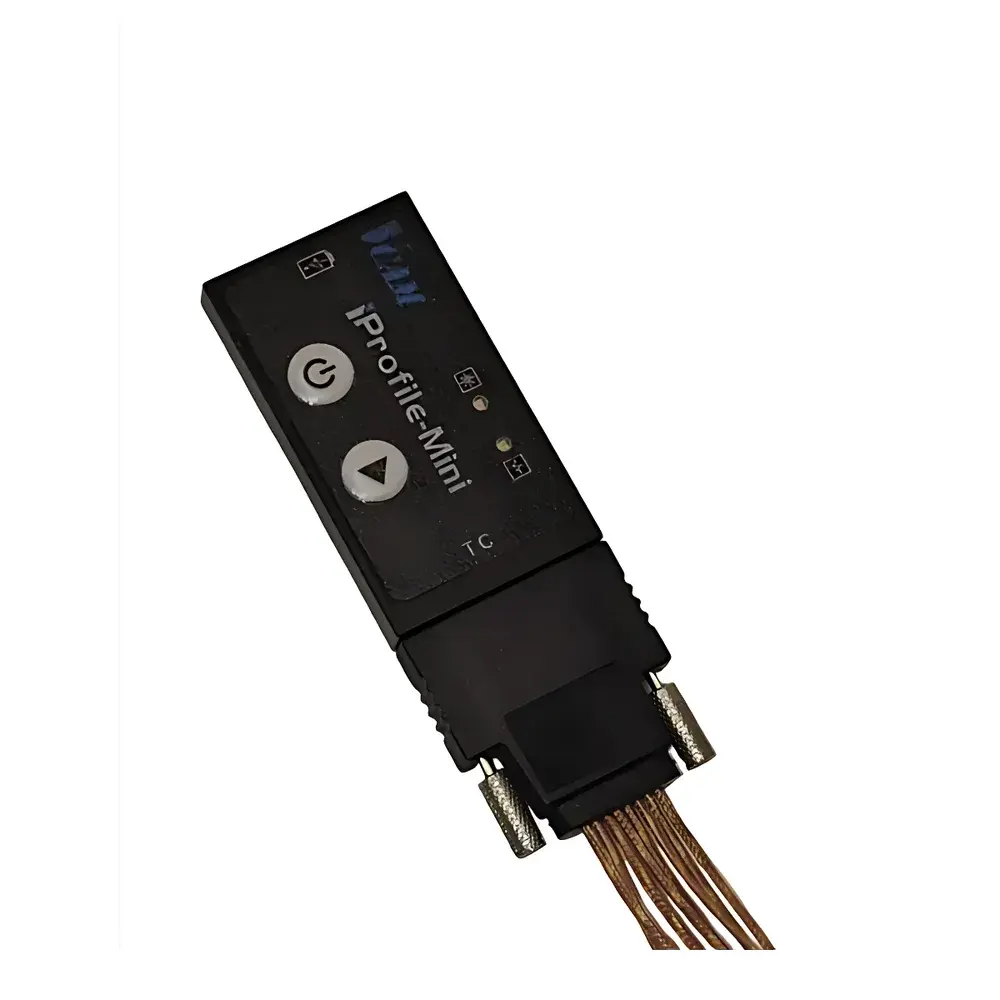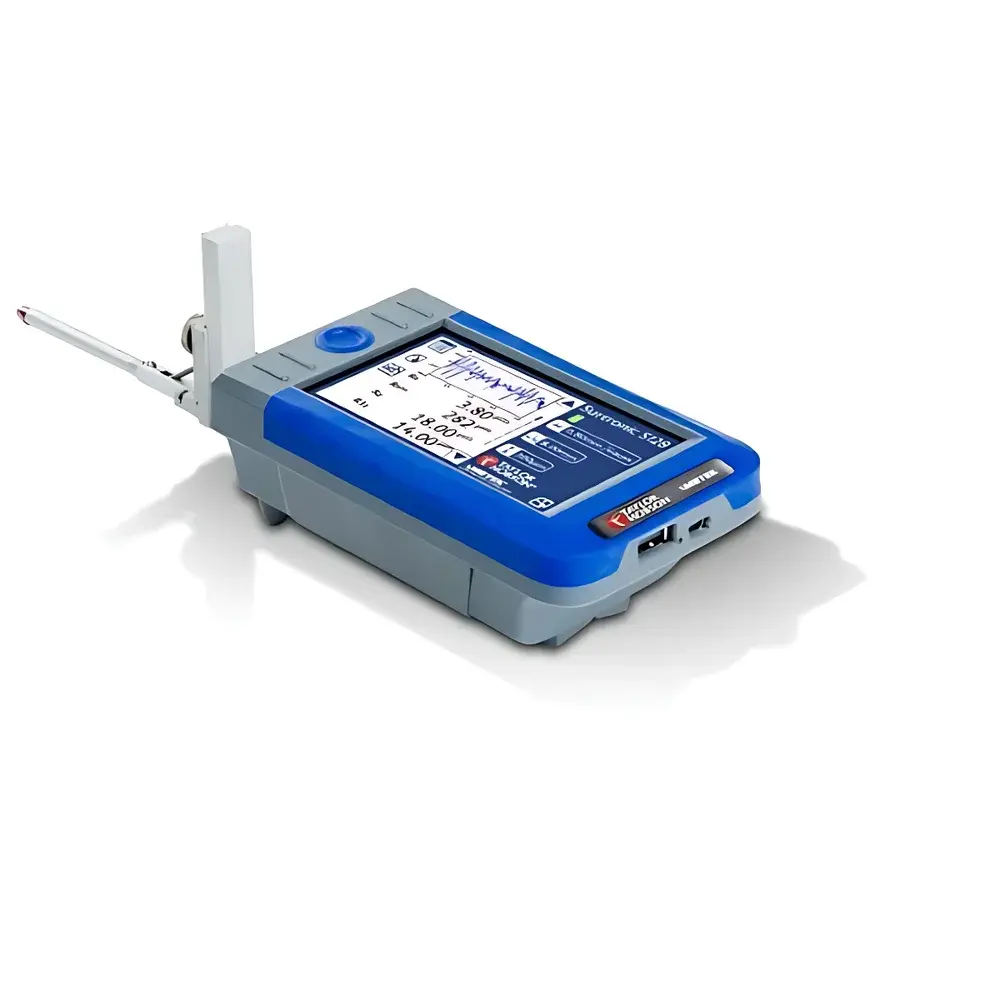
Taylor Hobson Surtronic S-100 Series Portable Surface Roughness Profilometer
| Brand | Taylor Hobson |
|---|---|
| Origin | United Kingdom |
| Model | S116 / S128 |
| Battery Life | ≥2000 measurements per charge |
| Standby Time | Up to 5000 hours |
| Vertical Travel | 50 mm (with optional right-angle probe for up to 70 mm depth access) |
| Display | 4.3-inch capacitive touchscreen, rotatable in four orientations |
| Interface | USB Type-A 2.0 (printer/data storage), Mini-USB 2.0 (charging/data transfer) |
| Housing | Rubberized impact-resistant polymer casing |
| Touchscreen Overlay | Durable polyester film |
| Drive Mechanism | Stainless steel gear-and-bearings assembly |
| Probe Orientation | Standard and inverted (underside measurement capability) |
| Foot Design | V-groove anti-slip base for flat or curved surfaces |
| Compliance | Designed for ISO 4287, ISO 4288, ISO 25178-2, ASME B46.1, and relevant EN standards |
Overview
The Taylor Hobson Surtronic S-100 Series is a rugged, handheld surface roughness profilometer engineered for high-reliability dimensional metrology in demanding industrial environments—including production floors, quality control laboratories, and field service applications. Operating on the principle of contact stylus profilometry, the instrument traces a diamond-tipped probe across the surface under controlled force (typically 0.75 mN or 4 mN, configurable per ISO 3274), converting vertical displacement into high-fidelity analog-to-digital signals. Its modular mechanical architecture supports rapid adaptation to complex geometries without auxiliary fixtures—enabling direct measurement of internal bores, stepped features, and inverted surfaces. Launched in September 2013, the S-100 platform was developed to meet the evolving requirements of ISO/IEC 17025-accredited labs and manufacturing sites subject to IATF 16949, AS9100, and FDA-regulated quality systems.
Key Features
- Ruggedized industrial enclosure with rubberized polymer housing, certified to IP54 for dust and splash resistance
- 4.3-inch high-contrast capacitive touchscreen with scratch-resistant polyester overlay and quad-directional rotation for ergonomic operation in confined spaces
- Stainless steel precision drive mechanism featuring hardened gears and sealed bearings for long-term repeatability and minimal maintenance
- Integrated 50 mm vertical travel stage with optional right-angle probe adapter enabling measurements up to 70 mm deep—eliminating reliance on custom stands or height blocks
- V-groove anti-slip base design ensures stable registration on both planar and cylindrical surfaces (e.g., shafts, pipes, turbine blades)
- Dual USB interface: Type-A port for direct connection to portable thermal printers or USB flash drives; Mini-USB port for charging and PC-based data synchronization
- Lithium-polymer battery delivering ≥2000 single-trace measurements per full charge and up to 5000 hours of standby time—supporting multi-shift deployment without recalibration
- Instant-on functionality: system boots from sleep mode to active measurement state in ≤1 second
Sample Compatibility & Compliance
The Surtronic S-100 accommodates a broad range of metallic, ceramic, and polymer surfaces—from ground steel and anodized aluminum to injection-molded plastics and coated aerospace alloys. Its probe tip radius (2 µm or 5 µm, depending on configuration) and selectable measuring forces ensure compatibility with soft materials (e.g., elastomers, PTFE) as well as hardened tool steels. The instrument complies with international surface texture standards including ISO 4287 (profile parameters), ISO 4288 (lay and waviness assessment), ISO 25178-2 (areal parameters), ASME B46.1, and EN ISO 13565 series. All firmware and calibration routines are traceable to NPL (UK) and NIST reference artifacts. Data integrity meets GLP/GMP documentation requirements, with optional audit trail logging available via PC-connected software.
Software & Data Management
Raw profile data and calculated parameters are stored internally (≥10,000 profiles) and exportable in CSV, TXT, and proprietary .PROF formats. When connected to a Windows PC via Mini-USB, the device integrates with Taylor Hobson’s HOMM (Hobson Online Measurement Manager) software suite—enabling advanced filtering (Gaussian, RC, PC), statistical process control (SPC) charting, comparative analysis against master profiles, and automated report generation compliant with ISO/IEC 17025 clause 7.8.2. All exported files include embedded metadata: timestamp, operator ID, calibration certificate ID, environmental conditions (if logged externally), and instrument serial number—ensuring full data lineage for regulatory audits under 21 CFR Part 11 (when used with validated HOMM configurations).
Applications
- Automotive: Cylinder bore finish verification, camshaft lobe roughness, brake disc Rz validation
- Aerospace: Turbine blade leading-edge Ra/Rz mapping, landing gear component fatigue-critical surface assessment
- Medical Devices: Implant-grade titanium surface texture compliance (ISO 14644-1, ASTM F2715), catheter hub microfinish inspection
- Energy: Valve seat surface integrity checks, nuclear fuel cladding roughness screening
- Tooling & Molds: EDM finish characterization, injection mold cavity replication fidelity analysis
- Academic Research: Tribology studies requiring repeatable baseline roughness quantification across material aging cycles
FAQ
Does the Surtronic S-100 support areal (3D) surface analysis?
No—the S-100 is a 2D contact profilometer optimized for line-profile acquisition. For areal topography, Taylor Hobson recommends the Talysurf CCI or Form Talysurf platforms.
Can the instrument be calibrated in-house?
Yes—using NIST-traceable step-height and roughness calibration standards (e.g., TalyStep, Roughness Standards RS-1000 series). Full calibration procedures are documented in the ISO/IEC 17025-aligned user manual.
Is probe replacement user-serviceable?
Yes—stylus cartridges are field-replaceable with torque-limited installation tools included. Each probe is individually certified with its own calibration certificate.
What environmental conditions affect measurement accuracy?
Ambient temperature stability (±2 °C/hour) and vibration isolation are critical. The S-100 includes real-time thermal drift compensation, but measurements outside 15–30 °C require environmental chamber validation per ISO 22476-1.
How does the inverted (underside) measurement mode function mechanically?
The probe carriage rotates 180° around its longitudinal axis using a precision detent mechanism; the V-foot remains engaged with the reference surface while the stylus extends downward—maintaining consistent skid-based leveling and force vector alignment.