
PRESI POLY’VAC Vacuum Mounting Press
| Brand | PRESI |
|---|---|
| Origin | France |
| Model | POLY’VAC |
| Type | Cold Vacuum Impregnation Mounting Press |
| Working Chamber Diameter | Ø250 mm |
| Working Chamber Height | 100 mm |
| Control Interface | LCD Touchscreen |
| Max. Simultaneous Mounts | 16 × Ø25 mm Cups |
| Pressure Range (Resin Draw) | −20 to −40 kPa (gauge) |
| Pressure Range (Impregnation) | −20 to −90 kPa (gauge) |
| Programmable Cycles | Up to 20 Presets |
| Automation | Fully Automatic Sequence Control |
Overview
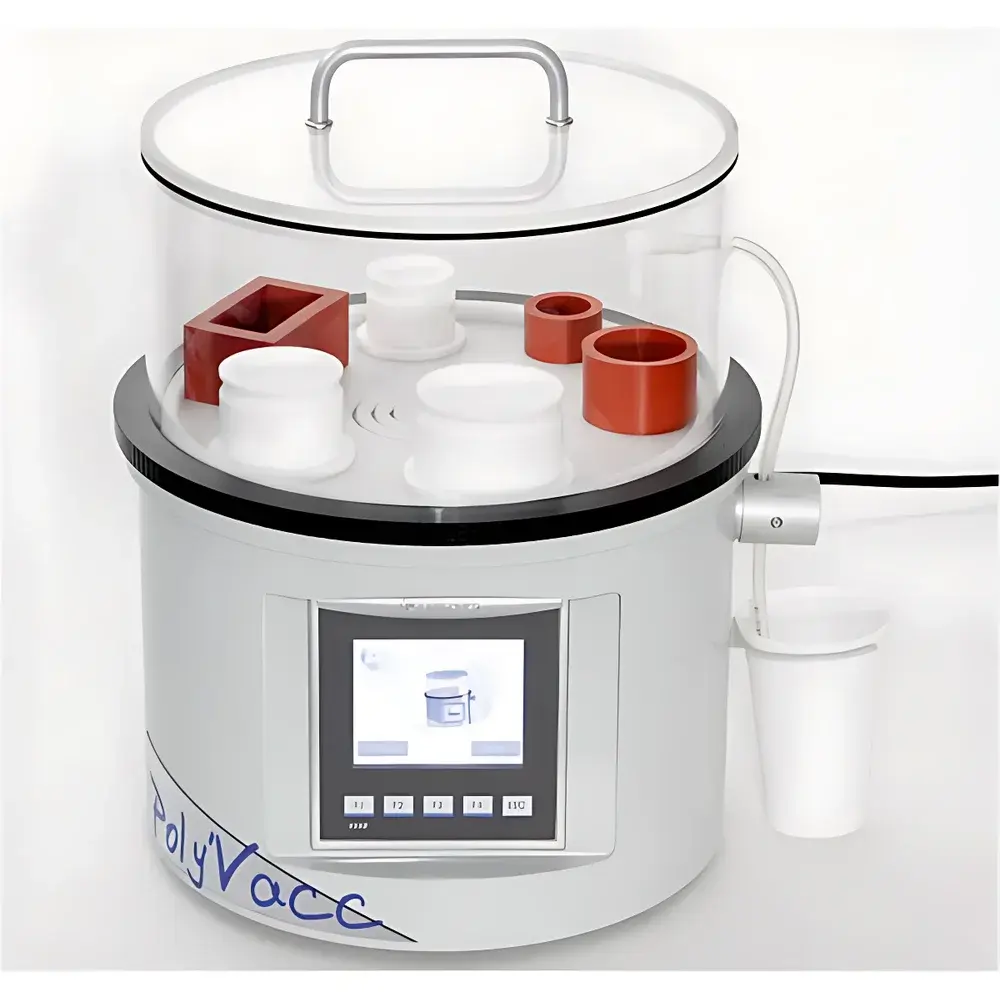
The PRESI POLY’VAC Vacuum Mounting Press is an engineered solution for cold embedding of thermally or mechanically sensitive specimens—particularly those with high porosity, fragile microstructures, or complex surface topographies. Designed around vacuum-assisted impregnation principles, the system leverages controlled negative pressure to evacuate air from specimen pores and interstitial voids prior to and during resin infiltration. This eliminates entrapped microbubbles that compromise sectioning integrity, edge retention, and interface adhesion—critical requirements in metallography, geological thin-section preparation, electronic component cross-sectioning, thermal spray coating analysis, and ceramic failure investigation. Unlike hot compression mounting, the POLY’VAC operates exclusively at ambient temperature using low-viscosity epoxy resins, preserving phase stability, preventing thermal distortion, and avoiding decomposition of polymers, composites, or biological inclusions.
Key Features
- Fully automatic operation with programmable multi-stage vacuum sequences—enabling precise control over resin draw, degassing, impregnation dwell, and pressure ramping.
- Integrated oil-free silent vacuum pump with real-time pressure feedback and dynamic load compensation—ensuring stable vacuum maintenance across varying resin viscosities and chamber loading conditions.
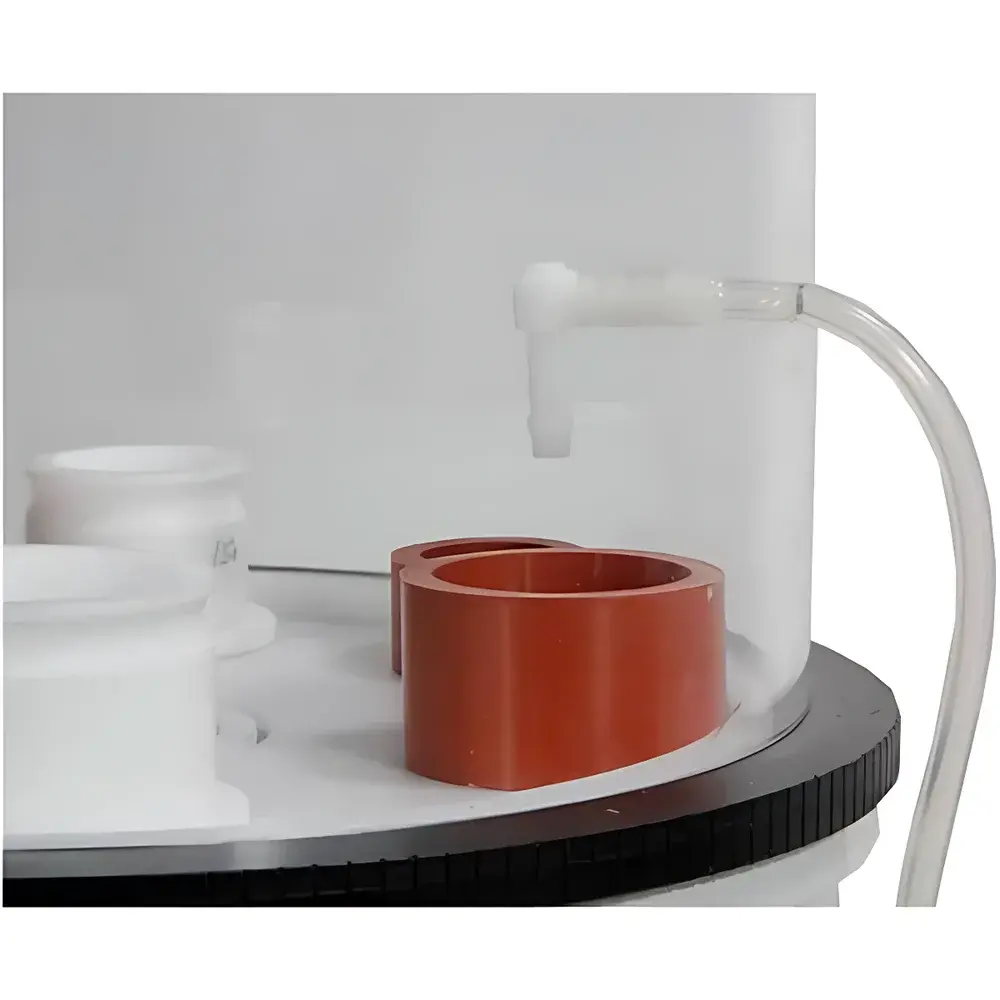
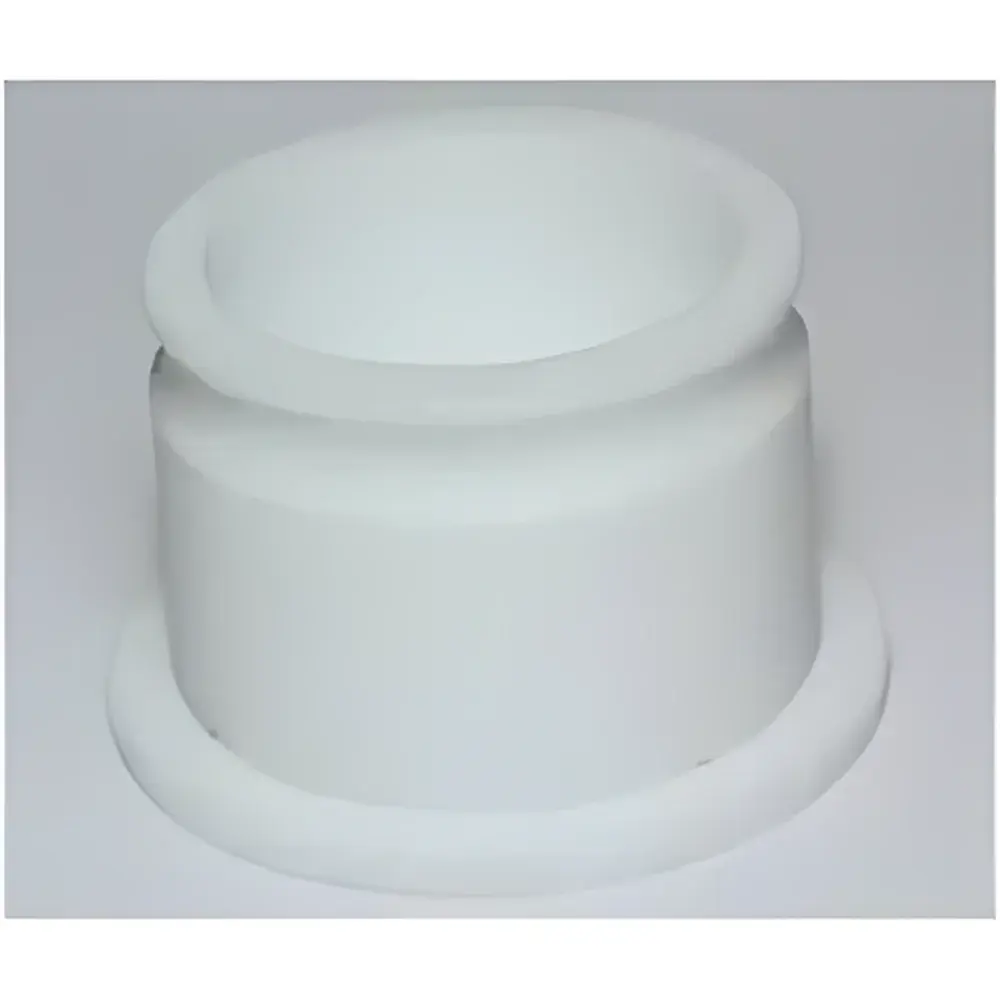
- Oversized transparent acrylic chamber (Ø250 mm × 100 mm H) accommodating up to sixteen 25 mm diameter mounting cups—or single large-format specimens up to 230 mm in diameter—while permitting full visual monitoring of resin flow and bubble evolution.
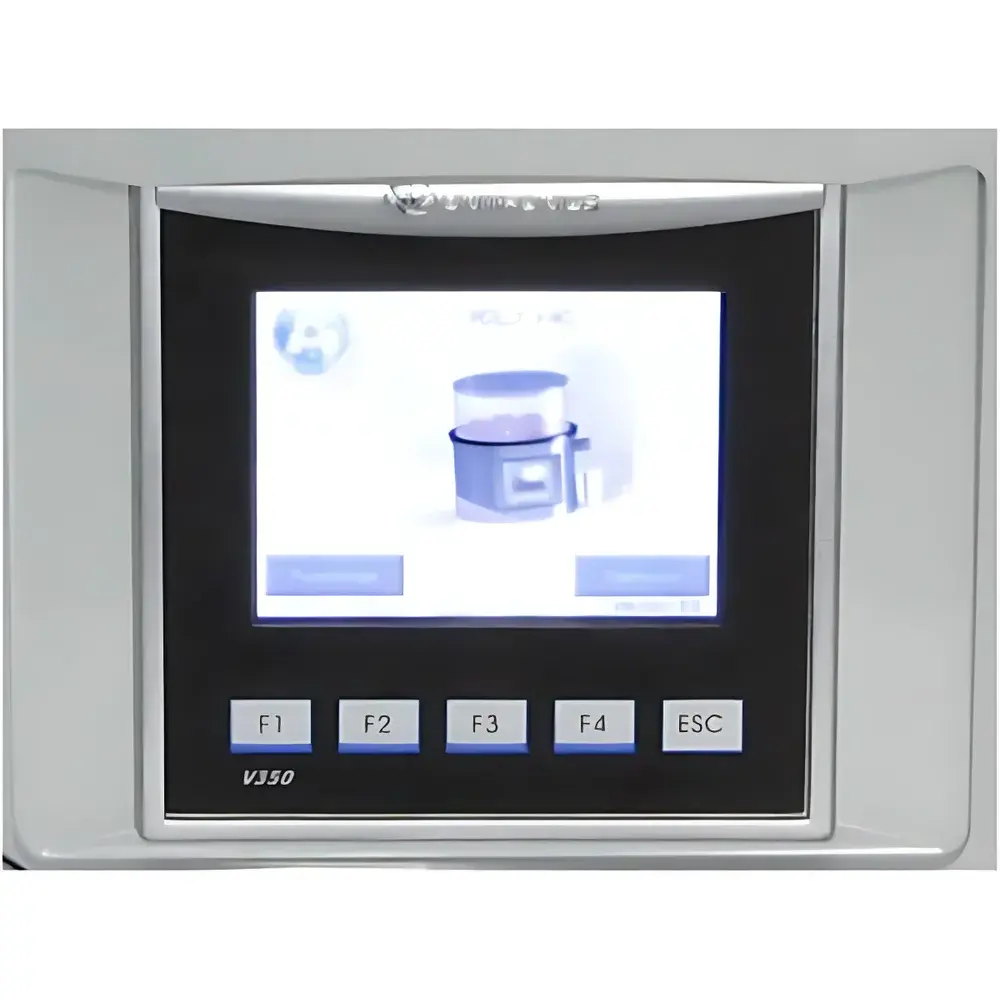
- High-resolution 7-inch LCD touchscreen interface supporting parameter configuration, progress visualization (bar graph + %), cycle logging, and immediate manual pressure override via dedicated vent/balance button.
- Dual-mode vacuum control: independent adjustment of resin aspiration pressure (−20 to −40 kPa) and post-filling impregnation pressure (−20 to −90 kPa), each optimized for resin rheology and specimen architecture.
- Onboard memory storing up to 20 validated process protocols—including pressure setpoints, dwell durations, cycle counts, and ramp profiles—for rapid recall and GLP-compliant repeatability.
- One-touch resin draw function eliminates manual pouring, reducing operator exposure, minimizing spill risk, and improving volumetric consistency across batches.
Sample Compatibility & Compliance
The POLY’VAC supports a broad spectrum of challenging sample types: sintered metals, porous ceramics, fiber-reinforced composites, semiconductor packages, geological core fragments, coral skeletons, and brittle mineral aggregates. Its cold-mount capability ensures compatibility with ASTM E3-22 (Standard Guide for Preparation of Metallographic Specimens), ISO 14577-1 (Metallic materials — Instrumented indentation test), and USP (Microscopic Examination of Pharmaceutical Dosage Forms). The system’s closed-loop pressure control and audit-trail-capable parameter logging align with laboratory quality management frameworks requiring traceability—supporting internal SOP documentation and readiness for ISO/IEC 17025 or FDA 21 CFR Part 11 validation when paired with secure user access controls.
Software & Data Management
While the POLY’VAC operates as a standalone embedded system, its touchscreen firmware implements structured data handling: all executed cycles are timestamped and archived with full parameter snapshots (target pressures, actual chamber readings, elapsed times, and user ID if enabled). Export functionality (via USB port) permits transfer of cycle logs in CSV format for integration into LIMS or statistical process control platforms. Firmware updates are delivered via encrypted firmware image files, ensuring version control and integrity verification. No cloud connectivity or remote telemetry is implemented—preserving data sovereignty and simplifying IT security compliance in regulated environments.
Applications
- Preparation of pore-free mounts for SEM/EDS analysis of open-cell foams and additive-manufactured lattice structures.
- Embedding of delaminated PCB layers without solder reflow or warpage.
- Routine mounting of abrasive wear surfaces (e.g., tungsten carbide coatings) where thermal expansion mismatch would induce cracking.
- Geological petrographic mounts requiring preservation of fluid inclusions and vesicular textures.
- Quality control mounting of injection-molded polymer parts containing glass fillers or elastomeric phases.
- Forensic metallurgy samples where heat-induced phase transformation must be avoided during evidence preservation.
FAQ
What resin types are compatible with the POLY’VAC?
Standard low-viscosity epoxy resins (e.g., Epofix, Technovit 2000, Buehler EcoMet) and acrylic-based cold-mounting media are fully supported. Resin selection should prioritize viscosity ≤ 500 mPa·s at 25°C for optimal capillary penetration under vacuum.
Can the POLY’VAC be used for vacuum impregnation without embedding?
Yes—the chamber accepts custom fixtures and non-standard molds; users may perform standalone vacuum infiltration of porous substrates (e.g., pre-sintered powder compacts) prior to secondary processing.
Is calibration required, and how often?
The integrated pressure transducer is factory-calibrated to EN 61326-1 accuracy class ±1.5% FS. Annual verification against a NIST-traceable reference gauge is recommended for ISO/IEC 17025 compliance.
Does the system meet electromagnetic compatibility (EMC) standards?
Yes—certified to IEC 61326-1:2013 for industrial environments, including immunity to electrostatic discharge (8 kV contact), radiated RF fields (10 V/m), and fast transient bursts (2 kV).
What maintenance is required for the vacuum pump?
The diaphragm pump is maintenance-free for ≥10,000 hours of operation. Filter cartridges should be inspected quarterly and replaced if discoloration or particulate loading is observed.



