

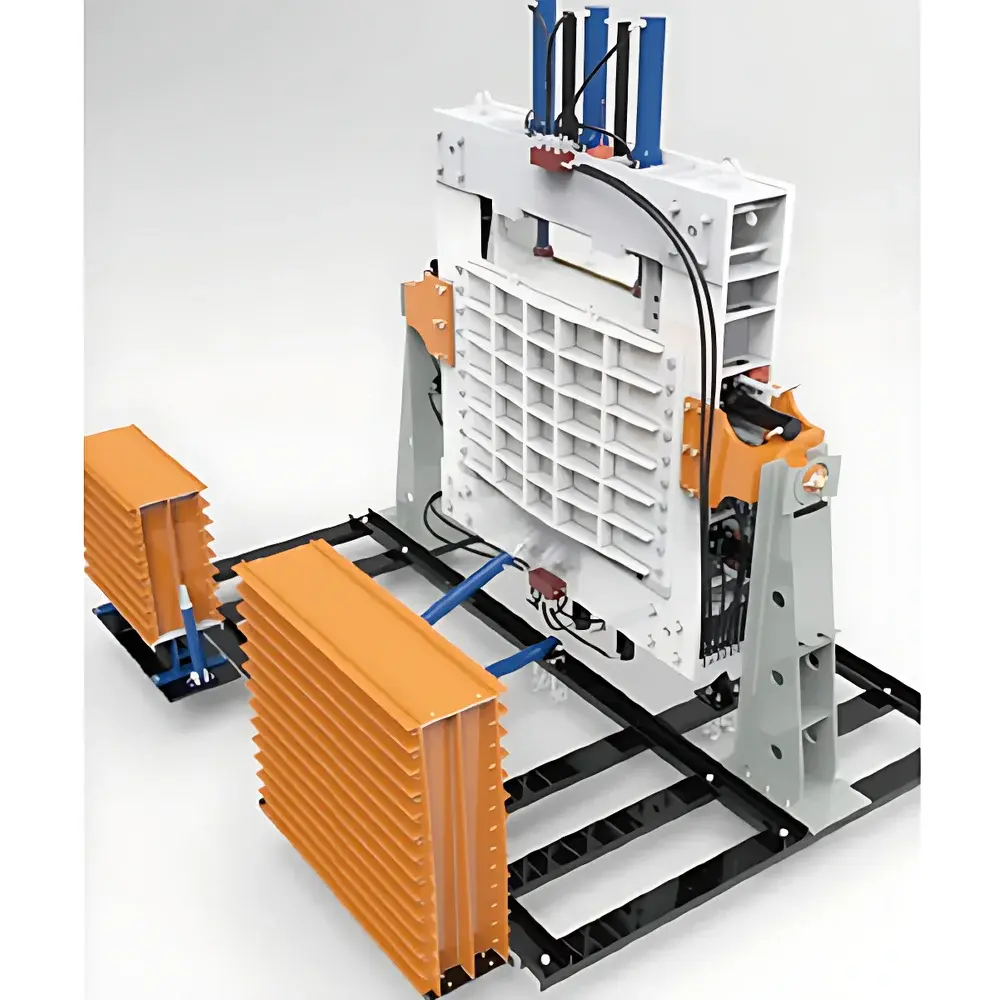
SINOTEST ZYS Series Geotechnical Planar Similarity Modeling Testing System
| Brand | SINOTEST |
|---|---|
| Origin | Jilin, China |
| Manufacturer Type | Direct Manufacturer |
| Country of Origin | China |
| Model | ZYS Series |
| Pricing | Upon Request |
Overview
The SINOTEST ZYS Series Geotechnical Planar Similarity Modeling Testing System is a purpose-built experimental platform engineered for physical modeling of geomechanical behavior under controlled boundary and loading conditions. Based on the principles of dimensional analysis and similitude theory (governed by Buckingham Pi theorem), the system enables scaled-down replication of in-situ stress states, excavation-induced deformation, and progressive failure mechanisms in rock and soil masses. It supports planar (2D) physical modeling—where geometric, mechanical, and boundary condition similarity ratios are rigorously maintained—to investigate structural stability, support interaction, and time-dependent deformation in large-scale underground engineering projects. Typical use cases include hydraulic tunnel portals, underground powerhouse caverns, subsea tunneling interfaces, deep mining stopes, nuclear waste repository host rock response, and urban underground space development. The system integrates rigid frame mechanics with servo-hydraulic actuation and high-fidelity instrumentation to deliver repeatable, traceable, and physically interpretable results suitable for peer-reviewed research and engineering validation.
Key Features
- Multiaxial servo-hydraulic loading configuration—either multi-cylinder or evenly distributed multi-plunger arrangement—ensures uniform stress application across model boundaries, minimizing edge effects and load eccentricity.
- Low-friction interface design: Polytetrafluoroethylene (PTFE) wear plates installed at cylinder top mounts and all specimen-contact surfaces reduce sliding resistance during model deformation, preserving natural shear-band propagation and minimizing artificial constraint artifacts.
- Modular front and rear steel retaining plates with removable observation windows facilitate staged excavation simulation, real-time visual monitoring, and post-test core sampling without structural disassembly.
- Integrated drying port arrays on both lateral plates allow controlled desiccation of cohesive model materials (e.g., cemented sand, clay-bentonite composites), accelerating curing cycles while maintaining homogeneity and reducing moisture-gradient-induced bias.
- Rigid welded steel frame with calibrated foundation anchoring ensures long-term dimensional stability and vibration isolation—critical for sub-millimeter displacement resolution over extended test durations (up to 72+ hours).
Sample Compatibility & Compliance
The ZYS system accommodates model dimensions up to 2.0 m × 1.5 m × 0.4 m (L × W × H), supporting both particulate (sand, gravel, crushed rock) and bonded analog materials (cement-sand mixtures, gypsum-based simulants, polymer-modified clays). Specimen preparation follows ASTM D6913 (particle-size distribution), ASTM D422 (grain-size analysis), and ISO 14688-1 (geotechnical classification) protocols. All load cells are traceably calibrated per ISO/IEC 17025 requirements; displacement transducers comply with ASTM E220 standards for thermal expansion compensation. The system architecture supports GLP-compliant operation: audit trails, user-access controls, and electronic signature capability are embedded within the control software to meet regulatory expectations for data integrity in federally funded research and infrastructure safety assessments.
Software & Data Management
The proprietary SINOTEST GeoSimControl™ software provides synchronized acquisition from up to 64 channels—including load cells, LVDTs, strain gauges, digital image correlation (DIC) inputs, and environmental sensors (temperature/humidity). Raw data is stored in HDF5 format with embedded metadata (test ID, operator, timestamp, calibration certificate IDs, similarity ratio definitions). Built-in modules enable automatic conversion of measured displacements into strain tensors, stress contour mapping via inverse finite difference, and Mohr–Coulomb envelope fitting. Reporting tools generate ASTM-compliant summary tables, time-series plots with dual-Y axes, vector field overlays, and export-ready figures (EPS, SVG, PNG) for publication. All data exports include hash-verified digital signatures and optional encryption for secure collaboration across academic and industrial consortia.
Applications
- Stability analysis of shallow-buried tunnels under asymmetric surcharge loading
- Support system optimization (rock bolts, shotcrete, steel sets) using sequential excavation method (SEM) simulation
- Thermo-hydro-mechanical (THM) coupling studies in radioactive waste repository host rocks
- Seismic response characterization of layered rock masses adjacent to underground powerhouses
- Scale-effect investigation in pillar-and-stope mining geometry under varying depth-to-span ratios
- Validation benchmarking for discrete element (DEM) and continuum-based numerical models (e.g., FLAC2D, Phase2)
FAQ
What similarity criteria does the ZYS system enforce for model scaling?
The system implements geometric, kinematic, and dynamic similarity based on defined scale factors for length (λL), stress (λσ), and time (λt), with optional inclusion of gravitational and pore-pressure similitude per Terzaghi’s law.
Can the system accommodate real-time DIC-based surface deformation tracking?
Yes—dedicated mounting brackets and lighting ports are integrated for commercial stereo-DIC systems (e.g., LaVision, Correlated Solutions); synchronization is achieved via TTL trigger output from the main controller.
Is remote monitoring and control supported for collaborative projects?
The software includes TLS-secured web interface access with role-based permissions, enabling off-site supervision and data review without compromising local network security policies.
Does the system meet requirements for third-party verification in government-funded infrastructure R&D?
All hardware calibration records, software version logs, and raw data archives comply with ISO/IEC 17025 and NSF 422 guidelines for geotechnical testing laboratories engaged in federally sponsored research.



