
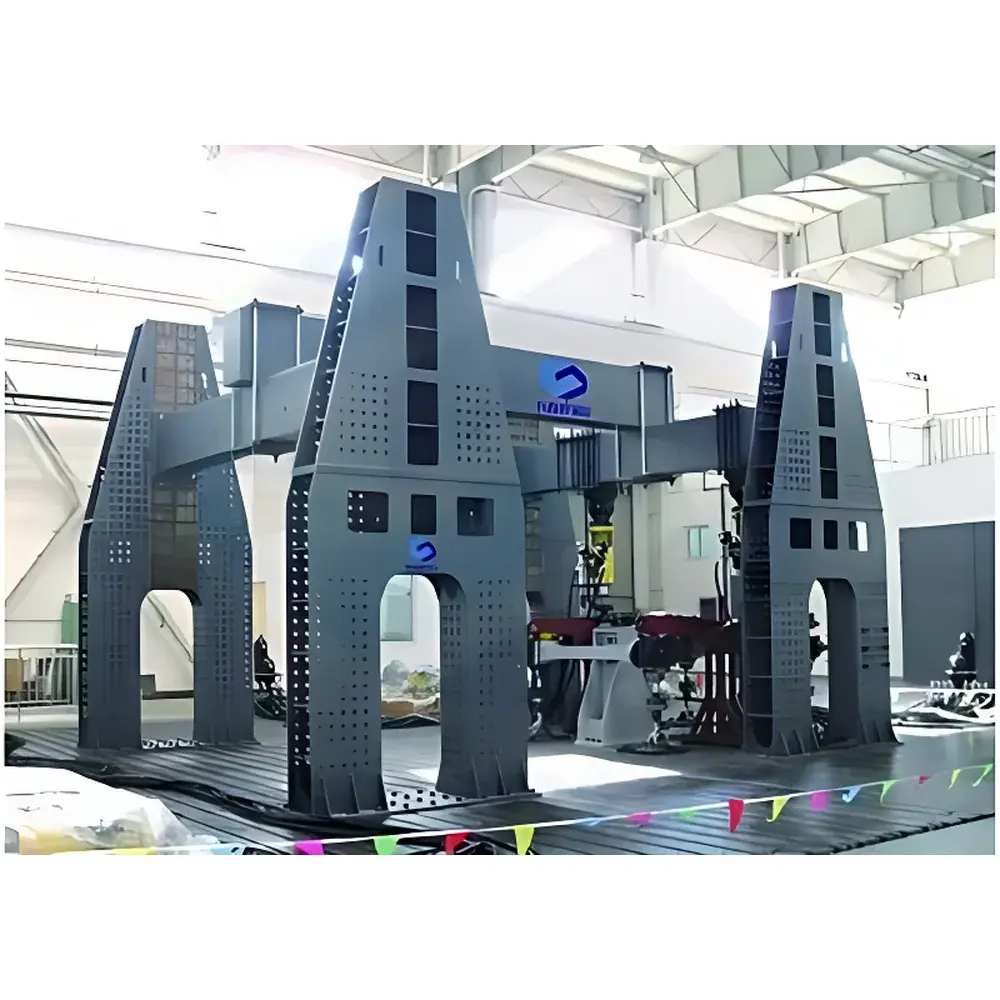
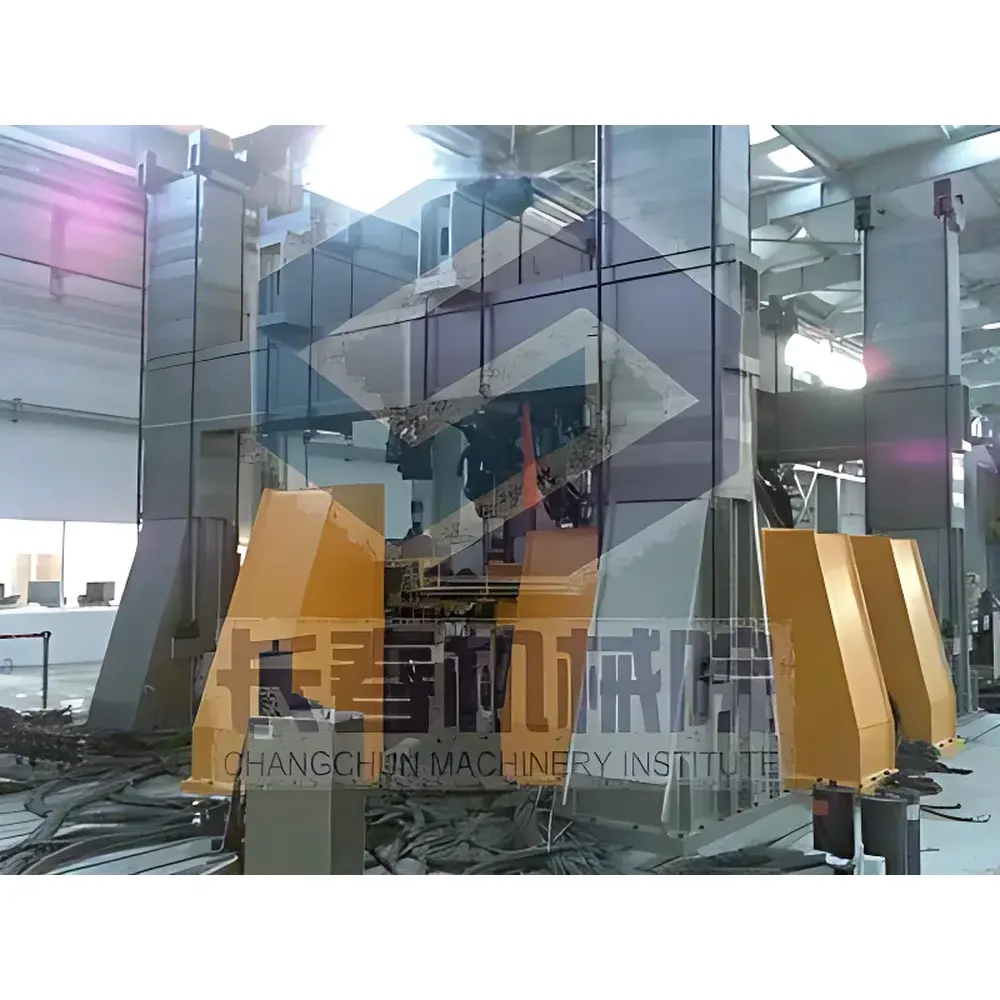
CIMACH ZSDS-GZJ Multi-Channel Coordinated Loading Test System for Railway Bogie Structures
| Brand | CIMACH |
|---|---|
| Origin | Jilin, China |
| Model | ZSDS-GZJ |
| Application | Static Strength & Fatigue Testing of High-Speed EMU Bogies |
| Compliance | TB/T 2368–2005, UIC 515-4, UIC 615-4, JIS E 4207, JIS E 4208 |
| Loading Channels | Multi-channel synchronized hydraulic actuation |
| Control Mode | Closed-loop servo-hydraulic coordination |
| Structural Test Scope | Complete bogie assembly, frame-only configuration, and modular subcomponents (axle box, pivot arm, bolster, suspension springs) |
Overview
The CIMACH ZSDS-GZJ Multi-Channel Coordinated Loading Test System is an engineered solution for structural integrity validation of railway bogie systems under representative service loading conditions. Designed specifically for high-speed electric multiple unit (EMU) applications, the system implements multi-axis, phase-synchronized hydraulic actuation to replicate complex in-service load spectra—including vertical, lateral, longitudinal, and torsional components—acting simultaneously on the bogie frame, wheelset, and suspension subassemblies. Its architecture adheres to classical mechanics-based test methodologies defined in international rail standards, where static strength verification assesses yield margin and plastic deformation limits under ultimate design loads, while fatigue testing subjects critical structural zones to cyclic loading histories derived from real-world track spectra (e.g., SN curves, power spectral density profiles). The system operates within a rigid load frame with high-stiffness reaction base, enabling precise force and displacement control across all active channels with minimal cross-axis coupling.
Key Features
- Multi-channel closed-loop servo-hydraulic control architecture supporting up to eight independently programmable loading axes, each equipped with high-resolution load cells (±0.5% FS accuracy) and LVDT displacement transducers (±0.01 mm resolution)
- Real-time coordinated loading synchronization with phase offset adjustment (±180°) and amplitude modulation per channel, enabling simulation of asymmetric track irregularities and dynamic wheel-rail interaction forces
- Modular fixture interface compatible with standard bogie mounting configurations (e.g., axle box support points, air spring seats, traction rod pivots), allowing rapid reconfiguration between full-bogie, frame-only, and component-level test setups
- Dedicated safety interlock system compliant with ISO 13857 and EN 954-1 Category 3, including emergency stop circuits, hydraulic pressure monitoring, and over-travel limit switches on all actuators
- Integrated thermal management subsystem for sustained operation during extended fatigue cycles, maintaining actuator oil temperature within ±2°C of setpoint (typically 40–50°C)
Sample Compatibility & Compliance
The ZSDS-GZJ system accommodates structural test specimens ranging from monolithic welded bogie frames (up to 5,000 kg mass) to discrete suspension components such as axle boxes, pivot arms, bolsters, and primary/secondary coil or air springs. Fixture adaptability supports both conventional CRH-series bogies and newer standardized designs conforming to IEC 62236-2 electromagnetic compatibility requirements. All test protocols align with statutory regulatory frameworks governing rail vehicle certification: static strength tests follow TB/T 2368–2005 (Chinese national standard for railway vehicle structural strength), while fatigue validation meets UIC 515-4 (wheelset and axle fatigue) and UIC 615-4 (bogie frame endurance), supplemented by Japanese Industrial Standards JIS E 4207 (static strength of rolling stock structures) and JIS E 4208 (fatigue testing methods for railway components). Documentation output includes traceable calibration records, raw data logs, and summary reports formatted for GLP-compliant submission to certification authorities.
Software & Data Management
Control and data acquisition are managed via CIMACH’s proprietary TestMaster-Bogie v3.2 software platform, built on a deterministic real-time operating system (RTOS) with <1 ms control loop latency. The software provides synchronized waveform generation (including user-defined time-history files and frequency-domain spectra), automated test sequencing with conditional branching, and dual-mode data logging: high-frequency raw channel data (up to 10 kHz per channel) stored in HDF5 format, and processed engineering units (stress, strain, deflection, cycle count) archived in SQL-based relational database with timestamped audit trails. Export modules support ASTM E2001-compliant fracture mechanics reporting and ISO 10816-3 vibration severity classification. Full compliance with FDA 21 CFR Part 11 is implemented through electronic signature workflows, role-based access control, and immutable audit logs covering all test parameter modifications and result approvals.
Applications
- Verification of static strength margins for newly designed bogie frames under combined vertical, lateral, and longitudinal load cases per UIC 615-4 Annex A
- High-cycle fatigue assessment of weld joints at critical stress concentrations (e.g., motor hanger attachments, brake beam interfaces) using spectrum loading derived from line-specific track geometry databases
- Component-level qualification testing of rubber-metal composite elements (e.g., axle box rubber nodes, anti-roll bar bushings) under combined shear-compression-torsion loading
- Correlation of physical test results with finite element analysis (FEA) models, including strain gauge rosette validation and modal response comparison
- Support for type approval processes required by national rail safety agencies, including CNRAC (China), ERA (European Union), and JRT (Japan Rail Technical Research Institute)
FAQ
What types of bogie configurations can be tested on the ZSDS-GZJ system?
The system supports complete three-piece bogies (frame + two wheelsets + suspension), frame-only assemblies, and isolated subcomponents such as axle boxes, pivot arms, and bolster assemblies—provided appropriate custom fixtures are supplied.
Does the system support real-time load spectrum replay from field measurement data?
Yes. The TestMaster-Bogie software accepts ASCII or CSV-formatted time-history files and converts them into synchronized actuator commands with configurable interpolation and filtering to match hardware bandwidth limits.
Is third-party calibration documentation available for load cells and displacement sensors?
All transducers are supplied with NIST-traceable calibration certificates issued by accredited laboratories; recalibration intervals are specified in the maintenance manual and tracked within the software’s asset management module.
Can the system be integrated into an existing laboratory SCADA or MES infrastructure?
Standard OPC UA and Modbus TCP interfaces are provided for bidirectional communication with enterprise-level manufacturing execution systems, enabling automated test scheduling, resource allocation, and quality record linkage.



