
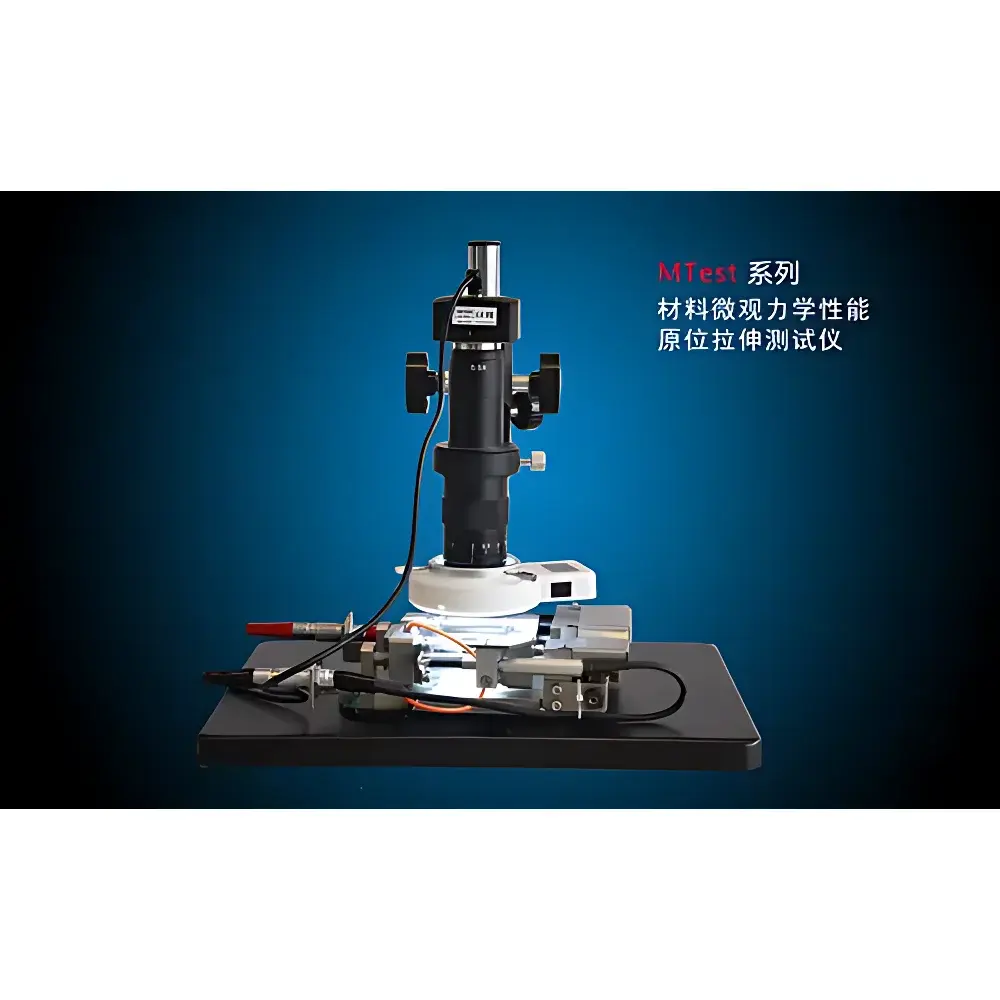
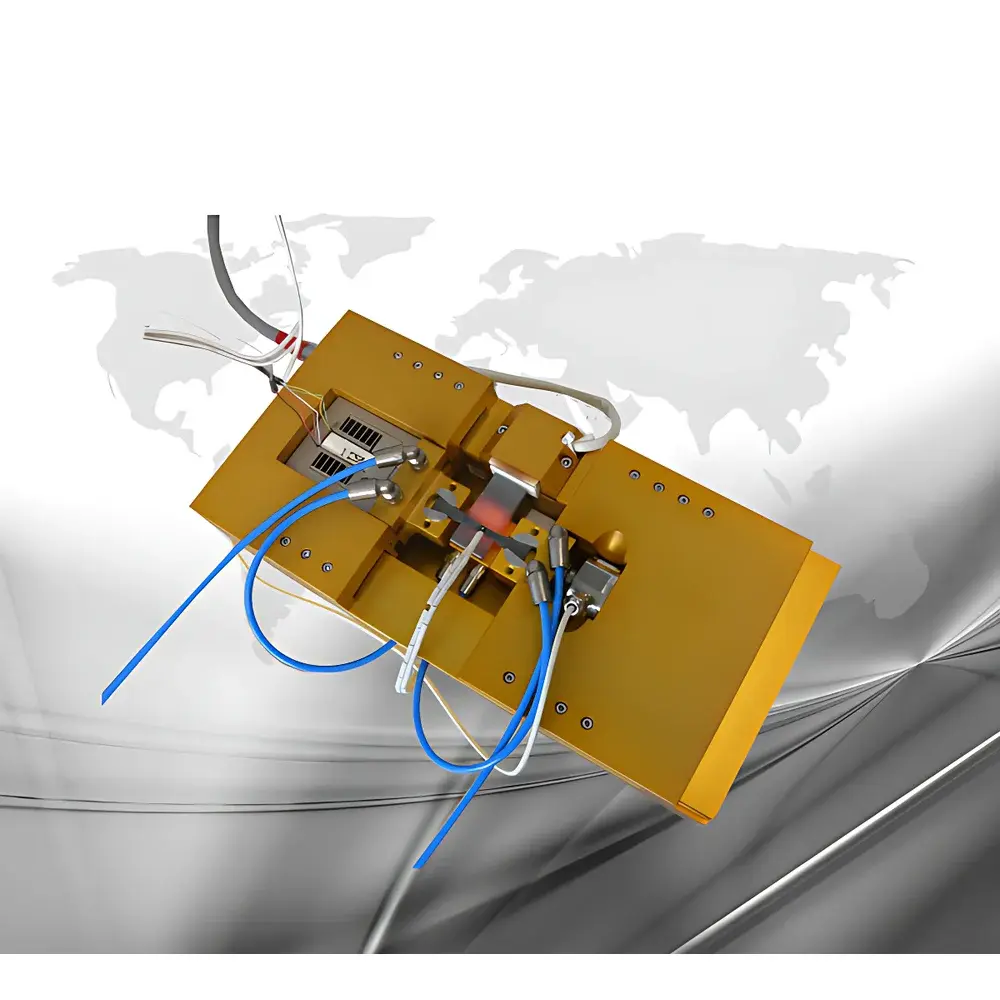
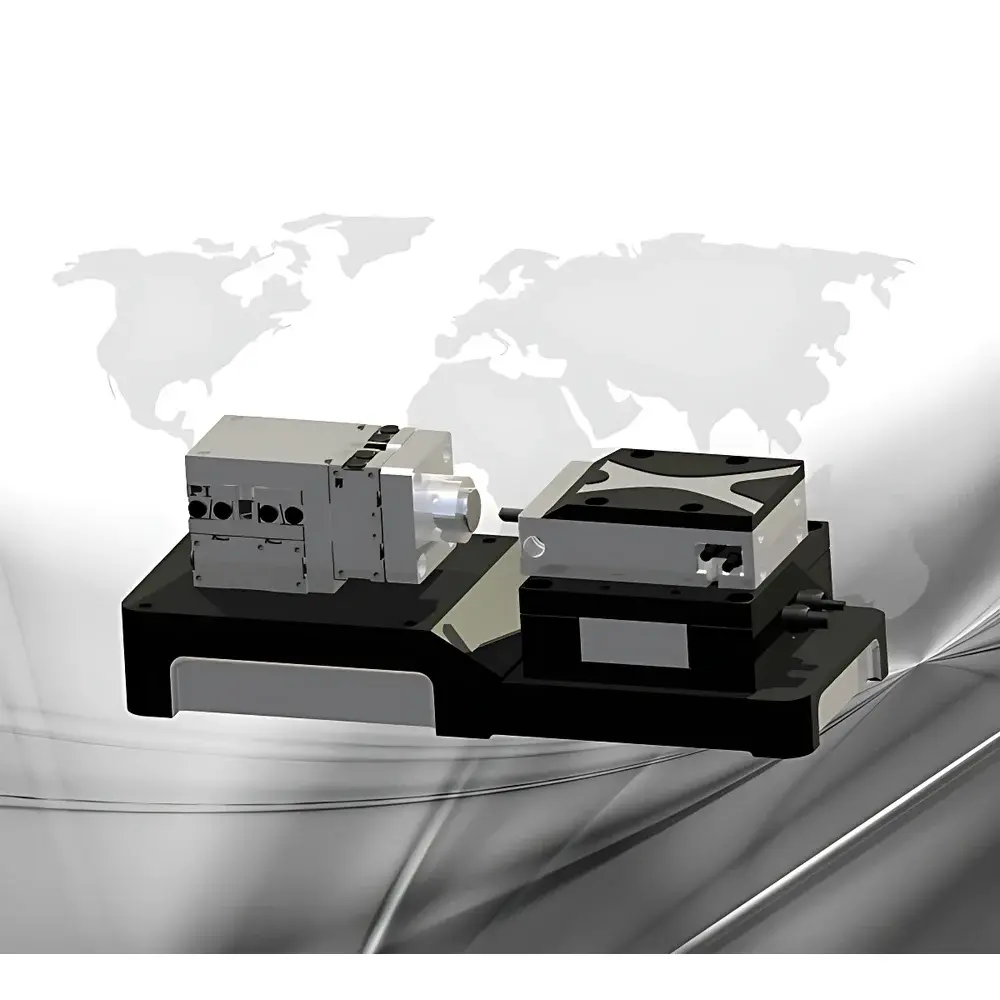
Sinotest MTest In-situ Micro-Mechanical Testing System
| Brand | Sinotest |
|---|---|
| Origin | Jilin, China |
| Manufacturer Type | Direct Manufacturer |
| Country of Origin | China |
| Model | MTest |
| Force Capacity | 1 kN |
| Force Measurement Range | 4–100% FS |
| Force Accuracy | ±1% of reading |
| Displacement Resolution | 1 mm |
| Travel Range | 4–100% FS |
| Instrument Category | In-situ Mechanical Testing System |
| Application Scope | SEM/XRD/AFM/Raman/CCD/Metallurgical Microscope Integration |
Overview
The Sinotest MTest In-situ Micro-Mechanical Testing System is an engineered platform for quantitative mechanical characterization of solid materials under real-time microscopic observation. Designed explicitly for integration with high-resolution imaging and analytical instrumentation—including scanning electron microscopes (SEM), transmission electron microscopes (TEM), X-ray diffraction (XRD) systems, Raman spectrometers, atomic force microscopes (AFM), and optical metallurgical microscopes—the MTest enables synchronized mechanical loading and dynamic visualization of deformation, crack initiation, dislocation activity, grain boundary sliding, and phase transformation at micro- to sub-micron scales. Its core architecture follows the principles of uniaxial tensile/compressive testing in compliance with ASTM E8/E9 and ISO 6892-1 standards, while its modular design supports multi-axial, cyclic, and multi-physics loading configurations. The system operates within a compact footprint (<0.5 m²), features low power consumption (<150 W), and maintains structural rigidity sufficient for high-fidelity load-displacement data acquisition during in-vacuum or ambient environmental operation.
Key Features
- 1 kN maximum static load capacity with force measurement accuracy of ±1% of reading across 4–100% full scale—validated per ISO 7500-1 Class 1 requirements.
- Integrated displacement transduction with 1 mm resolution; compatible with external high-precision encoders or interferometric sensors for sub-micron positional feedback when paired with microscope stages.
- Modular mechanical stage design supporting interchangeable test fixtures: uniaxial tension/compression, three/four-point bending, dual-axis tension, shear-tension coupling, nanoindentation-compatible loading heads, and low-cycle fatigue actuation modules.
- Multi-physics environmental compatibility: provisions for electrical biasing (±100 V), thermal control (−40 °C to +200 °C via optional Peltier or furnace modules), and magnetic field exposure (up to 1 T with custom yoke integration).
- Optomechanical alignment interface compliant with standard SEM chamber flanges (CF-63/CF-100), XRD goniometer mounts, and inverted optical microscope nosepiece geometries.
- Real-time synchronization capability with external trigger signals (TTL/5 V logic) for frame-locked imaging, spectroscopic acquisition, and diffraction pattern capture.
Sample Compatibility & Compliance
The MTest accommodates specimens ranging from bulk coupons (up to 20 mm gauge length) to thin films, nanowires, MEMS devices, and additively manufactured lattice structures. Specimen mounting utilizes standardized mechanical grips, wedge clamps, or custom vacuum-compatible holders. All mechanical components are constructed from non-magnetic, ultra-high vacuum (UHV)-compatible alloys (e.g., Ti-6Al-4V, Inconel 718) to ensure operational integrity inside SEM columns and XRD chambers. The system conforms to electromagnetic compatibility (EMC) directives IEC 61326-1 and safety standard IEC 61010-1. Force and displacement calibration certificates traceable to NIM (National Institute of Metrology, China) are provided with each unit. For regulated environments, audit trails, user access control, and electronic signature support can be enabled via optional software modules compliant with FDA 21 CFR Part 11 and GLP/GMP documentation requirements.
Software & Data Management
Control and data acquisition are managed through Sinotest’s proprietary MTest Control Suite (v3.2+), a Windows-based application supporting deterministic real-time loop execution (<10 ms cycle time). The software provides programmable loading profiles (ramp, hold, cyclic, staircase), live plotting of force–displacement, stress–strain, and derived metrics (modulus, yield offset, fracture energy). Raw data exports in ASCII, CSV, and HDF5 formats include metadata tags for instrument configuration, environmental conditions, and synchronization timestamps. API interfaces (COM/.NET and TCP/IP) enable third-party integration with MATLAB, Python (via PySerial/PyVISA), and LabVIEW. All acquired datasets are automatically indexed in a local SQLite database with version-controlled backups and SHA-256 hash verification for data integrity assurance.
Applications
- In-situ SEM tensile testing of metallic alloys to quantify slip band formation, void nucleation, and intergranular fracture kinetics.
- Correlative XRD–mechanics studies mapping lattice strain evolution during plastic deformation in polycrystalline ceramics.
- Raman-synchronized nano-mechanical testing of 2D materials (e.g., graphene, MoS₂) to correlate phonon softening with critical shear stress.
- AFM-coupled indentation-bending experiments on polymer composites evaluating filler–matrix interfacial debonding thresholds.
- Thermo-mechanical cycling tests on shape-memory alloys under simultaneous optical microscopy to resolve martensitic variant reorientation dynamics.
- Reliability assessment of microelectronic interconnects via in-situ bending–fatigue protocols aligned with JEDEC JESD22-B112A guidelines.
FAQ
Is the MTest compatible with field-emission SEM systems?
Yes—its compact form factor and non-magnetic construction meet FE-SEM chamber clearance and magnetic field interference requirements. Optional Faraday cage shielding is available upon request.
Can displacement resolution be improved beyond 1 mm?
The base system provides 1 mm encoder resolution; however, it supports external laser interferometers (e.g., Keysight 5530 series) or capacitive sensors (e.g., Lion Precision CCG-2000) for sub-100 nm resolution when integrated via analog voltage input or digital quadrature interface.
Does the system support closed-loop strain control?
Closed-loop strain control is achievable using external extensometers (e.g., EDC-200 video extensometer) or DIC systems (e.g., Correlated Solutions VIC-2D), with feedback routed through the MTest Control Suite’s analog PID module.
What is the warranty and service coverage?
Sinotest provides a 24-month limited warranty covering parts and labor. Extended service contracts including on-site calibration, preventive maintenance, and application engineering support are available globally through authorized partners.
Are custom fixture designs supported?
Yes—Sinotest offers collaborative mechanical design services for application-specific fixtures, including cryogenic, electrochemical, or fluidic cell-integrated configurations, subject to NDA and feasibility review.



