
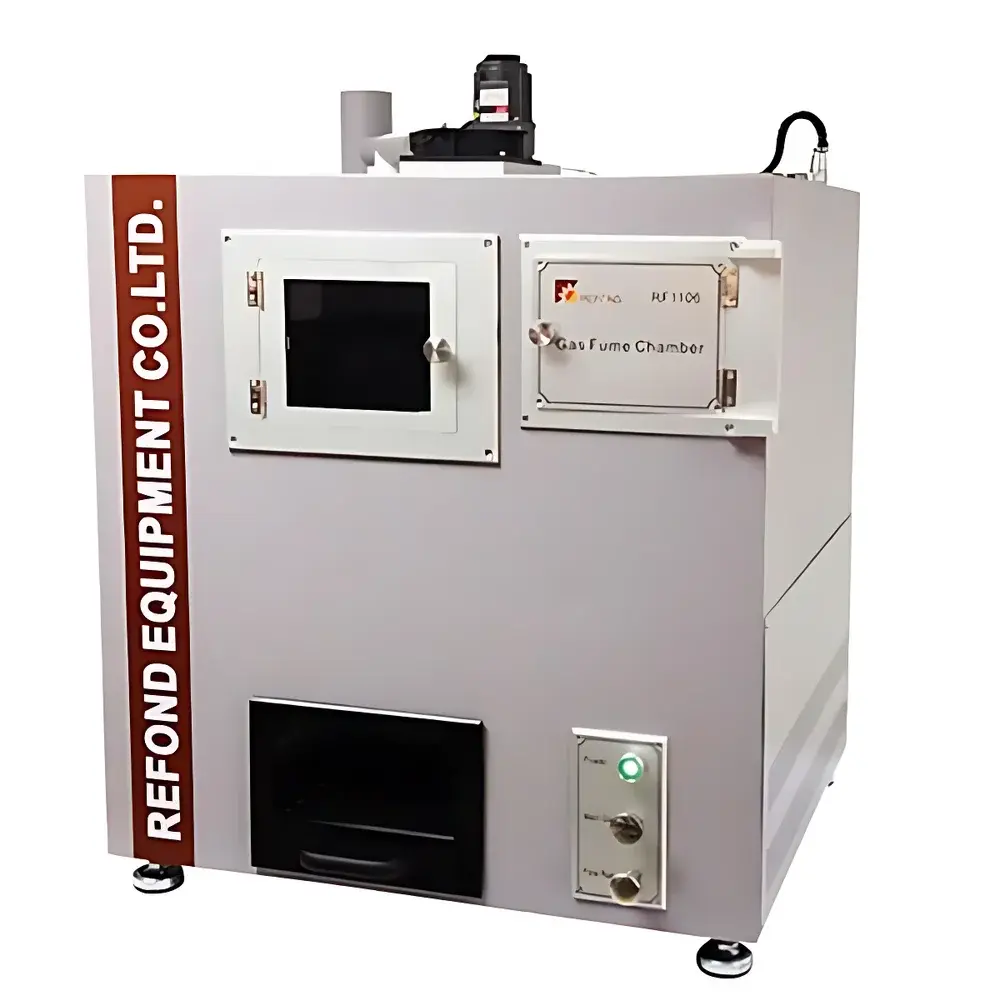
HENGYU RF 1106-1 NOx Fading Tester for Textile Colorfastness (Compliant with ISO 105-G02 / GB/T 11039.2 / AATCC 23)
| Brand | HENGYU |
|---|---|
| Model | RF 1106-1 |
| Power Supply | AC 220 V, 50 Hz, 1000 W |
| Operating Environment | 10–35 °C, 10–80 % RH |
| Gas Source | Butane |
| Display | 7-inch color touchscreen |
| Ventilation System | Forced-exhaust fan, adjustable airflow fan, and internal recirculation fan |
| Ignition Source | Bunsen burner |
| Compliance | ISO 105-G02, GB/T 11039.2, AATCC 23 |
Overview
The HENGYU RF 1106-1 NOx Fading Tester is an engineered laboratory instrument designed to evaluate the colorfastness of textiles—excluding loose fibers—to nitrogen oxide (NOx) fumes generated during controlled combustion of butane or town gas. This test method simulates real-world atmospheric exposure to nitrous oxides emitted from domestic heating appliances, industrial combustion sources, or urban air pollution events. The instrument operates on the principle of standardized thermal-chemical degradation: a calibrated Bunsen burner produces a reproducible flame under regulated gas flow, generating a defined concentration of NOx within a sealed, thermally stabilized reaction chamber. Specimens are mounted adjacent to the flame zone and exposed for predetermined durations while ambient temperature, humidity, and airflow are actively monitored and maintained per ISO 105-G02 protocol requirements. Unlike optical or photometric fading tests, this apparatus measures chemical resistance to gaseous oxidative stress—a critical parameter for apparel, upholstery, automotive interiors, and technical textiles deployed in environments with elevated NOx exposure.
Key Features
- 7-inch high-resolution color touchscreen interface with intuitive navigation and real-time parameter monitoring—including gas flow status, chamber temperature, and fan operational modes.
- Triple-fan ventilation architecture: a forced-exhaust fan ensures rapid removal of residual gases post-test; an adjustable airflow fan permits fine-tuning of convective mixing; and an internal recirculation fan maintains uniform gas distribution across the specimen plane.
- Precision-mounted Bunsen burner assembly with integrated gas pressure regulation and flame height calibration scale—ensuring repeatable NOx generation per ISO 105-G02 Annex A specifications.
- Thermally insulated stainless-steel reaction chamber with calibrated temperature sensors (±0.5 °C accuracy) and active ambient compensation circuitry to maintain stability within the required 10–35 °C operating range.
- Integrated safety interlocks: automatic gas cutoff upon door opening, overtemperature shutdown, and flame-out detection via thermocouple feedback loop.
- Modular design compliant with standard laboratory benchtop footprint (W × D × H: 650 × 520 × 480 mm), facilitating integration into QA/QC labs operating under GLP or ISO/IEC 17025 frameworks.
Sample Compatibility & Compliance
The RF 1106-1 accommodates flat textile specimens up to 100 mm × 40 mm, clamped securely in standardized sample holders conforming to ISO 105-G02 Figure 1 geometry. Fabrics—including woven, knitted, nonwovens, coated substrates, and dyed leather—are tested without pre-conditioning beyond standard atmospheric equilibration (ISO 139). The instrument fully satisfies the mechanical, thermal, and procedural requirements of ISO 105-G02:2019, its Chinese national equivalent GB/T 11039.2–2009, and AATCC Test Method 23–2022. All critical parameters—including burner flame height (25 ± 2 mm), exposure duration (1–4 h), and chamber air exchange rate (6–10 air changes/hour)—are programmable and auditable. Device documentation supports traceability to NIST-traceable reference standards where applicable, and operational logs meet minimum data integrity expectations for regulatory submissions under FDA 21 CFR Part 11 when paired with validated software extensions.
Software & Data Management
While the base RF 1106-1 operates via embedded firmware, optional PC-based control software (v2.1+) enables automated test sequencing, parameter logging at 1-second intervals, and export of CSV-formatted datasets for statistical analysis (e.g., ANOVA of grayscale change ΔE* values). Audit trails record user ID, timestamp, parameter modifications, and system error codes—supporting GLP-compliant record retention. Raw sensor outputs (temperature, fan RPM, gas pressure) are time-stamped and stored locally on removable SD card (supplied), with encryption options available for secure data transfer. Software validation packages—including IQ/OQ documentation templates—are provided for laboratories requiring formal equipment qualification under ISO/IEC 17025 or pharmaceutical GMP environments.
Applications
- Quality assurance of reactive- and acid-dyed cotton, wool, and nylon fabrics intended for indoor architectural textiles exposed to kitchen or heating appliance emissions.
- Comparative assessment of NOx-resistant pigment systems in automotive seat covers and cabin trim materials.
- Regulatory testing for textile suppliers serving EU markets, where EN ISO 105-G02 remains a referenced standard in REACH Annex XVII compliance dossiers.
- R&D screening of novel antioxidant additives or barrier coatings applied to synthetic fibers to mitigate oxidative discoloration.
- Third-party certification testing accredited under CNAS (China National Accreditation Service) or UKAS frameworks for ISO 105 series methods.
FAQ
What gas types are compatible with the RF 1106-1?
Butane is the primary and recommended fuel per ISO 105-G02. Town gas (coal gas) may be used only if composition and calorific value are documented and validated against the standard’s equivalence clause.
Is external fume hood connection mandatory?
Yes. The instrument must be installed inside a certified fume hood or connected to an externally ducted exhaust system meeting local occupational health regulations (e.g., OSHA 1910.1200, EN 14175-3). Internal fans alone do not replace structural ventilation.
Can test duration and temperature be customized beyond ISO-specified ranges?
The touchscreen interface allows deviation from standard exposure times (1–4 h) and chamber setpoints (within 10–35 °C); however, non-standard conditions invalidate ISO/GT compliance unless justified and documented per ASTM E2500 risk-based validation principles.
Does the unit include grayscale or color measurement tools?
No. The RF 1106-1 performs exposure only. Post-test evaluation requires separate instrumentation—typically a spectrophotometer (e.g., ISO 105-A02-compliant) or gray scale (ISO 105-A03) assessed under D65 illumination.
What maintenance intervals are recommended for the Bunsen burner assembly?
Burner nozzles should be inspected and cleaned weekly using specified gauge wires; full calibration—including flame geometry verification and thermocouple drift check—is required quarterly or after 100 test cycles, whichever occurs first.



