
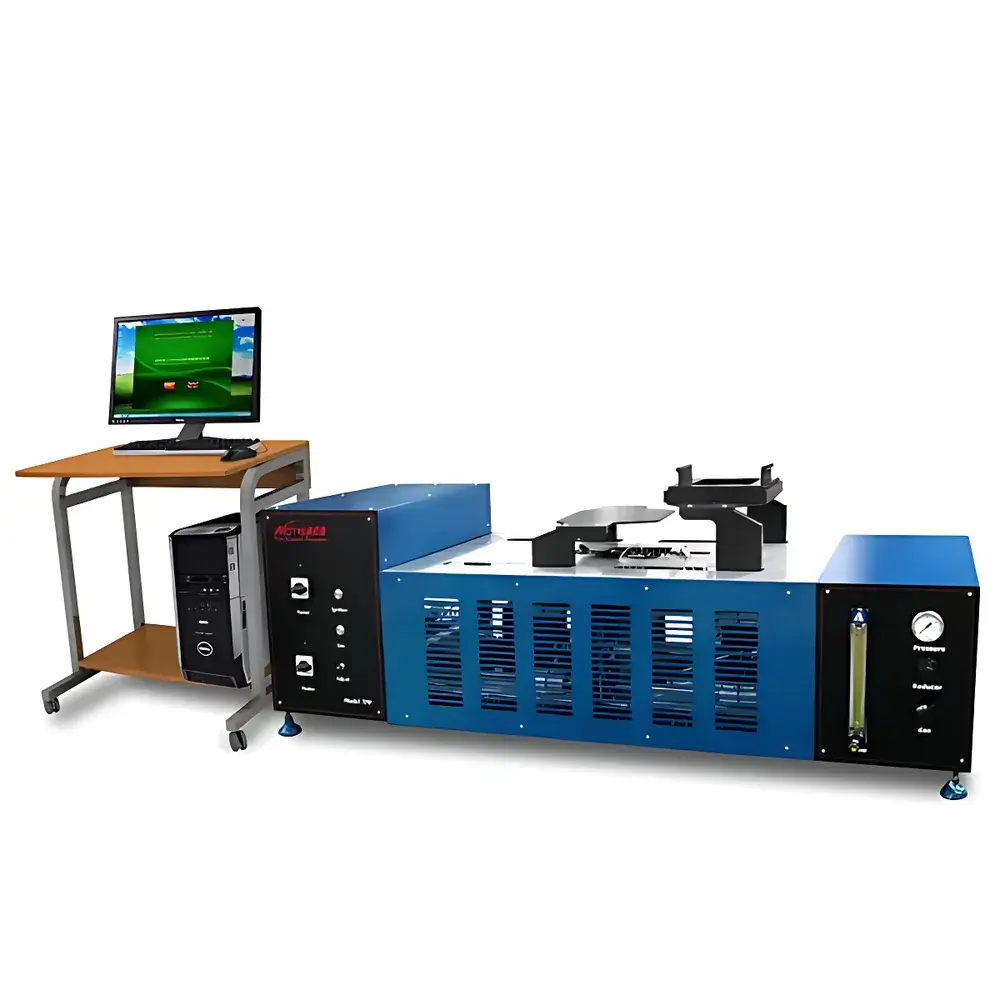
NYX TPP-Ⅱ Thermal Protective Performance Tester
| Brand | NYX |
|---|---|
| Origin | Tianjin, China |
| Manufacturer | NYX Instrument Co., Ltd. |
| Model | TPP-Ⅱ |
| Compliance Standards | GB 8965.1-2009, GA 434, ISO 17492, ASTM F2700, ASTM F2703, NFPA 1971, NFPA 2112 |
| Heat Flux | 83 kW/m² ± 2 kW/m² |
| Meker Burner Output | 800–1200 BTU/min |
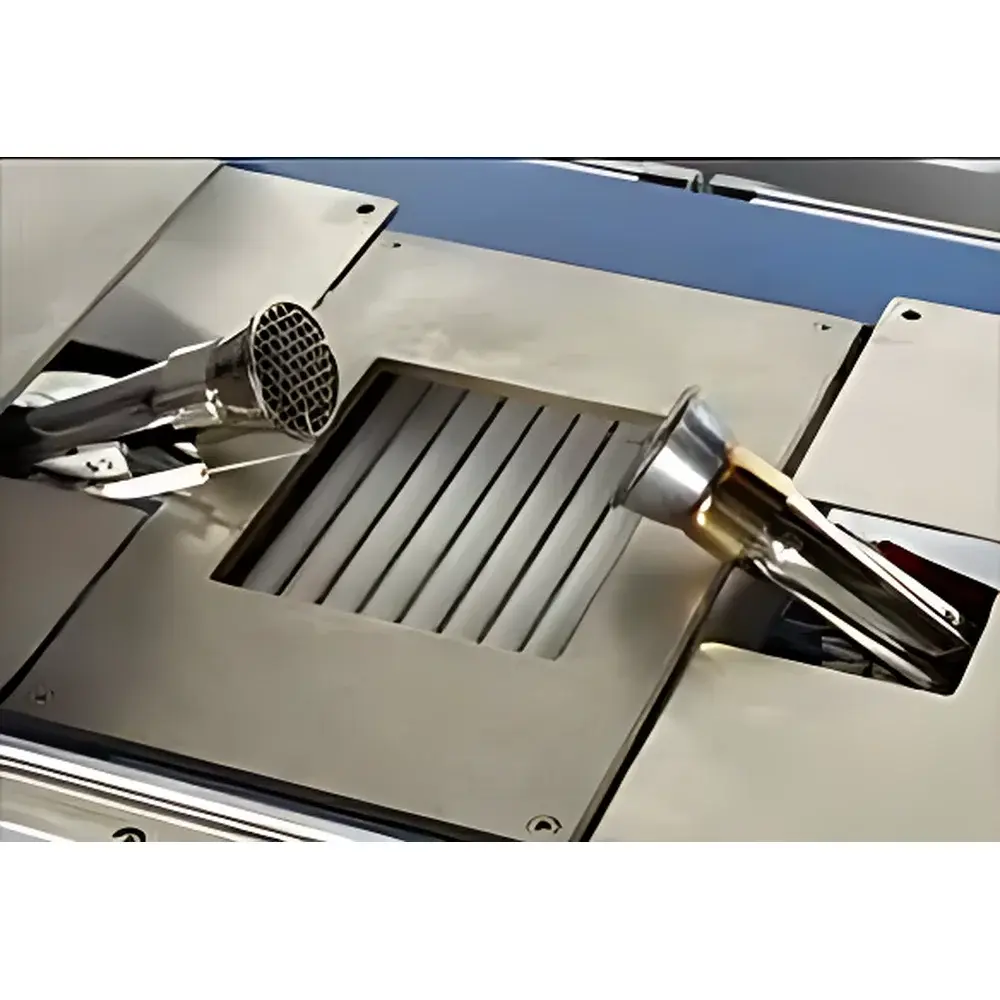
| Radiant Source | 9 × T150 quartz infrared tubes |
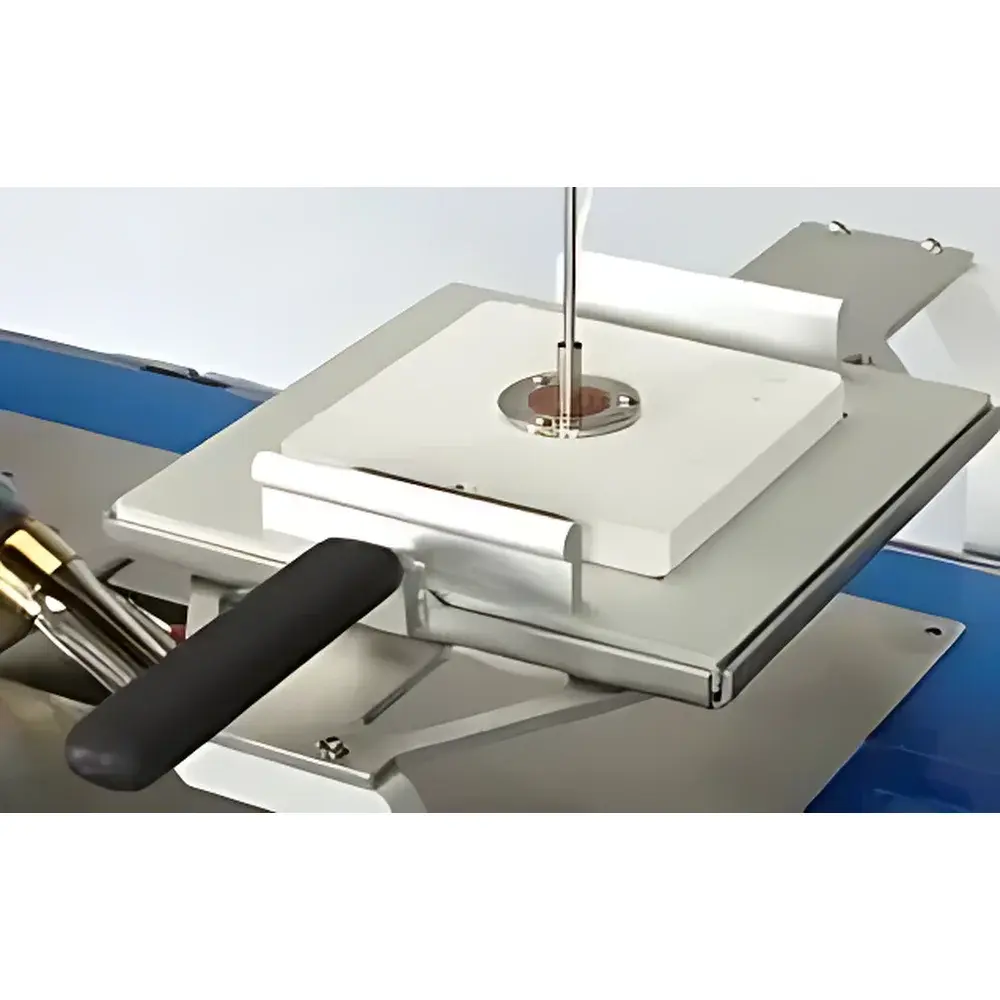
| Calorimeter | Copper disk with three embedded thermocouples (1.2 mm diameter, 0.13 mm depth) |
| Radiation Sensor | SB-type water-cooled sensor (0–100 kW/m²), NIST-traceable calibration certificate included |
| Gas Flow Control | Mass flow meter (±2% accuracy, >3 L/min range) |
| Automation | Pneumatic shield actuation and auto-specimen loading |
| Software | Integrated thermal injury prediction module (1st- and 2nd-degree burn curves), user-calibratable heat flux and thermocouple validation tools |
| Power Supply | 220 V AC, 50 Hz |
Overview
The NYX TPP-Ⅱ Thermal Protective Performance Tester is an engineered platform for quantitative evaluation of fabric and composite material resistance to combined convective and radiant heat exposure—directly simulating flash fire or arc flash scenarios encountered in industrial, firefighting, and military environments. Based on the standardized Thermal Protective Performance (TPP) test method, it measures time-to-second-degree-burn threshold using a calibrated copper calorimeter beneath controlled thermal insult. The system applies a defined total incident heat flux of 83 kW/m² ± 2 kW/m²—comprising both convective energy from a regulated Meker burner and radiant energy from a 9-element T150 quartz infrared array—to replicate real-world thermal threat profiles. This dual-mode heating architecture enables precise differentiation between material performance under flame impingement versus radiant dominance, supporting rigorous compliance verification per ISO 17492, ASTM F2700/F2703, NFPA 1971/2112, and GB 8965.1-2009.
Key Features
- Integrated dual-energy source: U.S.-sourced Meker burner (800–1200 BTU/min) with adjustable air/gas mixing ratio and spark ignition for repeatable convective heat delivery
- Uniform radiant field generated by nine T150 quartz infrared tubes, independently controllable to maintain spectral consistency across test cycles
- Copper disk calorimeter with three precision-welded Type K thermocouples (1.2 mm bore, 0.13 mm depth) for high-fidelity surface temperature capture at 100 Hz sampling rate
- SB-type water-cooled radiometric sensor (0–100 kW/m² range), supplied with NIST-traceable calibration certificate and real-time flux monitoring via software interface
- Pneumatically actuated protective shield and automated specimen positioning mechanism minimize operator intervention and reduce inter-test variability
- Mass flow-controlled gas delivery system (±2% accuracy, >3 L/min capacity) ensures stable burner output across extended test sequences
- Embedded thermal injury modeling engine calculates time-to-1st-degree and time-to-2nd-degree burn thresholds using Stoll curve interpolation per ASTM F2703 Annex A1
Sample Compatibility & Compliance
The TPP-Ⅱ accommodates flat fabric specimens up to 200 mm × 200 mm, including multilayer assemblies, coated textiles, laminates, and nonwovens used in structural firefighting turnout gear, wildland PPE, electric arc-rated clothing, and military combat uniforms. Specimen clamping fixtures conform to ISO 17492 dimensional tolerances and ensure zero edge heat leakage during exposure. All hardware and firmware configurations adhere to GLP-aligned design principles, supporting audit-ready documentation for regulatory submissions. System validation protocols include daily calorimeter baseline checks, quarterly radiation sensor recalibration (with documented NIST traceability), and annual full-system verification against reference materials certified per ASTM F2700 Annex B. Data integrity meets FDA 21 CFR Part 11 requirements through electronic signature support, immutable audit trails, and role-based access control.
Software & Data Management
The proprietary TPP TestSuite v3.2 software provides a validated, Windows-based environment for test execution, real-time thermal data visualization, and regulatory report generation. It displays live heat flux calibration curves alongside concurrent calorimeter temperature rise plots, enabling immediate detection of thermal drift or source instability. Users may perform in-house validation of commercial heat flux sensors and thermocouples using built-in reference algorithms compliant with ASTM E2584. All raw thermal time-series data are stored in HDF5 format with metadata embedding (test ID, operator, date/time, environmental conditions, calibration status). Export options include CSV, PDF (with digital signature), and XML for LIMS integration. Audit logs record every parameter change, calibration event, and result modification—including timestamps and authenticated user IDs.
Applications
- Development and qualification of flame-resistant (FR) workwear for oil & gas, utilities, and chemical processing sectors
- Performance benchmarking of multilayer thermal barriers in NFPA-compliant turnout gear systems
- Material screening for arc-rated garments under IEEE 1584 and ASTM F1959 test matrices
- Research into thermal degradation kinetics of high-performance fibers (e.g., meta-aramid, polybenzimidazole, modacrylic blends)
- Third-party certification testing for CE marking (EN ISO 11612), UL certification, and MIL-STD-2020 compliance
- Root-cause analysis of field failures through comparative TPP degradation studies after laundering, abrasion, or chemical exposure
FAQ
What standards does the TPP-Ⅱ fully support out-of-the-box?
The system is pre-configured for ASTM F2700, ASTM F2703, ISO 17492, NFPA 1971, NFPA 2112, GA 434, and GB 8965.1-2009—with all required exposure parameters, calculation algorithms, and reporting templates embedded in firmware.
Is NIST-traceable calibration provided with initial shipment?
Yes. The SB-type water-cooled radiometric sensor ships with a full NIST-traceable calibration certificate valid for 12 months. Optional annual recalibration services include on-site verification and updated certificates.
Can the system be integrated into an existing laboratory LIMS?
Absolutely. TPP TestSuite supports HL7 and ASTM E2500-compliant data export via secure FTP or direct SQL database push. API documentation and configuration guides are included with enterprise licenses.
Does the software allow custom burn threshold definitions beyond Stoll criteria?
Yes. Advanced users may define alternative thermal injury models (e.g., Henriques, Anderson-Morgan) via scriptable modules, subject to internal validation per ISO/IEC 17025 clause 5.4.5.
What maintenance intervals are recommended for long-term measurement stability?
Daily: calorimeter cleaning and baseline verification. Quarterly: radiation sensor recalibration and burner orifice inspection. Annually: full optical alignment verification, thermocouple drift assessment, and pneumatic system leak testing—all documented in the included Maintenance Logbook.






