
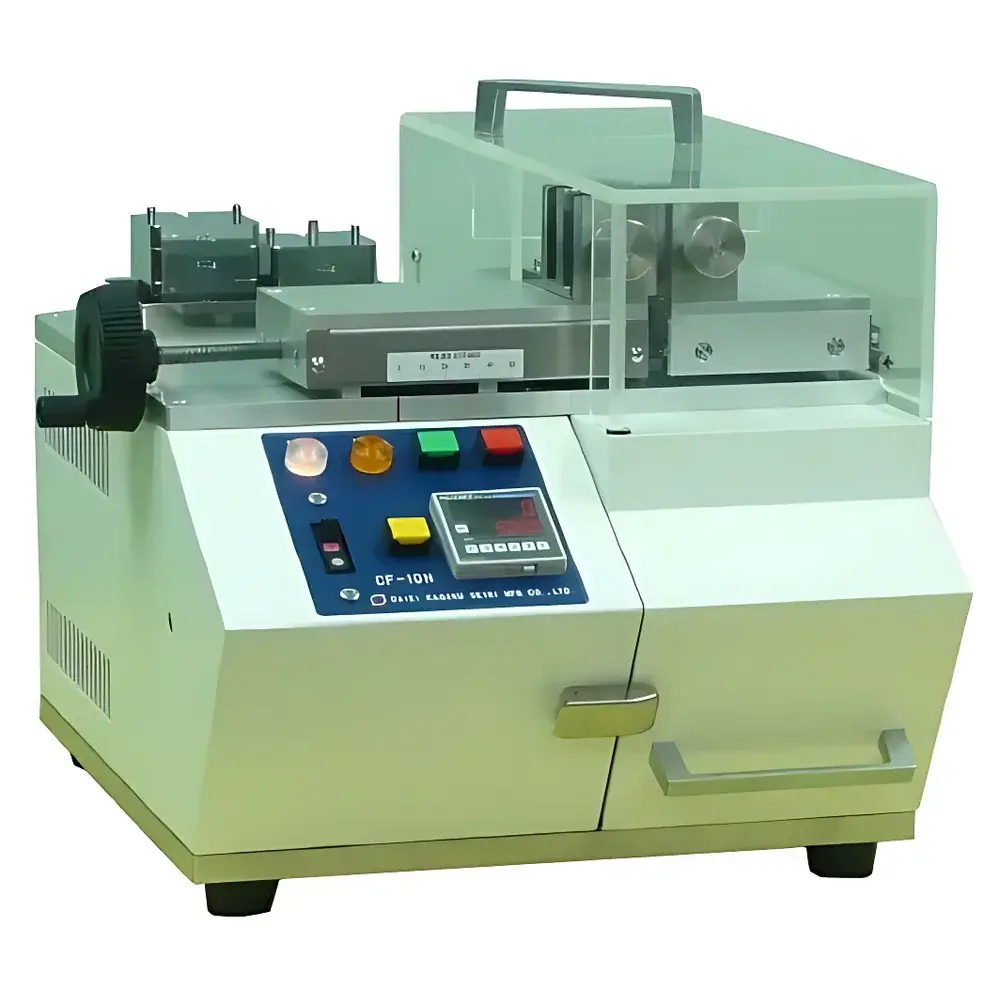
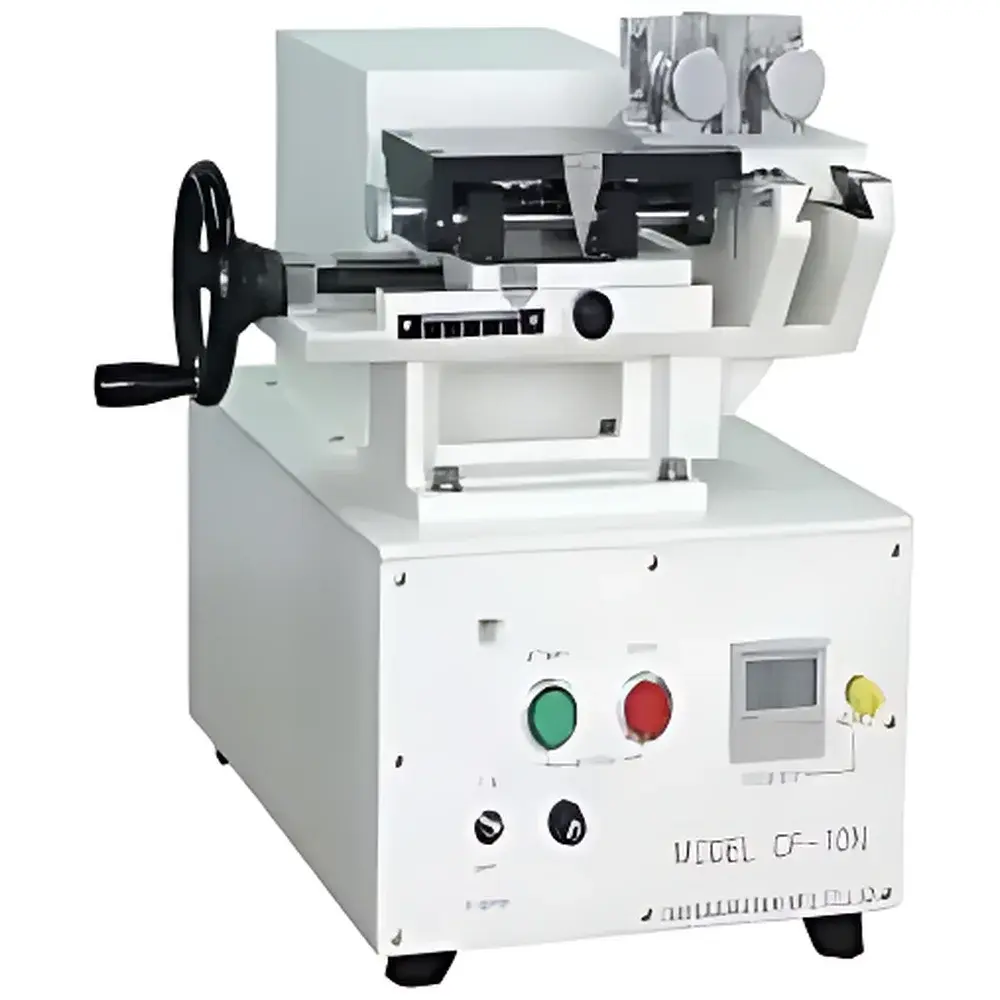
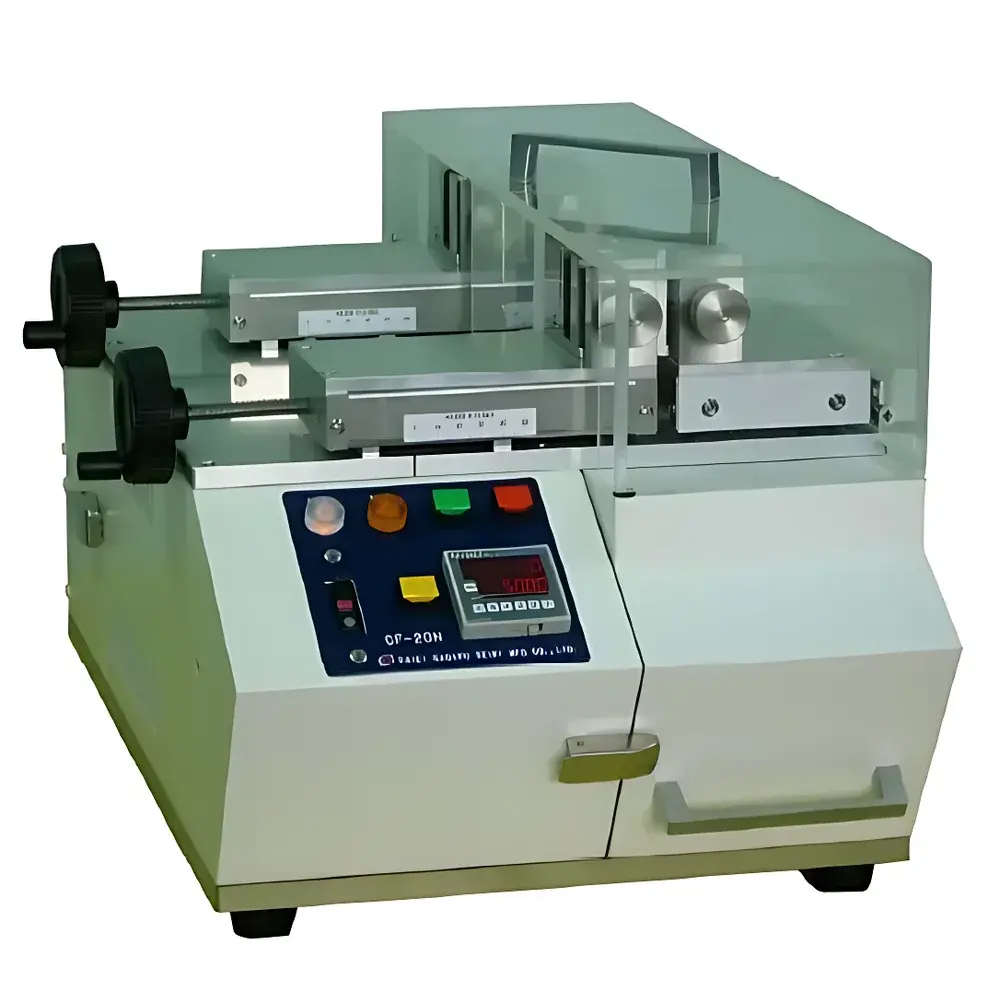
Scotch-type Abrasion and Crease Resistance Tester CF-10N / CF-20NW
| Origin | Japan |
|---|---|
| Manufacturer Type | Authorized Distributor |
| Origin Category | Imported |
| Model | CF-10N, CF-20NW |
| Pricing | Upon Request |
Overview
The Scotch-type Abrasion and Crease Resistance Tester (Models CF-10N and CF-20NW) is a precision mechanical test instrument engineered for quantitative evaluation of surface durability under cyclic flexural stress. It operates on the principle of controlled reciprocating abrasion—where a standardized abrasive medium (typically wool or emery cloth) is applied under defined load and stroke frequency to a clamped specimen undergoing repeated folding or rubbing motion. This method replicates real-world mechanical degradation mechanisms such as creasing, bending fatigue, and surface pilling in flexible sheet materials. Designed in strict accordance with JIS L 1096 Method B (Scotch-type abrasion test), the system delivers repeatable, traceable results essential for quality assurance in textile R&D, automotive interior component validation, and functional fabric development.
Key Features
- Two model variants: CF-10N for standard textile and coated fabric testing; CF-20NW features enhanced stroke width and dual-load capability for thicker substrates including synthetic leather, rubberized textiles, and laminated composites.
- Motor-driven cam mechanism ensures constant stroke amplitude (±0.5 mm tolerance) and stable frequency control (typically 60 ± 2 cycles/min), minimizing operator-induced variability.
- Adjustable clamping force with calibrated torque wrench ensures consistent specimen tension across test runs—critical for inter-laboratory reproducibility.
- Modular abrasive holder accepts standardized 100 × 100 mm abrasive sheets (JIS K-6404-6 compliant), enabling rapid media replacement and cross-method comparison.
- Robust cast-iron frame with vibration-dampening base minimizes resonance effects during extended test sequences (>10,000 cycles).
- Front-access viewing window and transparent polycarbonate guard meet ISO 13857 safety clearance requirements for operator protection.
Sample Compatibility & Compliance
The tester accommodates flat, flexible specimens up to 200 mm in length and 50 mm in width, with thickness ranging from 0.1 mm (woven silk) to 3.5 mm (reinforced PVC tarpaulin). Compatible material classes include: resin-finished cotton/polyester blends, PU-coated nylon, fluoropolymer-laminated membranes, nitrile rubber sheets, and grain-finished bovine leather. All test protocols align with internationally recognized standards: JIS L 1096 (B method), JIS K-6404-6 (rubber abrasion), JASO M403 (automotive interior durability), and GMW 3217 (General Motors material specification for fold resistance). Data generated supports GLP-compliant reporting and satisfies pre-shipment audit requirements for OEM supply chains in Asia-Pacific and North America.
Software & Data Management
While the CF-10N/CF-20NW operates as a standalone electromechanical system without embedded microprocessor control, it integrates seamlessly into digital QA workflows via optional cycle-counting interface modules (sold separately). These modules output TTL-level pulse signals compatible with PLC-based data loggers, LabVIEW acquisition systems, or custom SCADA platforms. All test parameters—including cycle count, elapsed time, and manual pass/fail annotations—are recorded in CSV format for traceability. When used in regulated environments, the instrument’s mechanical simplicity supports 21 CFR Part 11 compliance when paired with validated electronic lab notebooks (ELNs) that enforce user authentication, audit trails, and electronic signatures for result sign-off.
Applications
- Evaluation of crease recovery retention in permanent-press cotton fabrics after industrial laundering cycles.
- Comparative wear assessment of waterproof breathable membranes (e.g., ePTFE laminates) subjected to dynamic folding in outdoor apparel applications.
- Validation of seam integrity and coating adhesion in automotive seat covers exposed to repetitive flexing under temperature-humidity cycling (per JASO M403 Annex C).
- Accelerated aging simulation for medical device packaging films requiring resistance to carton stacking-induced abrasion.
- Pre-screening of novel biopolymer films (e.g., PLA-based nonwovens) for consumer packaging durability prior to ASTM D3884 abrasion validation.
FAQ
What is the fundamental difference between the CF-10N and CF-20NW models?
The CF-20NW offers an extended stroke range (up to 40 mm vs. 25 mm on CF-10N), higher maximum clamping load (200 N vs. 100 N), and compatibility with wider abrasive media—making it suitable for rigid composites and multi-layer technical textiles.
Can this tester be used for ISO 12947-2 (Martindale) correlation studies?
No—this instrument implements the Scotch-type (linear reciprocating) geometry per JIS standards, whereas Martindale employs a Lissajous motion pattern. Direct correlation requires parallel testing using both methods and statistical regression per ISO 12947-4 guidelines.
Is calibration certification included with shipment?
Yes—each unit ships with a factory-issued calibration certificate verifying stroke amplitude, cycle frequency, and clamping force accuracy against NIST-traceable reference instruments.
What maintenance intervals are recommended for long-term reliability?
Lubrication of cam follower bearings every 500 operating hours; inspection of abrasive holder alignment and clamp jaw wear every 2,000 cycles; annual verification of motor speed stability using optical tachometer.




