
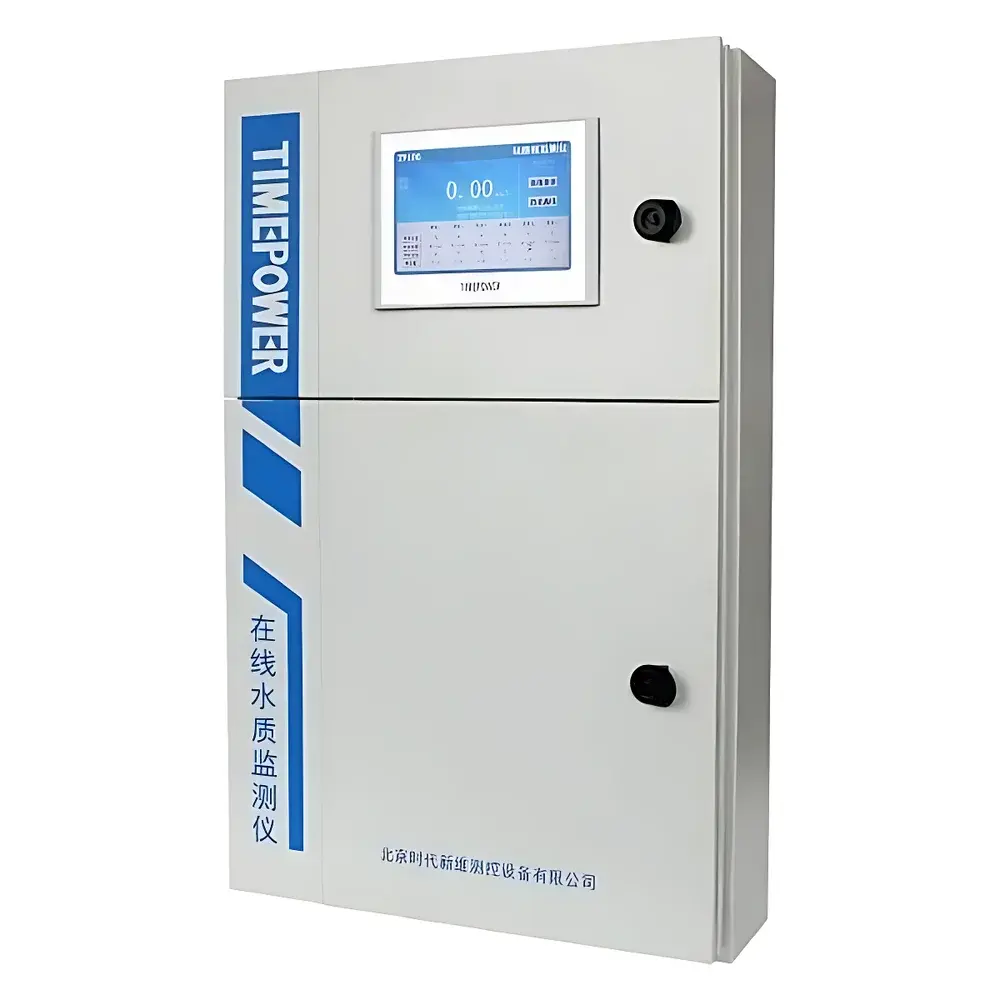
Timepower TP-107 Online Phosphate Analyzer
| Brand | Timepower |
|---|---|
| Origin | Beijing, China |
| Manufacturer Type | Manufacturer |
| Country of Origin | Domestic (China) |
| Model | TP-107 |
| Instrument Type | Online Analyzer |
| Compliance | GB/T 6913–2008 |
Overview
The Timepower TP-107 Online Phosphate Analyzer is a fully automated, multi-channel photometric analyzer engineered for continuous, real-time quantification of orthophosphate (PO₄³⁻) in aqueous process streams. It operates on the principle of molybdenum blue spectrophotometry — a standardized colorimetric method in which phosphate reacts with ammonium molybdate and ascorbic acid under acidic conditions to form a stable heteropolyblue complex, measurable at 880 nm. The instrument is designed specifically for industrial water quality management, with primary deployment in boiler feedwater, condensate, cooling tower circulation, and wastewater effluent monitoring. Its architecture complies with the analytical requirements of GB/T 6913–2008, the Chinese national standard for phosphate determination in boiler and cooling water, and supports trace-level detection down to sub-ppb sensitivity ranges typical of high-purity steam cycles.
Key Features
- Modular channel configuration: 1–6 independent measurement channels, enabling flexible deployment across multiple sampling points without redundant instrumentation.
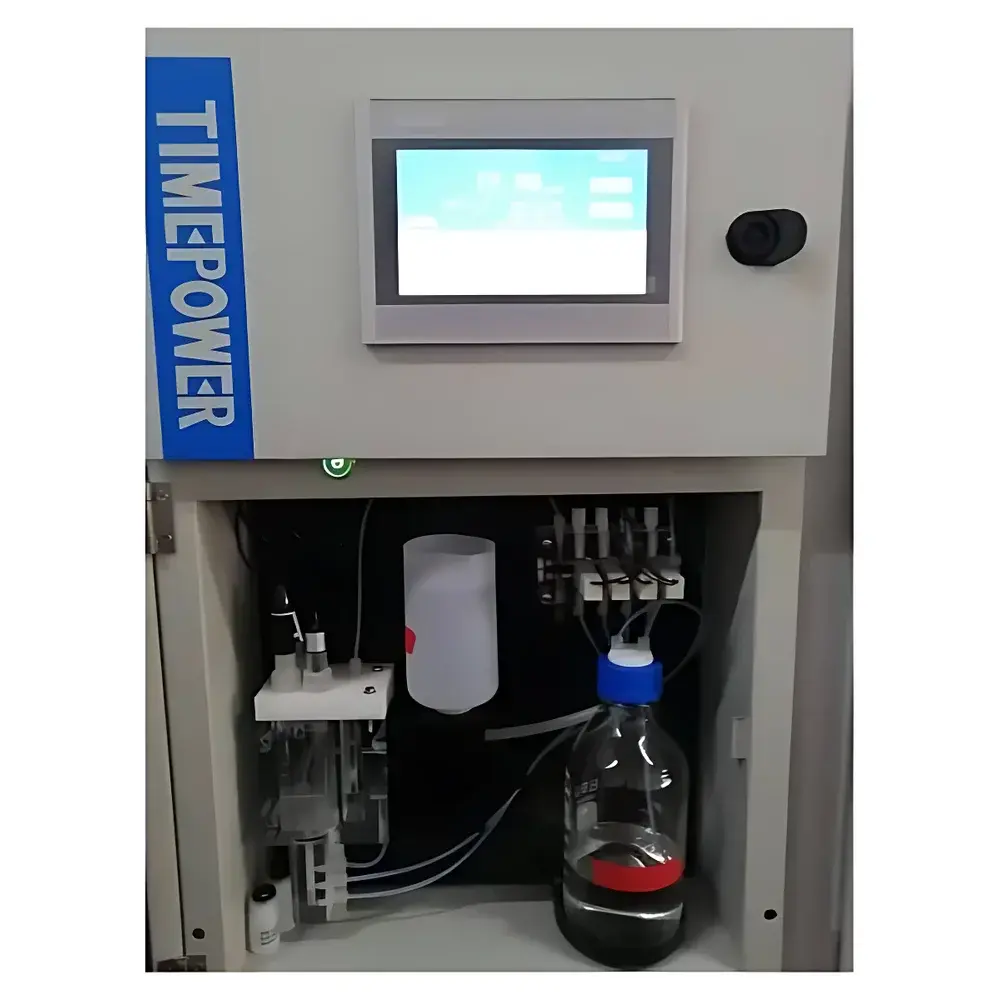
- High-reliability solenoid valve manifold: Precision-engineered electromagnetic valves ensure repeatable reagent dosing, sample aspiration, and waste discharge—critical for long-term stability and low maintenance.
- Integrated thermal control system: Onboard Peltier-based temperature regulation maintains reaction and measurement zones within ±0.5 °C, minimizing drift from ambient fluctuations.
- Optical subsystem: Monochromatic cold-light source (LED-based) with narrow-band interference filter centered at 880 nm; eliminates lamp aging effects and delivers >50,000 hours of stable photometric output.
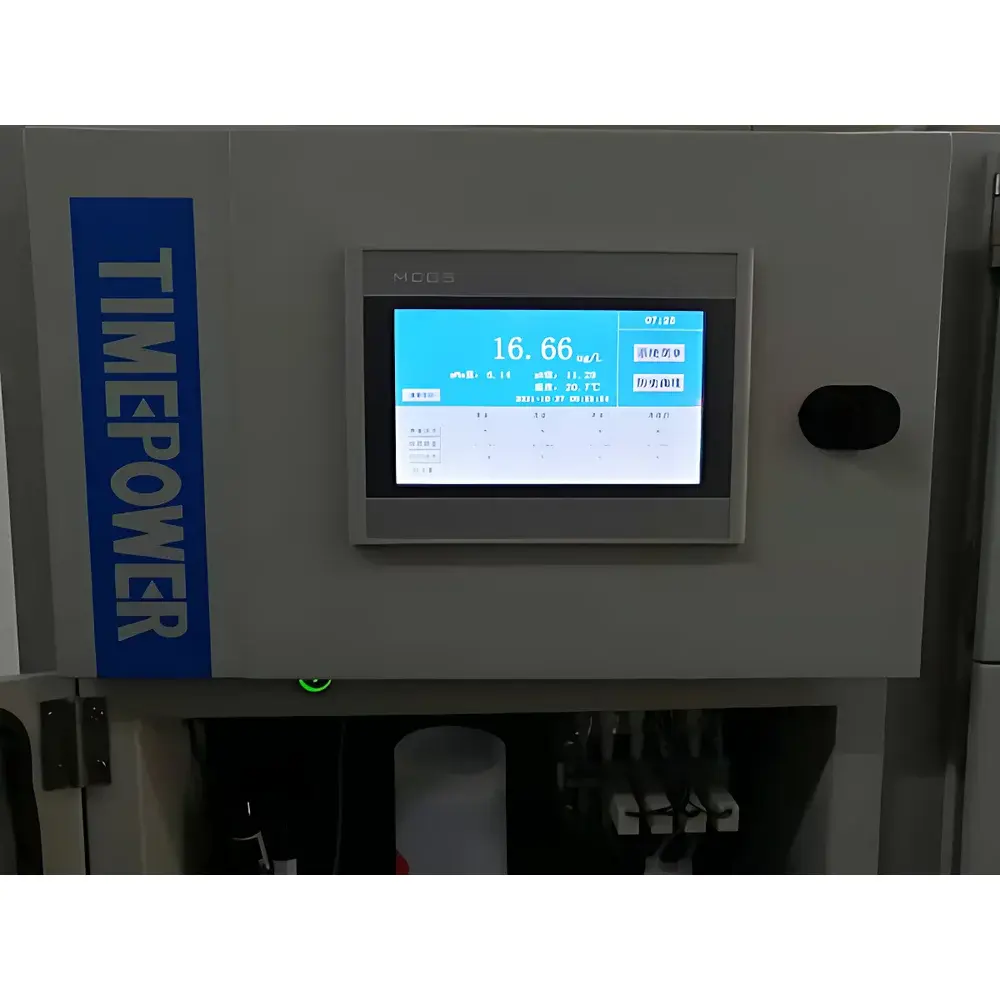
- Embedded 7-inch color LCD interface: Simultaneously displays real-time phosphate concentration (µg/L or mg/L), sample temperature (°C), system status, and timestamp—all in a single view without navigation layers.
- Data integrity architecture: Automatic logging of all measurements, calibration events, fault diagnostics, and system uptime; internal non-volatile memory stores up to 6,000 timestamped records with full audit trail.
Sample Compatibility & Compliance
The TP-107 is validated for use with clarified, low-turbidity aqueous samples containing total suspended solids < 5 mg/L and chloride concentrations < 500 mg/L. It accommodates inlet pressure ranges of 0.1–0.6 MPa and sample temperatures between 5–45 °C. While primarily intended for industrial process water, it has been deployed in municipal drinking water pre-treatment and tertiary wastewater discharge monitoring where orthophosphate speciation is regulated. The analyzer meets functional equivalency to ISO 6878:2004 (Water quality — Determination of phosphorus — Ammonium molybdate spectrophotometric method) and supports compliance workflows aligned with GLP and ISO/IEC 17025 laboratory quality systems. All firmware and data handling protocols are structured to support future integration with FDA 21 CFR Part 11–compliant electronic record environments.
Software & Data Management
The embedded operating system provides native Modbus RTU/ASCII and Modbus TCP communication interfaces, allowing seamless integration into DCS, SCADA, or PLC networks. Four isolated 4–20 mA analog outputs are factory-configurable per channel for phosphate concentration, temperature, alarm status, or diagnostic flag—each with HART-compatible digital overlay. Optional RS-485 and Ethernet ports enable remote firmware updates and secure data export via FTP or MQTT. Data export formats include CSV and XML, compatible with LIMS platforms and cloud-based asset performance management (APM) systems. Calibration history, drift logs, and reagent consumption metrics are accessible via encrypted web interface (HTTPS) with role-based user authentication (admin/operator/viewer).
Applications
- Power generation: Continuous monitoring of phosphate carryover in drum boiler drum water and turbine condensate to prevent scale formation and corrosion.
- Chemical & petrochemical plants: Feedwater phosphate control in steam generation units and catalyst cooling loops.
- Municipal utilities: Effluent compliance tracking against local phosphorus discharge limits (e.g., EU Urban Wastewater Treatment Directive Annex I).
- Pharmaceutical manufacturing: Monitoring of purified water (PW) and water-for-injection (WFI) distribution loops per USP and EP 2.2.48 guidelines.
- Fertilizer production: Process stream verification during wet-process phosphoric acid purification and neutralization stages.
FAQ
What is the detection range for orthophosphate?
The TP-107 supports configurable measurement spans from 0–50 µg/L to 0–5 mg/L, selectable per channel based on application requirements.
Does the analyzer require manual reagent replenishment?
Yes—reagents (ammonium molybdate, ascorbic acid, sulfuric acid) are housed in external reservoirs and must be refilled periodically; average reagent consumption is ~1.2 mL per analysis cycle.
Can the instrument operate unattended for extended periods?
Yes—once calibrated and primed, the TP-107 runs autonomously for up to 30 days between routine maintenance tasks (e.g., tubing inspection, filter replacement).
Is remote diagnostics supported?
Yes—via integrated Ethernet port with SNMP v3 and Syslog protocol support for network-level health monitoring and alert forwarding.
How is calibration verified?
Calibration is performed using NIST-traceable phosphate standards; the system supports bracketing calibration, multi-point linear regression, and automatic zero/slope validation before each measurement sequence.
Related Products







