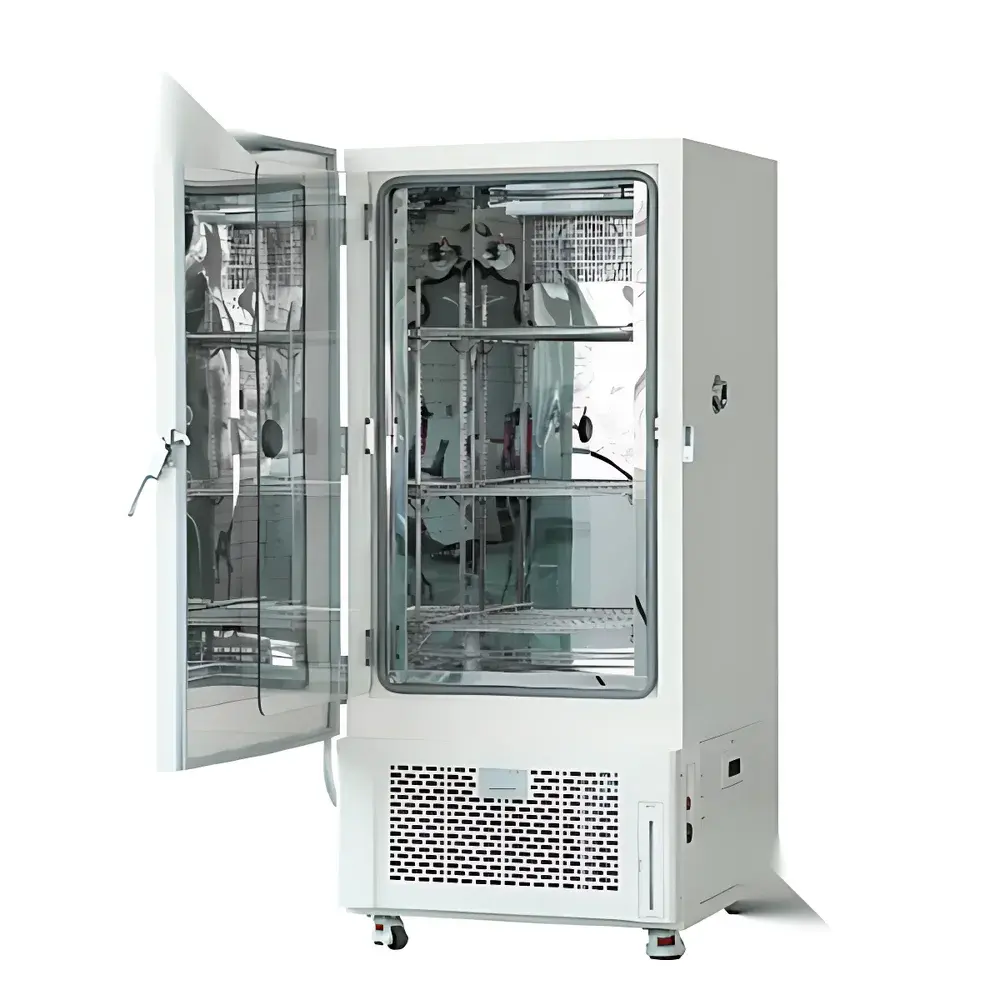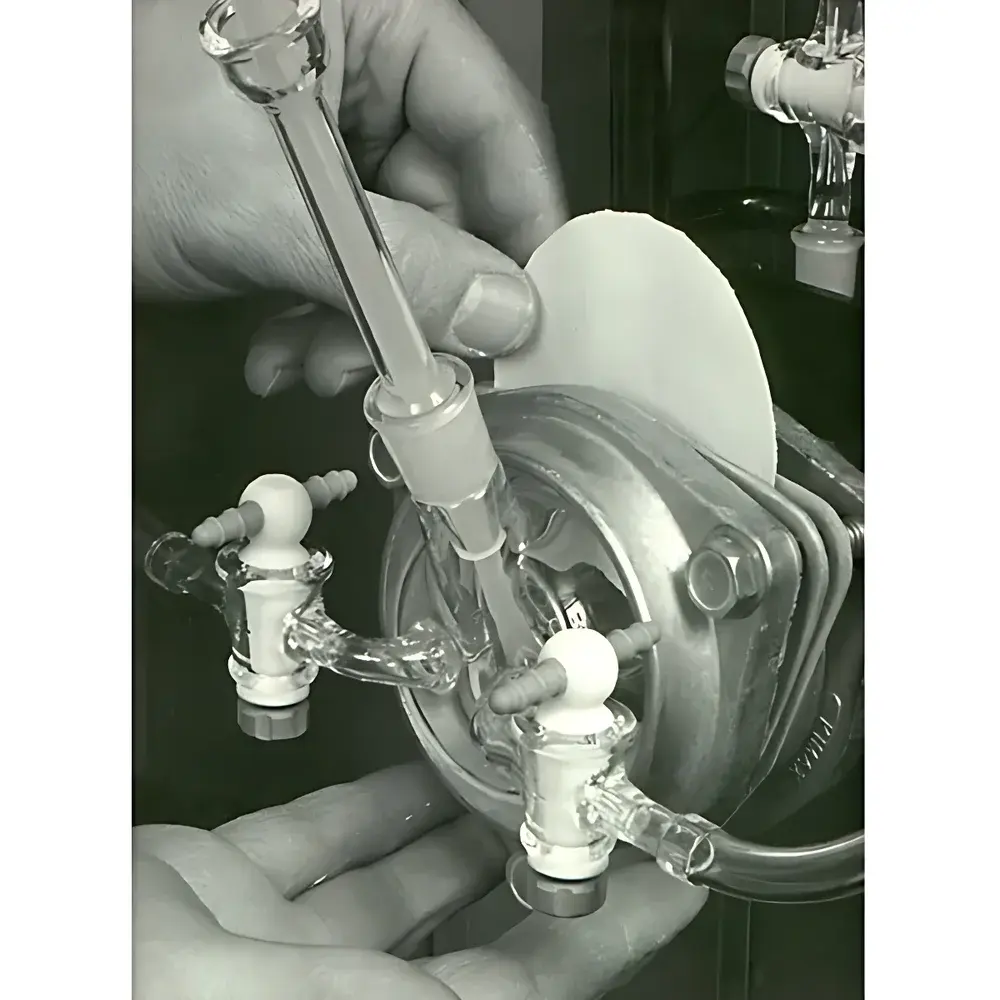
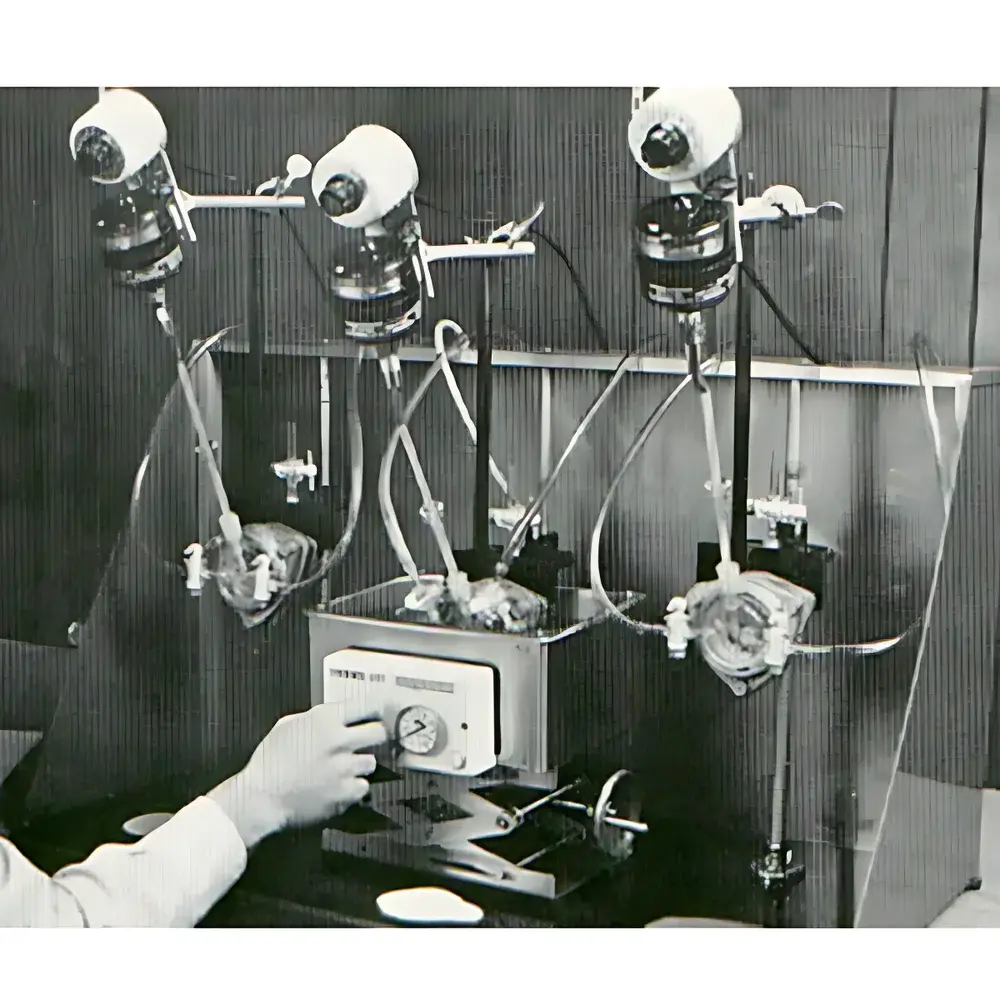
Chemistry Liquid Permeation Test Cell PT 200 by NYX
| Brand | NYX |
|---|---|
| Origin | Tianjin, China |
| Manufacturer Type | Direct Manufacturer |
| Model | PT 200 |
| Compliance Standards | GB 20265–2019, GB 24540–2009, GB/T 23462, ASTM F739 |
| Sample Dimensions | 60 mm × 60 mm (for protective clothing), Ø70 mm (for protective footwear) |
| Chamber Configuration | Dual-chamber design (exposure chamber contacting outer sample surface |
| Sealing Material | PTFE gaskets |
| Construction | Corrosion-resistant, chemically inert materials engineered for long-term exposure to aggressive liquids and vapors |
Overview
The NYX PT 200 Chemistry Liquid Permeation Test Cell is a precision-engineered dual-chamber apparatus designed to quantify the breakthrough time and cumulative permeation rate of liquid and vapor-phase chemical agents through non-porous, impermeable personal protective equipment (PPE) materials. Operating on the principle of controlled static exposure under standardized diffusion conditions, the PT 200 enables quantitative assessment of barrier performance in accordance with internationally recognized test protocols—including ASTM F739 (Standard Test Method for Permeation of Liquids and Gases Through Protective Clothing Materials Under Conditions of Continuous Contact), GB 20265–2019 (Footwear for protection against chemicals), GB 24540–2009 (Protective clothing against chemical hazards), and GB/T 23462 (Determination of permeation behavior of chemical protective clothing). Unlike dynamic or flow-through systems, the PT 200 maintains a fixed chemical challenge volume in direct contact with the specimen’s outer surface while continuously monitoring analyte accumulation in the sealed inner chamber—enabling reproducible measurement of lag time, breakthrough time, and steady-state permeation flux.
Key Features
- Dual-chamber architecture with independent, hermetically sealed exposure and collection compartments—ensuring zero cross-contamination and precise mass balance tracking.
- PTFE-sealed interface between test specimen and chamber walls, delivering consistent compression load and eliminating leakage pathways across repeated test cycles.
- Modular sample holder accommodates standardized geometries: 60 mm × 60 mm square specimens for garments and Ø70 mm circular cutouts for footwear components—fully aligned with GB and ASTM dimensional requirements.
- Body constructed from high-purity, corrosion-resistant alloys and fluoropolymer-coated stainless steel, certified for compatibility with organic solvents, strong acids (e.g., sulfuric, hydrochloric), caustics (e.g., sodium hydroxide), and halogenated hydrocarbons.
- Integrated venting and sampling ports conforming to ASTM F739 gas-tight specifications, enabling connection to validated analytical instrumentation such as GC-FID, GC-MS, or ion chromatography systems.
- No internal moving parts or electronic components—maximizing operational reliability, simplifying cleaning protocols, and supporting extended use in Class I Division 1 hazardous environments.
Sample Compatibility & Compliance
The PT 200 is validated exclusively for non-porous, impermeable barrier materials including but not limited to laminated polyvinyl chloride (PVC), butyl rubber, nitrile-butadiene rubber (NBR), fluoroelastomers (FKM), and multilayer polymer composites used in chemical-resistant gloves, boots, aprons, and full-body suits. It does not support testing of microporous or breathable membranes (e.g., Gore-Tex®-type structures), which require alternative methodologies per ISO 6529 or EN 374–3. All mechanical dimensions, sealing force profiles, and exposure durations comply strictly with the physical test setup requirements defined in ASTM F739 Annex A1 and GB 20265–2019 Clause 6.2. The device itself carries no CE marking or FDA clearance, as it functions solely as a passive test fixture—not an analytical instrument—and thus falls outside regulatory device classification frameworks. However, its geometry and material traceability support audit readiness for GLP-compliant laboratories performing ISO/IEC 17025-accredited permeation testing.
Software & Data Management
The PT 200 operates as a hardware-only test cell and requires external analytical instrumentation for detection and quantification. When integrated into a full permeation testing workflow, it supports seamless data linkage via LIMS-compatible output formats (CSV, ASCII) generated by connected chromatographic or electrochemical analyzers. Its standardized port configuration and pressure-rated seals ensure compatibility with automated sampling manifolds compliant with FDA 21 CFR Part 11 requirements—enabling electronic signatures, audit trails, and user access controls when paired with validated third-party software platforms. Raw permeation curves (mass vs. time) derived from analytical output may be processed using ASTM F739-recommended algorithms for breakthrough time (tb), normalized breakthrough time (tb,n), and steady-state permeation rate (Qss).
Applications
- Performance validation of chemical protective footwear per GB 20265–2019 and EN ISO 13688.
- Regulatory submission testing for CE-marked Category III PPE under EU Regulation (EU) 2016/425.
- Quality control screening of incoming barrier film lots in glove manufacturing facilities.
- Comparative evaluation of aging effects (thermal, UV, hydrolytic) on permeation resistance of elastomeric substrates.
- Method development and interlaboratory study participation in ISO TC 94/SC 13 working groups.
- Supporting hazard assessment documentation required under OSHA 1910.132 and REACH Annex XVII exposure scenarios.
FAQ
Is the PT 200 suitable for testing breathable or microporous fabrics?
No. The PT 200 is explicitly designed for non-porous, impermeable barrier materials only. Testing porous textiles or coated membranes requires alternate methods such as ISO 6529 or ASTM F1671.
Can the test cell be sterilized or autoclaved?
No. Autoclaving is incompatible with PTFE seals and fluoropolymer coatings. Cleaning must be performed using solvent rinses (e.g., isopropanol, acetone) followed by nitrogen purge and desiccation.
Does NYX provide calibration certificates or metrological traceability?
As a passive mechanical test fixture, the PT 200 does not require calibration. Dimensional conformity to ASTM F739 and GB standards is verified during manufacturing and documented in the Certificate of Conformance supplied with each unit.
What analytical techniques are recommended for detecting permeated analytes?
Gas chromatography with flame ionization (GC-FID) or mass spectrometry (GC-MS) detection is preferred for volatile organics; ion chromatography (IC) or UV-Vis spectroscopy is appropriate for inorganic acids/bases and ionic species.
Is technical support available for method validation under GLP conditions?
Yes. NYX provides application notes, test protocol templates, and on-site installation qualification (IQ) assistance upon request—supporting laboratories seeking ISO/IEC 17025 accreditation or internal GLP compliance audits.