
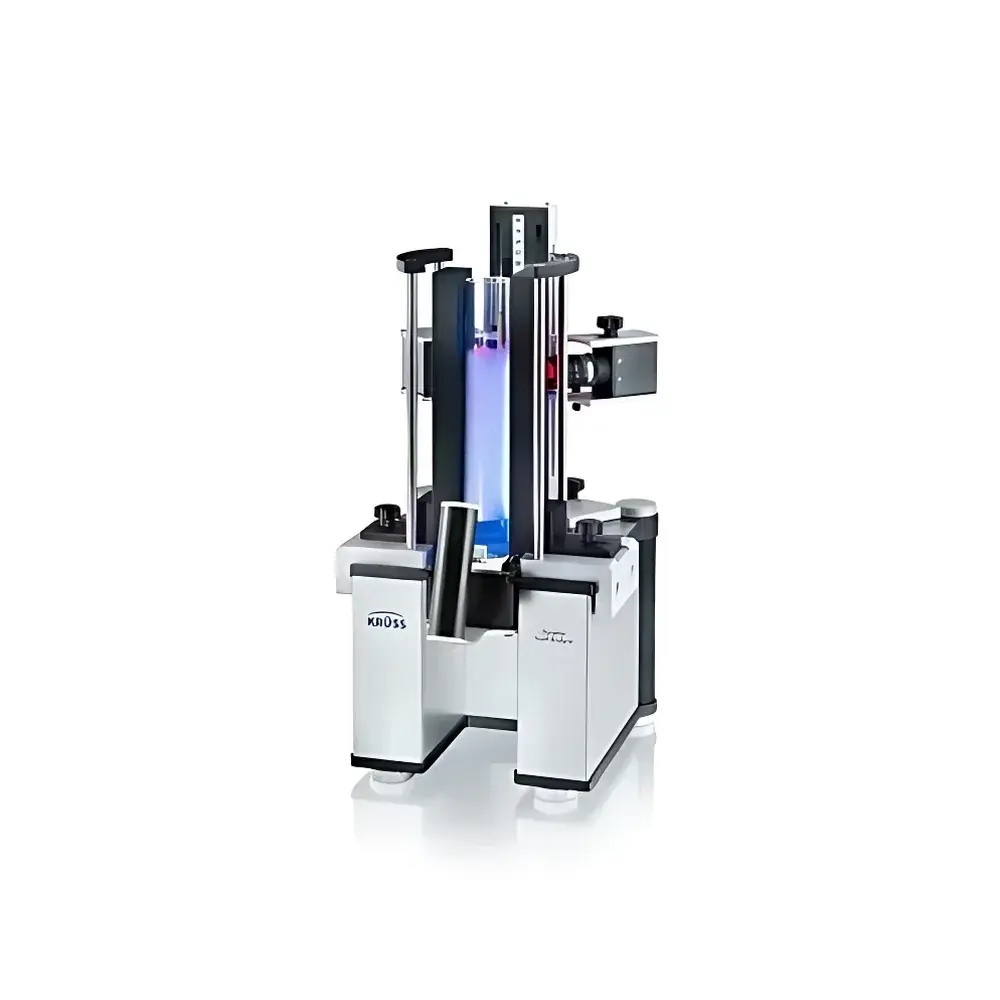
SITA DFA100FSM Dynamic Foam Analyzer with Foam Structure Module
| Origin | Germany |
|---|---|
| Supplier Type | Authorized Distributor |
| Origin Category | Imported |
| Model | DFA100FSM |
| Pricing | Available Upon Request |
Overview
The SITA DFA100FSM Dynamic Foam Analyzer is a precision-engineered instrument designed for the quantitative, time-resolved characterization of liquid foam structure and stability. Built upon the robust platform of the DFA100 series, the FSM (Foam Structure Module) integrates high-speed digital video microscopy with advanced image processing algorithms to capture and analyze bubble size distribution, spatial density, coalescence dynamics, and structural evolution during foam aging. Unlike conventional foam height or volume-based metrics alone, the FSM provides orthogonal structural data—enabling correlation between macroscopic foam decay (e.g., half-life, drainage kinetics) and microscopic morphological transitions (e.g., disproportionation, coalescence, Ostwald ripening). This dual-scale measurement capability is essential for R&D and QC applications where foam functionality—whether in detergency, food texture, personal care aesthetics, or mineral flotation—depends critically on both bubble population statistics and temporal stability profiles.
Key Features
- Real-time, non-invasive optical imaging of foam cross-sections using adjustable-resolution CCD/CMOS camera system with programmable frame rate (up to 60 fps) and LED backlighting optimized for contrast enhancement across diverse surfactant systems.
- Automated bubble detection and segmentation algorithm compliant with ISO 13322-2 (Particle size analysis — Image analysis methods), delivering statistically representative bubble count per mm², mean equivalent circular diameter (ECD), standard deviation of ECD, and radius histogram up to 500+ bins.
- Synchronized multi-parameter acquisition: simultaneous recording of foam height (via laser displacement sensor), liquid content (via integrated LCM module with multi-point conductivity electrodes), and structural parameters—all time-aligned with millisecond precision.
- Configurable timing protocols including continuous acquisition, triggered start/stop, and adaptive sampling intervals to resolve rapid initial collapse or slow aging phases without data overload.
- Modular architecture supporting seamless integration of optional modules: LCM (Liquid Content Measurement), FT (Foam Tester for standardized ASTM D1173-compliant foaming tests), and temperature-controlled sample stage (–10 °C to +80 °C).
Sample Compatibility & Compliance
The DFA100FSM accommodates aqueous and non-aqueous foaming formulations across viscosities from 1 mPa·s to >500 mPa·s, including detergent concentrates, shampoo bases, protein-stabilized food foams (e.g., meringue, whipped cream), and flotation reagent solutions. Sample volumes range from 20 mL to 250 mL, compatible with standardized cylindrical glass cuvettes (ID 25 mm, 35 mm, or 50 mm). All measurement protocols support traceability and audit readiness: software enforces user-defined method templates, electronic signatures, and full audit trail logging compliant with FDA 21 CFR Part 11 and GLP/GMP requirements. Data export formats include CSV, PDF reports, and HDF5 for long-term archival and third-party statistical analysis.
Software & Data Management
The ADVANCE software suite provides an intuitive, workflow-driven interface for method setup, real-time visualization, and post-acquisition evaluation. Users define measurement sequences—including gas flow ramping, agitation cycles, and multi-stage aging protocols—via drag-and-drop automation builder. During acquisition, synchronized plots display foam height (mm), total bubble count (n/mm²), mean bubble radius (µm), and liquid fraction (%) versus time on a unified timeline. Batch analysis tools enable comparative assessment across formulation variants, while built-in statistical functions calculate repeatability (RSD < 3.5% for bubble count at n ≥ 1000), inter-operator variance, and ANOVA-ready datasets. Raw image stacks and metadata are stored in vendor-neutral formats, ensuring long-term interoperability with MATLAB, Python (OpenCV, scikit-image), or JMP platforms.
Applications
- Detergent & Cleaning Formulation: Correlating surfactant blend composition with bubble size homogeneity to optimize cleaning efficiency and rinseability.
- Food Science: Quantifying air cell distribution in aerated dairy products and plant-based alternatives to predict mouthfeel, shelf-life, and thermal stability.
- Personal Care: Validating foam sensory attributes (e.g., creaminess vs. fluffiness) through objective structural descriptors aligned with consumer perception studies.
- Mineral Processing: Screening frother performance in flotation systems by analyzing bubble size distribution’s impact on particle attachment efficiency and concentrate grade.
- Antifoam Development: Measuring suppression kinetics and residual bubble morphology to benchmark defoamer efficacy beyond simple height decay metrics.
FAQ
What foam properties does the FSM module measure that conventional foam analyzers cannot?
The FSM delivers quantitative, time-resolved bubble size distribution (BSD) — including number-weighted and area-weighted statistics — enabling direct assessment of coalescence and disproportionation mechanisms prior to macroscopic collapse.
Can the DFA100FSM be used for non-aqueous foams, such as those in lubricants or polymer melts?
Yes, provided the formulation permits optical transmission and stable foam generation under controlled gas dispersion; compatibility must be verified empirically due to refractive index and viscosity constraints.
Is the ADVANCE software validated for regulated environments (e.g., pharmaceutical QC)?
The software supports IQ/OQ documentation packages, electronic signature workflows, and audit trail configuration meeting FDA 21 CFR Part 11 and EU Annex 11 requirements.
How is bubble size accuracy calibrated?
Calibration uses NIST-traceable microsphere standards (e.g., 10 µm, 50 µm polystyrene beads) imaged under identical optical conditions; system resolution is verified to ≤1.2 µm pixel size at maximum magnification.
Does the instrument support automated method transfer between laboratories?
Yes—method files (.dsm) encapsulate all hardware settings, image processing parameters, and analysis logic, ensuring reproducible execution across globally deployed instruments.



