
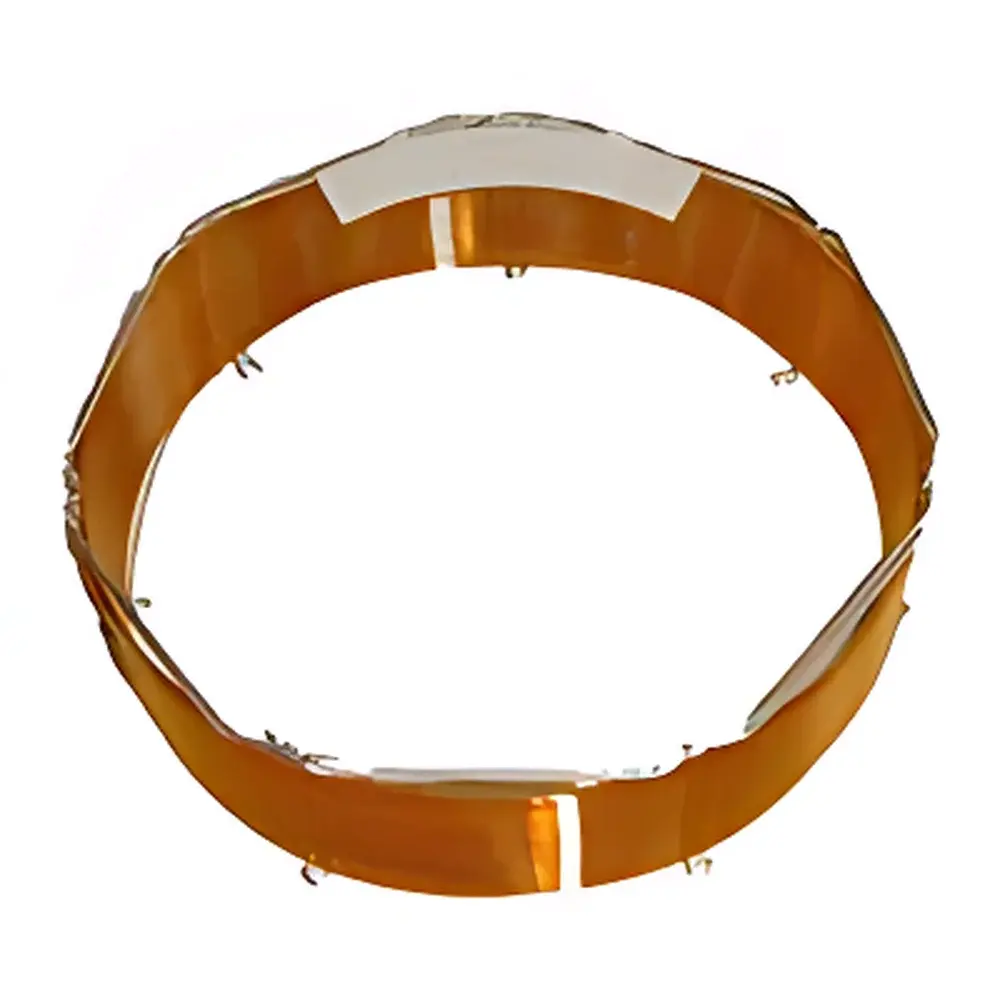
Agilent J&W DB-35ms Capillary Gas Chromatography Column
| Origin | China |
|---|---|
| Manufacturer Type | Authorized Distributor |
| Origin Category | Domestic |
| Model | DB-35ms |
| Pricing | Available Upon Request |
Overview
The Agilent J&W DB-35ms capillary gas chromatography (GC) column is engineered for high-resolution separation of moderately polar analytes, particularly in complex matrices requiring robust thermal stability and low bleed performance. Based on a chemically bonded and crosslinked (35%-phenyl)-methylpolysiloxane stationary phase, this column delivers enhanced polarity relative to standard HP-35 columns while maintaining excellent inertness toward active compounds—including amines, phenols, and carboxylic acids. Its low-bleed architecture ensures stable baseline performance across extended temperature programs, supporting reliable quantitation in regulated environments. The column complies with USP Classification G42, making it suitable for method transfer and validation in pharmaceutical, environmental, and forensic laboratories operating under GLP or GMP frameworks.
Key Features
- Bonded and crosslinked (35%-phenyl)-methylpolysiloxane phase—provides superior thermal stability up to 320 °C (isothermal) and 300 °C (programmed), with consistent low-bleed characteristics over repeated injections.
- High inertness surface treatment minimizes adsorption and tailing of reactive compounds, improving peak symmetry and reproducibility for trace-level analysis.
- Compatible with all major GC platforms—including Agilent, Thermo Fisher, Shimadzu, and PerkinElmer systems—without hardware modification.
- Available in multiple configurations (ID: 0.25–0.53 mm; length: 15–60 m; film thickness: 0.25–1.00 µm) to support diverse resolution, capacity, and speed requirements.
- Validated for use in regulatory applications aligned with ASTM D5845 (chlorinated biphenyls), EPA Method 8082A (PCBs), and USP chromatographic separations.
Sample Compatibility & Compliance
The DB-35ms column demonstrates broad applicability across compound classes critical to environmental monitoring (e.g., chlorinated pesticides, Aroclors, dioxin-like PCB congeners), clinical toxicology (drug metabolites, abused substances), and botanical analysis (herbicide residues, terpenoid profiles). Its selectivity profile enables effective resolution of structural isomers and co-eluting contaminants in CLP (Chlorinated Pesticides) screening workflows. All columns undergo rigorous QC testing per ISO/IEC 17025-accredited protocols, including retention time indexing against NIST SRM 869b, bleed profile verification at maximum operating temperature, and inlet pressure stability assessment. Documentation supports 21 CFR Part 11-compliant data integrity when paired with compliant GC data systems.
Software & Data Management
Column specifications are integrated into Agilent OpenLab CDS, Thermo Chromeleon, and Waters Empower chromatography data systems via standardized .col file libraries. Retention index databases (e.g., Kovats, Lee) are preloaded for automated compound identification. Batch processing templates include built-in system suitability criteria (tailing factor ≤ 2.0, resolution ≥ 1.5 between critical pairs, RSD ≤ 1.5% for replicate injections), facilitating audit-ready reporting. Electronic column logs—recording installation date, total run time, bake-out cycles, and maintenance events—are retained within the instrument’s audit trail module, supporting GLP/GMP documentation requirements.
Applications
- Environmental analysis: Quantification of polychlorinated biphenyls (PCBs), organochlorine pesticides (e.g., DDT, chlordane), and flame retardants in soil, sediment, and biota extracts.
- Forensic toxicology: Screening and confirmation of controlled substances (e.g., amphetamines, benzodiazepines, synthetic cannabinoids) in blood and urine matrices.
- Pharmaceutical impurity profiling: Separation of genotoxic impurities and degradation products in API stability studies per ICH Q3B(R2).
- Food safety: Residue analysis of herbicides and fungicides in plant-based commodities using QuEChERS extraction coupled with GC–MS/MS detection.
- Botanical and natural product research: Fingerprinting of volatile oil constituents (e.g., monoterpenes, sesquiterpenes) in herbal raw materials per USP .
FAQ
What is the maximum allowable inlet temperature for the DB-35ms column?
The column supports continuous operation up to 320 °C for 0.25–0.32 mm ID formats and up to 300 °C for 0.53 mm ID variants, provided the film thickness does not exceed 1.0 µm.
Can this column be used with hydrogen carrier gas?
Yes—optimized linear velocity ranges for H2 are documented in the column manual; recommended flow rates ensure optimal efficiency without compromising resolution or column lifetime.
Is solvent rinsing supported?
All DB-35ms columns are fully compatible with common GC solvents (hexane, toluene, acetone, methanol) for backflush cleaning and removal of non-volatile residues.
How does DB-35ms compare to Rtx-35 or SPB-35?
While sharing identical phase chemistry and USP G42 classification, DB-35ms exhibits tighter batch-to-batch reproducibility due to Agilent’s proprietary deactivation process and QC screening against >20 reference standards.
Does this column meet FDA requirements for method validation?
Yes—the column’s consistent retention behavior, low bleed profile, and documented lot-specific test reports satisfy ICH Q2(R2) specificity, precision, and robustness criteria for validated GC methods.
Related Products



