
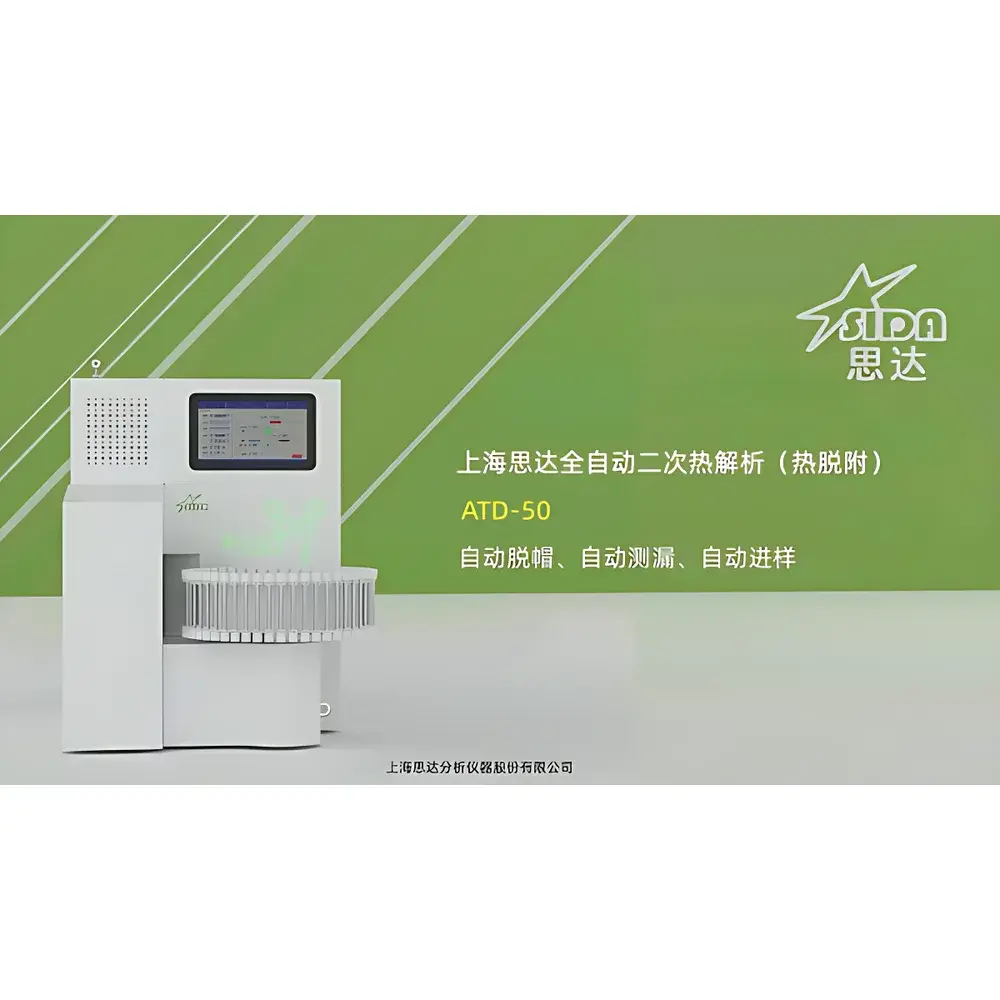
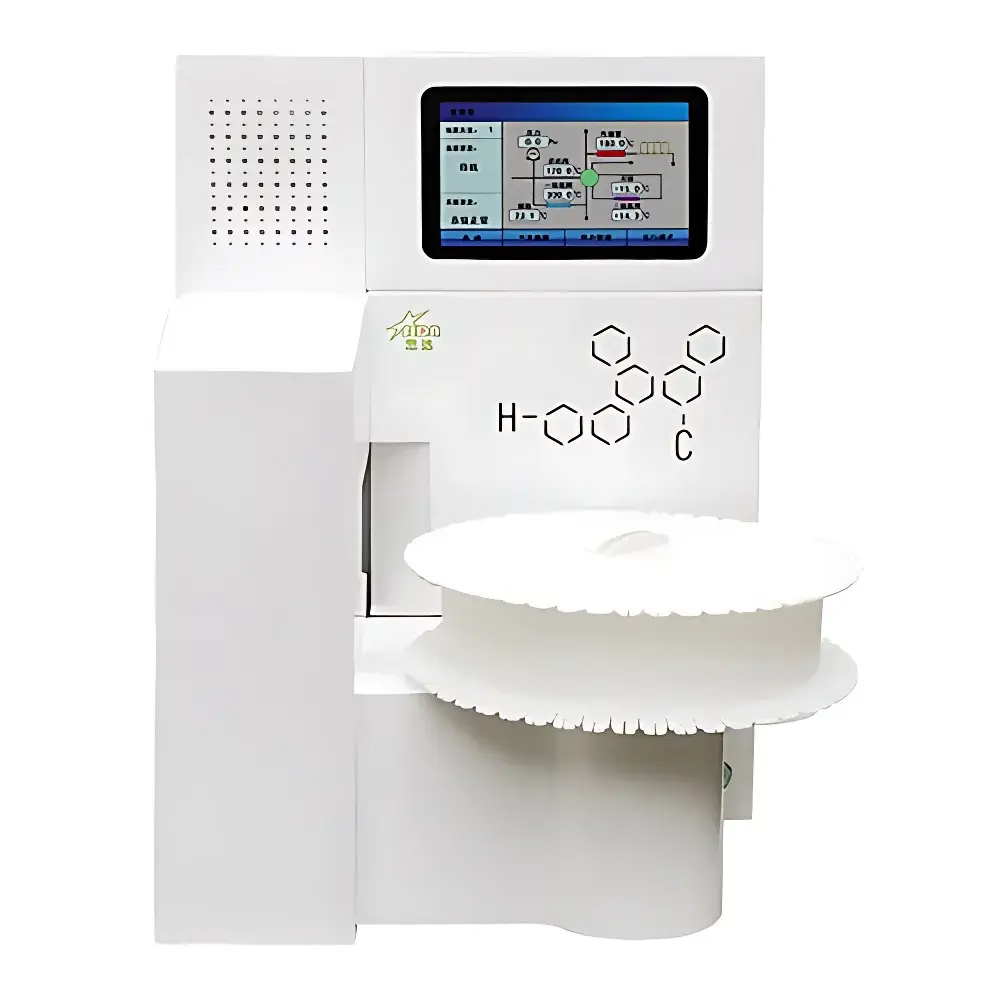
Shida ATD-50 Dual-Stage Thermal Desorber
| Brand | Shida |
|---|---|
| Origin | Shanghai, China |
| Manufacturer Type | Original Equipment Manufacturer (OEM) |
| Product Category | Domestic |
| Model | ATD-50 |
| Price Range | USD 14,000 – 42,000 |
| Instrument Type | Dual-Stage Thermal Desorber / Thermal Desorber |
| Automation Level | Fully Automatic |
| Sample Capacity | 50 positions |
| Cooling Method | Electronic Peltier Cooling |
| Focusing Trap | Integrated Cryogenic Trap (No Liquid Cryogens Required) |
| Independent Temperature Control Zones | 5 (Adsorption Tube, Inlet Valve, Transfer Line, Focusing Trap, Desorption Zone) |
| Valve Type | Motor-Driven 6-Port Rotary Valve |
| Transfer Line Material | Deactivated Silica-Capillary Tubing (Imported, High-Inertness) |
| Maximum Valve Operating Temperature | 260 °C (Optional High-Temp Valve) |
| Valve–Line Junction | Heated Enclosure (Zero Cold Spot) |
| Interface | Dual TTL/Relay Trigger Outputs for GC/GCMS Synchronization |
| External Ready Signal Input | Supported |
| GC/GCMS Compatibility | Universal (Agilent, Thermo Fisher, Shimadzu, PerkinElmer, Waters, etc.) |
Overview
The Shida ATD-50 Dual-Stage Thermal Desorber is a fully automated, benchtop thermal desorption system engineered for high-fidelity quantitative analysis of volatile and semi-volatile organic compounds (VOCs and SVOCs) in ambient air, indoor air, workplace atmospheres, and emission source samples. It operates on the principle of dual-stage thermal desorption: first, analytes are thermally released from sorbent tubes under controlled inert gas flow; second, evolved compounds are cryogenically focused in an integrated Peltier-cooled trap—eliminating reliance on liquid nitrogen or dry ice—and subsequently re-desorbed as a narrow, solvent-free band into the gas chromatograph (GC) or gas chromatography–mass spectrometry (GC-MS) inlet. This two-step process significantly enhances sensitivity, peak shape resolution, and method reproducibility compared to single-stage systems—particularly for low-concentration, high-boiling-point, or thermally labile compounds.
Key Features
- 5 independently programmable temperature zones: adsorption tube oven, six-port valve housing, transfer line, focusing trap, and desorption zone—each with ±0.1 °C stability and real-time monitoring;
- Electronic Peltier cooling system for the focusing trap (−30 °C to +400 °C range), enabling rapid, repeatable cold trapping without consumable cryogens;
- Motor-driven, high-precision 6-port rotary valve with heated manifold integration—ensuring zero cold spots at all fluidic junctions;
- Entire sample pathway constructed from ultra-inert, silanized fused-silica capillary tubing (imported), minimizing surface adsorption and carryover;
- 7-inch full-color capacitive touchscreen interface with intuitive method editor, storage for ≥100 user-defined methods, and one-touch run initiation;
- Dual TTL/relay outputs synchronized with GC/GCMS start signals; configurable external “ready” input for event-driven automation;
- Modular architecture supports seamless integration with any major GC or GC-MS platform—including Agilent 7890/8890, Thermo ISQ/DFS, Shimadzu GCMS-QP2020, and PerkinElmer Clarus SQ8—via standard pneumatic and electronic interfaces.
Sample Compatibility & Compliance
The ATD-50 accommodates standard 6 mm OD × 89 mm length sorbent tubes (e.g., Tenax TA, Carbopack B/C, Carboxen 1000, or multi-bed configurations) and is validated for use with EPA TO-17, ISO 16017-1, and multiple Chinese national standards including HJ 644–2013, HJ 583–2010, HJ 734–2014, GB/T 18883–2002, and GB 50325–2020. Its hardware design and firmware logic support audit-ready operation: temperature logs, method version stamps, operator ID fields, and run timestamps are embedded in every data file. While not pre-certified to 21 CFR Part 11, the system’s deterministic I/O architecture, non-editable raw method files, and timestamped event logging provide foundational traceability required for GLP and GMP-aligned environmental testing laboratories.
Software & Data Management
The ATD-50 operates standalone via its embedded microcontroller and touchscreen UI—no PC dependency for routine runs. All method parameters (temperature ramps, dwell times, carrier gas flows, valve timing sequences) are stored in non-volatile memory with checksum validation. Exportable CSV log files include complete thermal profile histories and valve actuation timestamps. When interfaced with third-party chromatography data systems (CDS), the instrument transmits standardized trigger events (e.g., “valve switch,” “trap desorb start”) that auto-annotate chromatograms. Optional LabVIEW-compatible drivers enable custom script integration for high-throughput batch processing in regulated QC environments.
Applications
- Occupational exposure assessment per OSHA and NIOSH methodologies;
- Indoor air quality (IAQ) screening for formaldehyde, benzene, toluene, xylenes, and aldehydes in residential/commercial buildings;
- Automotive cabin air characterization (HJ/T 400–2007 compliance);
- Rapid identification of unknown VOC plumes during hazmat incidents or industrial leak investigations;
- Regulatory compliance testing for fixed emission sources (e.g., paint booths, printing facilities, chemical reactors) per HJ 734–2014;
- Odor profiling and flavor compound analysis in food, fragrance, and cosmetic R&D labs;
- Method development for emerging contaminants such as halogenated VOCs, oxygenated VOCs, and C10–C20 hydrocarbons requiring cold-trap enhancement.
FAQ
Does the ATD-50 require liquid nitrogen or other cryogenic liquids?
No—it uses solid-state Peltier cooling for the focusing trap, eliminating logistical and safety constraints associated with cryogen handling.
Can it be used with GC-MS systems from non-Chinese manufacturers?
Yes. The ATD-50 features universal pneumatic and electrical interfaces compatible with Agilent, Thermo Fisher, Shimadzu, PerkinElmer, and Waters GC/GCMS platforms.
How is carryover minimized between runs?
Through sequential high-temperature bake-out cycles (up to 400 °C) of the transfer line and focusing trap, combined with inert gas purging and ultra-inert tubing surfaces.
Is method validation documentation available?
Shida provides instrument qualification protocols (IQ/OQ), temperature uniformity reports, and performance verification data for common VOC standards (e.g., TO-17 test mix) upon request.
What maintenance intervals are recommended?
Valve rotor seals and focusing trap desorption frits should be inspected every 500 runs; transfer line integrity verified quarterly via blank run monitoring.





