
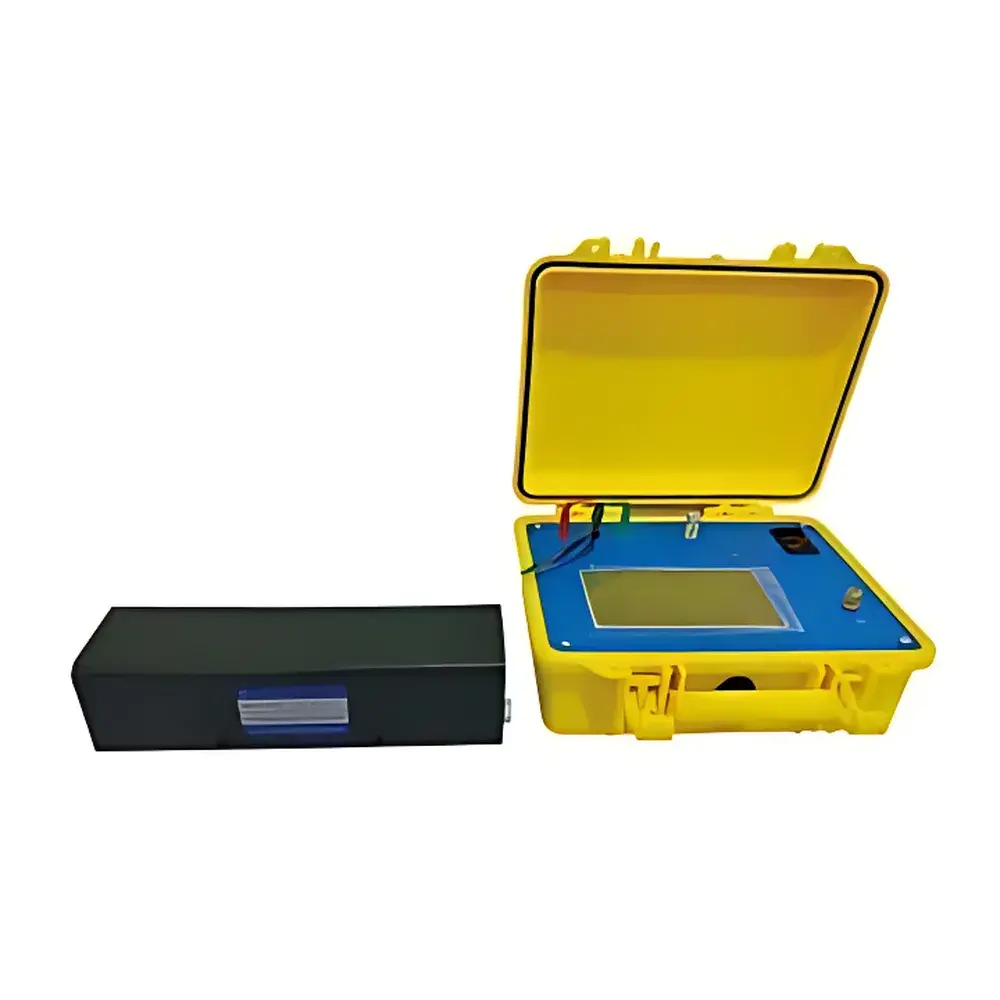
Timepower TP202 Portable Dielectric Strength Tester Calibration Standard
| Brand | Timepower |
|---|---|
| Origin | Beijing, China |
| Manufacturer | Timepower |
| Country of Origin | China |
| Model | TP202 |
| Price | Upon Request |
| Measurement Range | 0–80 kV (RMS) |
| Accuracy | ±2% of reading |
| Voltage Division Ratio | 10,000:1 |
| Input Impedance | 1,000 MΩ |
| Operating Temperature | 15–35 °C |
| Relative Humidity Limit | ≤70% RH |
| Power Supply | AC 220 V ±10%, 50 Hz ±10% |
| Power Consumption | ≤50 W |
| Dimensions | 310 × 290 × 280 mm |
| Weight | 1 kg |
| Display | 7.0-inch industrial-grade color TFT touch serial LCD (1024 × 600) |
| Battery | Rechargeable Li-ion, >8 h continuous operation |
| Environmental Rating | EMI-resistant, outdoor-capable, ruggedized enclosure |
| Compliance Reference | GB/T 507–2002 Clause 5.2.3 (auxiliary measurement device per “alternative standard method”) |
Overview
The Timepower TP202 Portable Dielectric Strength Tester Calibration Standard is a traceable, high-impedance resistive voltage divider system engineered specifically for in-situ verification and periodic calibration of insulating oil dielectric strength testers (also known as oil breakdown voltage testers or insulating oil testers). It operates on the principle of precision high-voltage resistive division, conforming strictly to the auxiliary measurement methodology defined in GB/T 507–2002 “Method for Determination of Breakdown Voltage of Insulating Oil”, Section 5.2.3. Unlike conventional calibration methods requiring disassembly or external HV sources, the TP202 functions as a direct replacement for the test oil cup—occupying the same physical position between high-voltage electrodes—while presenting an equivalent impedance profile under AC stress. This enables real-time, non-intrusive validation of output voltage waveform integrity, RMS magnitude, rise rate, crest factor, and frequency without interrupting routine maintenance workflows.
Key Features
- High-precision glass-enameled resistive divider with 10,000:1 fixed division ratio and ≥1,000 MΩ input impedance, ensuring minimal loading effect on the DUT’s high-voltage circuitry.
- Adjustable electrode spacing mechanism compatible with multiple commercial oil testers—including models from HAEFELY, Doble, Megger, and domestic manufacturers—enabling mechanical interoperability across diverse electrode geometries.
- 7.0-inch industrial-grade capacitive touch display (1024 × 600 resolution) with optical bonding and wide operating temperature range (−10 °C to +50 °C ambient), designed for reliable use in substations, field laboratories, and outdoor HV commissioning sites.
- Integrated rechargeable lithium-ion battery system supporting >8 hours of continuous operation; includes intelligent charging module with overvoltage/overtemperature protection and state-of-charge monitoring.
- Onboard calibrated digital temperature/humidity sensor (±0.3 °C / ±2% RH accuracy) for environmental condition logging—critical for uncertainty budgeting per ISO/IEC 17025:2017 Annex A.3.
- Real-time parametric display: RMS voltage, peak voltage, frequency, voltage ramp rate (kV/s), crest factor, harmonic distortion index, and system status diagnostics (e.g., thermal drift alert, battery health, connection integrity).
Sample Compatibility & Compliance
The TP202 is not a standalone high-voltage source but a metrological reference standard intended exclusively for calibrating AC dielectric strength testers used in insulating oil testing per IEC 60156, ASTM D877, ASTM D1816, and GB/T 507–2002. Its electrical interface replicates the capacitive and resistive load characteristics of a standard ASTM D877-type test cell filled with mineral oil, thereby satisfying the “equivalent impedance” requirement for valid calibration traceability. The unit is CE-marked for EMC immunity (IEC 61326-1:2021 Class B) and meets IP54 ingress protection for dust and water splashes. All internal high-voltage components are rated for continuous operation at 80 kV RMS (113 kV peak) with safety margins exceeding 200%. Documentation includes factory calibration certificate traceable to NIM (National Institute of Metrology, China) and optional UKAS-accredited calibration upon request.
Software & Data Management
The TP202 features embedded firmware supporting USB-C data export (CSV format) of time-stamped calibration records, including voltage readings, environmental parameters, operator ID, and instrument serial number. Data files comply with GLP/GMP audit trail requirements: each entry contains immutable timestamps, digital signatures, and change history logs. Optional PC software (Windows 10/11) provides report generation per ISO/IEC 17025 Annex A.4, uncertainty calculation per GUM (JCGM 100:2008), and integration with LIMS platforms via HL7 or CSV batch import. Firmware updates are delivered via signed binary packages to ensure integrity and prevent unauthorized modification—supporting compliance with FDA 21 CFR Part 11 for electronic records and signatures where applicable.
Applications
- Periodic verification of oil dielectric testers in power utility QC labs prior to scheduled transformer oil sampling campaigns.
- Field calibration audits during substation preventive maintenance outages, eliminating need to return instruments to central metrology labs.
- Validation of voltage ramp linearity and waveform fidelity in accordance with IEC 60270 partial discharge test set requirements (indirectly relevant for HV source characterization).
- Supporting ISO/IEC 17025 accreditation for insulating oil testing laboratories by providing documented, traceable calibration evidence for measurement equipment.
- Troubleshooting inconsistent breakdown voltage results across multiple oil testers within a fleet—identifying unit-specific gain drift or waveform distortion.
FAQ
Is the TP202 suitable for calibrating DC or impulse voltage outputs?
No. The TP202 is designed exclusively for sinusoidal AC voltage verification at power frequencies (45–65 Hz). It does not support DC, lightning impulse (1.2/50 µs), or switching impulse waveforms.
Does it require external grounding during operation?
Yes. The unit must be connected to a verified earth ground point using the provided grounding lug to ensure personnel safety and measurement stability under high-voltage stress.
Can it be used with automated oil testers that have proprietary cup interfaces?
Yes—provided the tester allows manual insertion of a substitute load cell. The adjustable electrode spacing (range: 2.0–2.5 mm) accommodates most standard and custom electrode configurations.
What is the recommended recalibration interval?
Annual recalibration is advised under normal usage conditions. In high-utilization environments (≥200 calibrations/month), semi-annual verification against a primary standard is recommended.
Is firmware upgrade capability available in the field?
Yes. Updates are delivered via USB-C and include version-controlled release notes, cryptographic signature verification, and rollback functionality.






