
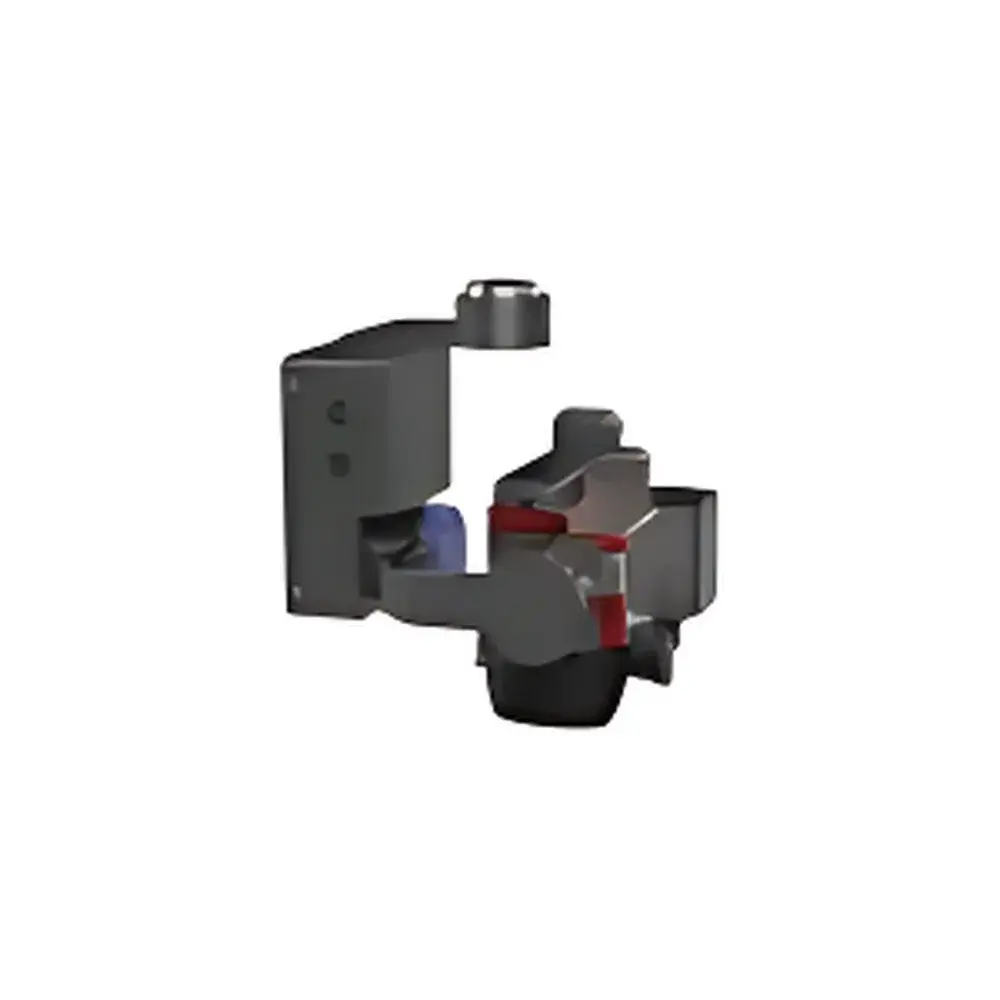
Cubert X20P-IR Hyperspectral and Thermal Infrared Imaging System
| Brand | Cubert |
|---|---|
| Origin | Germany |
| Model | X20P-IR |
| Spectral Range | 350–1000 nm + 7.5–13.5 µm |
| Spectral Resolution | 164 channels (instantaneous, full-frame) |
| Spatial Resolution | 1886 × 1886 pixels (VIS-NIR), 640 × 512 pixels (MWIR/LWIR) |
| FOV | 35° (66 spatial pixels per spectral cube) |
| IFOV | <0.5 mrad (typical at 1 m working distance) |
| Detector Configuration | 20 MP monochrome CMOS (VIS-NIR) + VOx microbolometer array (7.5–13.5 µm) + 3.5 MP panchromatic sensor |
| Frame Rate | 2 hyperspectral cubes/s @ 1886 × 1886 |
| Bit Depth | 12-bit digital output |
| Data Interface | Skyport proprietary connector, dual GigE, dual USB 3.0, HDMI |
| Onboard Storage | 256 GB SSD + 8 GB RAM + microSD slot |
| Stabilization | Brushless gimbal with ±50° pitch / ±90° roll mechanical limits |
| Weight | <1.5 kg (integrated gimbal + optics + detectors) |
Overview
The Cubert X20P-IR is a field-deployable, dual-domain hyperspectral and thermal infrared imaging system engineered for synchronized acquisition of visible–near-infrared (VIS-NIR: 350–1000 nm) and long-wave infrared (LWIR: 7.5–13.5 µm) spectral data in a single, compact, gimbal-integrated platform. Unlike scanning or push-broom architectures, the X20P-IR employs snapshot (full-frame) spectral imaging based on integrated optical field-encoding technology—enabling distortion-free, motion-robust data capture without spatial or temporal misregistration between spectral bands. Its core architecture integrates three co-aligned detector arrays: a 20 MP global-shutter CMOS sensor for high-fidelity VIS-NIR hyperspectral cubes (164 spectral channels), a 640 × 512 VOx microbolometer for radiometrically calibrated thermal imaging, and a 3.5 MP panchromatic sensor for geometric reference and scene context. All modalities operate simultaneously under a shared optical train and timing engine, ensuring pixel-level spatial correspondence across domains—a critical requirement for quantitative remote sensing, precision agriculture, and industrial thermographic analytics.
Key Features
- True simultaneous acquisition of VIS-NIR hyperspectral cubes (1886 × 1886 pixels, 164 channels) and LWIR thermal imagery (640 × 512 pixels) with sub-millisecond inter-channel synchronization
- Snapshot spectral imaging architecture eliminates motion-induced artifacts—ideal for UAV-mounted operation at flight speeds up to 15 m/s
- Integrated brushless 2-axis gimbal with <0.015° RMS angular jitter and real-time inertial stabilization, compliant with RTK-GNSS time-synchronized geotagging workflows
- Skyport interface enables deterministic low-latency communication with autopilot systems (e.g., Pixhawk, DJI SDK), supporting hardware-triggered frame capture and embedded GPS/IMU metadata stamping
- Onboard 256 GB SSD and 8 GB DDR4 memory allow >45 minutes of continuous dual-domain recording at native resolution without external tethering
- Optical design optimized for f/2.0 throughput across both spectral domains, delivering high photon efficiency without compromising spatial fidelity or thermal sensitivity (NETD < 40 mK)
Sample Compatibility & Compliance
The X20P-IR is designed for non-contact, standoff analysis of heterogeneous surfaces under ambient or controlled illumination conditions. It supports reflective, emissive, and mixed-mode measurement protocols—enabling applications ranging from vegetation index derivation (NDVI, PRI, MCARI) to thermal anomaly detection in photovoltaic arrays or composite material inspection. The system complies with ISO 18434-1 (condition monitoring — thermography) for quantitative surface temperature mapping and adheres to ASTM E1933-19 standards for infrared thermographic instrumentation calibration traceability. All thermal measurements are factory-calibrated against NIST-traceable blackbody sources (±1 °C accuracy verified at 50 °C and 80 °C), and raw data output includes embedded radiometric metadata required for GLP-compliant post-processing pipelines.
Software & Data Management
Data acquisition and preprocessing are managed via Cubert’s proprietary HyperSpectra Studio software suite (Windows/Linux), which supports real-time preview, lossless compression (HDF5-based), and batch-georeferencing using embedded GNSS/IMU logs. Export formats include ENVI-compatible BIL/BIP, GeoTIFF with RPC metadata, and CSV-based spectral libraries. The system supports FDA 21 CFR Part 11–compliant audit trails when operated in validated laboratory environments, including user access controls, electronic signatures, and immutable acquisition logs. Raw hyperspectral cubes retain full 12-bit dynamic range and wavelength-registered spectral response functions—essential for chemometric modeling, spectral unmixing, and machine learning training datasets.
Applications
- Agricultural phenotyping: Crop stress detection, nutrient deficiency mapping, and yield prediction via combined reflectance + emissivity indices
- Environmental monitoring: Wetland delineation, wildfire fuel load assessment, and methane plume localization using spectral–thermal correlation
- Industrial QA/QC: Delamination detection in carbon-fiber composites, coating uniformity verification, and overheating identification in power electronics
- Defense & security: Camouflage discrimination, concealed object detection under foliage (through NIR-LWIR fusion), and perimeter surveillance with day/night all-weather capability
- Geospatial surveying: High-resolution land-cover classification, mineralogical mapping (using diagnostic absorption features in SWIR-LWIR overlap regions), and urban heat island analysis
FAQ
Does the X20P-IR require external cooling for the IR detector?
No—the VOx microbolometer operates uncooled and is thermally stabilized via integrated Peltier control and ambient drift compensation algorithms.
Can spectral calibration be performed in-field?
Yes—onboard LED-based spectral reference sources enable routine wavelength validation; full radiometric recalibration requires lab-grade blackbody exposure but can be scheduled remotely via firmware update.
Is the system compatible with third-party drone platforms beyond DJI and Autel?
Yes—Skyport interface documentation and open-source SDKs (C++/Python) are provided for integration with PX4- and ArduPilot-based UAVs, including custom airframes.
What is the maximum operational altitude for radiometric accuracy?
For optimal atmospheric correction, recommended operating altitude is ≤120 m AGL; above this, optional atmospheric transmission models (MODTRAN-based) can be applied during post-processing.
How is data synchronization between VIS-NIR and LWIR channels ensured?
A master clock governs all detectors and IMU/GNSS modules; timestamp alignment is maintained within ±100 ns across all data streams, verified during factory acceptance testing.





