
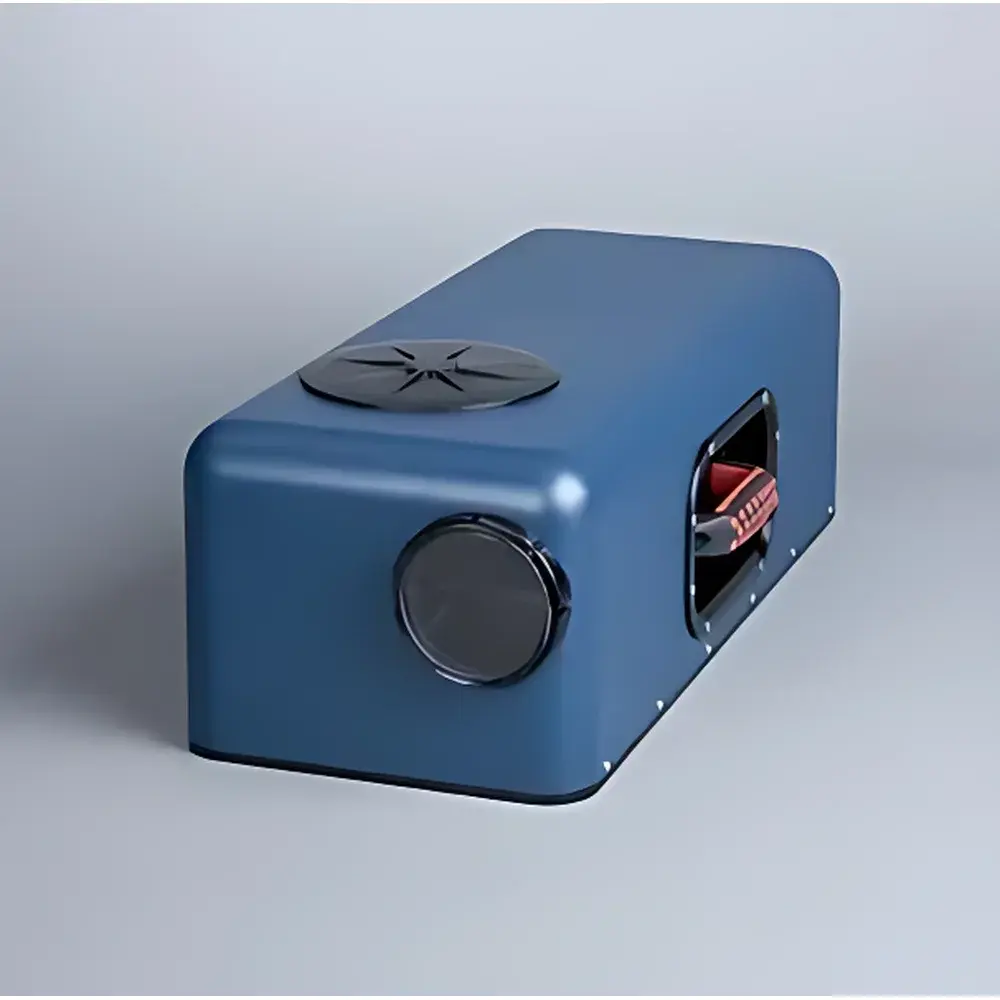
SurfaceOptics SOC730VS Visible-Near Infrared Hyperspectral Imaging Spectroradiometer
| Brand | SurfaceOptics |
|---|---|
| Origin | USA |
| Model | SOC730VS |
| Spectral Range | 400–1000 nm |
| Spectral Resolution | 2 nm |
| Spatial Resolution | 1024 × 1024 pixels |
| Smile Error | <1.5 µm |
| f-number | f/2.4 |
| Total Field of View (35 mm lens) | 10° |
| Instantaneous Field of View (35 mm lens) | 0.17 mrad |
| Frame Rate | 15 fps |
| Digitization | 12-bit |
| Interface | Camera Link |
| Scan Mechanism | Integrated push-broom scanner |
| Power Supply | AC / 12 V DC |
| Tripod Mount | 3/8″–16 |
Overview
The SurfaceOptics SOC730VS is a field-deployable, push-broom hyperspectral imaging spectroradiometer engineered for quantitative reflectance and radiance measurements across the visible to near-infrared (VNIR) spectrum (400–1000 nm). Unlike conventional multispectral sensors, the SOC730VS acquires contiguous spectral bands at 2 nm resolution—enabling precise identification and discrimination of material-specific absorption features related to pigment composition, water content, cellulose structure, and chemical bonding states. Its optical architecture employs a high-throughput, f/2.4 fore-optics train coupled with a precision diffraction grating and a back-illuminated, 12-bit CMOS detector array (1024 × 1024 pixels), delivering high signal-to-noise ratio (SNR) performance under variable illumination conditions. Designed for both laboratory benchtop operation and airborne or ground-based platform integration, the system meets the radiometric stability and geometric fidelity requirements of scientific remote sensing, quality assurance, and non-contact process monitoring applications.
Key Features
- Continuous VNIR spectral coverage from 400 nm to 1000 nm with ≤2 nm spectral sampling interval
- Low smile distortion (<1.5 µm) ensured by optimized collimator-grating-detector alignment and factory spectral calibration
- Integrated push-broom scanning mechanism eliminates mechanical stage dependency and supports real-time line acquisition at 15 fps
- Camera Link interface enables deterministic, low-latency data streaming to host systems with minimal driver overhead
- Modular design supports optional integration with the SurfaceOptics MIDIS™ real-time spectral processor for on-the-fly spectral unmixing, anomaly detection, and band-ratio mapping
- Open binary data format (IEEE 754 floating-point or integer) compatible with ENVI, MATLAB, Python (scikit-image, spectral), and GDAL workflows
- Calibration-ready architecture: includes NIST-traceable radiometric and spectral calibration certificates; supports user-performed dark current, flat-field, and irradiance calibration routines
Sample Compatibility & Compliance
The SOC730VS is compatible with solid, semi-solid, and particulate samples—including soil cores, vegetation canopies, mineral specimens, painted surfaces, pharmaceutical tablets, and food products—provided they fit within the instrument’s instantaneous field of view (0.17 mrad at 35 mm focal length) and exhibit sufficient spectral contrast in the VNIR domain. For laboratory use, it operates under ambient lighting or controlled illumination (e.g., halogen or quartz-tungsten-halogen sources with UV-vis-NIR output). The system conforms to IEC 61000-6-3 (EMC emission limits) and IEC 61000-6-2 (immunity standards). Radiometric calibration procedures align with ASTM E275, ASTM E1311, and ISO 17025-accredited practices. When used in regulated environments (e.g., pharmaceutical QC or agricultural product certification), raw data logging supports audit trails per FDA 21 CFR Part 11 when paired with validated MIDIS™ firmware and compliant host software.
Software & Data Management
SurfaceOptics HS Analysis Software provides end-to-end workflow support—from sensor initialization and radiometric correction to spectral library matching and georeferenced mosaic generation. It supports batch processing of hyperspectral cubes, pixel-wise spectral derivative computation, and export to standard interchange formats (BIL, BSQ, BIP). All raw acquisitions are stored in uncompressed binary format with embedded metadata headers (wavelength vector, exposure time, integration settings, GPS timestamp if external GNSS is connected). Third-party integration is facilitated via documented C/C++ SDK and Python bindings. MIDIS™ firmware extends functionality with parallelized spectral angle mapper (SAM), constrained energy minimization (CEM), and real-time NDVI/EVI index generation—capable of sustaining >100 Mpix/s throughput on dual Xeon platforms. Data provenance is preserved through immutable file headers and optional SHA-256 checksum logging.
Applications
- Agriculture & Precision Farming: Detection of nitrogen stress, chlorophyll-a/b ratios, leaf water potential, and early disease onset via spectral indices (e.g., PRI, MCARI, OSAVI)
- Environmental Monitoring: Soil organic carbon estimation, lithological mapping, wetland delineation, and post-fire vegetation recovery assessment
- Industrial QA/QC: Coating thickness verification, pigment homogeneity analysis, counterfeit detection in printed electronics and packaging
- Life Sciences: Label-free histopathology screening, cell culture confluence monitoring, and plant phenotyping in controlled-environment growth chambers
- Defense & Security: Camouflage detection, material identification in UAV-based ISR missions, and standoff detection of explosives precursors
- Geosciences: Mineral identification (e.g., clays, carbonates, iron oxides) using diagnostic absorption features near 700 nm, 900 nm, and 2200 nm (via extended-range variants)
FAQ
Is the SOC730VS suitable for outdoor field deployment?
Yes—the system is rated for operation in temperatures ranging from 5 °C to 40 °C and relative humidity up to 80% non-condensing. Optional ruggedized enclosures and thermal stabilization modules are available for extended environmental resilience.
Can the SOC730VS be mounted on unmanned aerial vehicles (UAVs)?
It is routinely integrated onto fixed-wing and multirotor UAV platforms with appropriate gimbal stabilization and power regulation. Weight (2.3 kg) and power draw (≤18 W) comply with Class II UAV payload constraints.
Does the system include factory spectral calibration?
Yes—each unit ships with NIST-traceable spectral and radiometric calibration certificates, including wavelength accuracy (±0.5 nm) and responsivity curves measured under collimated illumination.
What software licenses are included with purchase?
The base package includes perpetual licenses for SurfaceOptics HS Analysis Software and MIDIS™ Lite. Full MIDIS™ Pro requires separate validation documentation for GxP environments.
How is geometric distortion corrected during data processing?
Built-in keystone and smile correction coefficients are applied during raw cube reconstruction. Additional orthorectification and co-registration with LiDAR or RGB imagery require external GIS tools such as PCI Geomatica or QGIS with Orfeo Toolbox plugins.
Related Products




