
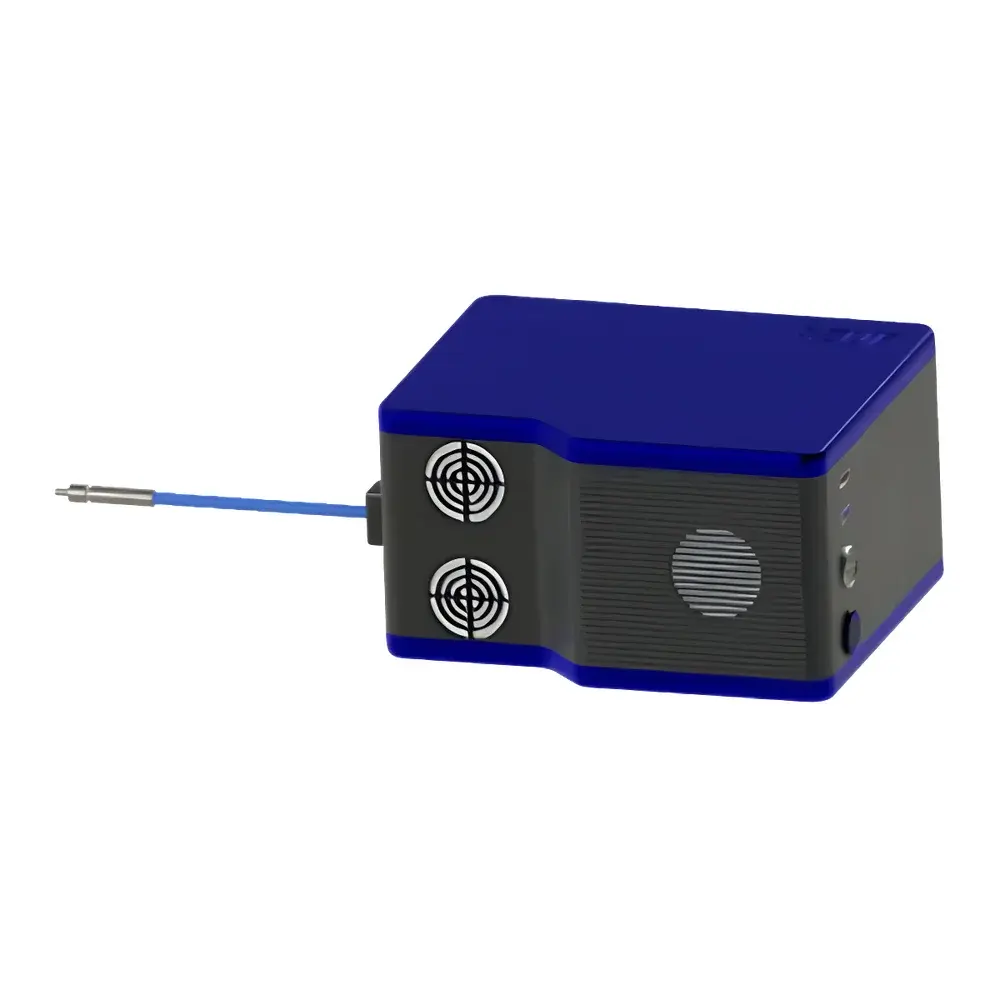
AZUP ASR2500 Field Spectroradiometer
| Brand | AZUP |
|---|---|
| Origin | Beijing, China |
| Manufacturer Type | Original Equipment Manufacturer (OEM) |
| Product Origin | Domestic (China) |
| Model | ASR2500 |
| Pricing | Upon Request |
Overview
The AZUP ASR2500 Field Spectroradiometer is a high-performance, dual-detector push-broom spectroradiometric instrument engineered for precision ground-based spectral measurement across the visible and near-infrared (VNIR) spectrum (350–2500 nm). It operates on the principle of diffraction grating-based dispersion coupled with optimized optical path design to deliver calibrated radiance, reflectance, and transmittance spectra under field conditions. Unlike conventional single-detector field spectrometers, the ASR2500 integrates two independent, thermoelectrically cooled large-format linear array detectors—one for the VNIR (350–1000 nm) and one for the shortwave infrared (SWIR, 1000–2500 nm)—enabling simultaneous acquisition without mechanical scanning or spectral stitching artifacts. This architecture ensures high spectral fidelity, low thermal drift, and superior signal-to-noise ratio (SNR), making it suitable for applications demanding metrological traceability and inter-comparison with airborne and spaceborne hyperspectral sensors such as AVIRIS-NG, PRISMA, and EnMAP.
Key Features
- Dual-cooled detector configuration: 2048-pixel back-thinned CCD for 350–1000 nm; 256-element InGaAs array (TE-cooled to –10 °C) for 1000–2500 nm
- Spectral resolution: ≤2 nm FWHM at 700 nm; ≤7 nm FWHM at 1500 nm (calibrated per NIST-traceable line sources)
- Optical sampling interval: 1.0 nm (VNIR), 1.4 nm (SWIR); full spectral coverage acquired in a single exposure
- Integrated cosine corrector and calibrated reference panel support for bidirectional reflectance distribution function (BRDF)-aware field measurements
- Ruggedized aluminum housing with IP54-rated environmental sealing; operational temperature range: –10 °C to +45 °C
- Real-time onboard calibration verification via internal tungsten-halogen and LED reference sources
Sample Compatibility & Compliance
The ASR2500 is designed for non-contact, in situ spectral characterization of natural and engineered surfaces—including soils, vegetation canopies, mineral outcrops, water bodies, painted panels, and industrial coatings—under ambient solar illumination or controlled artificial lighting. Its optical geometry adheres to ASTM E275, ISO 9050, and USP guidelines for spectral reflectance measurement. Radiometric calibration is traceable to NIST SRM 2030 (diffuse reflectance standard) and SRM 1930 (spectral irradiance standard), with certificate of calibration provided per unit. The system supports GLP-compliant data acquisition workflows, including electronic signatures, audit trails, and metadata embedding (Wavelength, Integration Time, GPS, Illumination Geometry, Detector Temperature) compliant with ISO/IEC 17025 requirements for testing laboratories.
Software & Data Management
The ASR2500 is operated via SpectraView Pro v4.x—a platform-independent application supporting Windows, macOS, and Linux. The software enables real-time spectral preview, automated dark-current subtraction, radiometric calibration application, BRDF correction modules, and export to ENVI, HDF5, and ASCII formats. All raw and processed spectra are stored with embedded EXIF-like metadata (including GPS coordinates, UTC timestamp, viewing zenith/azimuth angles, and atmospheric pressure). Data files comply with NASA’s CEOS/ISO 19115 geospatial metadata schema and support direct ingestion into ESA’s SNAP or USGS’s Earth Engine platforms. Audit logging meets FDA 21 CFR Part 11 requirements for electronic records and signatures when configured with user authentication and role-based access control.
Applications
- Pre-flight and post-flight vicarious calibration of airborne/spaceborne hyperspectral imagers (e.g., AVIRIS-NG, HySpex, DESIS)
- Mineral identification and alteration mapping in exploration geology using diagnostic absorption features (e.g., Al–OH, Fe³⁺, Mg–OH)
- Phenotyping and stress detection in precision agriculture via chlorophyll, carotenoid, and water-band indices (NDVI, PRI, WI)
- Coastal and inland water quality monitoring: CDOM, chlorophyll-a, suspended sediment concentration retrieval
- Material identification and quality control in pigment manufacturing, solar cell coating validation, and heritage conservation science
- Validation of radiative transfer models (e.g., PROSAIL, SAIL, MODTRAN) under realistic canopy and soil background conditions
FAQ
Is the ASR2500 compatible with third-party GPS and inertial measurement units (IMUs)?
Yes—the instrument features RS-232 and TTL serial interfaces plus a dedicated PPS input for synchronization with external GNSS/IMU systems, enabling geo-referenced spectral point clouds.
Does the ASR2500 support automated field scanning (e.g., via goniometer or UAV mount)?
It provides trigger-in and trigger-out TTL signals for hardware synchronization with motorized stages, gimbal systems, or UAV payloads; custom scripting via Python API is supported.
What calibration certificates are supplied with each unit?
Each ASR2500 ships with a factory calibration report (traceable to NIST standards), spectral responsivity curve, linearity assessment, and stray light characterization data.
Can the ASR2500 be used for absolute irradiance measurements?
Yes—when paired with the optional calibrated cosine receptor and irradiance calibration kit (NIST-traceable), it meets ISO/IEC 17025 requirements for spectral irradiance measurement.
Is firmware upgradable in the field?
Firmware updates are delivered via USB and validated through cryptographic signature verification to ensure integrity and compliance with IEC 62443-3-3 cybersecurity standards.




