
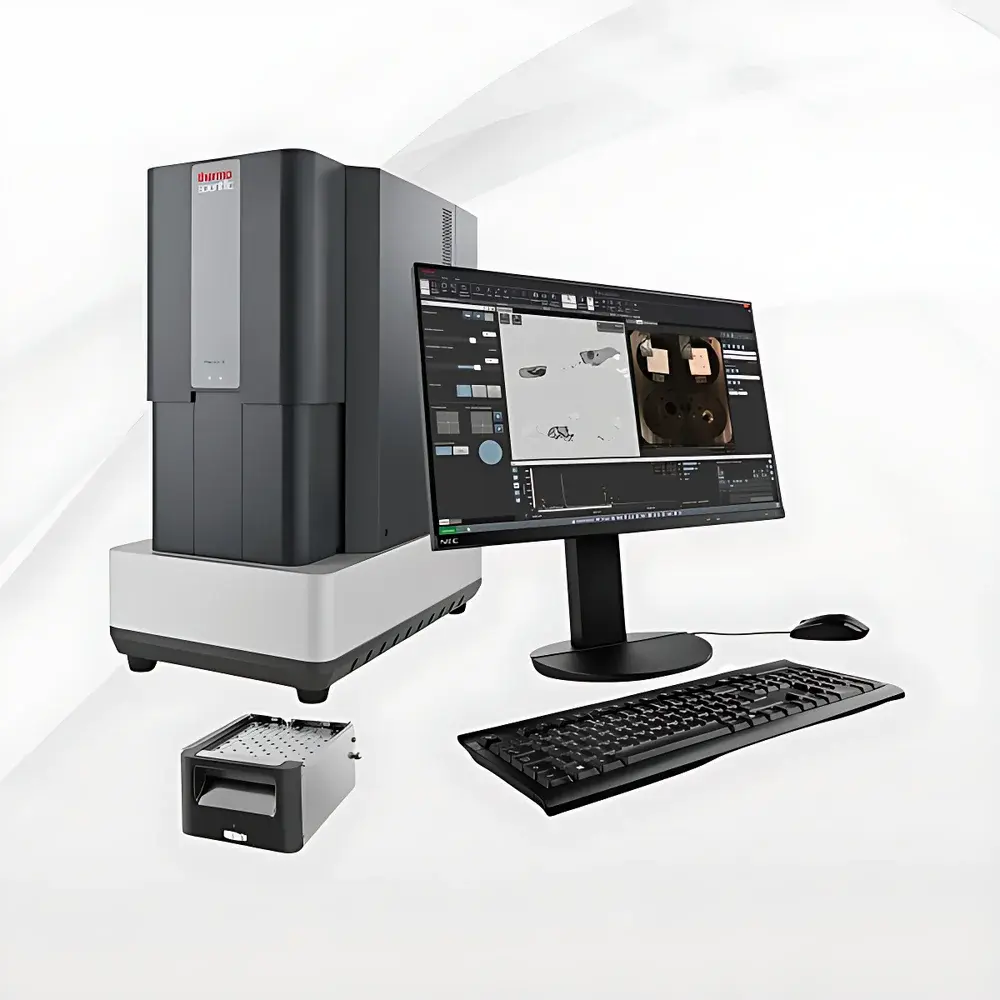
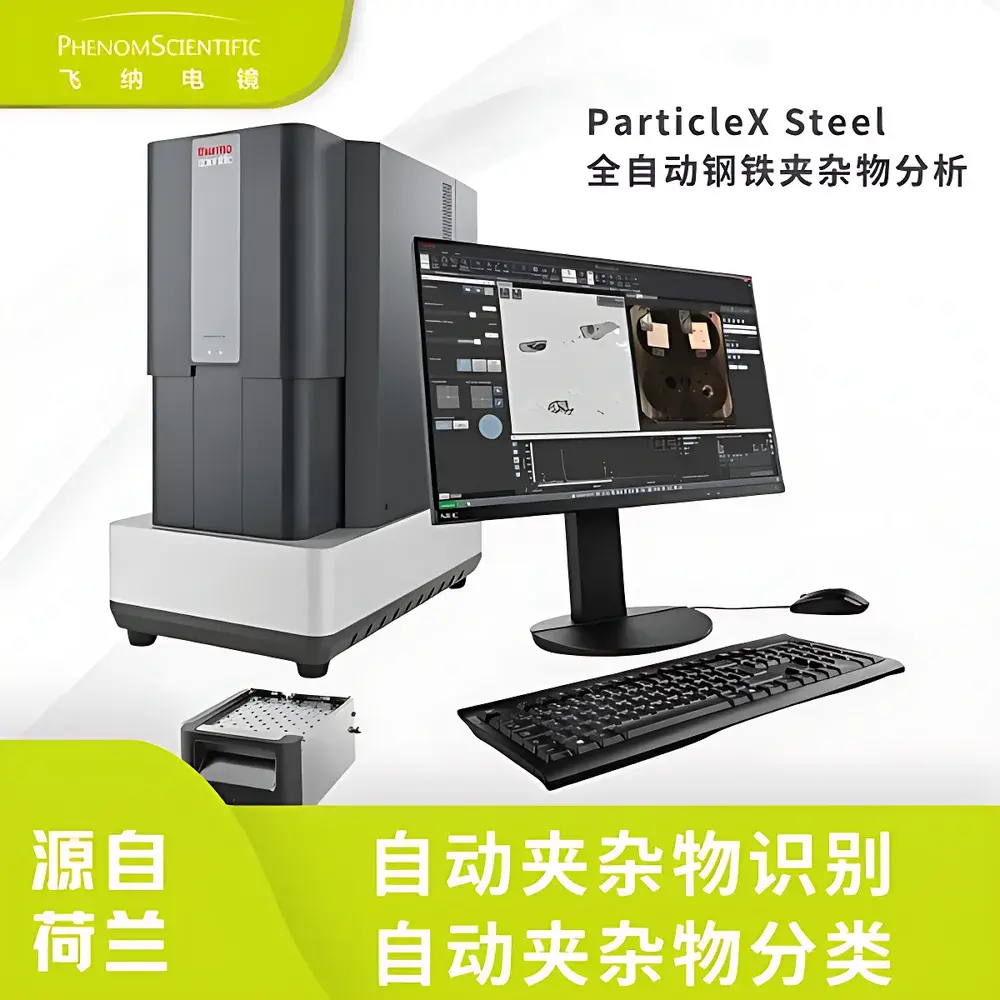
Phenom ParticleX Steel Inclusion Analysis System
| Brand | Phenom |
|---|---|
| Origin | Netherlands |
| Model | ParticleX Steel Inclusion |
| Instrument Type | Benchtop Scanning Electron Microscope (SEM) |
| Electron Source | Cerium Hexaboride (CeB6) |
| SEM Class | Entry-level Field-Emission Equivalent |
| Secondary Electron Resolution | 8 nm |
| Backscattered Electron Resolution | 8 nm |
| Maximum Magnification | 200,000× |
| Accelerating Voltage Range | Standard Modes: 2, 5, 10, 15, 20 kV |
| Advanced Mode | Continuously Adjustable from 4.8 kV to 20.5 kV |
| Standard Detectors | Backscattered Electron Detector (BSE), Energy-Dispersive X-ray Spectrometer (EDS) |
| Optional Detector | Secondary Electron Detector (SED) |
| Vacuum System | Triple-chamber Separated Architecture |
| Pump-down Time | ≤30 s |
| Stage | High-Precision Motorized Stage |
| Compliance | ASTM E2109, ISO 4967, USP <788>, GB/T 10561 |
Overview
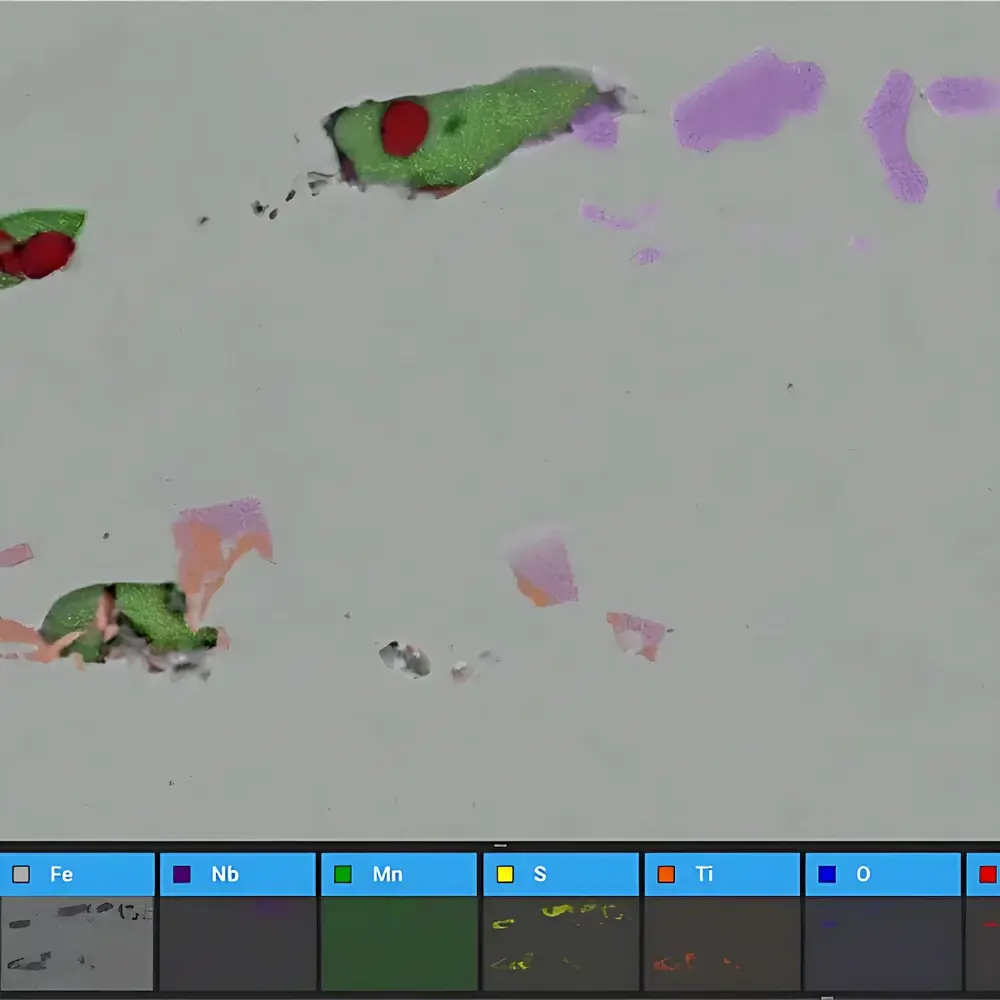
The Phenom ParticleX Steel Inclusion Analysis System is a fully integrated benchtop scanning electron microscope (SEM) platform engineered specifically for automated, high-throughput characterization of non-metallic inclusions in steel and ferrous alloys. Leveraging CeB6 thermionic emission technology, it delivers field-emission–level stability and longevity without the operational complexity or cost of cold-FE systems. Its core analytical capability rests on the synergistic combination of high-resolution BSE imaging (8 nm), real-time EDS elemental mapping, and proprietary automated inclusion recognition algorithms—enabling quantitative assessment of inclusion type, size distribution (≥1 µm), aspect ratio, area fraction, spatial clustering, and chemical composition (O, Al, Si, Ca, Mg, Mn, S, Ti, Cr, etc.) per ASTM E2109 and ISO 4967 standards. Unlike conventional manual SEM workflows, ParticleX executes unattended analysis across entire polished metallographic cross-sections (up to 50 mm × 50 mm), generating statistically robust datasets compliant with quality control and process qualification requirements in primary steelmaking, rolling, forging, and automotive component manufacturing.
Key Features
- CeB6 electron source offering >1,500 hours of stable emission life—reducing filament replacement frequency by over 80% compared to tungsten filaments.
- Triple-chamber vacuum architecture enabling full system pump-down in ≤30 seconds, minimizing idle time between samples.
- Motorized 5-axis precision stage with sub-micron repeatability for seamless tile-scan navigation and positional recall during reanalysis.
- Dual-mode operation: fully automated inclusion survey mode + manual SEM/EDS investigation mode—eliminating workflow bottlenecks without hardware duplication.
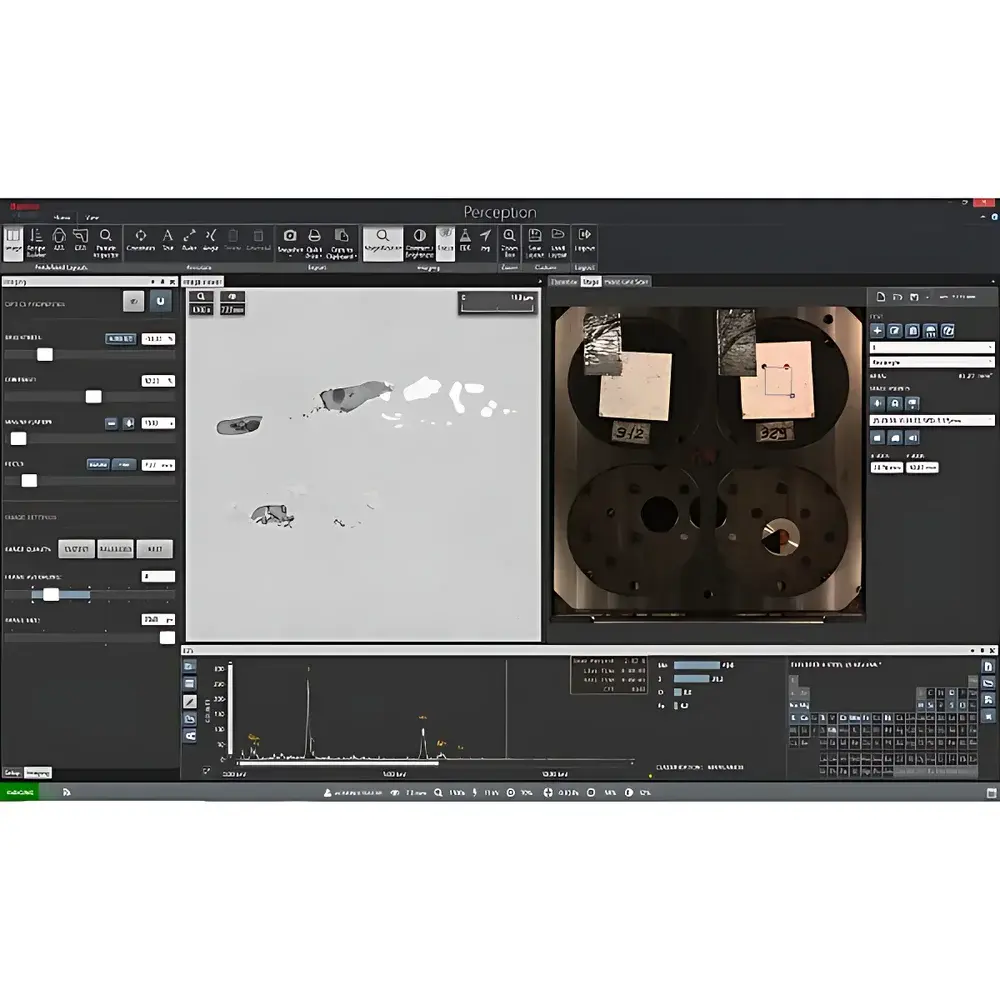
- Real-time EDS spectrum acquisition synchronized with BSE imaging at every measurement point, supporting phase identification via library matching (Oxford AZtecLive or Thermo Scientific Pathfinder).
- Pre-configured analysis templates aligned with ISO 4967 Category A–D classification and ASTM E2109 reporting formats—including inclusion count per mm², maximum length, and compositional histograms.
Sample Compatibility & Compliance
The ParticleX accommodates standard 25 mm and 32 mm metallographic mounts, as well as custom-sized polished sections up to 50 mm × 50 mm. Samples require standard conductive carbon coating (≤5 nm) and are compatible with both epoxy-embedded and resin-free preparation methods. All automated analysis protocols adhere to the statistical sampling requirements defined in ISO 4967 Annex A and ASTM E2109 Section 7. Data traceability meets GLP/GMP documentation standards, with audit trails capturing operator ID, timestamp, instrument parameters, and raw spectral files. Optional 21 CFR Part 11-compliant software modules support electronic signatures and role-based access control for regulated environments.
Software & Data Management
Control and analysis are performed via Phenom’s proprietary ParticleX Software Suite, built on a modular architecture supporting version-controlled method libraries, batch processing queues, and export to CSV, PDF, and XML formats. Raw data—including BSE image stacks, EDS spectra (.eds/.spc), and inclusion attribute tables—are stored in vendor-neutral HDF5 containers. Integration with LIMS platforms (e.g., LabWare, STARLIMS) is achieved through standardized RESTful APIs. Automated report generation includes customizable cover pages, statistical summaries, inclusion morphology heatmaps, and overlayable compositional scatter plots (e.g., Al₂O₃ vs. CaO content). All software updates are delivered via secure OTA channels with SHA-256 integrity verification.
Applications
- Quantitative inclusion rating for ASTM E45 / ISO 4967 certification of structural steels, bearing steels, and stainless grades.
- Root-cause analysis of surface defects (e.g., slivers, pits) linked to oxide or sulfide cluster distributions.
- Process validation of ladle refining, calcium treatment, and vacuum degassing efficacy.
- Comparative evaluation of inclusion modification strategies using rare-earth or Mg-based inoculants.
- Failure analysis of fatigue cracks initiating at brittle aluminate or spinel inclusions.
- Research-grade morphological and compositional trend analysis across multi-batch production campaigns.
FAQ
What sample preparation is required prior to ParticleX analysis?
Standard metallographic polishing to 0.05 µm colloidal silica finish, followed by conductive carbon coating (5–10 nm thickness). No sputter coating is required for most steel matrices.
Can ParticleX distinguish between alumina and spinel inclusions?
Yes—via high-count EDS spectra (>10,000 cps) and multivariate clustering of O/Al/Mg/Cr ratios, supported by reference spectra libraries calibrated against certified CRM standards.
Is remote operation supported for multi-site labs?
Yes—through secure TLS-encrypted VNC sessions with session logging and concurrent user management. Full instrument control, including stage movement and EDS acquisition, is available remotely.
How does ParticleX ensure measurement reproducibility across operators?
By enforcing parameter-locked analysis templates, automated focus/stigmation routines, and drift-compensated stage navigation—eliminating subjective adjustments common in manual SEM workflows.
Does the system support post-acquisition reprocessing of inclusion data?
Yes—raw spectral and image data remain fully accessible. Users may reapply classification thresholds, update elemental libraries, or perform secondary statistical modeling without re-scanning.





