
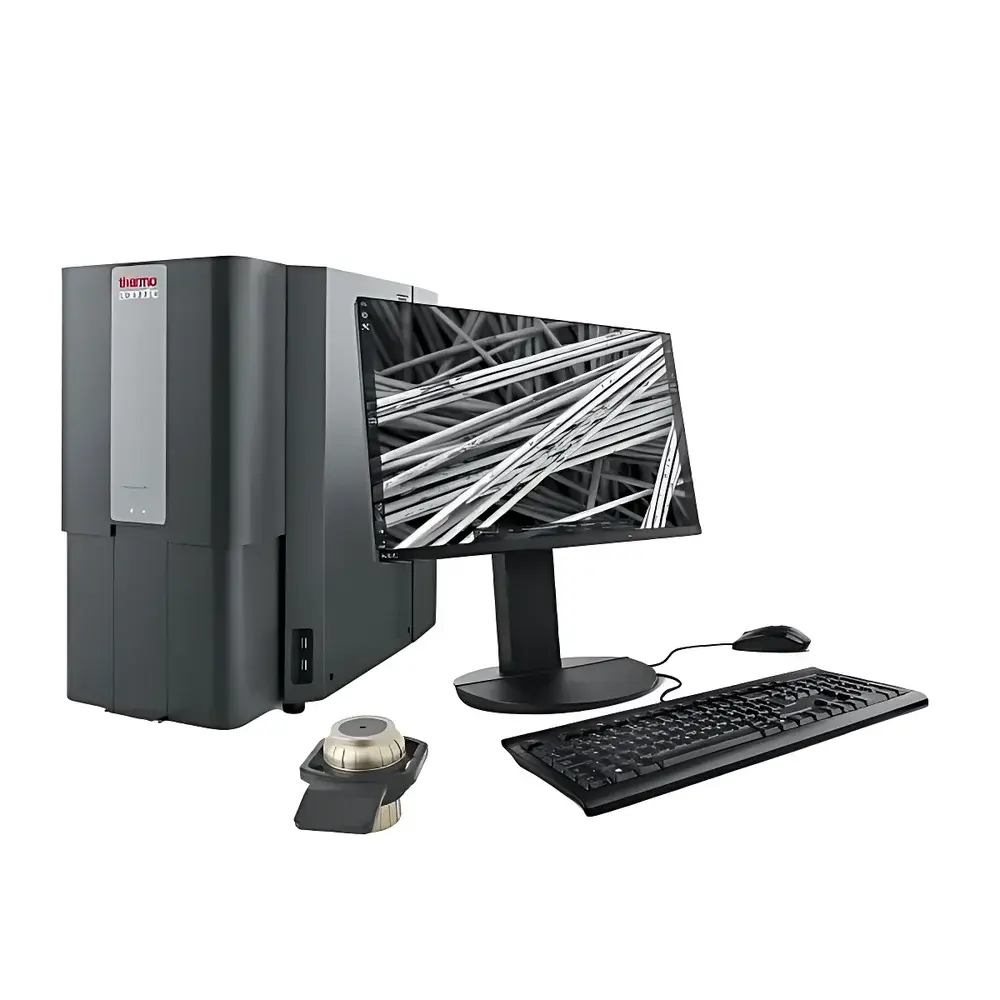
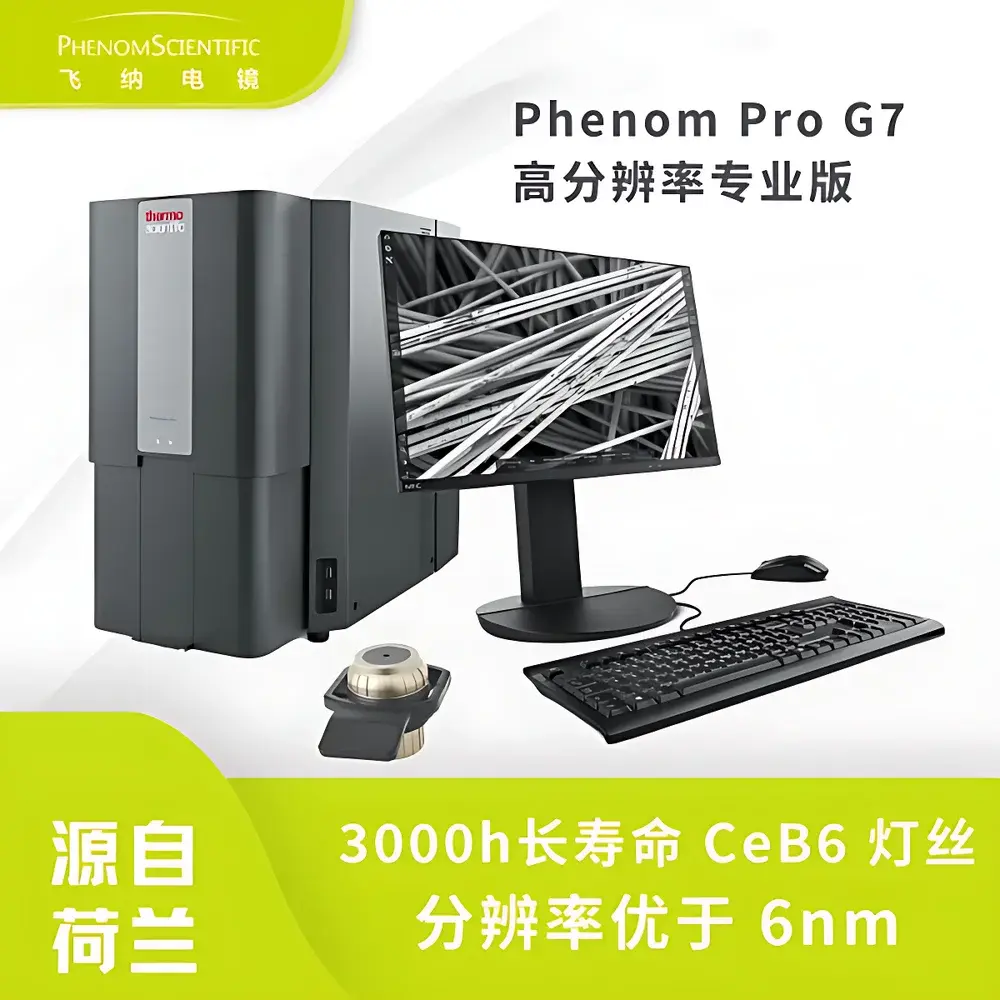
Phenom Pro Desktop Scanning Electron Microscope
| Brand | Phenom |
|---|---|
| Origin | Netherlands |
| Model | Pro |
| Instrument Type | Benchtop SEM |
| Electron Source | Cerium Hexaboride (CeB₆) |
| Secondary Electron Resolution | <6 nm @ 10 kV |
| Maximum Magnification | 350,000× |
| Accelerating Voltage Range | 4.8–20.5 kV |
| Backscattered Electron Resolution | <6 nm @ 10 kV |
| Vacuum Pumping Time | <15 s |
| Imaging Time | <30 s |
| Detector Configuration | Quadrant BSE Detector + SED + Optional SE/BSE Mix Mode |
| Navigation | Integrated 27–160× Color Optical Microscope |
| Sample Stage | Motorized, Fully Automated |
| Software Output Formats | JPEG, TIFF, PNG (up to 7680×4800 px) |
Overview
The Phenom Pro is the seventh-generation benchtop scanning electron microscope (SEM) engineered by Phenom, a Dutch manufacturer specializing in accessible, high-performance electron microscopy solutions. Designed around a high-brightness cerium hexaboride (CeB₆) thermionic electron source and an optimized electro-optical column, the Phenom Pro delivers sub-6 nm resolution at 10 kV — a benchmark for desktop SEMs in its class. Unlike conventional tungsten-filament instruments, the CeB₆ source provides superior brightness, improved signal-to-noise ratio, and extended operational lifetime (~3000 h), enabling stable low-kV imaging critical for beam-sensitive materials such as polymers, biological specimens, and nanoscale coatings. The system operates under variable vacuum conditions, eliminating the need for conductive coating of non-conductive samples — a key advantage for rapid, artifact-free analysis across academic, industrial, and quality control environments.
Key Features
- High-Brightness CeB₆ Electron Source: Delivers consistent beam current and stability over extended operation; enables reliable imaging at accelerating voltages as low as 4.8 kV without compromising signal fidelity.
- Sub-6 nm Resolution Performance: Achieved via enhanced magnetic lens design and reduced aberration pathways; validated per ISO 16700:2016 methodology for SEM resolution measurement.
- Ultra-Fast Operational Cycle: Full vacuum establishment in under 15 seconds; image acquisition begins within 30 seconds from sample loading — ideal for high-throughput labs and teaching facilities.
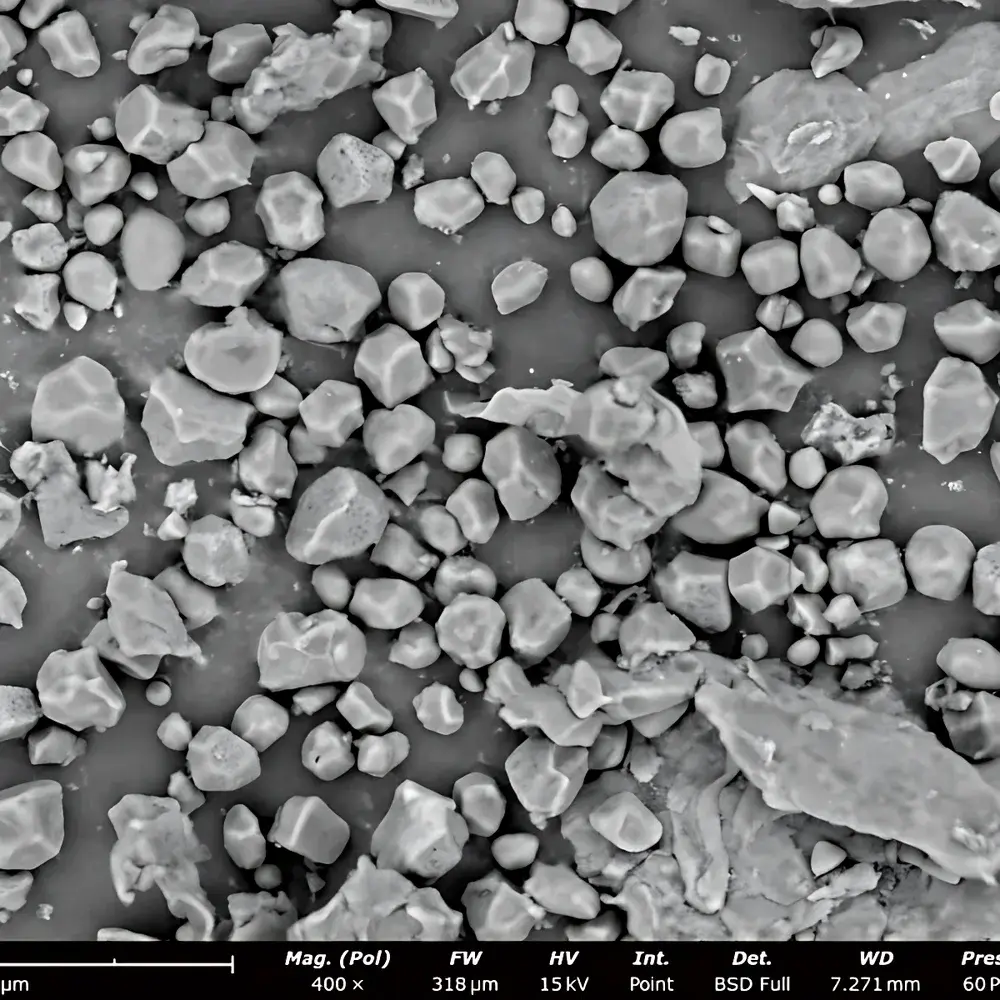
- Low-Vacuum Imaging Mode: Supports direct observation of insulating, hydrated, or outgassing samples (e.g., polymers, powders, plant tissues) without sputter-coating.
- Intuitive Automation Suite: Includes auto-focus, auto-brightness/contrast, and intelligent stage navigation; enables novice users to acquire publication-ready images within 10 minutes of first use.
- Modular Expandability: Field-upgradable to Phenom ProX configuration with integrated energy-dispersive X-ray spectroscopy (EDS), supporting simultaneous morphological and elemental characterization.
Sample Compatibility & Compliance
The Phenom Pro accommodates diverse sample geometries up to 100 mm in diameter and 50 mm in height. Its motorized stage supports precise positional repeatability (±1 µm), while the built-in optical navigation camera (27–160× color magnification) ensures accurate region-of-interest selection. The instrument complies with IEC 61000-6-3 (EMC emissions) and IEC 61000-6-2 (immunity) standards. For regulated environments, data acquisition workflows support audit-trail generation and user-access logging — facilitating alignment with GLP and GMP documentation requirements. While not certified to FDA 21 CFR Part 11 out-of-the-box, the software architecture permits integration with validated laboratory information management systems (LIMS) for traceable reporting in QC/QA settings.
Software & Data Management
Phenom’s proprietary software platform provides real-time image acquisition, multi-detector signal blending (SE/BSE Mix mode), and quantitative post-processing tools including particle sizing, fiber length distribution, and surface roughness estimation. All images are saved in lossless TIFF format (up to 7680×4800 pixels) alongside metadata (kV, WD, dwell time, detector gain). Export options include JPEG and PNG for presentation, while batch processing supports automated report generation compliant with ISO 13322-1 (particle size analysis). Software updates are delivered via secure HTTPS channels, with version history and change logs maintained per ISO/IEC 17025:2017 Annex A.3 guidelines for measurement software validation.
Applications
- Materials Science: Characterization of battery electrode microstructures (cathode/anode composites), solid-state electrolytes, MOFs, and catalyst supports.
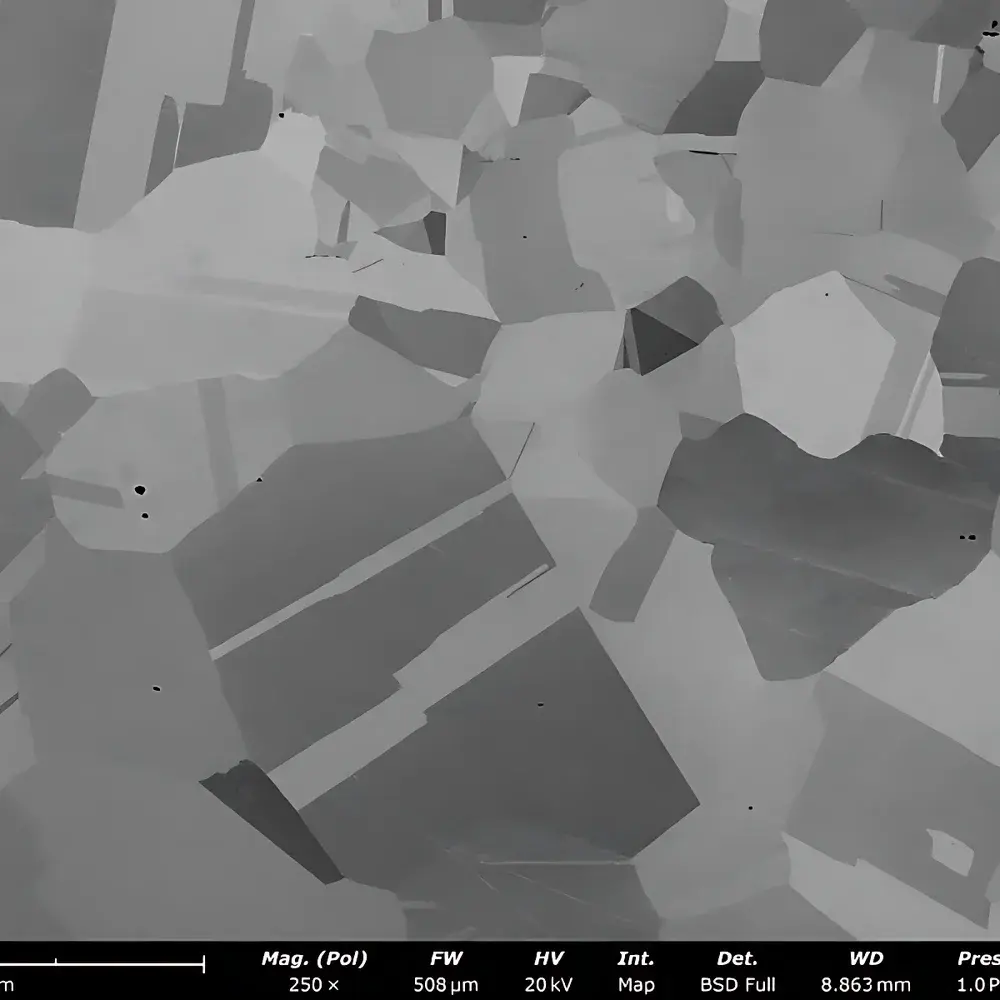
- Metallurgy & Powder Metallurgy: Grain boundary analysis, porosity quantification, and inclusion identification in sintered alloys and additive-manufactured components.
- Semiconductor Packaging: Failure analysis of wire bonds, solder joints, and delamination detection in molded IC packages.
- Life Sciences: Uncoated imaging of pollen grains, diatoms, biofilms, and freeze-dried tissue sections — preserving native morphology.
- Quality Assurance: Rapid defect inspection on production lines for ceramics, composites, and polymer films; supported by customizable pass/fail criteria in automated analysis modules.
FAQ
What vacuum level does the Phenom Pro operate at?
The system achieves a base pressure of ~10⁻³ mbar using a turbomolecular pump, with optional low-vacuum mode extending operational range up to 100 Pa for non-conductive samples.
Is EDS integration available at purchase or only as an upgrade?
EDS functionality is factory-installed in the ProX variant; the Pro model can be upgraded on-site by certified Phenom service engineers with minimal downtime.
Does the instrument require external vibration isolation?
No. The integrated passive damping platform and compact column design allow stable operation on standard lab benches — no dedicated SEM room or active isolation table is required.
How is calibration verified during routine use?
Built-in reference standards (Au/Pt nanoparticles and Si grating) are accessible via software-guided calibration routines; drift correction algorithms maintain spatial accuracy across multi-frame acquisitions.
Can the Phenom Pro interface with third-party LIMS or ELN platforms?
Yes. Through standardized CSV export, RESTful API endpoints (available under enterprise license), and configurable metadata tagging, seamless integration with major LIMS/ELN infrastructures is supported.




