
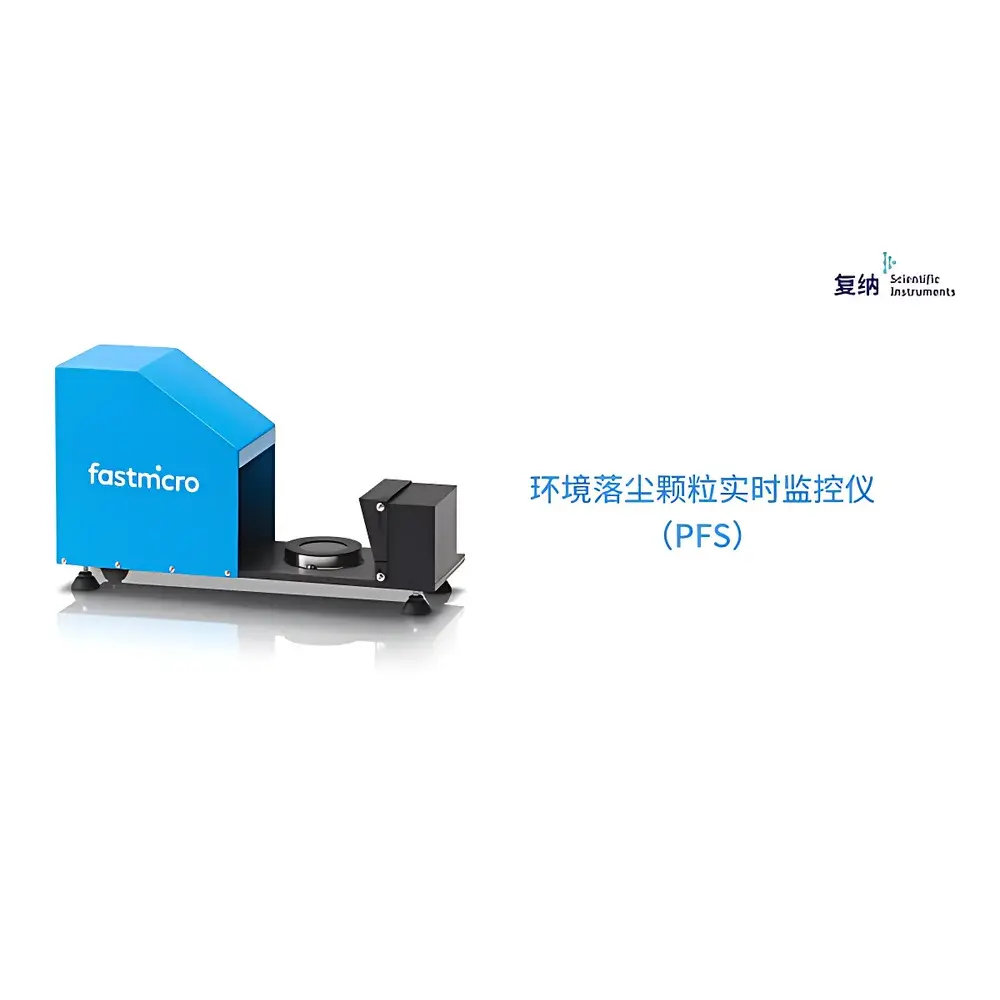
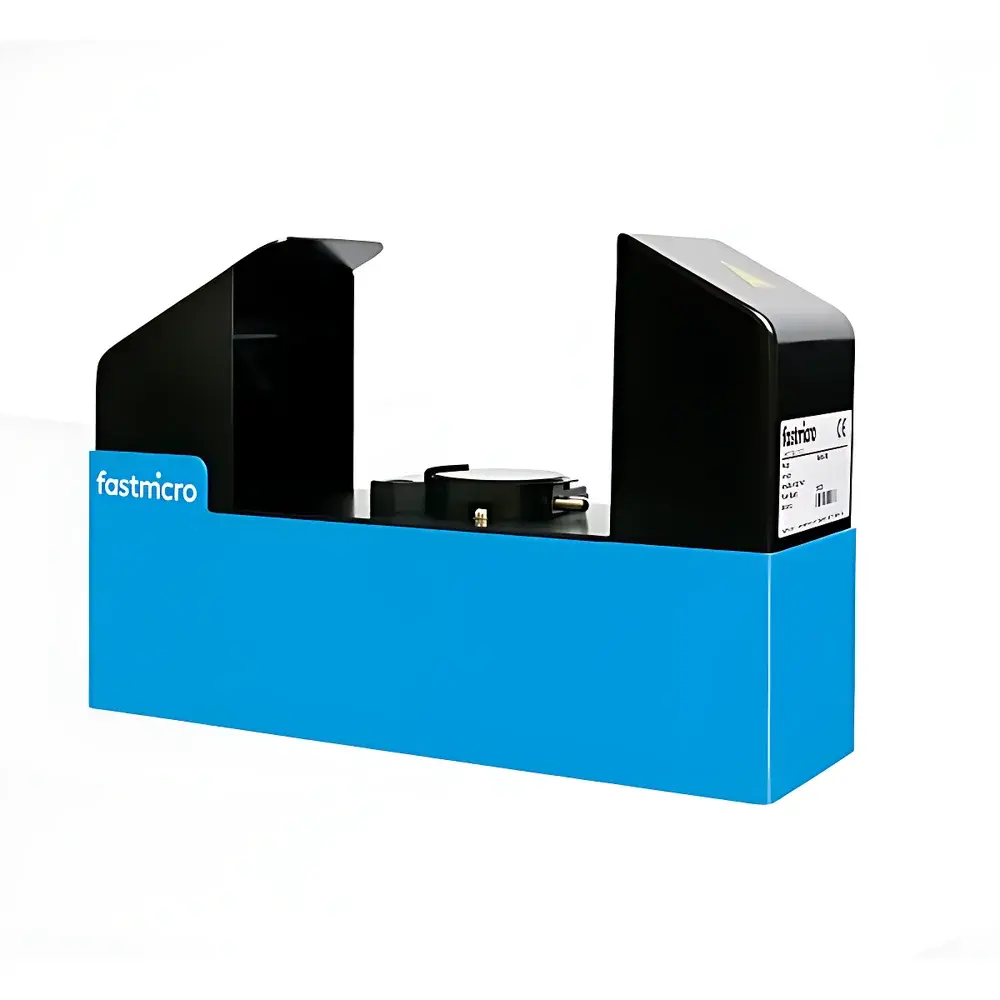
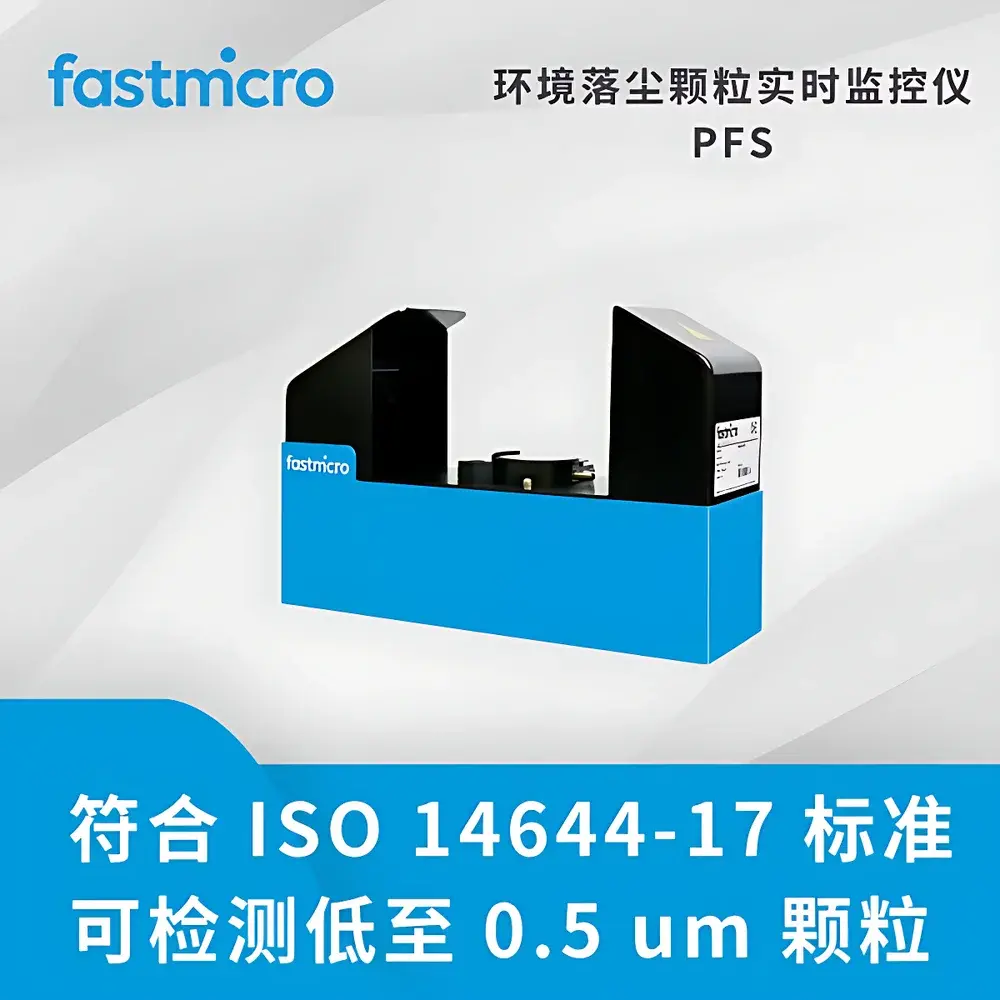
Fastmicro FM-PS-PFS-V02 Real-Time Particle Fallout Monitoring System
| Brand | Fastmicro |
|---|---|
| Origin | Netherlands |
| Model | FM-PS-PFS-V02 |
| Instrument Type | Optical Particle Fallout Monitor |
| Compliance | ISO 14644-9, ISO 14644-17 |
| Detection Threshold | ≥0.5 µm (NIST-traceable) |
| Sampling Interval | Adjustable down to 10 s |
| Substrate | 2-inch silicon wafer |
| Measurement Output | Deposition Rate (DPRL), particle count, size distribution, spatial density, time-resolved deposition profile |
Overview
The Fastmicro FM-PS-PFS-V02 Real-Time Particle Fallout Monitoring System is an engineered solution for quantitative, in-situ measurement of particulate deposition rates on critical surfaces in controlled environments. Unlike conventional airborne particle counters that report suspension concentration only, the PFS directly quantifies the dynamic flux of particles settling onto representative substrates—providing a physicochemically relevant metric: Deposition Rate per Unit Area per Unit Time (DPRL). This measurement principle is grounded in gravitational sedimentation, thermophoretic drift, and electrostatic deposition physics, calibrated against NIST-traceable reference standards. Designed specifically for semiconductor fabrication, pharmaceutical aseptic processing, and advanced optics manufacturing, the system enables objective assessment of surface contamination risk—where submicron particles (≥0.5 µm) may settle rapidly onto wafers, filters, or sterile packaging surfaces despite low airborne concentrations. Its compact industrial enclosure meets cleanroom-compatible mechanical and electromagnetic requirements (ISO 14644-1 Class 5–8 compatible mounting).
Key Features
- Real-time DPRL quantification with configurable sampling intervals as short as 10 seconds
- NIST-traceable optical detection sensitivity down to 0.5 µm equivalent spherical diameter (ESD)
- Integrated 2-inch silicon wafer substrate holder with automated stage positioning for repeatable surface exposure
- High-resolution imaging engine with auto-focus, dynamic contrast enhancement, and multi-threshold particle segmentation
- Robust architecture with IP54-rated housing, ESD-safe materials, and vibration-damped optical platform
- Onboard data buffering (72+ hours at 10-s resolution) and dual-mode connectivity (Ethernet + optional Wi-Fi)
Sample Compatibility & Compliance
The FM-PS-PFS-V02 is validated for use with standard 2-inch silicon wafers, but supports interchangeable substrate carriers for quartz, stainless steel, or polymer films (custom adapters available). All measurements adhere to the metrological framework defined in ISO 14644-9 (Cleanrooms and associated controlled environments — Part 9: Classification of surface cleanliness by particle concentration) and ISO 14644-17 (Guidance on contamination control for surfaces). The system’s calibration protocol includes traceability to NIST SRM 2800 (monodisperse latex spheres) and documented uncertainty budgets per ISO/IEC 17025. It satisfies prerequisite criteria for GMP Annex 1 (2022) surface monitoring validation and supports audit-ready documentation for FDA 21 CFR Part 11-compliant environments when paired with Fastmicro’s secure software suite.
Software & Data Management
The embedded Fastmicro PFS Control Suite (v3.2+) provides intuitive, role-based interface navigation with zero-code configuration. Key modules include: (1) Real-time DPRL dashboard with color-coded trend overlays across multiple instruments; (2) Automated report generation compliant with ISO 14644-2 surveillance requirements; (3) Time-series export in CSV, HDF5, and ASTM E2932-21 structured format; (4) Audit trail logging with user authentication, timestamped action records, and immutable data hashing. Optional integration with LIMS or MES platforms is supported via RESTful API and OPC UA protocols. All raw image datasets are preserved with embedded metadata (exposure time, focus offset, environmental sensor readings) to enable retrospective reanalysis without loss of provenance.
Applications
- Semiconductor front-end process control: monitoring particle fallout during photolithography, etch, and deposition tool idle periods
- Pharmaceutical isolator and RABS qualification: verifying surface cleanliness stability between batch cycles
- Aerospace optical assembly cleanrooms: correlating DPRL spikes with HVAC maintenance events or personnel ingress
- Medical device packaging line validation: establishing baseline deposition rates on Tyvek® and blister foil surfaces
- Research into particle resuspension dynamics: pairing PFS time-series with aerosol generation studies
- Root cause analysis workflows: exporting coordinate-mapped particle locations for subsequent SEM-EDS analysis using Phenom XL or similar desktop SEM systems
FAQ
How does the PFS differ from traditional airborne particle counters?
It measures actual particle deposition onto surfaces—not airborne concentration—enabling direct correlation with product defect mechanisms.
Can the system operate unattended for extended periods?
Yes. With onboard storage and scheduled reporting, it supports continuous 30-day deployments without manual intervention.
Is calibration required between runs?
No routine recalibration is needed; the system performs daily self-checks using internal reference targets and logs verification status automatically.
What environmental parameters are monitored alongside DPRL?
Integrated sensors record temperature (±0.3°C), relative humidity (±2% RH), and barometric pressure (±0.1 kPa) synchronized to each image capture.
Does Fastmicro provide installation and IQ/OQ support?
Yes—factory-certified engineers deliver on-site commissioning, including installation qualification (IQ), operational qualification (OQ), and user training aligned with ISO 13485 and GAMP 5 guidelines.



